 CEOInterviews.AI
Ali Ghodsi on IPO
From Conversation with Databricks CEO Ali Ghodsi on Lakewatch, Genie Code, IPO, and What’s Next · · Josue Bogran Channel
“We're not trying to time the market. We're trying to win the market, and whatever makes Databricks most valuable where we can achieve these visions. We will be public, but I just don't want to be at the whims of the stock market or short-term pressures; there are two bad times to go public like 2022 and now in 2026.”
On , Ali Ghodsi, Cofounder and CEO at Databricks, spoke about IPO during Conversation with Databricks CEO Ali Ghodsi on Lakewatch, Genie Code, IPO, and What’s Next on Josue Bogran Channel.
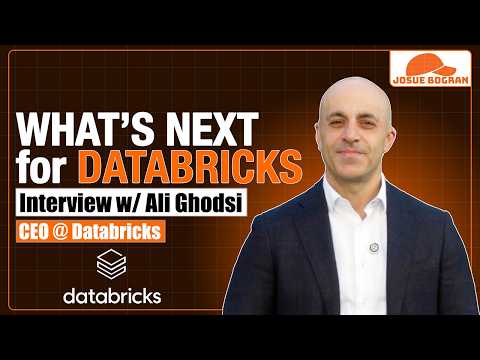
About Ali Ghodsi
Ali Ghodsi, cofounder and CEO of Databricks, has recently discussed AI risk and enterprise adoption in several public appearances. In a September 2026 conversation with a16z, he argued that current models are capable of automating more work than most companies currently use them for, and identified the lack of institutional context in models as a key barrier to wider adoption. He also stated that he believes the existential risk of AI to humanity is "close to zero," while emphasizing that cybersecurity is a real and growing threat, noting that the time from a vulnerability's disclosure to its weaponization has shrunk from years to hours. Ghodsi has also said that the AI transformation will take decades to fully impact society, drawing a comparison to the time it took for electricity to replace steam power. In interviews, Ghodsi has discussed his approach to running Databricks, including his focus on identifying the company's single biggest bottleneck and dedicating a disproportionate amount of attention to it for several years. He has also commented on the company's decision to remain private, stating that preparing for an IPO would not be a good use of time given the current demand for its software. He has spoken about the importance of open source to Databricks' history, attributing the company's existence to the Apache Spark ecosystem, and has noted that over 90% of databases created on its Neon and Lakebase products are now created by agents.
This quote was transcribed and extracted with AI assistance from a verified, first-person interview, then reviewed by our team to confirm the speaker and the exact wording. See how we verify →