
Memoirs of a Stranger
Michael Moritz talks to Albert Read about Ausländer, and a life lived between worlds.
Former Partner at Sequoia Capital, Sequoia Capital
Search every verified Michael Moritz interview, podcast appearance, and on-the-record quote — each transcript cross-checked by AI and human review to confirm speaker identity. Michael Moritz has been promoting his memoir, *Ausländer*, which recounts his family's history as Jewish refugees from Nazi Germany and explores themes of exile and identity. In interviews, he has discussed his experience growing up as an outsider in Wales and has drawn parallels between that history and contemporary political developments in the United States, saying he believes President Trump has "authoritarian instincts" while stating he has been careful not to label him a fascist or Nazi. He has also discussed his foundation's work to protect the rights of immigrants in the U.S. In conversations about the technology sector, Moritz has offered his views on the AI industry, predicting that Google and Anthropic will be the two main winners in the AI race and that OpenAI has relinquished its leadership in the sector. He has also reflected on his career at Sequoia Capital, discussing lessons from investing in companies like Google and PayPal, and has shared his perspective that a founder's first 15 to 17 years of life are the most important for understanding their character and potential for success.

Michael Moritz talks to Albert Read about Ausländer, and a life lived between worlds.

Peter Frankopan (ch), Lauren Collins, Robin Niblett and Michael Moritz on the history, politics and precarious present of the United States

In this episode, William Green speaks with multibillionaire Sir Michael Moritz, arguably the most successful venture capitalist ever. He spent nearly four decades at Sequoia Capital, which invested in early-stage companies like Nvidia, Google, YouTube, PayPal, Airbnb, LinkedIn & Stripe. Here, he talks about his unconventional path to success, the role of temperament in investing, & what he learned from observing Steve Jobs, Bill Gates, Jensen Huang & Elon Musk. What you'll learn here: 00:00:00 - Intro 00:04:49 - Why Michael Moritz has always felt like an outsider. 00:08:49 - How his family’s…

As a longtime partner and former chairman of the legendary Silicon Valley venture capital firm Sequoia, Sir Michael Mortiz had a ...

After his mother’s death, Michael Moritz uncovered tragic family secrets from life in the shadow of Nazi Germany. What can his story teach us about our own era — and the Torah’s commandment to welcome the stranger? Leaving Germany as child refugees, Michael Moritz’s parents escaped to London before settling in Wales after the war. But the idea of being an outsider — Ausländer — has persisted in Moritz’s life to this day, resurfacing in his adopted home of California, where he has become one of Silicon Valley’s most celebrated investors. A deeply moving, intimate story about how the ravages of…

Michael Moritz joins Patrick O’Shaughnessy for a wide-ranging conversation about the forces that shape exceptional people. Moritz reflects on growing up in a family of Jewish refugees from Nazi Germany, the outsider mentality that followed him throughout his life, and why he spent so much time studying the childhoods and backgrounds of founders. He shares the questions he used to understand people, what he learned from decades around extraordinary leaders, and why complete obsession often comes with a cost. TIMESTAMPS 0:00 Intro 0:53 Family History & Identity 7:03 Survival & Outsider Instinct…

Today, we're back with Michael Moritz, the Sequoia investor who backed Google, Yahoo and PayPal, to talk about his family and ...

Today, we're joined by Michael Moritz, the former chairman of Sequoia Capital, one of the most successful venture capitalists of all time. Michael Moritz is a venture capitalist and philanthropist renowned for backing early tech giants like Google, PayPal, and YouTube during his 38-year career, first as Partner then Chairman of the firm. Cameron McLain and Tommy Stadlen talk to Michael about why he thinks the first 16 years of a founder's life tell you more than you can find anywhere is, why he still wears the cap of the company that lost Sequoia more money than any other, and why he shiver…
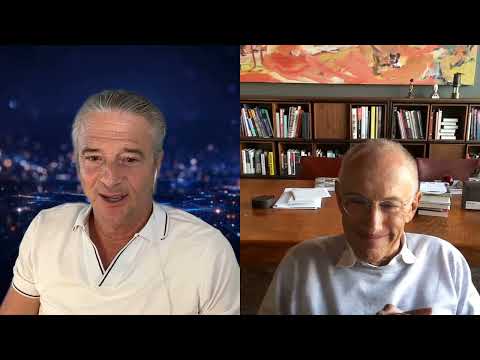
My guest today is Michael Moritz. He started as a journalist at Time Magazine, then spent 35 years at Sequoia Capital backing Google, Yahoo, PayPal, and YouTube. Before any of that, he wrote The Little Kingdom, the first inside account of Apple, written with unusual access to Steve Jobs and Steve Wozniak, and later relied on by Walter Isaacson for his own Jobs biography. In this conversation, Moritz reflects on what made Jobs different before the world caught on (he calls him a bit of a mystic), what he learned from Sequoia founder Don Valentine about spotting talent, and how adversity shaped…

Michael Moritz has written books through every phase of his life: the first history of Apple and an account of Chrysler's near-death while he was a journalist at Time, a study of Alex Ferguson's Manchester United in the middle of his 38 years at Sequoia, and now Ausländer, a family memoir, after leaving the firm. Moritz calls himself a dilettante with too many interests, but listen to him on learning to paint in his 40s, or the questions he would ask a ten-year-old boy in a German village in 1890, and you may decide that unsatisfied curiosity is not a small thing to build a life on. Tyler and…

Subscribe to stay up to date with our range of fascinating interviews, featuring some of the biggest names in global finance and business! RECORDING DATE: 16th February, 2026 TOPICS: 00:00 - Intro 02:30 - Journalism to Venture Capital 07:05 - What Makes a Brilliant Entrepreneur 10:39 - Stripe and the Collison Brothers 17:41 - Attributes for Entrepreneurs and Investors 25:26 - Hiring at Sequoia and Portfolio Companies 27:44 - Asset Allocation and Investment Philosophy 36:41 - Perspectives on AI and the Next Decade 39:10 - Philanthropy: Motivations and Impact 42:27 - Writing 'Auslander' – Mot…

Sir Michael Moritz ran Sequoia Capital for over 35 years and is one of the world's most successful venture capitalists - he talks to ...
“I learned about this because I didn't know anything about the investment business when I went to Silicon Valley. This is 1985, so it's a long time ago. And Sequoia was really small. There were four, you know, our whole organization including the assistants and the receptionist and everything. They We get It was 11 people. So, there were really three principals. And so I watched and I listened and I learned from them ”
“I think Britain punches below its weight. It's also the um aversion to success that is um I think um insinuates many aspects of uh of British life. It's the uh it's the lack of ambition. It's the lack of um of treating people who are entrepreneurial or who have made money uh with um you know the sort of uh um respect is the wrong word but with with the feeling that they're welcomed in this country. You look at all th”
“It is still the one place in the world with great ambition and also I should say parenthetically you know my views of Trump are undoubtedly you know they're they're very harsh and very severe. I think he's the uh a vile, venal, vain character who makes Richard Nixon look like a saint. But America's economy, and we can talk about China if you want, but America's economy is still the best in the world. And if you look ”
“Most investors are congenitally incapable of doing nothing. They just have to do something. Now if you're a venture investor and you have shares in a private company until the last 5 or 10 years when the secondary market has kicked in in a big fashion, if you have shares in a private company you can't do anything. But when it becomes public, you immediately have the opportunity to sell it. And there a whole bunch of ”
“I think it's just become part of the establishment. And perhaps when I got into it, you know, 85 or so, most people wanted to go and work at whatever it was, McKinsey or Bain or Goldman Sachs or Morgan Stanley. I think it's those generations or their descendants now, they all want to be in the venture industry. Join a seed fund, join a pre-seed fund, join a first round fund, etc. And so to some extent when I got into”
“I have been very careful never to call Trump a fascist, never to label him a Nazi, never to equate him with what happened in Nazi Germany. Never. But I do believe he has authoritarian instincts. The same authoritarian instincts that we've seen in others who've risen to the forefront of politics in their countries. And one of the things that happens when you have an authoritarian with a lot of control, no matter how m”
Sign in to search the full transcript archive, filter by topic, and access every quote from Michael Moritz.
The summary and quote tags on this profile are produced with AI assistance from verified, first-person interview transcripts, then checked by our team to confirm the speaker's identity and the accuracy of every quote. See how we verify →
Pro unlocks every transcript in full, plus unlimited search across every executive and company we cover.
50% off appliedPulling data at scale? The Data API gives you 30,000 transcripts a month over REST, MCP and JSON.
Compare all plans