
The Turnaround Playbook: How Sandeep Mathrani Saved General Growth Properties and WeWork
Sandeep Mathrani has built a career stepping into chaos—and fixing it. From leading General Growth Properties out of bankruptcy ...
CEO, Wework
Search every verified Sandeep Mathrani interview, podcast appearance, and on-the-record quote — each transcript cross-checked by AI and human review to confirm speaker identity. Sandeep Mathrani, CEO of WeWork India, discussed the company's performance and outlook during a Q4FY26 earnings call on May 1, 2026. He stated that the company ended "net debt negative for the first time in our history" and received a "two notch credit upgrade to A+." Mathrani described a structural shift in office leasing, noting that "five year plus leases have collapsed from 40% of enterprises a few years ago to only 8% today" and argued that "flex has become the structural answer to work workforce volatility." He also introduced Rivet, a standalone design and build business that offers WeWork's in-house capability to enterprises, landlords, and developers without requiring a WeWork center commitment. In a May 5, 2026 podcast interview, Mathrani reflected on his career turning around companies such as General Growth Properties and WeWork. He described his approach to turnarounds, stating that "20% of the assets are very low quality--offload them; 30% are great and 50% are fine but they give you scale." He recalled that at WeWork, "the math was 6 billion of expenses, three and a half billion of revenue" and that he "made a decision to cut two and a half billion of expenses," reducing the workforce from 15,000 to 3,500 employees. Mathrani said he "never really think[s] of a glass half empty" and described his current role at Atlas Hill as "the best time of my life."

Sandeep Mathrani has built a career stepping into chaos—and fixing it. From leading General Growth Properties out of bankruptcy ...

John Santora could be called the anti-Adam Neumann. Unlike the charismatic but sometimes chaotic founder of the co-working ...

youtube #yahoofinance #stockmarket WeWork (WE) is doubling down on its space-as-a-service business, rising 12% ...

#WeWork #youtube #stockmarket WeWork CEO Sandeep Mathrani joins Yahoo Finance Live anchors Julie Hyman, Brian Sozzi, and to discuss debt restructuring plans, all access memberships, occupancy, job cuts across the tech industry, and the post-pandemic outlook for the company. Subscribe to Yahoo Finance: https://yhoo.it/2fGu5Bb About Yahoo Finance: At Yahoo Finance, you get free stock quotes, up-to-date news, portfolio management resources, international market data, social interaction and mortgage rates that help you manage your financial life. Yahoo Finance Plus: With a subscription to Yah…

WeWork CEO Sandeep Mathrani joins 'Squawk Box' to discuss his views on the state of work, pressures on WeWork's business, and more. For access to live and exclusive video from CNBC subscribe to CNBC PRO: https://cnb.cx/2NGeIvi » Subscribe to CNBC TV: https://cnb.cx/SubscribeCNBCtelevision » Subscribe to CNBC: https://cnb.cx/SubscribeCNBC Turn to CNBC TV for the latest stock market news and analysis. From market futures to live price updates CNBC is the leader in business news worldwide. Connect with CNBC News Online Get the latest news: http://www.cnbc.com/ Follow CNBC on LinkedIn: https:/…

Closing Keynote Arnaud Karsenti, Managing Principal, 13th Floor Investments Sandeep Mathrani, CEO, WeWork Francis X.

WeWork Chief Executive Officer Sandeep Mathrani joins William J. Ferguson and Peter Linneman to share perspectives on ...
WeWork CEO Sandeep Lakhmi Mathrani says Russia is a small part of the company's business and discusses the state of the commercial real estate market with Bloomberg's Ed Hammond at the JPMorgan Global High Yield and Leveraged Finance Conference in Miami.
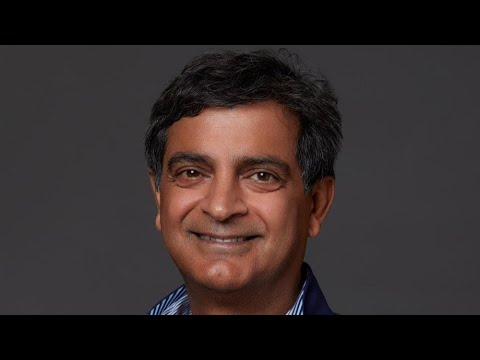
In the kick-off episode of Recalibrate Reality’s second season, host Scott Rechler sits down with Sandeep Mathrani, the CEO of WeWork, to discuss the future of work. Scott and Sandeep discuss how WeWork has grown throughout the pandemic, what workers are looking for when it comes to the office, and how virtual and augmented reality could completely change how we think about the office.

WeWork CEO Sandeep Mathrani and Executive Chairman Marcelo Claure join CNBC's 'Squawk Box' ahead of the company's debut on the public markets to discuss WeWork's path to profitability. For access to live and exclusive video from CNBC subscribe to CNBC PRO: https://cnb.cx/2NGeIvi Shares of WeWork jumped as high as 12% midday on Thursday, as the company went public through a special purpose acquisition company more than two years after its failed IPO. The stock is currently up more than 8%. The office-leasing company scrapped plans for an IPO in 2019 after investors raised concerns over its…

Keynote: Adapting to the Future of Work with Sandeep Mathrani, CEO, WeWork moderated by Kirthiga Reddy, Investing Partner, ...

Presented at the NYU Schack Institute's 25th Annual REIT Symposium, Day 2, Wednesday, April 7, 2021 Conference Hosts: Dean ...
“I thought the board uh uh you know should have allowed me to do the three things I wanted to do uh which is uh merge the company uh with my biggest competitor, consolidate the industry, okay um and um and buy back the debt at a huge discount. And uh we had done such a good job of raising the revenue and the board felt one they didn't want to merge because they wanted to capitalize on our growth individually which I t”
“I had to restructure 20 billion of debt, okay? On 200 plus loans and you know and uh we had a plan for each one, okay? and they had and you had to execute and once you execute you build a reputation, okay, of of putting forward a plan that that works.”
“I think the number one, two, three, four is who is the borrower. The reputation of the borrower, the reputation of the person. Uh there's a lot to be done on credibility. That's first. Second is what's the plan? Okay. And you know, have you done it before? Is it executionable? Okay. Then third is what's the exit? What's my exit? Okay. Is there an exit? Are we structuring it right or are we just doing this for a tempo”
“The math was 6 billion of expenses, three and a half billion of revenue. I don't think anyone needs a calculator. That math doesn't work. Okay. I mean, that's what actually fascinated me to be honest and said, 'You guys think what?'”
“I made a decision to cut two and a half billion of expenses. I said the only way we're moving forward is if we can cut two and a half billion of expenses. Okay? So that we can be a break even company and then we can start to grow.”
“We have 2 billion dollars of revenue. We need to make a profit. If you've got $2 billion in revenue, there's got to be a way to make a profit. So, we've gone through the tough things of restructuring our staffs, right? Our our employees and uh expense base matches the new portfolio we have today. And so, we have turned that corner. The last uh two quarters have been IBIDA profitable, traditional GAP IBIDA profitable,”
Sign in to search the full transcript archive, filter by topic, and access every quote from Sandeep Mathrani.
The summary and quote tags on this profile are produced with AI assistance from verified, first-person interview transcripts, then checked by our team to confirm the speaker's identity and the accuracy of every quote. See how we verify →
Pro unlocks every transcript in full, plus unlimited search across every executive and company we cover.
50% off appliedPulling data at scale? The Data API gives you 30,000 transcripts a month over REST, MCP and JSON.
Compare all plans