CEOInterviews.AI
Start App
Try: AI strategy tariffs earnings guidance layoffs interest rates growth

Youssef Chahed

Former Prime Minister, Tunisia

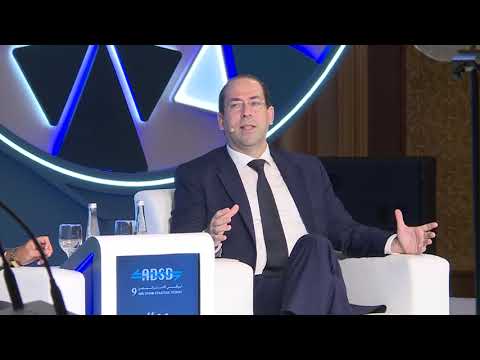
Search every verified Youssef Chahed interview, podcast appearance, and on-the-record quote — each transcript cross-checked by AI and human review to confirm speaker identity. Former Tunisian Prime Minister Youssef Chahed appeared on two podcasts in May 2026, discussing his tenure and the state of Tunisian democracy. In a conversation on the Tahrir Podcast recorded at Harvard University, Chahed described the economic challenges he faced while in office, stating that phosphate production fell from 8 million tons to 3 or 4 million tons and oil production dropped from 100,000 barrels per day to 30,000 barrels per day. He said that when he arrived, the public deficit was around 6% of GDP, and when he left it was 3%. Chahed also said that the ground was prepared for President Kais Saied to activate Article 80 of the constitution, which Saied used to assume emergency powers in 2021. In a separate podcast with the Worldview Podcast, Chahed said that the generation that participated in the Arab Spring was not necessarily looking for democracy "per se" but for freedom, jobs, and better redistribution of wealth. He argued that governments need to be present on social media to counter false information, saying "perception is reality" and that he made a mistake by not engaging with every question or rumor. Chahed identified youth unemployment, school dropout rates, and corruption as major challenges for the MENA region, and said that international donors should coordinate their efforts more effectively. He is currently a senior fellow at the Harvard Kennedy School's Middle East initiative.

Recent appearances

Notable quotes

“The ground was prepared for him and even technically speaking you can check many Tunisian politician were asking to activate the article 80 of the constitution that finally used.”

“When I arrived public deficit ratio to the GDP was around 6%, when I left it was 3%. This is what I call protecting the state avoiding any collapse.”

“The global idea is that countries living under democracy perform better than under autocracy. This you can compare historically GDP or GDP per capita and it should be you should find something clear in that.”

“School dropout is because of of course I mentioned the educational system was not reformed. But now this is a concrete result. In Tunisia we have between 50,000 200,000 a year that that are leaving schools. Those are young 12 15 years old. Um it's a big problem for their family. Um how they manage that? we are the government has not enough funding to but then it's a it's it's a huge issue that we uh all North African”

“But then how can I create growth with the world bank and while the IMF is asking me to raise taxes interest rates etc more value added tax etc. sus and I asked them to to sit together at the same table not only those two institution but also with all other international donors because after the revolution we saw huge arrival of all those you know Jika uh French development agency USD uh German came Tunisia the Chines”

“When I arrived I was very clear about fight against terrorism said this is a number one priority. Uh uh uh fight against corruption is number two. Uh uh also repairing or fixing the budget because we were close to bankruptcy in Tunisia at that time. The public deficit was around 7% of the GDP. Uh when I left it was around 3%. So this is another example. This is a huge achievement for us.”

The summary and quote tags on this profile are produced with AI assistance from verified, first-person interview transcripts, then checked by our team to confirm the speaker's identity and the accuracy of every quote. See how we verify →