CEOInterviews.AI
Start App
Try: AI strategy tariffs earnings guidance layoffs interest rates growth

Vitalik Buterin

Cofounder, Ethereum

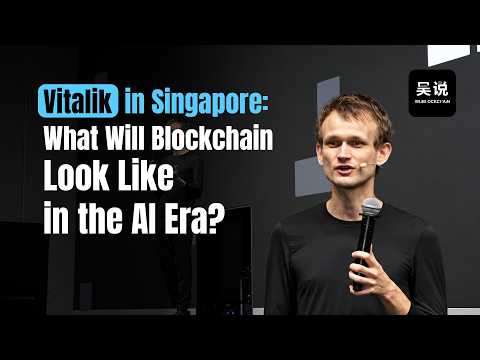
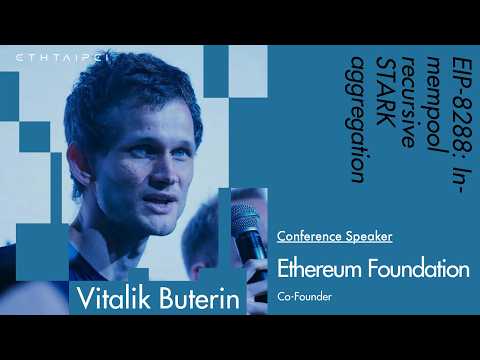
Search every verified Vitalik Buterin interview, podcast appearance, and on-the-record quote — each transcript cross-checked by AI and human review to confirm speaker identity. Vitalik Buterin, cofounder of Ethereum, has been active in public discussions and conferences over the past two months, focusing on the intersection of blockchain, cryptography, and artificial intelligence. At the Network State Conference 2026, he joined Balaji Srinivasan for a fireside chat where he said public key cryptography will continue, though he expects it to face security challenges requiring periodic parameter updates. He also stated that AI has accelerated Ethereum's development roadmap, suggesting that without AI, the "Lean" roadmap might have taken until 2040 or 2050 to complete. In a talk at OKX NOW in Singapore, Buterin argued that blockchain technology has not matured and that AI is both the biggest opportunity and risk for the space. He described a shift from "programmable assets" to "programmable data" using zero-knowledge proofs, and predicted AI would become the new user interface for blockchain transactions, potentially reducing certain security risks while introducing new ones. At ETHTaipei 2026, he presented a keynote titled "Blockchain is one tool, CROPS is the objective," defining CROPS as censorship and capture resistance, open source, privacy, and safety. He also detailed EIP-8288, a proposal for in-mempool recursive STARK aggregation, which he said would improve scalability, privacy, and post-quantum security by replacing individual signatures and proofs with a single aggregated proof per block. In a Shanghai speech, he encouraged developers to explore new cryptographic tools and applications, noting that Ethereum's roadmap now includes concrete EIPs for integrating STARKs more broadly.

Recent appearances

Verified interview transcripts

Notable quotes

“The whole lean roadmap would basically not be possible without AI. I think without AI the roadmap as we now conceive it with the level of ambition that we conceive it, possibly would have taken until literally 2040 or 2050. Basically we've been getting massive speedups from the fact that AI is doing a lot of research. AI is starting to do a lot of coding, and we've especially a lot of the lean Ethereum stuff, like le”

“I think it continues. I do think it will probably take some hits to concrete security and I think one of the ways that I think it's realistic to think about this is to think about what's happened to existing hard problems that cryptography depends on, right? So things like factoring, for example. For a long time people thought that the fastest way to factor is basically effectively brute force but you sort of make it”

“We've seen AI start to actually become powerful at hacking into everything, right? You know, we've seen AI break out of sandboxes. We have seen AIs take down all kinds of websites. We've seen AIs discover bugs and exploits in all kind of software. At the same time, Ethereum blockchain has not gone down. I mean, Bitcoin also has not gone down. Lots of and what we're going to happen is that much better forms of securit”

“The technology has not stopped, right? And the technology has not matured. And there's actually some very important trends that are happening especially in these particular five years that a lot of which are being really accelerated by AI where AI is becoming at the same time the biggest opportunity and also the biggest risk. And it's worth understanding this and I think it's also worth understanding kind of some of ”

“I think the answer there has to do with, like, it inevitably has to do with AI. And I think the big shift that AI has really brought to the world is that many things that used to be scarce have become super abundant, and the thing that has become scarce is versions of those things that kind of are secure in some sense, where the meaning of secure changes a lot depending on context. I think this is even true for writi”

“I think the answer for agents is in many ways similar to the answer for humans, right? Which is finance is often one of those things where the kind of losses and gains are very asymmetric, right? And you know, a lot of people who kind of do finance, you know, the wrong way spend a lot of time thinking about the difference between like 4.59% APY and 4.89% APY, but not enough time thinking about making sure they don't ”

The summary and quote tags on this profile are produced with AI assistance from verified, first-person interview transcripts, then checked by our team to confirm the speaker's identity and the accuracy of every quote. See how we verify →