CEOInterviews.AI
Start App
Try: AI strategy tariffs earnings guidance layoffs interest rates growth

Andrew Bailey

Governor, Bank Of Engl

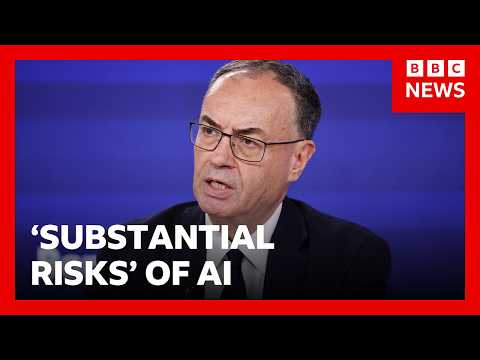
Search every verified Andrew Bailey interview, podcast appearance, and on-the-record quote — each transcript cross-checked by AI and human review to confirm speaker identity. Andrew Bailey, Governor of the Bank of England, has recently addressed the economic and financial stability implications of the ongoing Middle East conflict and the rapid expansion of artificial intelligence. Speaking at the IMF annual meeting in Bangkok and other forums, he noted that the conflict has created major uncertainty around growth, inflation, and interest rates, and warned that the longer the energy situation persists, the harder it becomes to avoid second-round effects on prices. He also expressed support for the IMF's emphasis on the importance of stronger growth and maintaining macroeconomic frameworks to address fiscal concerns. Bailey has repeatedly highlighted AI as a significant source of both opportunity and risk. He described frontier AI as a potentially powerful weapon that could expose vulnerabilities in the financial system, particularly in cyber security, and cautioned that the large volume of investment in AI could lead to market shocks, stating that "not everybody always wins." He also discussed the need for public trust in AI, emphasizing that humans must remain in control of decision-making. In parliamentary testimony, he addressed UK productivity, youth unemployment, and the Bank's monetary policy framework, while at the Jackson Hole symposium he discussed the importance of avoiding unconditional forward guidance and assessing the overall impact of global developments on UK inflation.

Recent appearances

Verified interview transcripts

Notable quotes

“I think at the moment, and of course it does differ from economy to economy because clearly the US is in a different position in that respect, but I think we are seeing demand effects probably coming through more quickly particularly via asset markets and asset valuations, and so I think that's probably more so in the US than the rest of us, but I think that is the mechanism that's coming through probably sooner. And”

“I do think that the things over history that have actually raised potential growth rates over a sustained period are big changes particularly in general purpose technology and the effects that that can have in terms of spreading across the economy, and I think it is possible that one of the causes of us having lower potential growth rates in many of our economies for the last 15, 20 years is actually that we may have”

“I think there's a big issue with AI now which I really summarize as in two parts. It's public trust and I think behind that it's sort of quite philosophical but is I think public trust relies on the feeling that humans are ultimately in control of the thing and there are now big question marks. I mean, you know, you see things like the French refrigerator story and you think, you know, where's all this going? The rea”

“I genuinely thought pre the conflict breaking out in the Gulf that we would be back at the 2% target late spring. And I've seen nothing subsequently change my view that that would have been the case. But of course it isn't because we've had the conflict breakout. But it is the case. So we've got the first round effects of energy prices. We've got inflation just over 3%. The question for us is what are we seeing and w”

“I was making three points in terms of what I see as the underlying, you know, things that we have to look at. One is growth because there's no question that in terms of what can alleviate the fiscal situation, which again, the IMF are pointing to, is stronger growth. The second one is having macroeconomic frameworks and and keeping to them, which is both monetary and fiscal. So our job is to bring inflation back to t”

“The framework that we're looking at and have been looking at for a while now hasn't changed. So we've got the impact, obviously, of the events in the Middle East, the impact on direct impact on energy prices, that's very visible. It's going on longer. Clearly, we're seeing that. It's not a statement. Nothing but a statement. I'm afraid of fact. The key thing that we have to look at is, is what are called pass through”

The summary and quote tags on this profile are produced with AI assistance from verified, first-person interview transcripts, then checked by our team to confirm the speaker's identity and the accuracy of every quote. See how we verify →