CEOInterviews.AI
Start App
Try: AI strategy tariffs earnings guidance layoffs interest rates growth

Carolyn Rogers

Senior Deputy Governor, Bank Of Canada

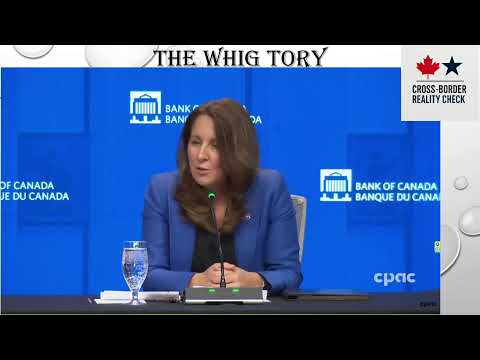
Search every verified Carolyn Rogers interview, podcast appearance, and on-the-record quote — each transcript cross-checked by AI and human review to confirm speaker identity. Carolyn Rogers, Senior Deputy Governor of the Bank of Canada, addressed Canada’s housing market in a speech to the Greater Victoria Chamber of Commerce and CFA Society Victoria on October 1, 2026. In her remarks, she discussed the difficulty of solving housing affordability, noting that rising prices have tied housing to household wealth, financial stability, and economic growth, creating policy trade-offs. She also highlighted that Canada invests twice as much in residential real estate as in business investment, machinery, equipment, and intellectual property, which she said affects productivity. Rogers stated that monetary policy is a blunt instrument and that the Bank of Canada has focused on explaining what it can and cannot do, rather than adjusting how shelter costs are measured in inflation. Rogers also participated in the Bank of Canada’s September 2, 2026, press conference following the policy rate decision, where the governing council maintained the policy interest rate at 2.25%. She said the Bank is weighing risks to growth from the trade conflict with the United States and risks to inflation from the Middle East situation, noting that both have escalated in recent weeks. She described the Canadian economy as coping and adapting to these challenges, and distinguished between market volatility and dysfunction, stating that leveraged investors unwinding positions quickly and liquidity drying up would be a greater concern.

Recent appearances

Verified interview transcripts

Notable quotes

“Maybe rather than talking about a risk that's underpriced, I would point to a vulnerability that was part of our economy long before the tariff problems came along, and that's productivity. And I there was a point in the speech where I talked about the amount of investment in our country that's going into residential real estate versus basically business investment, machinery, equipment, IP. It's double. We invest tw”

“Housing affordability is difficult to solve. Not because no one is trying and not because the problem is poorly understood. It's hard because over a very long period of time and a long period of rising house prices, housing has become tied to many other things we care about. Household wealth, financial stability and a growing economy. Rising prices made housing less affordable, but they also supported household wealt”

“Ultimately, you want to hope that all different policy makers are coordinated and rowing in the same direction, but different policy makers have different tools. They have different objectives. They have different constraints. And so it's not always the case that everybody's rowing in the same direction. We have had periods of time in the last 20 years where there were measures coming out of different policy makers t”

“We probably need more investment in both, right? We need more investment in the things that improve productivity and increase our standard of living. It is, as you say, there's some logic to why housing investment has gone up. Housing has gotten more affordable. So, you have to invest more to get the same amount of housing. I think probably if you think about housing, we have to be careful about what kind of housing ”

“It's important to distinguish between volatility and dysfunction or instability. When prices and yields are moving because investors are repricing risk, that's a functioning market. The vulnerability that we have talked about in our previous financial stability reports really comes when you get leveraged investors unwinding their positions quickly and liquidity starts to dry up, and in particular when those markets a”

“Monetary policy is never about one risk or one piece of data. We're always weighing multiple pieces of data. We're always weighing the balance of risks. And that's definitely the case right now. As you said, things have changed since July. We're looking at risks to growth that come out of the trade conflict we have right now. And then we're looking at risks to inflation that come primarily out of the situation in the”

Other executives at Bank Of Canada

The summary and quote tags on this profile are produced with AI assistance from verified, first-person interview transcripts, then checked by our team to confirm the speaker's identity and the accuracy of every quote. See how we verify →