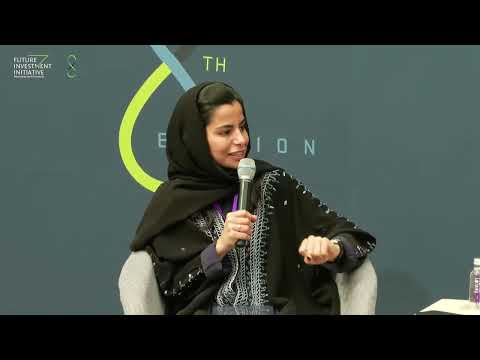
Al-Razouki, Angermayer, Nelsen, Pujara & Tandon on Where the Next Biotech Unicorn Is
... Founder, Apeiron Investment Group Robert Nelsen, Co-Founder & Managing Director, ARCH Venture Partners Rohan Pujara, ...
Co-founder & Managing Director, Arch Venture Partners
Search every verified Robert Nelsen interview, podcast appearance, and on-the-record quote — each transcript cross-checked by AI and human review to confirm speaker identity. In a February 2024 interview with BioCentury, Nelsen expressed excitement about the potential of artificial intelligence to "create a language of biology" by linking disparate biological data. He stated that Arch Venture Partners is investing cautiously in China, arguing that "engagement is better than non-engagement" despite geopolitical tensions, but that the firm is "watching and thinking more than investing and acting." Nelsen criticized the Inflation Reduction Act, saying it creates "perverse incentives" that push investors away from small-molecule drugs toward biologics, and warned that if Democrats control Congress and the presidency they could "really screw this up by pushing the exclusivity years down." He also argued that the current class of Alzheimer's drugs "should have been approved" and that it is "better to have things approved and then proven wrong and not paid for than it is to have them not approved at all." In a December 2024 panel, Nelsen said the biotech industry is at a "local minimum" where everyone is focused on GLP-1 drugs and ignoring other areas. He called for a reimagining of biomanufacturing, similar to the semiconductor industry's approach, and said the system of training doctors is "purely reactive," noting that "ChatGPT‑4 knows more about prevention than the average doctor today." Nelsen predicted that within 12 to 20 months, data from cell therapy trials would "reignite the space," including cures for some tumors and type 1 diabetes. He has also described the pharmaceutical industry's incentive structure as "fundamentally broken," arguing that R&D staff are not rewarded for killing failing projects, and that venture capitalists sometimes "don't take enough risk."
“I think there is reality amongst the hype — even when you look at AI meets biotech there's a lot of hype but we know it's going to be the future. The revolution in data driving medicine and AI application to medicine will be a whole new category of real companies.”
“When you think about the revolution in cell therapy — in the next 12 maybe 20 months you'll see some data that will reignite the space: some people curing tumors, some people curing type 1 diabetes. The gene‑editing revolution means you'll start seeing many rare diseases really cured.”
“I do think we're at kind of a local minimum right now where you have GLPs and that's everybody — everybody wants to talk about that and then everybody wants to kind of ignore the rest of the world.”
“That's a tough one — I would modify it to say 'do no relative harm.' The idea that 'do no harm' is too conservative; we need to take more risk and rethink the system to focus on preventing disease.”
“The system of training doctors is just purely reactive — your doctor doesn't really know anything about prevention; ChatGPT‑4 knows more about prevention than the average doctor today. Prevention should be central.”
“The Inflation Reduction Act does create some perverse incentives to move away from small‑molecule drugs toward biologics, and I think there's a reasonable chance that if there's a Democratic House, a Democratic Senate and a Democratic president they will really screw this up by pushing the exclusivity years down and ma...”
“I think it's better to have things approved and then proven wrong and not paid for than it is to have them not approved at all; the current class of Alzheimer's drugs should have been approved and should get approved, and we should be rigorous about the follow-up studies to make sure they're actually doing something.”
“The promise of AI is to link disparate types of biological data into some semblance of an approximation of what biology is doing — potentially creating a language of biology that lets us ask much harder questions and even move toward preventive pharmaceuticals rather than purely reactive ones.”
“I think the current class of Alzheimer’s drugs should have been approved — it's better to approve things and prove them wrong than to never approve them — but we must be rigorous about follow-up studies; these are probably version 0.1 in the battle against Alzheimer’s.”
“The Inflation Reduction Act creates perverse incentives — it pushes investors toward biologics and away from small molecules — and when you go after innovation, even accidentally, you get unintended consequences that could harm U.S. competitiveness in biotech.”
“If you have a Democratic House, Senate and president they could really screw this up by pushing the exclusivity years down — once you bake policies in they don't go away and they will be abused.”
“I always thought it would be useful to sit down with Senator Sanders and ask how he plans to cure Alzheimer’s if he won’t even engage with companies — companies make drugs, governments don't, so refusing to engage is screwing your constituents.”
“We should engage with China rather than put our head in the sand — it's a huge market with unmet needs and it's important for emerging diseases — but we must retain intellectual property by maintaining a strong patent system and enforcing laws.”
“There is much more threat from overregulation and bad domestic policy — Bernie Sanders' pricing ideas and other tax policies would do far more damage to American biotech competitiveness than China ever could.”
“If the U.S. wants to win in life sciences it should reimagine biomanufacturing — not just onshore old technologies but invest with industry and government in new manufacturing paradigms, similar to how the semiconductor industry paired public and private investment.”
... Founder, Apeiron Investment Group Robert Nelsen, Co-Founder & Managing Director, ARCH Venture Partners Rohan Pujara, ...
This is a previously recorded episode of The BioCentury Show from February 22, 2024. Subscribe to this channel to listen to each new episode. Visit TheBioCenturyYouTube.com (https://biocenturyyoutube.com/) to access and watch all prior episodes. In a wide-ranging conversation with BioCentury, Bob Nelsen, co-founder and managing director of Arch Venture Partners, said he is excited by the potential for AI to “create a language of biology,” is cautious about investing in China given increasing geopolitical tensions, and is convinced that the U.S. healthcare system could do a far better job of…
This is a previously recorded episode of The BioCentury Show. Subscribe to this channel to listen to each new episode.
In a wide-ranging conversation with BioCentury, Bob Nelsen, co-founder and managing director of Arch Venture Partners, said he ...
Robert Nelsen is a co-founder and a Managing Director of ARCH Venture Partners. He joined ARCH at its founding and played a significant role in the creation, early sourcing, financing and development of more than 150 companies, including 39 which have reached valuations exceeding $1 billion. Mr. Nelsen is focused on generating new ideas for disruptive technologies or business models and partnering with founding management teams and entrepreneurs to execute on these visions by advancing novel platform technologies with the overarching goal of improving health care and outcomes. Some of his no…
... CEO at Wellington Management; and Robert Nelsen, Co-Founder and Managing Partner at ARCH Venture Partners, share how ...
What is occurring in the GCT venture capital segment? Which elements are seeing the most activity? Which areas have cooled? How is the investment market segmented between gene therapy, cell therapy and gene editing? What makes a hot GCT company? How long will the market stay frothy? Some review of demographics -- # of investments, sizes, etc. Why is the market hot and how long do we expect it to stay that way? Rank the top 5 geographic markets for GCT company creation and investing? Are there academic centers that have been especially adept at accelerating GCT outcomes? Do the business models…
Moderator Stephen Weber Panelists James Kilts, '74, Stanley Erck, '76, and Robert Nelsen, '87. Panelists discuss the lessons we ...
Beyond Innovation co-host Michael Bancroft chats with ARCH Venture Partners' Robert Nelsen about the challenges of investing ...
Sign in to search the full transcript archive, filter by topic, and access every quote from Robert Nelsen.
The summary and quote tags on this profile are produced with AI assistance from verified, first-person interview transcripts, then checked by our team to confirm the speaker's identity and the accuracy of every quote. See how we verify →