CEOInterviews.AI
Start App
Try: AI strategy tariffs earnings guidance layoffs interest rates growth

Raquel Urtasun

Cofounder, Waabi

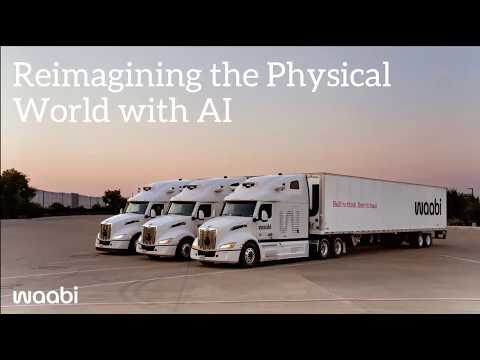
Search every verified Raquel Urtasun interview, podcast appearance, and on-the-record quote — each transcript cross-checked by AI and human review to confirm speaker identity. Raquel Urtasun, founder and CEO of Waabi, appeared at several industry events in late 2026 to discuss the company’s progress in autonomous trucking and its expansion into robotaxis. At TechCrunch Disrupt 2026, she argued that the development playbook used for large language models does not apply to physical AI, stating that safety must be proven before deployment in the real world. She also criticized some competitors for deploying driverless vehicles on public roads without full validation, calling such practices dangerous. In a CVPR keynote, Urtasun described a "physical AI revolution" and said self-driving is the most mature domain within it, announcing a partnership with Uber that she said involves a commitment to deploy more than 25,000 of Waabi’s robotaxis over the next couple of years. Urtasun also discussed Waabi’s commercial operations and scaling strategy. On The Trade Show podcast, she said the company has conducted commercial self-driving truck operations in Texas for nearly four years, with safety drivers still onboard, and that driverless trucks are expected early next year pending final validation. In an interview on the Autonocast podcast, she outlined three axes of commercial scalability—generalization across environments, vehicle types, and customers—and said early growth would be limited by OEM truck production capacity rather than technology or demand. She also stated that Waabi’s technology uses a single "brain" to drive both trucks and robotaxis, and that the company’s $1 billion in funding provides sufficient capital to execute its vision.

Recent appearances

Notable quotes

“There is a shortcoming that we are starting to see particularly on the tracking domain that comes from a lot of pressure from showing investors that you are actually advancing, or as a consequence of people not having enough money in the balance sheet to actually have large runways that will allow us to just focus on doing the right thing. What we are seeing is deploying driverless on public roads with platforms that”

“Over the last maybe four years, I think the world has had a lot of conversations about AI. But when you think about what are they talking about, they're talking about the digital version of what AI can do. That has really with large language models, it has really transformed the way that we interact with computers, but everything is in the digital world. Now think about bringing this technology to the physical world,”

“So if you look at self-driving trucks for almost four years or so, we've been doing commercial operations in Texas. So if you come to Texas, highway as well as surface street, it's very likely that you will see one of our self-driving vehicles on the road. What they still have today is a safety driver that is there really to monitor the vehicle and what is coming. Really early next year is that you will be able to se”

“So, there are there are three axes of scalability that are tremendously important from a commercial perspective. This is not just about a you know, it is not just about a science experiment or technology. It is truly a massive commercial advantage. So let me walk you through through these three things. Um uh on one side is about scalability or generalization across environments. M what do I mean by this is you know i”

“We have a massive partnership with Uber where they committed to deployment of more than 25,000 of our robot taxis. Just let that sink in for a second. More than 25,000 over the next couple of years. So robot taxis are going to be everywhere.”

“Point-to-point driverless technology is ready now. Level five, which is everywhere, is potentially a decade far along, but what you get with Waabi is this year point-to-point in general everywhere within Texas, next year the majority if not the entire Sun Belt, and then full US shortly after.”

The summary and quote tags on this profile are produced with AI assistance from verified, first-person interview transcripts, then checked by our team to confirm the speaker's identity and the accuracy of every quote. See how we verify →