
Amnon Shashua, Mobileye CEO: Fortt Knox Earnings
I speak with Mobileye CEO Amnon Shashua about the company's earnings and the outlook for adoption of self-driving and ...
Cofounder, OrCam Technologies
Search every verified Amnon Shashua interview, podcast appearance, and on-the-record quote — each transcript cross-checked by AI and human review to confirm speaker identity. Amnon Shashua, CEO and co-founder of Mobileye, has been discussing the company’s progress in autonomous driving and the broader state of AI. In earnings calls and press conferences, he stated that Mobileye’s inventory issues are behind them and that the company is experiencing over 15% year-on-year growth in chip shipments despite a slight decline in global vehicle production. He highlighted the rollout of Mobileye’s SuperVision system in China, with 300,000 vehicles already equipped, and announced design wins with Porsche and Audi for the next-generation EyeQ6 chip, expected in 2026. Shashua described Mobileye’s strategy as a hybrid approach between Waymo’s geofenced robotaxis and Tesla’s “YOLO” method, aiming for a low-cost, scalable system that uses cameras and radar rather than lidar. He noted that the company’s Chauffeur system will offer eyes-off highway driving at 130 km/h, while the robotaxi platform, based on the ID Buzz, is being tested in Munich. In academic and public lectures, Shashua has also addressed the limitations and dangers of large language models. He described current AI as a “knowledgeable idiot” that relies on massive overfitting and lacks true reasoning, though he acknowledged that machines can sample millions of attempts to improve problem-solving. He warned that adversarial prompts can trick language models and that aligning them with human values may be fundamentally difficult. Shashua predicted that regulation may eventually limit the length of human-machine conversations to prevent dangerous outcomes. He also expressed optimism that artificial general intelligence could emerge within a decade, but cautioned that the current technology is not yet capable of reaching expert-level performance in complex domains.

I speak with Mobileye CEO Amnon Shashua about the company's earnings and the outlook for adoption of self-driving and ...

AI Week 2024 @ Tel Aviv University: Keynote: Where is AI Heading? Amnon Shashua , World-Renowned Expert in AI; President ...
At the Ride AI 2025 summit, Dr. Amnon Shashua (CEO of Mobileye) unpacks the breakthroughs and roadblocks shaping the ...

Mobileye gave their annual presentation at CES 2025. CEO Prof. Amnon Shashua gave a presentation about their path to Level 5 ...

In his CES keynote, Now. Next. Beyond., Mobileye CEO and founder Prof. Amnon Shashua delves into how the fusion of ...

Join Avishai Abrahami, CEO & Co-Founder of Wix, as he engages in a fascinating dialogue with Amnon Shashua, ...

Amnon Shashua, Mobileye CEO, joins 'Closing Bell Overtime' to talk its investor day, growth drivers, and more.

Guest Lecture by Prof. Amnon Shashua: "The Excitement and Danger in Modern AI" Join Prof. Amnon Shashua, President & CEO of Mobileye and Professor of Computer Science at The Hebrew University of Jerusalem, as he dives into the transformative world of AI, discussing both the remarkable advancements and the potential risks that accompany this technology. This lecture was part of the 2024 Adams Seminar, marking the 20th anniversary of the Adams Fellowships in Memory of Mr. Marcel Adams, held on September 29, 2024, at The Israel Academy of Sciences and Humanities. For more information: https:/…

Watch “Mobileye: Now. Next. Beyond. at CES 2024, a Press Conference with Prof. Amnon Shashua, as he introduces a new ...
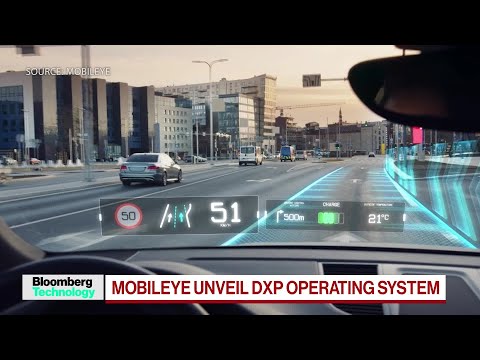
Mobileye CEO Amnon Shashua discusses the company's announcement of its DXP operating system. He speaks with Ed Ludlow ...


Artificial Intelligence began a new renaissance with the resurrection of deep convolutional networks in 2012, deep reinforcement ...
“No matter how detailed the reward function is, an AGI — if it is very, very intelligent — can find a corner in the solution space that I did not anticipate, and no matter how I try to avoid it it will also always find a corner in that space; we cannot guarantee this will never happen.”
“There are dangers from technological abuse like generating chaos on social platforms, undermining the democratic systems — all these AI bots, of course.”
Sign in to search the full transcript archive, filter by topic, and access every quote from Amnon Shashua.
The summary and quote tags on this profile are produced with AI assistance from verified, first-person interview transcripts, then checked by our team to confirm the speaker's identity and the accuracy of every quote. See how we verify →
Pro unlocks every transcript in full, plus unlimited search across every executive and company we cover.
50% off appliedPulling data at scale? The Data API gives you 30,000 transcripts a month over REST, MCP and JSON.
Compare all plans