CEOInterviews.AI
Start App
Try: AI strategy tariffs earnings guidance layoffs interest rates growth

Jonathan Ross

Chief Software Architect, Nvidia

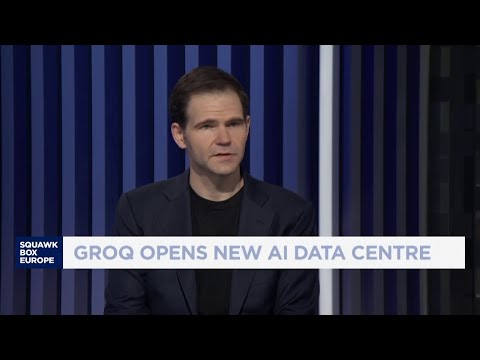
Search every verified Jonathan Ross interview, podcast appearance, and on-the-record quote — each transcript cross-checked by AI and human review to confirm speaker identity. Jonathan Ross, founder of Groq and inventor of Google's TPU, has been discussing the company's near-collapse and subsequent partnership with Nvidia. He described a period when Groq was about three weeks from running out of money and considered layoffs, but instead implemented a salary-for-equity exchange called "Groq bonds," which he said 80% of employees participated in, with about half reducing their salaries to the statutory minimum. Ross stated that this move saved the company. He also discussed a $20 billion partnership with Nvidia, describing it as combining GPUs and LPUs for better performance, analogous to using both 18-wheelers and delivery vans in a logistics network. Ross has spoken about the future of AI compute, stating that "as long as there are unsolved problems in civilization, we will have a need for more compute" and that "there's no way to satiate the appetite for intelligence." He has advocated for revamping education to focus on asking questions rather than providing answers, saying "if you can come up with the right question, AI can go answer it for you." Ross also distinguished between intelligence and sentience, defining sentience as "your rate of improvement in your intelligence" and suggesting that AI is creating a feedback loop that accelerates societal intelligence.

Recent appearances

Notable quotes

“We were about 3 weeks from running out of money at one point. We had an all hands and we put up World War II looking pictures of war bonds and we called it Grock bonds. Wasn't technically a bond. It was an exchange of salary for equity and we expected that we were going to have pretty high attrition and we actually didn't. 80% of the employees participated and I think about half went to the statutory minimum salary b”

“I think you're going to see many many smaller players making the chips because the stakes are so high and you're going to want to go with the people that you can depend with, especially as the costs are skyrocketing.”

“As long as there are unsolved problems in civilization, we will have a need for more compute. Right now, cancer isn't cured. People still get old. With AI becoming as inexpensive as it is, it's going to increase the demand for AI to the point where people are going to spend more and more on it. They're going to need more compute. And so I just think we're going to have this endless demand for compute.”

“Portability across architectures is diminishing and porting is no longer really an engineering inconvenience but is involved into more of like an economic handicap.”

“Training scales with the number of researchers and inference scales with the number of users; revenue comes from users, not researchers. If you are the best at inference you enable revenue for your customers and they're also going to buy more training hardware — it's a virtuous cycle.”

“When you buy energy, if you produce that energy from coal versus oil, it costs you about seven times as much per BTU; people won't overspend on something unless it gives them capability you can't get otherwise. If you're trying to code and you have to wait ten minutes for a result, you'll accept it only if you have no alternative, but if someone else gets results in five minutes they can do twice as many iterations p”

Other executives at Nvidia

The summary and quote tags on this profile are produced with AI assistance from verified, first-person interview transcripts, then checked by our team to confirm the speaker's identity and the accuracy of every quote. See how we verify →