CEOInterviews.AI
Start App
Try: AI strategy tariffs earnings guidance layoffs interest rates growth

Michael Barr

Vice Chair for Supervision, Federal Reserve Board Of Governors

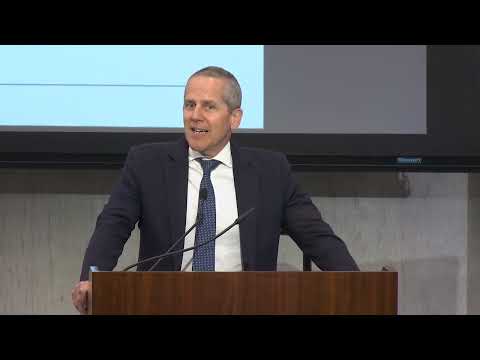
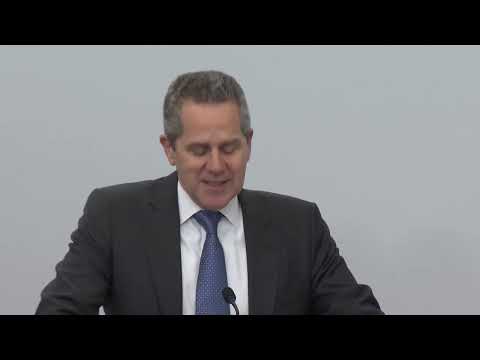
Search every verified Michael Barr interview, podcast appearance, and on-the-record quote — each transcript cross-checked by AI and human review to confirm speaker identity. Michael S. Barr, Vice Chair for Supervision at the Federal Reserve Board of Governors, delivered speeches and participated in a fireside chat in February and July 2026 on the potential economic and social effects of artificial intelligence (AI). In his remarks, Barr discussed scenarios where AI could either empower lower- and middle-income workers by boosting productivity or exacerbate inequality by eliminating certain jobs while concentrating gains among higher-income individuals and large firms. He noted that AI's reliance on data, computing power, and model improvements could reinforce market concentration, potentially allowing a small number of "hyperscaler" firms to dominate, and he cited a 2025 paper by Anten Coronk and High Vipra on this dynamic. Barr emphasized that the future impact of AI on inequality is uncertain and would depend on policy choices in areas such as education, job training, competition, and tax policy. He stated that generative AI could help overcome inequality and promote financial inclusion, but only if pursued with intentionality and purpose. In the fireside chat, he also cautioned that without strong guardrails, AI could reinforce societal biases and worsen credit access outcomes for low-income individuals. Barr referenced his 2012 book "No Slack" and the concept of scarcity to illustrate the financial challenges faced by low-income Americans.

Recent appearances

Verified interview transcripts

Notable quotes

“The policy challenge is therefore not simply to observe the development and deployment of AI, but also as a society to consider policies related to AI and its effects on education, job training, and workforce development, competition, tax policy, and other areas that may allow the gains from AI to be shared across workers, households, and communities rather than accruing to a small group of firms and investors.”

“AI has the potential to transform lives and the US economy, possibly empowering workers to be more productive with lower and middle income workers perhaps benefiting the most. But it is also the case that AI may instead exacerbate inequality, eliminating some lower and middle income jobs while boosting the income and wealth of higher income individuals.”

“It is possible that generative AI can help overcome inequality in our society and help promote financial inclusion, but only if we decide to do that with intentionality and purpose.”

“AI, if there aren't really good guard rails, might reinforce the biases that we already have in our society and result in worse outcomes in terms of credit access. So that's a second area that you know we would really need clear guard rails before you'd want a financial institution to use AI in credit decision-making.”

“It is unclear whether AI will reduce or increase income and wealth inequality. But society can begin making choices now that can affect that outcome. Decisions on AI policy, education, worker training, and workforce development, competition, tax policy, and other areas will help determine this outcome. But future inequality will depend not only on what AI can do, but also on what we choose to do with AI.”

“The policy challenge is therefore not simply to observe the development and deployment of AI, but also as a society to consider policies related to AI and its effects on education, job training, and workforce development, competition, tax policy, and other areas that may allow the gains from AI to be shared across workers, households, and communities rather than accruing to a small group of firms and investors.”

Other executives at Federal Reserve Board Of Governors

The summary and quote tags on this profile are produced with AI assistance from verified, first-person interview transcripts, then checked by our team to confirm the speaker's identity and the accuracy of every quote. See how we verify →