
Derek Dicker & Vik Malyala | Beyond the GPU
In this interview from Beyond the GPU: The Full-Stack Fight for Enterprise AI 2026, Derek Dicker, corporate vice president of the ...
Senior VP, MD & President of the EMEA Division, Supermicro
Search every verified Vik Malyala interview, podcast appearance, and on-the-record quote — each transcript cross-checked by AI and human review to confirm speaker identity. Vik Malyala, Senior Vice President, Managing Director and President of the EMEA Division at Supermicro, has been discussing the company's AI infrastructure portfolio and the importance of balancing CPU and GPU architectures for enterprise AI workloads. In interviews and presentations, Malyala emphasized that AI infrastructure should not be viewed solely as a decision around GPUs, stating that CPUs, accelerators, memory, networking, storage, cooling, software, and rack integration must work as one system. He noted that with the rise of agentic AI, workloads on the CPU can impact 50 to 90 percent of latency, and called it "a criminal waste not to have the best computation" for orchestration. Malyala also highlighted the rapid pace of technology refresh, which he said is now less than a year, while typical data center projects take 12 to 24 months, creating a fundamental challenge where infrastructure can become outdated before deployment. At COMPUTEX 2026, Malyala showcased Supermicro's next-generation platforms powered by NVIDIA, AMD, Intel, and ARM processors, including the Vera Rubin, HGX B300, and AMD Helios systems. He described the AMD Helios as a "beast" and a "massive 7,000 lb machine." Malyala also discussed the company's data center building block strategy, which includes liquid cooling, rack-scale systems, and infrastructure management software. He referenced estimates of $1.5 trillion in IT infrastructure spending, calling it a "big number," and noted that customers are increasingly exploring on-premises deployment after seeing the costs of public cloud services. Malyala added that Supermicro is working with partners such as AMD to co-design systems that can be quickly taken from proof of concept into production.
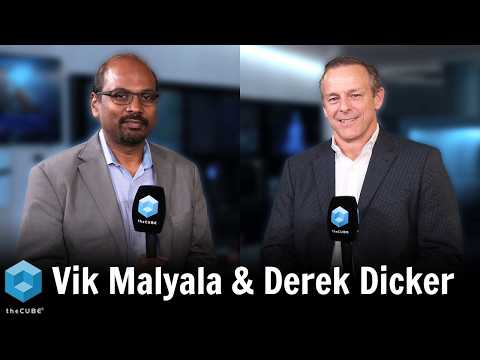
In this interview from Beyond the GPU: The Full-Stack Fight for Enterprise AI 2026, Derek Dicker, corporate vice president of the ...

Vik Malyala, Supermicro | AMD Advancing AI 2026 00:00 - Intro 00:02 - Navigating AI Leadership and Industry Transformation 04:08 - AMD's Role in AI and Partnering Strategies 06:41 - Demand for GPUs and Broad AI Adoption 08:43 - Configurability and Scalability in AI Systems 11:57 - Co-design and Engineering with AMD 15:41 - Optimizing Helios: Balancing Demand and Overcoming Data Center Limits 18:19 - Strategies for Sustainable Market Growth and Innovative User-Centric Design
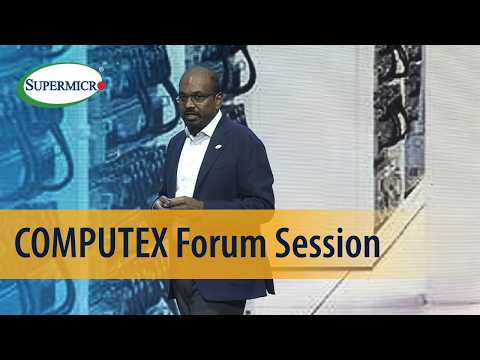
While surging AI demand is raising Data Center complexity, Supermicro is introducing Data Center Building Block Solutions® and ...

Supermicro unveils its latest AI infrastructure portfolio, featuring next generation platforms powered by NVIDIA, AMD, Intel, and ARM. In this exclusive interview with Vik Malyala, Chief Business Officer, President & Managing Director EMEA, Technology & Solutions, Supermicro, discover how the company is advancing AI data centers with liquid cooling, rack scale systems, AI workstations, storage, networking, and infrastructure management. Key Highlights 🟨 Supermicro showcases AI platforms powered by NVIDIA, AMD, Intel, and ARM processors. 🟩 Vera Rubin, HGX B300, AMD MI350, MI355, and upcoming H…

Bring AI to customers at scale, from small enterprises to large data centers— Vik Malyala, Supermicro EMEA.

Vik Malyala, Senior Vice President at Supermicro, shares how democratizing AI starts with getting hardware and platforms into the ...

In this interview from SC25, Vik Malyala from Supermicro joins theCUBE's John Furrier and Jackie McGuire to discuss the ...

At OCP Global Summit 2025, Vik Malyala, SVP of Technology and AI at Supermicro explores some of Supermicro's OCP-inspired ...

Intervista a Vik Malyala, President & Managing Director EMEA, SVP Technology & AI di Supermicro durante l'evento AI, HPC ...

Most people think building AI infrastructure is all about software. But the real bottlenecks? Power, cooling, and optimizing ...

Vik Malyala, President & MD of Supermicro, speaks with TECHx Media at COMPUTEX 2025, reveals the company's strategic ...

Recorded live at AI INFRA SUMMIT 2025 — Microsoft Silicon Valley Campus Supermicro's Vik Malyala breaks it down: the future ...
“They're talking about around 1 and 1/2 trillion dollars of IT infrastructure spend. 1 and 1/2 trillion dollars, which basically means it could be a conservative number, it could be aggressive number because I have seen numbers going three or four trillion also, but fact is that it's a big number that we all are exposed to.”
Sign in to search the full transcript archive, filter by topic, and access every quote from Vik Malyala.
The summary and quote tags on this profile are produced with AI assistance from verified, first-person interview transcripts, then checked by our team to confirm the speaker's identity and the accuracy of every quote. See how we verify →
Pro unlocks every transcript in full, plus unlimited search across every executive and company we cover.
50% off appliedPulling data at scale? The Data API gives you 100,000 transcripts a month over REST, MCP and JSON.
Compare all plans