
Unpacking the Strategy Behind Synaptics Astra SL2610 Launch
How is Synaptics shaping the future of Edge AI In this conversation, Vikram Gupta, SVP & GM, IoT Processors and Chief Product ...
Senior Vice President, GM of IoT Processors & Chief Product Officer, Synaptics
Search every verified Vikram Gupta interview, podcast appearance, and on-the-record quote — each transcript cross-checked by AI and human review to confirm speaker identity. Vikram Gupta, Senior Vice President, GM of IoT Processors and Chief Product Officer at Synaptics, has been active in discussing the company's edge AI strategy throughout 2024 and 2025. In November 2025, he announced the launch of the Astra SL2610 series of Linux processors, which he described as featuring a dual-core Cortex-A class SoC with a 3D GPU and an NPU developed in collaboration with Google. Gupta stated that the company decided to develop its own AI hardware accelerator IP rather than licensing off-the-shelf IP, and that it is incorporating Google's Coral NPU into all future Synaptics processors. He said the company plans to open-source its AI hardware and software to enable ecosystem development. At Embedded World 2025, Gupta introduced the Astra SR100 series of AI-enabled microcontrollers, describing them as a new line of MCUs designed with a "geared" approach to power consumption, with different levels of intelligence and power usage. He stated that the SR100 series consumes about 100 milliwatts in its highest performance state)Skip Gupta has also spoken about the broader industry trends driving edge AI adoption, citing latency, privacy, and energy consumption as key factors. He has emphasized the importance of security in IoT devices, noting that the SL2600 series includes PSA Level 3 security. In a panel discussion at Synaptics Tech Day 2025, Gupta said that "edge AI is the new frontier" and that the company's SL2610 family of products represents rapid progress in making AI work efficiently at the edge. He has also discussed the company's approach to making AI "frictionless" for customers by offering models, helping with model optimization, and providing a framework for customers to make their own modifications.
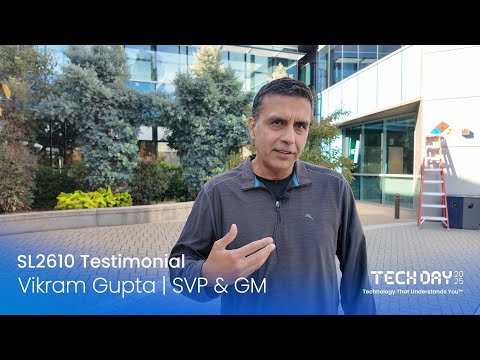
How is Synaptics shaping the future of Edge AI In this conversation, Vikram Gupta, SVP & GM, IoT Processors and Chief Product ...

In this special Synaptics Tech Day 2025 panel, EE Times Editor-In-Chief Nitin Dahad moderates a powerhouse discussion ...

At Embedded World 2025, Vikram Gupta, Chief Product Officer at Synaptics, introduced the company's latest innovation: the Astra ...

It's been almost a year since Synaptics launched its Astra architecture. Hear what's happened to the AI platform since that time.

What does it take to build a ₹5500 crore venture fund with a uniquely Indian approach using a model inspired by Ivy League ...

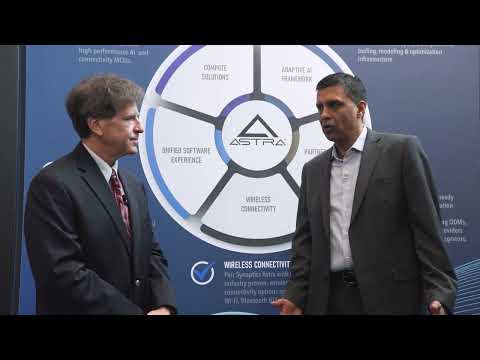
Rich Nass, EVP of Embedded Computing Design, spends a few minutes with Synaptics' Chief Product Officer, Vikram Gupta ...
Sign in to search the full transcript archive, filter by topic, and access every quote from Vikram Gupta.
The summary and quote tags on this profile are produced with AI assistance from verified, first-person interview transcripts, then checked by our team to confirm the speaker's identity and the accuracy of every quote. See how we verify →
Pro unlocks every transcript in full, plus unlimited search across every executive and company we cover.
50% off appliedPulling data at scale? The Data API gives you 30,000 transcripts a month over REST, MCP and JSON.
Compare all plans