
Meet Your New Teammate, AI: Asana’s Saket Srivastava
Saket Srivastava, CIO at work management platform Asana, has had technology roles at organizations such as General Electric, ...
Head of Enterprise Technology, Asana
Search every verified Saket Srivastava interview, podcast appearance, and on-the-record quote — each transcript cross-checked by AI and human review to confirm speaker identity. Saket Srivastava, CIO of Asana, has been discussing the role of generative AI in the workplace and the evolving responsibilities of technology leaders. He stated that Asana has decided to become an "AI-first company," with the goal that the average worker should be able to leverage generative AI capabilities within the product. Srivastava described AI as a "teammate" that can automate tasks such as writing status reports, which he said can free workers to focus on more strategic work. He cited Asana's research indicating that an average worker spends 50–55% of their time on "work about work," and suggested that AI could reduce that waste. Srivastava also emphasized that accountability should remain with humans, saying "AI can be that sort of muscle and the human can be that brain and that heart." Srivastava has also commented on the changing role of the CIO and workforce dynamics. He described the current period as "perhaps the best time to be the CIO," noting that the role is increasingly about being a business leader, strategist, and architect who works cross-functionally. He argued that the CIO organization must take an active role in guiding employees on which digital tools to use and how work flows between them. Regarding remote and hybrid work, Srivastava said that no decision will please everyone, but the key is to define the first principles behind the decision and bring the company along on that journey. He also discussed the challenge of "shadow IT" from the proliferation of SaaS tools, advocating for standardization on a few platforms like a data warehouse while using best-of-breed solutions for strategic differentiation.

Saket Srivastava, CIO at work management platform Asana, has had technology roles at organizations such as General Electric, ...

On the 37th episode of Enterprise Software Innovators, hosts Evan Reiser (Abnormal Security) and Saam Motamedi (Greylock Partners) talk with Saket Srivastava, CIO of Asana. Asana is a leader in project management platforms, allowing teams to stay organized, communicate effectively, and achieve their project goals efficiently. Asana has more than 130,000 customers in over 200 countries across the globe. In this conversation, Saket reflects on the dynamic role of AI in business, strategic considerations informing technology adoption, and how enterprises can best embrace the digital frontier. 00…

On this episode of The Analytics Edge (sponsored by NetSpring), Asana CIO Saket Srivastava explores how the future of work will be impacted by technologies like self-service analytics and Generative AI. Saket shares Asana’s research findings that show 50-55% of our time is spent working on work versus more productive output, and delves into Asana’s vision for improving work efficiency with AI. He also discusses how data leaders should be thinking about the consumerization of enterprise software and the data needed to drive product-led growth, shadow IT as business teams continue acquiring self…
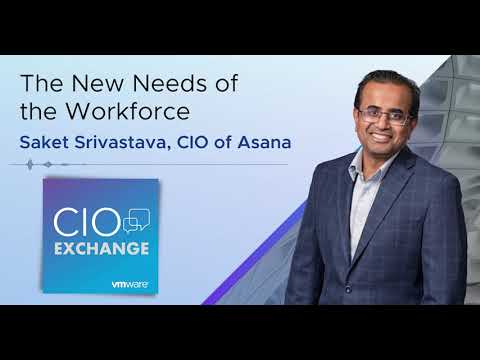
It's difficult to create the right operating model in a post-pandemic work environment. Whether your workforce is remote, hybrid, ...
Sign in to search the full transcript archive, filter by topic, and access every quote from Saket Srivastava.
The summary and quote tags on this profile are produced with AI assistance from verified, first-person interview transcripts, then checked by our team to confirm the speaker's identity and the accuracy of every quote. See how we verify →
Pro unlocks every transcript in full, plus unlimited search across every executive and company we cover.
50% off appliedPulling data at scale? The Data API gives you 30,000 transcripts a month over REST, MCP and JSON.
Compare all plans