CEOInterviews.AI
Start App
Try: AI strategy tariffs earnings guidance layoffs interest rates growth

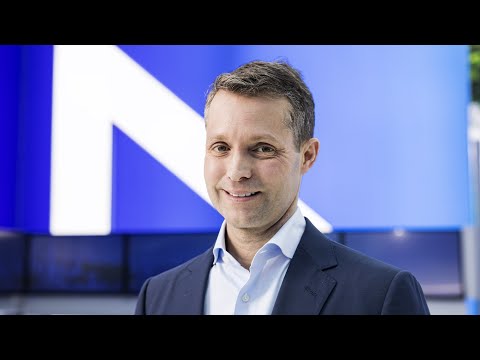
Justin Hotard

President and Chief Executive Officer, Nokia

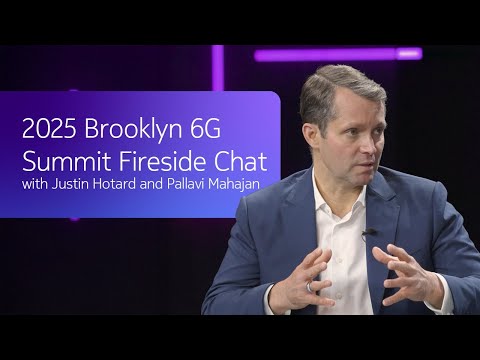
Search every verified Justin Hotard interview, podcast appearance, and on-the-record quote — each transcript cross-checked by AI and human review to confirm speaker identity. Justin Hotard, President and CEO of Nokia, has recently emphasized the company's role in the AI infrastructure buildout, describing it as providing optical and IP networking technology that connects AI data centers, as well as mobile-network equipment for applications like robotics and autonomous vehicles. In an October 2026 interview with CNBC, he stated that AI demand remains in its early stages, with customers constrained by power, silicon, and supply rather than a lack of interest, and he predicted that 6G services could arrive faster than the end of the decade. He also discussed Nokia's acquisition of Infinera, calling it a "1 + 1 = 10" example where the combined optics division, including legacy Alcatel assets, creates a unique position from systems down to semiconductor manufacturing. At the Helsinki Security Forum in October 2026, Hotard participated in a panel on Europe's technological sovereignty alongside ICEYE CEO Rafal Modrzewski, where he argued that sovereignty without competitiveness leads to isolation and that interdependence is necessary. He also commented on the technology race with China, stating that China had closed its doors to Western telecoms years ago, which led Nokia to align its engineering resources where it has business, while maintaining its technology licensing operations there. In a September 2026 interview, he highlighted partnerships, including one with Google, as part of Nokia's strategy to be a trusted connectivity infrastructure provider, and he stressed the importance of trusted networks in the context of security and physical AI.

Recent appearances

Verified interview transcripts

Notable quotes

“I've been pretty vocal on this at a couple levels, but let me take an example of doing this right in Europe. But I'm going to pick Finland. Finland has a great history of technology companies, not just Nokia, but you've got a quantum company IQM there that just recently went public. You've also got internet gaming companies. If you look across the cycle, Finland's got a great group of technology companies. It really ”

“The demand we have is still very early. AI is quite early, but it's a third of the internet traffic we see already. It's already massive in terms of the amount of data it's consuming. It's much richer than what we've seen in prior. And it reminds me, we talked about Nokia on the phone days. It's a little bit of the same experience, right? Looking back at history of, you know, the internet was so much more data than w”

“I think Rafal summarized it well. It's very complex, but I what I would say is a couple things. First of all, there is no story of complete independence. In fact, the only place maybe that will exist at some point is China. But even there it does not exist today. So if you look at this, we are in a world of interdependence. And the key thing for me is picking the control points. One of the things if you look at what ”

“I think many of the comments that Rafal made are similar. I would say there's also a view of a technology race, right? Particularly with AI, the focus, there's a lot of discussion today in the media about the risks of AI. There's not enough discussion about the risk of losing this race and the risk of losing this race means more capable technology on the adversarial side and on the in the warfront. So if you think ab”

“I think today they own a very valuable asset, which is the access network. And you know, our research suggests that over 50% of the traffic right now in AI is being generated on mobile. So, it's in their networks today. Um the question is how they capitalize on it. This is why, you know, at this show and you know, our big conversation is around designing AI native networks. Not recognizing that first of all, you can'”

“I don't see the super cycle crashing. Will growth slow at some point? I mean, of course, right? We just know that the math of physics and all of this. It's also, you know, but I think a few things. First of all, when you look at it, you know, the demand has actually been constrained from the outset of the ChatGPT moment. You know, first it was GPUs, then it was energy, now it's memory. There's been pressure. And you ”

The summary and quote tags on this profile are produced with AI assistance from verified, first-person interview transcripts, then checked by our team to confirm the speaker's identity and the accuracy of every quote. See how we verify →