
Glenn Saldanha on Innovation & Product Evolution: Candid and Ascoril
In an interview for the India Pharma Archives Oral History Project.
Chairman & Managing Director, Glenmark Pharmaceuticals Limited
Search every verified Glenn Saldanha interview, podcast appearance, and on-the-record quote — each transcript cross-checked by AI and human review to confirm speaker identity. Glenn Saldanha, Chairman and Managing Director of Glenmark Pharmaceuticals, discussed the company's recent performance and strategic direction in Q1 FY27 earnings calls and interviews. He reported consolidated revenue growth of 23.1% year-over-year, with base business growth exceeding 18% when excluding deferred income from the ISB 2001 deal. Saldanha noted that India formulation sales grew 15.5% and the US business grew 19.8%, while acknowledging that elevated API and logistics costs due to geopolitical situations could pressure gross margins. He maintained the company's FY27 EBITDA margin guidance of 21-22%, stating that new launches and India business strength would offset cost pressures. Saldanha also spoke about Glenmark's innovation pipeline, describing the ISB 2001 molecule as a "world-class product" and the largest deal out of India with a $700 million upfront payment. He characterized the deal as putting India on the global innovation map, comparing it to developments in China. Regarding the ISB 2301 asset, he described it as a "penta specific" targeting NK cells and activating T cells, stating the company would wait for clinical data before considering partnering. Saldanha also discussed plans to grow branded products in Europe from roughly 30% of revenues to about 60% over five years, and outlined investments in oncology commercial capabilities in emerging markets ahead of anticipated launches of amlotinib, trastuzumab, and enva folimab, which he estimated could generate $500-600 million over five to six years.

In an interview for the India Pharma Archives Oral History Project.
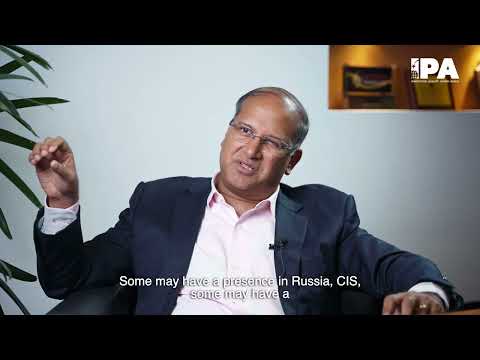
In an interview for the India Pharma Archives Oral History Project.

In an interview for the India Pharma Archives Oral History Project.

In an interview for the India Pharma Archives Oral History Project.

In an interview for the India Pharma Archives Oral History Project.

In an interview for the India Pharma Archives Oral History Project.

Full Glenmark Pharmaceuticals Limited (GLENMARK) Q1 FY27 earnings call — concall recording with management commentary. 📈 Growth: Base business grew 18% excluding deferred income; India outperformed IPM at 15.5% growth while US grew 19.8%. ⚠️ Risks: Elevated API and logistics costs due to geopolitical situations threaten near-term gross margin stability. 🎯 Outlook: Management maintains FY27 EBITDA margin guidance of 21-22% and expects 12-15% India growth. Stock: GLENMARK | Sector: Pharmaceuticals Glenmark Pharmaceuticals Limited share news | Glenmark Pharmaceuticals Limited share latest news…

Glenmark Pharmaceuticals Ltd | Q1FY27 Earnings Concall | Results Conference Call Hello Investors, Welcome to India Concall ...

Listen to the complete Glenmark Pharmaceuticals Q1 FY27 Conference Call, featuring the management's discussion on quarterly ...

Listen to the Glenmark Pharmaceuticals Q1 FY27 Earnings Conference Call to hear key management insights, financial ...

Conference Call with Glenmark Pharmaceuticals Management and Analysts on Q1FY27 Earnings Performance and Outlook. Get the Earnings/Conference Calls podcast: https://trendlyne.com/feeds/earning-c... To download the Trendlyne app: https://play.google.com/store/apps/de... All earnings transcripts: https://trendlyne.com/earnings-transc...

Listen to the Glenmark Pharmaceuticals Q4 FY26 Earnings Conference Call to hear key management insights, financial performance highlights, and strategic outlook for the quarter. Explore transcripts, summaries, and analysis of thousands of listed companies on - https://www.concall.in 📊 Stay updated with company earnings, financial results, and management commentary — all in one place. 🔔 Subscribe to our channel for more quarterly earnings calls and corporate updates from Indian listed companies.
“I'm hoping that in this next decade capital markets will evolve right to looking at innovative assets very differently than they did in the last decade or two decades right. So that transformation will happen we need a few more successes you know like our deal with Abby you know landmark deal $700 million up front that built a lot of confidence and I think if we have a few more successes coming out of India you will ”
“you know markets capital markets will do their own thing right uh I'm hoping that in this next decade capital markets will evolve right to looking at innovative assets very differently than they did in the last decade or two decades right u so that transformation will happen we need a few more successes you know like our deal with Abby you know landmark deal $700 million up front that built a lot of confidence and I ”
“If you look at China u as you rightly said you know 25 years they were they were nowhere right in the in the space and what they did was they leapfrogged the generic industry completely right India dominated that space and um you know rightly so we're now the pharmacy of the world but uh they actually focused a lot of their energies on on the innovation aspects right and uh coming up with uh competing with the US for”
“The other critical element that I've seen right what why many of the other countries are so successful take China for example right in a very short time in in 20 25 years many of those companies have transformed themselves right from being generic companies to being innovative led companies and part of the reason for that is uh is you know the the government itself has reimbursement of expensive medicines right so al”
“So the multiple myoma market today is about uh $30 billion estimated to be about 50 billion by 2030 uh globally. So um when you look at uh the market size is very large. Uh in terms of royalty payments uh typically some of the novel drugs have a life of at least 15 20 years of of exclusivity. Um so the royalty payments can be significant uh as and when these drugs come to market.”
“That's correct. So we get a $700 million payment uh up front uh and uh as soon as we get regulatory approvals uh that money will be received by us. The the milestones the $1.2 plus billion dollars of milestones are spread into clinical development milestones. So as the molecule progresses to clinics we keep getting milestones, regulatory milestones. So as the molecule gets filed in various markets we get and approved”
Sign in to search the full transcript archive, filter by topic, and access every quote from Glenn Saldanha.
The summary and quote tags on this profile are produced with AI assistance from verified, first-person interview transcripts, then checked by our team to confirm the speaker's identity and the accuracy of every quote. See how we verify →
Pro unlocks every transcript in full, plus unlimited search across every executive and company we cover.
50% off appliedPulling data at scale? The Data API gives you 30,000 transcripts a month over REST, MCP and JSON.
Compare all plans