
The Optimization Era: Engineering the AI-Native Revolution | Interview with Howie Xu 🎙️
AI demos are flashy. Building a production-grade organization is a "multi-year grind." In this session of The Optimization Era, we're ...
AI and Innovation, Gen Digital
Search every verified Howie Xu interview, podcast appearance, and on-the-record quote — each transcript cross-checked by AI and human review to confirm speaker identity. Howie Xu, chief AI and innovation officer at Gen Digital, has been a frequent speaker on AI adoption and the future of software engineering. In interviews and panel discussions throughout 2025 and early 2026, he argued that the programming tasks of the last decade will be "taken over by AI almost completely" within five years, though he distinguished this from the broader role of software engineering, which he said involves architecture and design decisions that remain human-driven. He described the current moment as the "very early beginning" of the AI revolution, comparing it to the early days of electricity and noting that it took 30 years for the true value of electricity to emerge. He also predicted that the default browser for 70% of people will not be Chrome in 10 years, citing the need for an "AI native browser" that rethinks how users interact with the digital universe. Xu has been involved in launching the Neo browser, an AI-native browser, and hosts "The Neo Show" and "Byte into the Future." In multiple appearances, he stated that the "browser war is real" and that Google's business model creates a conflict of interest that prevents Chrome from fully embracing AI-native features. He has also discussed the impact of AI on support and coding, calling these "two major applications for AI that's going to make a huge difference almost in every company." He emphasized that

AI demos are flashy. Building a production-grade organization is a "multi-year grind." In this session of The Optimization Era, we're ...

In this segment from the theCUBE + NYSE Wired: AI Factories - Data Centers of the Future event, Howie Xu, chief AI officer of Gen Digital, joins theCUBE’s John Furrier to discuss the rapid evolution of artificial intelligence from the "ChatGPT moment" to physical reality. Drawing on his deep industry experience, including the early days of Netscape, Xu draws parallels between the historic browser wars and the emerging battle for the "AI interface," predicting a shift where AI companions act as the new operating system for digital life. The conversation explores the concept of AI factories, ana…
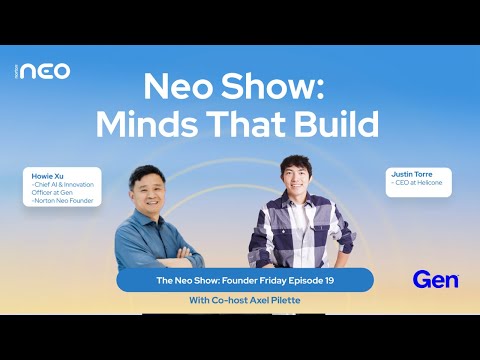
Justin Torre is the Chief Executive Officer and Co-Founder of Helicone (YC W23), a startup focused on building infrastructure to help developers monitor and analyze large-language-model usage. With a background as a full-stack developer and a passion for “builder” culture, he has guided Helicone from its inception through rapid growth—publicly sharing milestones such as 1.6 billion model requests processed and millions of dollars spent on the platform.

Lexi Reese, co-founder and CEO of Lanai, joins Howie Xu to discuss how AI is transforming the workplace. She shares how Lanai ...

Phil Pergola is the CEO of CloudZero, a FinOps platform that helps engineering and finance teams see how cloud and AI ...

Ondrej Dusek is the founder and CEO of Crreo.ai, an AI video creation platform that automates the full production pipeline—from scriptwriting to visuals, voiceover, and editing—to help creators turn ideas into long-form, publish-ready videos in minutes. Before Crreo, he was a Partner at McKinsey & Company, and he has ties to Northwestern University’s ecosystem (Kellogg; The Garage’s Ignite Accelerator). Under his leadership, Crreo has rolled out capabilities like multi-language voiceovers (170+ voices) and evolving “Kine” video models aimed at higher visual fidelity and creator control.

Gagan Biyani is an American entrepreneur and marketer best known as the co-founder and CEO of Maven, a platform for cohort-based courses. He previously co-founded Udemy, which has grown into one of the world’s largest online education marketplaces, and later founded Sprig, a venture-backed meal delivery startup. Beyond founding companies, he has advised firms like Lyft on growth and marketing, and he frequently shares insights on startup culture, product-market fit, and scaling. His career reflects a consistent focus on education, technology, and building communities around expertise.

Saket Saurabh is the Co-founder and CEO of Nexla, a company that specializes in automating data operations through an AI-powered platform. With a background in computer science from IIT Kanpur and an MBA from The Wharton School, Saket brings a blend of technical expertise and business acumen to the role. Prior to Nexla, he co-founded Mobsmith, a mobile advertising platform that was acquired, and has held roles at companies like NVIDIA. Under his leadership, Nexla has gained recognition for helping enterprises manage and scale their data workflows efficiently, earning accolades such as being na…

🚀 Welcome to The Neo Show: Founder Fridays, where we explore the future of the internet, AI, and the technologies reshaping how we live online. In this episode, host Howie Xu (Chief AI Officer at Gen Digital and Co-Host of Founder Fridays) sits down with Guru Chahal (Partner at Lightspeed Ventures and author of The AI Browser Wars) to unpack the battle for the next generation of browsers. 🔎 What you’ll learn in this episode: What exactly is an AI browser — and how it’s different from Chrome, Safari, and Edge Why the AI browser war is happening now and what’s at stake Guru’s perspective fr…
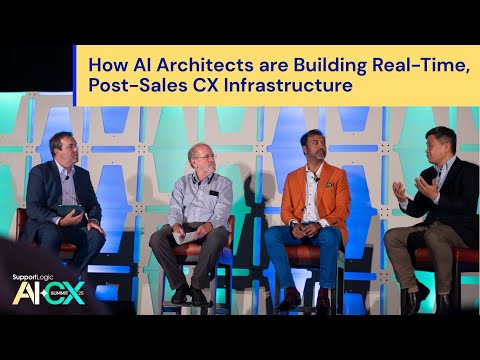
Two of the most respected AI leaders break down what actually works in enterprise AI. Bob Friday, Chief AI Officer at Juniper Networks HPE Networking, and Howie Xu, Chief AI Officer at Gen Digital and former head of AI at Palo Alto Networks and Zscaler, share hard-won lessons on customer experience, support operations, and modern AI stacks. Hosted by SupportLogic with Krishna Raj Raja. What you’ll learn: • Where AI drives real impact in CX and support • Agentic AI in practice and how to QA non-deterministic systems • Build vs buy for search, RAG, and agents • How to align product, support, an…

Dan Lorenc is the co-founder and CEO of Chainguard, a company focused on making software supply chains more secure by default. Before starting Chainguard, he worked at Google where he led open source security projects like Sigstore, SLSA (Supply-chain Levels for Software Artifacts), and Distroless containers, which are now widely adopted across the industry. He’s recognized as a thought leader in supply chain security, frequently contributing to open source communities and speaking at conferences about how to make building, verifying, and deploying software safer and more transparent.

Yuzheng Sun, PhD, is a Staff Data Scientist at Statsig and a leading AI educator who has worked at Meta, Amazon, Tencent, and BCG. With a PhD in Economics from Cornell, he combines industry expertise with teaching, reaching 250,000+ learners through his writing and his popular Maven course From Users to Builders. Known for making AI practical and accessible, Sun focuses on helping professionals move beyond using AI tools to actually building with them.
“I think the biggest issue with most of these tools which is being solved is just like capacity and cost uh which are going down. So a lot of these things are very expensive to run. So like a lot of our customers spend like tens of millions of dollars on like compute inference which is crazy. Um and uh and they're they're running these things um and they're slow. Um so I think like uh the biggest challenge we have is ”
“The Magnificent 7 makes up 30% of the S&P. ... if you scratch and sniff between how the Magnificent 7 increased profits, you will see 35% of that growth came from eliminating 160,000 jobs. 160,000 jobs between the Magnificent 7. They hold up 30% of the stock market. They are producing technology that the rest of the market can use to automate workflows.”
“AI is automating cognition. It's automating cognition. It's automating how we think. And it is going to displace by conservative estimates 800 million knowledge working jobs by 2030. There is no replacement theory for what those folks are going to do.”
“The go to market engineer's job is to look at all of this software and use either a combination of code, which our go to market engineers don't, but some do when you get really advanced, and a combination of just using these high-powered pieces of software to amplify the dollars in that you're spending on that team, right, to versus the output you're getting out of it. How many leads are you getting per $100,000 of e”
“I have always viewed AI as a very strong productivity companion for work and to automate away our the easiest tasks we have. But I also think it's dramatically overrated as a job replacement. It's a job enhancer.”
“I personally see that browser war is real. 10 years from now the default browser for 70% of people is not going to be chrome. Not even close. The reason is very simple. For the reason that guru just mentioned today, if you think about it, Google's revenue roughly $400 billion a year. And then search is a big part of that. A big part of that is actually sourced from Chrome. So anything they do with clone it has tremen”
Sign in to search the full transcript archive, filter by topic, and access every quote from Howie Xu.
The summary and quote tags on this profile are produced with AI assistance from verified, first-person interview transcripts, then checked by our team to confirm the speaker's identity and the accuracy of every quote. See how we verify →
Pro unlocks every transcript in full, plus unlimited search across every executive and company we cover.
50% off appliedPulling data at scale? The Data API gives you 30,000 transcripts a month over REST, MCP and JSON.
Compare all plans