
Wizz Air Q4 2026 Earnings Call | Annual Pre-Tax Profit Hits EUR 27M On Strong 70M Passenger Upswing
Wizz Air Q4 2026 Earnings Conference Call. If you find our work useful, please support us by purchasing a Super Thanks— it truly ...
Chief Executive Officer, Wizz Air
Search every verified Jozsef Varadi interview, podcast appearance, and on-the-record quote — each transcript cross-checked by AI and human review to confirm speaker identity. Jozsef Varadi, Chief Executive Officer of Wizz Air, discussed the company’s fiscal year 2026 results during an earnings call on June 11, 2026. He reported a pre-tax profit of EUR 27 million, a 16% year-on-year increase in revenue per available seat kilometer, and a 10% rise in passenger numbers to 70 million. Varadi noted that cash holdings exceeded EUR 2 billion, with leverage declining from 4.4 to 3.7, and described the company’s load factor of 36% as one of the highest in the industry, improving year on year. Varadi also addressed the company’s partnership with SpaceX for in-flight internet services, stating that the model is designed to keep costs affordable for passengers while enabling ancillary revenue opportunities. He said the arrangement avoids traditional operational expenses and capital expenditure profiles, and he expressed confidence that Wizz Air’s cash position would remain stable or potentially improve over the coming year, allowing the company to mobilize resources for market opportunities.

Wizz Air Q4 2026 Earnings Conference Call. If you find our work useful, please support us by purchasing a Super Thanks— it truly ...

"We've never done fuel surcharge and we will never do fuel surcharge. I don't think it works. At the end of the day, you have to manage capacity against demand and price accordingly to market requirements." Wizz Air CEO Jozsef Varadi on suspending flights to the Middle East

Descriere Youtube: Compania aeriană low-cost Wizz Air s-a dezvoltat inițial și a ajuns liderul pieței aviatice din România după numărul de pasageri transportați datorită traficului diasporei, dar în prezent acesta nu mai este factorul dominant, iar țara noastră trece către un mix mai echilibrat care include și turism, atât români care călătoresc în afară, cât și turiști străini care vin în România, spune József Váradi, CEO Wizz Air, într-un interviu în exclusivitate pentru Economedia și G4Media. Urmărește Economedia pe: Site oficial: https://economedia.ro Facebook: / economedia.ro Insta…

Compania aeriană low-cost Wizz Air și-a acoperit 80% din necesarul de combustibil pentru următoarele șase luni, astfel că este ...

Wizz Air Holdings Q3 2026 Earnings Conference Call. #earningscall #StockMarketNews #conferenceCall Earnings Call | Earnings Conference Call | Earnings concall | concall | quarterly results | Stock News | Full Year results | Fiscal Year results | investment news | stock latest news If you want us to remove your company's earnings call or any other conference call, please reach out to [email protected].

"We will have operating bases in Ukraine, going back to market. We believe that Wizz Air is set to be the hometown carrier for the Ukrainians, and we will act accordingly." Wizz Air CEO József Váradi on plans to return to Ukraine.
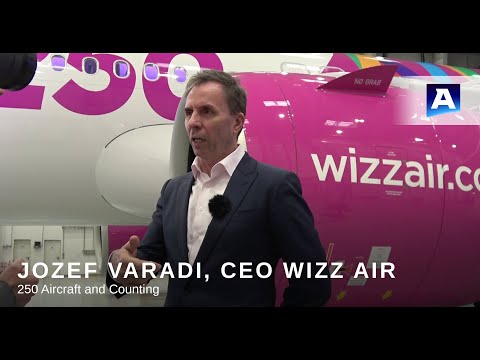
Wizz Air CEO Jozsef Varadi speaking to Alexander Bogoyavlenski in Budapest during Wizz Air event celebrating the delivery of its 250th plane, Airbus A321neo with a special livery. The Pratt & Whitney GTF engine issues, the A321XLR deferral and the new product offerings from Wizz, Nov, 28th, 2025, Budapest Ferenc Liszt International Airport.

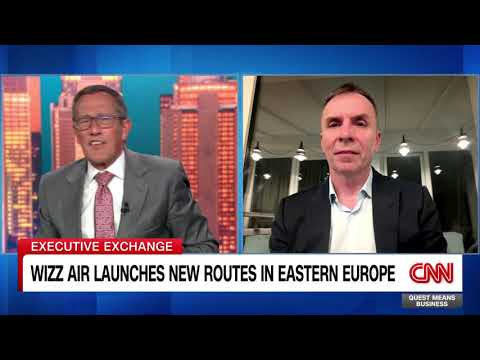
"Central East Europe continues to grow GDP, GDP translates into disposable income." Wizz Air CEO József Váradi on its new routes in Eastern Europe.

Wizz Air (LON: WIZZ) reported FY 2025 revenue up 4% and net profit of €214M. Join CEO József Váradi and CFO Ian Malin for insights on Pratt & Whitney challenges, network optimization, and FY 2026 outlook! ⏱️ Timestamps: 00:00 – Introduction by Operator 00:13 – CEO József Váradi: FY 2025 Overview and Strategic Outlook 09:28 – CFO Ian Malin: Financial and Operational Performance 34:50 – József Váradi: Network and Technology Strategy 1:03:46 – Q&A Session Begins 1:03:46 – RASK Outlook and CEO Redelivery Costs 1:08:46 – Cost Drivers and Medium-Haul Strategy 1:13:08 – RASK Dynamics…

"Leading an Airline in Extreme Growth: Jozsef Varadi , CEO of Wizz Air, on Challenges & Innovation ✈️🚀" 🎙️ In this episode of The Flying High Club, we sit down with Jozsef Varadi CEO of Wizz Air, one of the most radical challengers in the airline industry and a leader in extreme growth. 🔥 Key Highlights: Facing Challenges: Jozsef shares the biggest challenges Wizz Air faces in today’s competitive and dynamic aviation market. Why Industry Events Matter: Jozsef talks about the importance of events like the World Aviation Festival in fostering collaboration, innovation, and progress in aviat…
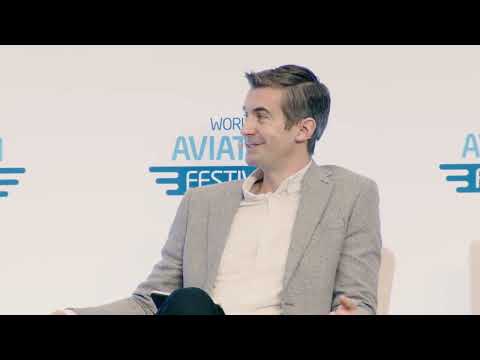
Keynote Interview with Jozsef Varadi, CEO of Wizz Air: Overcoming operational challenges to fuel future growth. Interviewed by Ben Thompson, Presenter, BBC.
“People are not going to go there. People are not going to go to the Middle East anytime soon. And people are not going to fly through the Middle East through Middle Eastern carriers simply just because of the level of uncertainties and unpredictability. I think European travel will pick up its pace. European travel will become more popular certainly this summer this year. I think people will look for European options”
“We have over 80% of our fuel requirement hedged over the next 6 months. So effectively whatever happens in the world, it doesn't really impact on us short term. Now of course over time if it keeps dragging for a long period, then we would have more impact. But as far as the short term is concerned, we are very well protected as we are hedged both on fuel and foreign exchange. So our business short term next 6 months ”
“the cost of flying is determined by the weight of the aircraft. The more luggage you bring, the higher the weight of the aircraft will be, the more cost you will create. So I think really what we are trying to do with our luggage policy and back policy is to be as democratic as possible. So you pay for what you use, you pay for the weight, what you add to the aircraft.”
“I think we have a specific issue in Europe. In Europe failure is not a very established standard. So when you fail you fail. In other places like I don't know like the United States actually you are more encouraged to fail.”
“the problem in in Europe is that Europe tends to over regulate uh it is very bureaucratic me I mean there is a problem we regulate it uh and that makes us uncompetitive in the end I'm pretty sure a lot of you read the the dragy report on Europe's competitiveness I mean it's pretty dire uh but I think it's is is a very fair assessment of what is what is happening so I think Europe will need to reinc its stands uh on v”
“so first the problem of ATC I see the problem of ATC is that this system has completely failed to integrate on a European scale uh it is seen as a expression of national sovereignity or whatever uh but it has nothing to do with economic efficiency operational effectiveness as a result the industry is paying a high price for that uh the geopolitical events are not helpful uh to the ATC operation let me just give you a”
Sign in to search the full transcript archive, filter by topic, and access every quote from Jozsef Varadi.
The summary and quote tags on this profile are produced with AI assistance from verified, first-person interview transcripts, then checked by our team to confirm the speaker's identity and the accuracy of every quote. See how we verify →
Pro unlocks every transcript in full, plus unlimited search across every executive and company we cover.
50% off appliedPulling data at scale? The Data API gives you 30,000 transcripts a month over REST, MCP and JSON.
Compare all plans