CEOInterviews.AI
Start App
Try: AI strategy tariffs earnings guidance layoffs interest rates growth

Pardis Sabeti

Professor, Harvard, Harvard University

Search every verified Pardis Sabeti interview, podcast appearance, and on-the-record quote — each transcript cross-checked by AI and human review to confirm speaker identity. Pardis Sabeti, a computational geneticist and professor at Harvard University, has continued to discuss her work on infectious disease surveillance and pandemic preparedness. In a 2026 interview, she described her team's efforts during the 2014 Ebola outbreak in West Africa, noting that they set up diagnostic testing in Sierra Leone and Nigeria and were among the first to detect cases there. She also discussed the Sentinel early warning system, which aims to detect and track viral threats, and expressed concern about the impact of cuts to global health funding on outbreak response efforts. Sabeti has said that the COVID-19 pandemic demonstrated both the potential of genomic technologies and significant gaps in the global response system, citing cultural and collaborative challenges as major obstacles. In earlier appearances, Sabeti has spoken about her research into how humans and pathogens evolve, including work on Lassa virus and malaria. She has advocated for open data sharing during outbreaks, describing how her team released Ebola genome sequences publicly during the 2014 epidemic to accelerate the global response. Sabeti has also discussed her perspective on biosecurity risks, stating in a 2024 podcast that she believes the next major event to impact humans could be a bioweapon, while emphasizing the importance of preparing for such threats. She has highlighted the need for training local scientists and health workers, particularly in Africa, as part of building sustainable surveillance capacity.

Recent appearances

  • Dr Pardis Sabeti - Sentinel

    What if we could find the next dangerous virus before it finds us? In this conversation, Gus sits down with geneticist Dr Pardis Sabeti to talk about Sentinel’s work hunting viruses, what we learned from Ebola and COVID, and why the systems designed to stop the next outbreak are now under threat from cuts to global health funding. A conversation about what’s at stake, but also what we already know works, and how science, technology and local networks could help us build a world that catches outbreaks before they become crises.

    Read the verified transcript → Watch on YouTube ↗

  • Pardis Sabeti | Paul & Daisy Soros Fellow | Geneticist & Infectious Disease Expert

    Meet Pardis Sabeti, a 2001 Paul & Daisy Soros Fellow and immigrant from Iran, whose groundbreaking work has transformed the fight against infectious diseases. With the support of the Fellowship, Pardis pursued her MD at Harvard Medical School, graduating summa cum laude, and has since become a trailblazing geneticist, professor at Harvard, and core institute member of the Broad Institute. Driven by a passion for understanding how humans develop resistance to infectious diseases, Pardis and her lab have created pioneering technologies to detect, track, and counter deadly pathogens like Ebola,…

    Watch on YouTube ↗

  • Dr. Pardis Sabeti | Iran Uncovered #12

    Pardis Sabeti is a computational biologist, medical geneticist, and evolutionary geneticist. She is a professor in the Center for Systems Biology and Department of Organismic and Evolutionary Biology at Harvard University, professor of Immunology and Infectious Disease at the Harvard T.H. Chan School of Public Health, core institute member at the Broad Institute, and an investigator of the Howard Hughes Medical Institute. Sabeti and her lab have pioneered technologies for detecting, tracking, and countering deadly pathogens, including Ebola, Zika, Lassa, and SARS-CoV-2. They have also created…

    Read the verified transcript → Watch on YouTube ↗

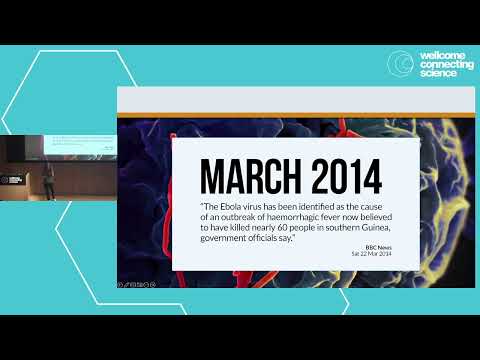
  • Pandemic preemption in the genomic and information age | Pardis Sabeti, Broad Institute, USA

    A keynote talk by Pardis Sabeti, Broad Institute, USA at Virus Genomics and Evolution 2023. A Wellcome Connecting Science conference.

    Watch on YouTube ↗

  • Interview with Harvard Biologist: How Pandemic has Changed Science | Pardis Sabeti | TEDxBoston

    Dr. Pardis Sabeti, a Harvard computational biologist and medical geneticist, sits down with John Werner to reveal talk about her experience as the director of an infectious disease research lab during the pandemic. Pardis Sabeti Computational Geneticist & Professor at Harvard University Dr. Sabeti is a computational geneticist with expertise developing algorithms to detect genetic signatures of adaption in humans and the microbial organisms that infect humans. Her lab’s key research areas include: (1) Developing analytical methods to detect and investigate evolution in the genomes of humans an…

    Watch on YouTube ↗

  • Rethinking the Future of Science (Stefan Oschmann, Pardis Sabeti, Sara Weber) | DLD All Stars

    Speakers: Stefan Oschmann, Chairman of the Executive Board & CEO, Merck Pardis Sabeti, Professor, Harvard University moderated by Sara Weber, Managing Editor DACH and Benelux, LinkedIn The Covid-19 pandemic has had the effect of alerting the entire world to the dangers of future viruses that could wreak even more havoc. Merck Group CEO Stefan Oschmann and Pardis Sabeti, Professor of Immunology and Infectious Diseases at Harvard University, discuss how advances in medicine can help us better prepare for future medical crises. The session was moderated by LinkedIn editor Sara Weber. DLD All St…

    Watch on YouTube ↗

  • Harvard College “Why Six Feet?” part one: Dr. Pardis Sabeti

    Harvard College student Liz Hoveland ’22 interviews Dr. Pardis Sabeti, Professor of Immunology and Infectious Diseases at the Chan School of Public Health. Among the topics covered were her experience with Harvard’s adaptation to the outbreak of mumps, and Harvard’s preparedness for the current pandemic.

    Watch on YouTube ↗

  • A virus detection network to stop the next pandemic | Pardis Sabeti and Christian Happi

    Visit http://TED.com to get our entire library of TED Talks, transcripts, translations, personalized talk recommendations and more. How can we stop the next pandemic before it starts? Disease researchers Pardis Sabeti and Christian Happi introduce Sentinel, an early warning system that detects and tracks viral threats in real time -- and could help stop them before they spread. Learn more about the cutting-edge technology that powers the system and how the Sentinel team is helping scientists and health workers during the coronavirus pandemic. (This ambitious plan is a part of the Audacious Pr…

    Watch on YouTube ↗

  • Pardis Sabeti - Genomic Surveillance and Response System for Infectious Disease Outbreaks

    Nov 7, 2018 - Pardis Christine Sabeti, recipient of the 2017 Richard Lounsbery Awardpresented the Lounsbery Lecture, "Genomic Surveillance and Response System for Infectious Disease Outbreaks" at the University Massachusetts, Boston. Long before Ebola erupted into a full-blown outbreak, it spread undetected. The consequences were devastating, yet the next pandemic—Zika—was already circulating under the radar. Oversights like this occur surprisingly often even in the best U.S. hospitals, where most infectious diseases are not properly diagnosed or tracked until it is too late. Health workers…

    Watch on YouTube ↗

  • Survival: Evolutionary Forces in Humans and Pathogens | Pardis Sabeti

    We are in the midst of a revolution in the fields of genomics and public health. The availability of genome-wide sequence and variation data and the ability to rapidly generate new data have created unprecedented opportunities to study human biology, evolution, and disease. These tools are making it possible to carry out studies in the microbial pathogens that affect humans, such as Lassa, Ebola and Zika virus. They also may be used to develop and apply methods to investigate natural selection in the human genome and build new computational tools for studies of genomics and public health. Thi…

    Watch on YouTube ↗

  • Dr. Pardis Sabeti: Sharing for the common good

    Harvard computational biologist, Dr. Pardis Sabeti, uses mathematics to decipher how deadly viruses spread.

    Watch on YouTube ↗

  • Pardis Sabeti, "Evolutionary Forces in Humans and Pathogens"

    The genome revolution has created unprecedented opportunities to study human biology, evolution, and disease, and is making it possible to carry out unprecedented studies in the microbial pathogens that affect humans. Sabeti lab’s research goals are to use the rapidly emerging resources to develop and apply methods to investigate natural selection in the human genome and study the genomic evolution of the microbial pathogens that affect humans including Lassa virus, Ebola, Plasmodium Falciparum, and Vibrio Cholerae.

    Watch on YouTube ↗

Notable quotes

“I think one of the great tragedies of the lab leak theory and all of that, I have my opinions, but I think publicly it's just not worth it at this point to weigh in on do I think it was real or natural or leaked or anything like that. Um, what I can tell you is it's pretty obvious nobody wanted it to be leaked if it was. Um, and so if if it in the worst case scenario, it was a mistake um uh that got out of control. U”

“I think that the work we do is really important for that reason. And unfortunately like my dad I can see bad things happening I can see them ahead of of me I think that you know we and um well I hope they never happen we have to be ready if they do. How do you prepare for how do you basically if the solution is not to shut down the science not to shut down this research how do you ensure that the good guys are better”

“I think that the next major event to impact humans is probably going to be a biosecurity risk. I think it's going to be a bioweapon. It is very very easy right now with genetic engineering and artificial intelligence to devise any pathogen that could affect you know humans and could wipe out large swaths of population could even be like group specific it's quite you know That's that's how you can pick a target audien”

Other executives at Harvard University

The summary and quote tags on this profile are produced with AI assistance from verified, first-person interview transcripts, then checked by our team to confirm the speaker's identity and the accuracy of every quote. See how we verify →