CEOInterviews.AI
Start App
Try: AI strategy tariffs earnings guidance layoffs interest rates growth

Philip Johnston

Co-founder & CEO, Starcloud

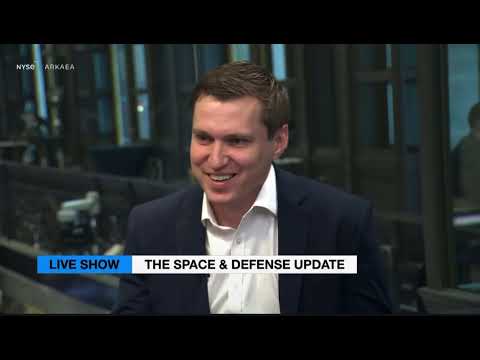
Search every verified Philip Johnston interview, podcast appearance, and on-the-record quote — each transcript cross-checked by AI and human review to confirm speaker identity. Philip Johnston, co-founder and CEO of Starcloud, appeared on the podcast Conversations in Action in October 2026, where he discussed the company's plans to move AI data centers into orbit. He predicted that within ten years, most new compute capacity would be built in space, describing the potential scale as the largest infrastructure project ever. During the episode, he elaborated on Starcloud's FCC filing for 88,000 satellites, the role of Starship in reducing launch costs, and technical challenges such as cooling chips and radiation protection. The conversation also covered Dyson swarms, the Fermi paradox, and the Fermi Explorer mission's proposed journey to Alpha Centauri. Johnston expressed openness to the idea that advanced civilizations might not necessarily build Dyson swarms, citing alternative computational approaches. In a September 2026 appearance on TVN's Ultra Dome, Johnston discussed a recent funding development, stating that Starcloud had raised a $250 million Series A extension at a $2.3 billion valuation, with Nvidia investing $25 million and Cisco also participating. He said the raise was intended to secure launch bookings for 2028 and 2029 and to strengthen the company's balance sheet ahead of partnerships with large data center companies. Johnston also commented on the broader capital landscape for AI infrastructure, suggesting that capital availability could become a limiting factor for the industry.

Recent appearances

Verified interview transcripts

Notable quotes

“I think I'm slightly less dismissive than I was of your view that perhaps there's intelligence. We're stuck in a galactic zoo. What what I'm out of curiosity, it's it's just the three of us, no one else listening. What did Sean have to say on the Firmeny paradox? Uh well his view is that there's a greater than 10% chance that the galactic zoo hypothesis is correct which still means let's say let's say it's at 10% tha”

“Within 10 years, I think most new compute capacity will be being built in space. Within 10 years that's likely to be on the order of a trillion dollars a year of capex at that point. So I think we are talking about by far the largest infrastructure project ever. But that doesn't necessarily mean that a particularly large percentage of total compute is in space in 10 years. And the way a good analogy for this I think ”

“So, we just raised a series A extension $250 million at a 2.3 billion with Nvidia investing 25 million and Cisco coming in and a bunch of other folks. So I think there's a few reasons to do the raise now. One is to secure launch. So booking launch for 2028 2029 and that's obviously quite expensive. Another is when we work with some of the large data center companies. We'll announce that soon. But they want to see a f”

“Data centers makes a lot of sense to be the first thing you do because you don't need to re-enter a product. So with things like um uh asteroid mining or with uh manufacturing in space or space hotels, they require this very expensive re-entry process. Initially what we actually started doing was space-based solar. So huge solar panels and then you beam that power down and it's it's a concept from I think like the 60”

“So we are very quickly running up on constraints on where we can build new energy projects terrestrially. And so by building them in space, we get access to this almost unlimited low cost energy in the form of solar. Um, of course there's other costs like the cost of launch and the cost of launch is actually very rapidly trending down, you know, with new launch vehicles coming online, the Falcon 9 program and and Sta”

“In just this dawn-dusk sun-synchronous orbit that flies over the terminator line, it means it's always in the sun. In just that orbit alone, we can fit on the order of 10 terawatts of new compute capacity, which is around 20 times the entire US power grid. So we've got a ways to go before we're going to run out. And then once we run out of space there, we can put things out in a medium earth orbit, in a cis-lunar orb”

The summary and quote tags on this profile are produced with AI assistance from verified, first-person interview transcripts, then checked by our team to confirm the speaker's identity and the accuracy of every quote. See how we verify →