CEOInterviews.AI
Start App
Try: AI strategy tariffs earnings guidance layoffs interest rates growth

Morgan Housel

Partner, Collaborative Fund

Search every verified Morgan Housel interview, podcast appearance, and on-the-record quote — each transcript cross-checked by AI and human review to confirm speaker identity. Morgan Housel, a partner at Collaborative Fund and author of The Psychology of Money, appeared on a podcast with Peter Mallouk in August 2026 to discuss wealth, investing, and the behavioral aspects of financial success. During the conversation, he said that building wealth depends more on behavior than on intelligence or knowledge, and he distinguished between being rich—affording a desired lifestyle—and being wealthy, which he defined as having financial resources that provide independence. He also discussed the importance of considering worst-case scenarios when taking risks and suggested that many people enjoy the process of accumulating wealth more than the wealth itself, which can lead to excessive risk-taking if they never feel they have "enough." Housel also reflected on his writing approach, stating that he writes for an audience of one—himself—and argued that successful products and art often come from creators who prioritize their own judgment over external criticism. He noted that investing has become more accessible and efficient than in the past, describing the current era as one where investing has been "solved" compared to 50 or 100 years ago.

Recent appearances

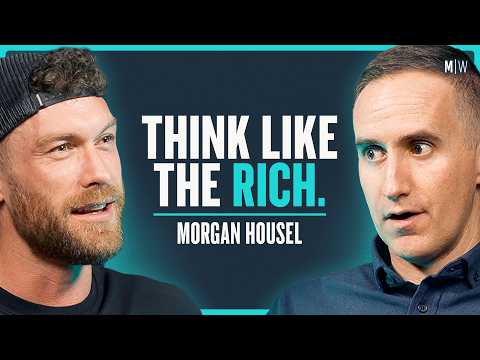
  • Morgan Housel: “The Psychology of Money,” Wealth and What Actually Makes You Rich

    What does it actually mean to be wealthy? Bestselling author ‪@Morgan-Housel‬ joins Peter Mallouk to explore why building wealth has less to do with intelligence and more to do with behavior, independence and understanding what money is really for. Morgan shares the thinking behind “The Psychology of Money,” why every U.S. publisher initially rejected the book, and the stories that shaped his approach to money and investing. He explains why financial success is often driven by behavior rather than knowledge, why getting rich and staying rich require different skills, and why some of the best…
    Read the verified transcript → Watch on YouTube ↗

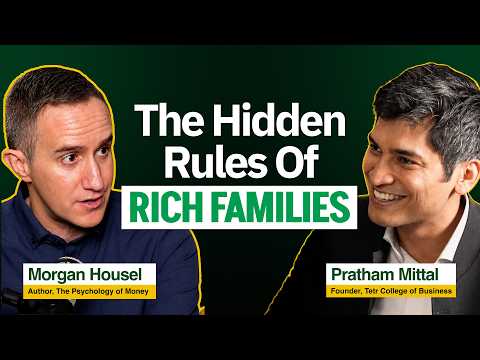
  • Why rich families stay rich? | Author of Psychology of Money shares wealth secrets | Morgan Housel

    Most people spend their lives building wealth, but a very few know how to keep it. In Ep03 The Tetr Podcast, ‪@Morgan-Housel‬, bestselling author of Psychology of Money and one of the world's most trusted voices on wealth, sits down with Pratham Mittal, founder of ‪@tetrcollege‬ , for a conversation about money, wealth, and what separates the people who build generational wealth from the ones who lose it all. From why a humble secretary financially outperformed a Harvard-educated executive, to why the Vanderbilts lost everything today, this episode doesn't just change how you see money. It…

    Read the verified transcript → Watch on YouTube ↗

  • Apple vs OpenAI, Mustard Controversy, Mark Gurman, Alexis Ohanian, & Morgan Housel Join

    00:05:13 Apple vs OpenAI 00:29:58 Paramount Threatens to Leave CA 00:47:22 𝕏 Timeline Reactions 00:50:13 Alexis Ohanian, co-founder of Reddit and venture capitalist, discusses the enduring value of live events in the age of AI, emphasizing that human experiences like sports and theater remain irreplaceable. He highlights his investments in women's sports, such as Angel City FC, and the track and field league Athlos, aiming to modernize and elevate these domains. Ohanian also touches on the growth of sports betting, expressing concerns about its societal impact and the need for thoughtful regul…

    Read the verified transcript → Watch on YouTube ↗

  • Morgan Housel on Money in Your 40s and Beyond

    Acclaimed writer Morgan Housel, the author of the international best sellers, The Psychology of Money, Same as Ever, and The Art of Spending and partner at The Collaborative Fund joined Flyover Stocks publisher Todd Wenning to discuss major money matters in our 40s. Included in this conversation: Morgan Housel's career journey and writing style The role of authentic storytelling in finance Impact of AI on human connection and storytelling Housing policy and its effect on affordability. *Parenting, education, and societal expectations in your 40s For more information, including important di…

    Read the verified transcript → Watch on YouTube ↗

  • The Psychology of Money and the Art of Spending Money with Morgan Housel (Ep. 13)

    What if the way you think about money is holding you back more than your bank balance ever could? How do you know when you have enough? And what does it truly mean to spend well? In this episode, Brady Fineske sits down with New York Times Bestselling author Morgan Housel to explore key lessons from two of his most celebrated books, The Psychology of Money and The Art of Spending. Morgan shares how our personal histories shape our financial behaviors, why knowing what "enough" means is the ultimate financial advantage, and how the way we spend money can either trap us or set us free. He al…

    Read the verified transcript → Watch on YouTube ↗

  • Wealth Expert: Do THIS Every Time You Get Paid | Morgan Housel

    If you enjoyed this episode, hit subscribe! And while I’m here — my new book, Own Or Be Owned, is all about building a business so good it doesn't need you. More profit, less pain. It's out now! Grab it here: → https://contrarianthinking.biz/oobo_b... Is true wealthbuilding as simple as asking for a raise? Or is it just picking the right stock? Well… no. Morgan Housel argues the cornerstone of true wealthbuilding lies in understanding — and controlling — your behavior. After studying the psychology of money and writing The Psychology of Money, he’s seen why brilliant people go broke and ordi…

    Read the verified transcript → Watch on YouTube ↗

  • How “Financial Psychology” Pays Off Forever - Morgan Housel

    Morgan Housel is a partner at The Collaborative Fund, an investor and an author. Why is spending money well a skill most people never learn? In a world obsessed with saving, why does saying “it’s okay to spend” still feel taboo? What can high performers teach us about investing not just money, but time, energy, and attention wisely? Expect to learn why it’s important to talk about how to spend money well when learning about personal finance, why good financial ideas struggle to spread while bad ones travel effortlessly, what Morgan’s definition of success is, how much modern dissatisfaction…

    Read the verified transcript → Watch on YouTube ↗

  • Most People Are Chasing the Wrong Number

    Want the 4 money rules that changed Shaan's life? Get it here: https://clickhubspot.com/ebr Episode 787: Sam Parr ( ⁠https://x.com/theSamParr⁠ ) and Shaan Puri ( ⁠https://x.com/ShaanVP⁠ ) talk to Morgan Housel ( https://x.com/morganhousel ) about the art of spending money. Show Notes: (0:00) Intro (10:01) Don't cut your flowers (15:38) the 2 ways to use money (19:07) The freedom number (23:49) Koch brothers story (27:41) Performing for others (33:38) The Total Man list (41:59) the art of spending money (49:42) 10 years of money wisdom in 60 seconds — Links: • Morgan Housel books - https:/…

    Read the verified transcript → Watch on YouTube ↗

  • The Wealth Secrets No One Teaches You | Morgan Housel

    Morgan Housel breaks down the exact framework he uses to build wealth, minimize financial stress, and buy freedom. While most financial advice focuses on how to get rich, Morgan explains why the psychological skills needed to stay rich are completely different. You will learn why “boring” investing beats complex strategies, how to avoid the social traps that destroy wealth, and the specific equation for finding true contentment. Morgan Housel is a partner at Collaborative Fund and the bestselling author of The Psychology of Money and Same as Ever. Learn more about this episode here: https:/…

    Read the verified transcript → Watch on YouTube ↗

  • Spending Your Money Well — With Morgan Housel

    Author and Collaborative Fund partner Morgan Housel joined Interintellect to share practical ideas from his new book, The Art of Spending Money: Simple Choices for a Better Life. This session was about turning money into a better daily experience. We talked about small choices that add up, and simple ways to reduce regret, buy back time, and feel calmer about the future. In this SuperSalon, hosted by Anna Gát, Housel drawed from his writing and research to offer clear habits you can try immediately. The conversation focused on aligning spending with your own values instead of status games, ch…

    Read the verified transcript → Watch on YouTube ↗

  • Morgan Housel: "Most people massively overestimate how happy money will make them."

    In this episode of PFI Talks, bestselling author and financial thinker Morgan Housel shares his most powerful insights on money, behavior, and the psychology behind our financial decisions. As a partner at The Collaborative Fund and author of global bestsellers The Psychology of Money and Same As Ever, Housel explains why behavior—not intelligence—drives financial success, how expectations shape happiness, and what most people get wrong about investing. A rare, insightful conversation with one of today’s most influential voices in finance. Leoš Rousek, the Head Of Corporate Communications at…

    Read the verified transcript → Watch on YouTube ↗

  • Scott Galloway & Morgan Housel on the Art of Spending Money | Office Hours

    In this special episode of Office Hours, Scott Galloway brings back Morgan Housel to answer your questions on “enough,” financial independence, and the art of spending. They discuss why our money goals keep moving, how to know when you can slow down, and why saving is really about buying independence, not things. Morgan also explains why holding extra cash can be a smart emotional hedge, while Scott shares how he spends today and what he wishes he’d known earlier. Morgan’s latest book, The Art of Spending Money: Simple Choices for a Richer Life, is out now: https://bit.ly/housel-book-youtube…

    Read the verified transcript → Watch on YouTube ↗

Verified interview transcripts

Notable quotes

“I define it as rich means you can afford whatever lifestyle that you want to live. Even if it's a big ostentatious lifestyle, you can make your car payments and your mortgage payments. You can fund the lifestyle that you want that's rich. Wealthy I defined as you have some level of financial resources that gives you independence. And so it's the money that you didn't spend is what wealth is. And it's the savings that”

“I think in general we're very fortunate to live in a world where in my view we've solved investing. Now, that was not true 50 or 100 years ago. If you were a dentist a 100 years ago and you wanted to invest, your options were pretty limited and you would go to some stock broker who was going to charge you who knows how much fee and the stock broker would put you in whatever choice stocks that they wanted to put you i”

“I think the biggest societal problem in the United States and many different countries is the lack of home affordability. It is such a huge huge problem and it goes so far beyond the cost of housing because for the majority of people particularly in America where it was this was established as a cultural uh you know uh limit that you had that you you had to go past was owning a home was a step towards adulthood. It w”

“I think it tends to be true that the long-term family wealth are made their money in products and services that don't change tremendously over time. There's some counter examples to that I can think of. But by and large, you know, the Rockefellers still have money today because oil is as valuable today as it was 130 years ago. Um but there were plenty of families 130 years ago who were making money in radios, let's s”

“I think I mean it's simple, but it's but it's not easy. It would it would be around permitting and building more. There's obviously demand for more. There is the ability to build more. It's just that in the vast majority of cities, it's virtually illegal to build where people want to live or at least extremely difficult. And it's one thing to say, you know, build more homes is another. If you're a home developer in C”

“I think by and large the answer is no. And even if you do know it, knowing it and experience it and in real time can be completely different. The one thing is that like stocks have been over time, nothing is promised in the future, but generating real growth above the rate like well above the rate of inflation. Real estate is something completely different where particularly if it's the house that you live in, not a ”

The summary and quote tags on this profile are produced with AI assistance from verified, first-person interview transcripts, then checked by our team to confirm the speaker's identity and the accuracy of every quote. See how we verify →