CEOInterviews.AI
Start App
Try: AI strategy tariffs earnings guidance layoffs interest rates growth

Michael Levin

Vannevar Bush Distinguished Professor of Biology, Tufts University

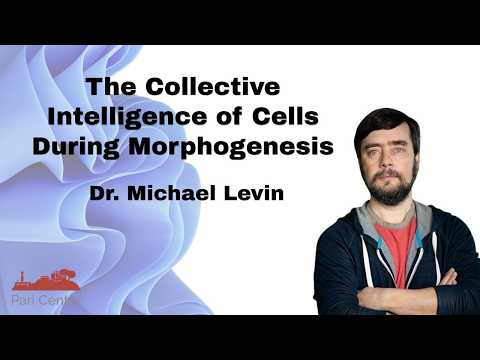
Search every verified Michael Levin interview, podcast appearance, and on-the-record quote — each transcript cross-checked by AI and human review to confirm speaker identity. Michael Levin, Vannevar Bush Distinguished Professor of Biology at Tufts University, has recently given multiple talks and interviews on his research into bioelectricity, regeneration, and "diverse intelligence." In these appearances, he has discussed work involving xenobots and anthrobots, which are synthetic multicellular organisms created from frog and human cells, respectively. He described experiments where these organisms exhibit behaviors such as kinematic self-replication, memory formation, and responses to acoustic stimuli. Levin also discussed his perspective that cancer can be understood as a failure of cells to maintain collective goal states, and he described research aimed at reprogramming tumors by electrically reconnecting cells to their environment rather than killing them. Levin has also spoken about his broader philosophical views on intelligence and cognition. He has proposed that minds and behavioral competencies exist on a continuum with mathematical truths and that intelligence is not limited to physical substrates. He argued that the "space" of possible patterns contains kinds of minds and that understanding this may require rethinking assumptions about evolution and selection. In talks on aging, he described a theory that aging involves a loss of "morphological information" and discussed ongoing work with fruit flies to test whether bioelectric interventions can affect lifespan. He also mentioned collaborations with companies, including a bioelectric simulator being developed by Morphaceuticals.

Recent appearances

Verified interview transcripts

Notable quotes

“I suspect that that space contains not only the truths of mathematics as kind of the lowest level of things, but the entire range of high agency types of patterns that we would recognize otherwise as behavioral competencies aka types of minds. I think that space contains kinds of minds. And I think that minds are fundamentally not physical. I mean, this is crazy for a biologist to say nowadays, but that's what I thin”

“The claim that the properties of natural things are primarily driven by selection, that is not a result. It's not a conclusion. It's a kind of an axiom. And it's an assumption that I think in many cases a story of selective forces is useful. And that's a good story. I'm not at all sure that's a complete story even for standard biological things. But the thing is, it's not enough to say, well, the cells they came from”

“I think that what fundamentally we have are an incredible number of patterns on a continuum from the most boring static thing like the you know, these simple mathematical constants. At least that's how they look to us. And then very very complex patterns that basically we recognize as kinds of minds. Some of them are embodied and some of them we would actually call living because they do, you know, Darwinian kinds of”

“The way to think about it is that up until now our data center business has been almost entirely GPUs. Vera is our CPU, and you know what's really exciting is that Vera opens a brand new 200 billion TAM for NVIDIA, a market we have never addressed before, and every major hyperscaler is partnering with us to get it deployed, and that's huge for the company because for the first time we have a second engine of that sca”

“Even extremely simple deterministic short algorithms, for example sorting algorithms like classical sorting algorithms that computer science students have been studying for 80 years. Even those simple deterministic things are doing things that are not literally in the algorithm. They have competencies that correspond to no code in the algorithm. These competencies are things like delayed gratification, homophily, bio”

“So my proposal is that that space contains not only the low agency, probably low agency, we don't actually know, mathematical truths, so facts about prime numbers and things like this, but also patterns that we would recognize as kinds of minds. In other words, behavioral propensities. So that space contains the familiar mathematical objects, but also types of behavioral competencies. And so my proposal is that when ”

The summary and quote tags on this profile are produced with AI assistance from verified, first-person interview transcripts, then checked by our team to confirm the speaker's identity and the accuracy of every quote. See how we verify →