CEOInterviews.AI
Start App
Try: AI strategy tariffs earnings guidance layoffs interest rates growth

Erin Harris

Chief Editor, Cell & Gene

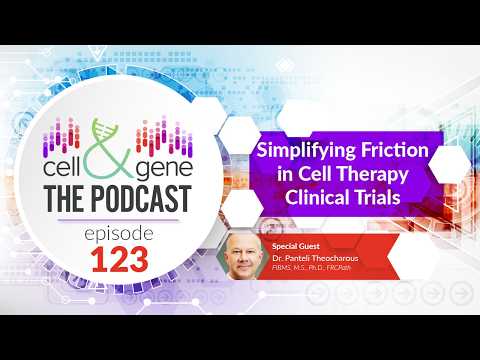
Search every verified Erin Harris interview, podcast appearance, and on-the-record quote — each transcript cross-checked by AI and human review to confirm speaker identity. In the past 60 days, Erin Harris, Chief Editor at Cell & Gene, has hosted and moderated multiple episodes of Cell & Gene: The Podcast, covering developments in cell and gene therapy. In an October 2026 episode, she spoke with Dr. Remo Moomiaie-Qajar of Axiom Biosciences about delivery-focused drug development and evolving FDA guidance. Dr. Moomiaie-Qajar stated that new regulatory flexibility does not compromise quality or safety and described the FDA as "somewhat a partner" in drug development. In an earlier September episode, Harris interviewed Roche's Sylke Poehling, Ph.D., who discussed starting drug development with disease biology rather than a modality, and the role of an integrated Center of Excellence. Poehling noted that AI is most valuable for quickly testing design ideas, such as AAV capsid variants. Harris also hosted a returning guest, Dr. Panteli Theocharous, in an episode on autoimmune CAR T therapy. Theocharous cautioned against directly extrapolating oncology risk-tolerance assumptions to autoimmune indications, noting that endpoint selection must meet a "materially higher bar" when the comparator is a chronic but often controlled standard of care. He also discussed patient support infrastructure needing to be organized around the full arc of clinical uncertainty. Throughout these episodes, Harris framed the conversations around practical challenges in delivery, regulatory strategy, and patient-centered approaches in the field.

Recent appearances

Verified interview transcripts

Notable quotes

“I believe that there's absolutely no indication that that is a compromise of quality, safety, or any other intangible metric for developing a drug. It is more about an open channel of communication and a true indication that the FDA is somewhat a partner in your journey to develop a drug. And I'm not sure it was like that, you know, a decade or two ago.”

“In the preclinical side, there's almost no real end to the amount of work you could do preclinically. And that's always a point of discussion in pretty much every company: do we have enough evidence? Is this conclusive enough? Is it safe? Are we proving these in these surrogate models and animals? And one of the important relatively new guidelines I think clearly states that there's some flexibility here and that pro”

“I think my answer for now is that it helps most where you can test ideas quickly and relatively cheaply and it disappoints where you cannot. So I think the clearest value seems to be in the area of design. So for instance when we think about genomic medicines we have to deliver genomic medicines and usually we use AAV capsids. In this area, we can build enormous libraries of variants and we can test them in parallel ”

“I think the comparator arm is determining variability. In oncology for example the comparator is frequently progressive ultimately a fatal disease. I think in autoimmune indications the comparator is a chronic but often adequately controlled standard of care which means that our endpoint selection must really substantiate a materially higher bar in some ways. So what we're now seeing is meaningful proportions of trea”

“I think one of the central errors in my mind and in my experience is extrapolating the risk tolerance calculus almost from a relapse refractory oncology directly onto autoimmune indications without almost kind of re-examining the underlying assumptions. And that's really critical because as we understand this is a fast-moving landscape and as we get close to the first CAR T approval it's in an autoimmune indication s”

“I think the gains being made on the diagnostic side are every bit as exciting as what we're seeing on the therapeutic side. And it's not simply because these tests are able to offer a more accurate prognostic information to patients, but it provides us with an opportunity to actually intervene. And that is a fundamental shift in how we think about delivering care, particularly as it applies to diseases like non-Hodgk”

The summary and quote tags on this profile are produced with AI assistance from verified, first-person interview transcripts, then checked by our team to confirm the speaker's identity and the accuracy of every quote. See how we verify →