CEOInterviews.AI
Start App
Try: AI strategy tariffs earnings guidance layoffs interest rates growth

Job Curtis

Fund Manager, The City of London Investment Trust; Portfolio Manager, Janus Henderson Investors, The City of London Investment Trust

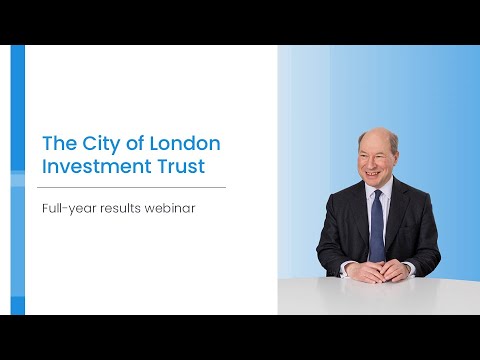
Search every verified Job Curtis interview, podcast appearance, and on-the-record quote — each transcript cross-checked by AI and human review to confirm speaker identity. Job Curtis, fund manager of The City of London Investment Trust, marked the trust's sixtieth consecutive year of dividend growth in 2026, a record for any UK investment trust. In a September 2026 interview, Curtis and co-manager David Smith attributed this streak to a focus on cash-generating businesses, portfolio diversification, and the use of revenue reserves to smooth dividend payments during difficult years. Curtis noted that the trust's investment approach has remained consistent over his three decades at the helm, emphasizing valuation consciousness, conservatism, and diversification. In the trust's full-year results for the period ending 30 June 2026, Curtis reported a net asset value total return of 21.9%, matching the FTSE All-Share Index and outperforming peer group averages. The annual dividend increased by 4.0%, fully covered by earnings, with earnings per share rising 4.4%. Curtis highlighted positive contributions from takeover activity involving holdings such as Schroders, Beazley, Tate & Lyle, and Segro, while noting that not owning Rolls-Royce was the largest detractor due to its relatively low dividend payout. He also discussed new holdings in Big Yellow, ICG, ITV, and Rightmove, and expressed views on artificial intelligence's potential market impact, inflation, interest rates, and the UK market's attractive valuation relative to overseas markets.

Recent appearances

Notable quotes

“In City of London, we were underweight the banks from before the financial crisis until about 3 years ago and we moved overweight again and part of the thinking on the UK banks is something called a structural hedge, which is the balances they have, which they hedge out very conservatively on a tough to over 5 to 7 years and in the ultra-low interest rate era, they obviously got very low yields on these hedges, but a”

“The key point is that the UK stock market does not equal the UK economy or the UK. In fact, just as an illustration, City of London's portfolio, some 60% of the underlying sales or revenues of our companies come from overseas, so only 40% come from the UK. So we've got like if you look at our top 10, it's loads of kind of global companies which just happen to be listed in the UK. So I think that's the key point, but ”

“The sums of money being spent by the so-called US hyperscalers, the kind of six big US companies, is just astonishing. They are spending this year $600 billion they've earmarked for spending on AI and data centers and I think a lot of people are questioning just whether they're going to get what kind of return they're going to get from this. I think that part of it is you to justify this sort of expense you got to th”

“I very much strongly feel that investors are paid to hold on. On a yield basis, equities may yield slightly less than fixed interest and base rates. But of course with equities you got dividend growth and so you'd expect that to be the normal relationship. In terms of price earnings ratio, it's another basic valuation we look at. It's slightly above the very long-term average, but the UK market looks cheap compared t”

“It's important to say that the UK stock market although listed companies listed in London they are actually very global and if you drill down into our portfolio which is over 90% UK listed shares we are some 60% of the underlying sales is overseas and so you got major companies like Shell or Unilever which are completely global company happen to be listed in London but in addition we can access overseas listed shares”

“We've been very clear that we are not going to do an enhanced dividend policy and in our chairman statement recently we made absolutely clear the board is firmly against that. We think when everything's going up, people don't notice a bit of the dividends paid out of capital, but we think in flat or declining markets, shareholders will be very upset to see that part of their dividend is being paid out of their own ca”

The summary and quote tags on this profile are produced with AI assistance from verified, first-person interview transcripts, then checked by our team to confirm the speaker's identity and the accuracy of every quote. See how we verify →