CEOInterviews.AI
Start App
Try: AI strategy tariffs earnings guidance layoffs interest rates growth

Lila Ibrahim

Chief AI Readiness Officer, DeepMind

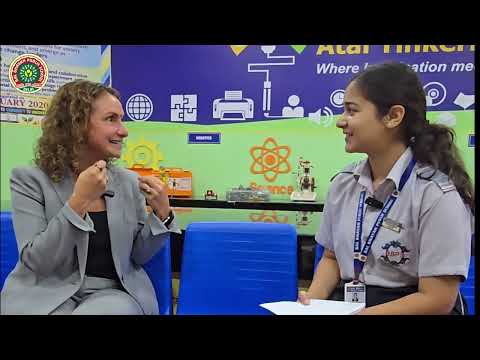
Search every verified Lila Ibrahim interview, podcast appearance, and on-the-record quote — each transcript cross-checked by AI and human review to confirm speaker identity. Lila Ibrahim, Google DeepMind's Chief AI Readiness Officer, has recently discussed her role and the importance of preparing communities for AI, stating that readiness means ensuring AI is "developed for and with communities and is not just something that happens to them." In interviews and panels, she has emphasized that responsibility must be built into AI from the start, not "bolted on at the end," and has cited DeepMind's AlphaFold project as an example of responsible development, noting its use by millions of researchers worldwide. She has also discussed the need to regulate AI in a way that is "right sized for the technology," balancing risk mitigation with the opportunity to address significant challenges. Ibrahim has advocated for treating advanced AI with a level of care comparable to other major risks, a position she previously endorsed by signing a statement on AI risk. Ibrahim has also spoken about AI's potential in education and science, describing it as a tool that can lower barriers to entry through multimodality and support teachers as an assistant and students as a tutor. She has highlighted collaborations in India, including an AI-powered agricultural platform called Anthro Krishi that works with 600,000 farmers, and a project with ICRISAT on the food crop sorghum. For those entering the workforce, she has advised that while tasks can be automated, the human skills of curiosity, creativity, and connection remain crucial, noting that "you can automate any task, but you cannot automate a Tuesday." She has expressed optimism that AI's benefits can outweigh its risks, while stressing the need for global collaboration and a focus on human impact.

Recent appearances

Verified interview transcripts

Notable quotes

“I think it requires a fundamental reset of the code design principles um that we apply um to building this technology to driving its diffusion etc. Currently um it's being driven a lot by um how quickly can we get I mean for some reason we have set um AGI as the north star and it's how quickly can we get to that and what can we do to build that kind of intelligence irrespective of the costs irrespective of what it do”

“A lot of people think of the digital public infrastructure as a tech stack. It does result in tech stacks, but when you think for at least for me, when I think of the digital public infrastructure, it's a set of design principles. It's a mindset, right? where you say that the success of any technology is when the last woman in the food chain gets impacted positively. So when you're going to the tiniest of villages in”

“I think trust is about the outcome. You know, if you're going to make a difference to health care, if you're going to cure, at least come towards kind of curing diseases. Or maybe the word curing is not right, but to make a big impact on diseases and disease outcomes, then people will build up the trust. And you're talking about personalized medicine for sure. I think this whole database approach of getting the genom”

“AI could be the most transformational technology of our time and that requires exceptional care. I think we have to figure out how do we regulate AI, but it's too important, we have to regulate AI, but how do we do so in a way that's actually right sized for the technology? So that's what we're really focused on, regulating AI and doing so such that we minimize the risk but we also don't limit the opportunity that we”

“I think technology has always been both a risk and an opportunity. I mean when we were first dealing with computers even you know the it wasn't that the computer was going to solve the problem in the classroom. The computers had to work, the teacher had to know how to use them, it had to be the local curriculum, etc. So I think that we both grew up in this culture where technology is an enabler. It's kind of back to ”

“I think it's so important that we're having these conversations. I don't mean to sound trite by any means, but you know I maybe a couple of things on my mind. First of all, I was in venture capital during the rise of social media and one thing that was really missing from a lot of the investment conversations was a talk about responsibility and safety. We're talking about this which I think is fantastic and we're tal”

Other executives at DeepMind

The summary and quote tags on this profile are produced with AI assistance from verified, first-person interview transcripts, then checked by our team to confirm the speaker's identity and the accuracy of every quote. See how we verify →