CEOInterviews.AI
Start App
Try: AI strategy tariffs earnings guidance layoffs interest rates growth

Christopher Kubasik

Chairman & Chief Executive Officer, L3Harris

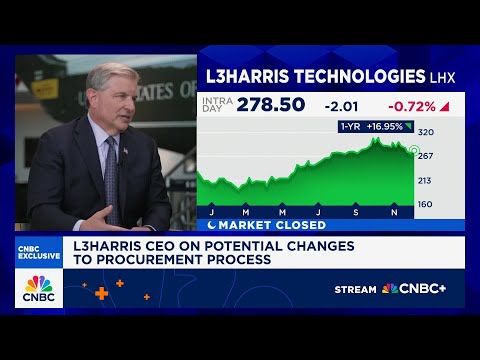
Search every verified Christopher Kubasik interview, podcast appearance, and on-the-record quote — each transcript cross-checked by AI and human review to confirm speaker identity. Christopher Kubasik, Chairman and CEO of L3Harris Technologies, discussed the company’s second quarter 2026 results and updated guidance during an earnings call in early August 2026. He stated that the company was raising its full-year 2026 revenue and earnings per share guidance, citing stronger performance in its space emission systems business and the award of the AMDT3 constellation, which he described as part of the “Golden Dome for America.” Kubasik also noted that the guidance reflected a non-cash deemed dividend cost of $55 million related to a Department of War preferred stock investment and the expected sale of a majority interest in the commercial space propulsion business. He expressed a positive outlook for defense spending, saying the nation is on a “wartime footing” and that he expects the highest defense budget in the country’s history, along with a supplemental budget for multi-year munition contracts. He also mentioned that the company was actively negotiating more than $20 billion in new contracts, potentially tripling its backlog. In his remarks, Kubasik thanked outgoing Vice President of Investor Relations Tony Calderon, who he said was being promoted to run one of the company’s sectors, and praised employees for their execution in the first half of the year. He also thanked Department of War leadership for transforming the department and changing how capabilities are acquired, saying L3Harris is “fully aligned and supportive” of efforts to put the ecosystem on a wartime footing. In an earlier earnings call from January 2025, Kubasik reflected on the company’s 2024 performance, saying it delivered on commitments through its “trusted disruptor” strategy and made progress toward its 2026 framework. He also commented on the cumulative effect of risk-reduction policies and procedures in the defense industry, stating that after decades, these measures have “actually created more risk than they’ve resolved or mitigated.” He emphasized that winning companies would be those that move fast, avoid vertically integrated and closed systems, and collaborate with both traditional primes and new entrants.

Recent appearances

The summary and quote tags on this profile are produced with AI assistance from verified, first-person interview transcripts, then checked by our team to confirm the speaker's identity and the accuracy of every quote. See how we verify →