CEOInterviews.AI
Start App
Try: AI strategy tariffs earnings guidance layoffs interest rates growth

Pedro Pizarro

President, CEO & Director, Edison International

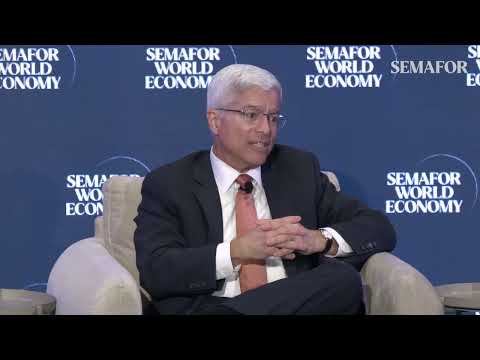
Search every verified Pedro Pizarro interview, podcast appearance, and on-the-record quote — each transcript cross-checked by AI and human review to confirm speaker identity. Pedro Pizarro, President and CEO of Edison International, recently discussed California's energy landscape and wildfire risk on the "Nameplate" podcast, describing the state as a preview for other utilities. He addressed the utility's obligation to serve high-risk areas, noting that Southern California Edison cannot make risk-based choices to avoid serving parts of its territory. Pizarro also explained the doctrine of inverse condemnation, under which utilities can be held responsible for property damage from fires originating with electrical equipment, regardless of cause. Pizarro participated in a C2ES panel on extreme heat and power infrastructure, where he highlighted the financial impact of climate-related disasters, citing $2 trillion in losses over the past decade. He argued that investments in adaptation yield significant returns, with every dollar spent saving $6 in response efforts and $7 in avoided economic losses. In a separate interview, Pizarro discussed data center growth and community engagement, stating that developers must work with local communities and regulators, and he noted that Southern California Edison's credit ratings are at the lowest investment grade, which he said raises debt costs passed through to customers.

Recent appearances

Verified interview transcripts

Notable quotes

“The short version of inverse condemnation basically says if the fire started with electrical equipment, however way it started, could have been a drunk driver hitting a pole and then the wires falling on the ground, that's electrical, the utility is responsible for all property damage. And so that's rooted by the way in a theory of governmental entities. The example would be if you have a governmental water system pi”

“We as a regulated utility have an obligation to serve. If we were a normal commercial business, we probably would be making risk-based choices to not serve every bit of that 27% of our 50,000 square miles. Just too high risk. We don't have that choice. When you think about these heartbreaking catastrophic fires that the state's been living through, there are multiple factors that contribute to that catastrophe. In th”

“We've seen $2 trillion in climate related extreme weather related losses over the last decade. We've seen $260 billion just last year, but every dollar spent today on preparing for adaptation saves $6 in response efforts once an event happens and another $7 in avoided economic losses. So there is payback to this. It's just sometimes hard to see in the short-term political cycle.”

“One of my concerns over the years has been that there's tremendous focus on how do we try and bend the climate change curve honestly not enough discussion on how we deal with the curve that is locked in because it's going to be not fun in 2050. We did our first paper on that topic about four years ago. And then we just released this Monday our latest white paper adapting today energizing more resilient tomorrow. It f”

“It's voluntary. You don't make a commitment until you decide whether you like it or not at the very end. It's fair and it's fast. Now, that's the headline. Digging into that a little bit more, traditional lawsuits can take years and that creates uncertainty not only for a company but more importantly creates uncertainty and extends the time period and it creates added cost for people who have been impacted and so for”

“Since the 2017 fires, SCE has really revamped how it thinks about wildfire mitigation and done a number of changes to its infrastructure. We've been kind of redesigning the airplane as it's been flying, designing systems that can withstand more extreme heat and storms and the fires that result from that. We know that the risk of wildfire can never go to zero. We'll never be able to eliminate it, but we want to get it”

The summary and quote tags on this profile are produced with AI assistance from verified, first-person interview transcripts, then checked by our team to confirm the speaker's identity and the accuracy of every quote. See how we verify →