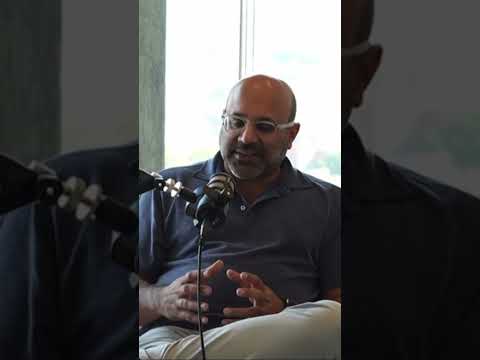
How I Built Resilience: Niraj Shah and Steve Conine of Wayfair
Despite the economic crisis, Wayfair has seen an 84 percent sales spike, leading them to profitability during the COVID-19ย ...
Co-Founder, Co-Chairman & CEO, Wayfair
Search every verified Niraj Shah interview, podcast appearance, and on-the-record quote โ each transcript cross-checked by AI and human review to confirm speaker identity. Niraj Shah, co-founder and CEO of Wayfair, discussed the companyโs history and recent challenges in podcast appearances. He noted that during the COVID-19 pandemic, Wayfair saw an 84 percent sales spike and achieved profitability. Shah said the company raised $535 million over a two-week period early in the crisis, adding that in hindsight the funds were not needed but the move put Wayfair in a strong position. Shah also addressed the companyโs approach to social issues, stating that Wayfair has been proactive in fighting against racism and rooting out unconscious bias. He added that there are other opinions he holds personally that he does not believe the company should take a stand on, because there are two sides to many topics. Reflecting on Wayfairโs growth, Shah said the companyโs success stems from its focus on home goods, a category where visual and aesthetic considerations are paramount and customers want unique items.
“We didn't know what was going to happen next, so we actually decided to raise money so we raised $535 million in hindsight we didn't need but at the time you don't exactly know what's going to happen and so we we did that and we did that very quickly over a 2-week period and so I think that put us in a in a great posit...”
“I think it's important to take a stand on issues you believe in. And there there's certain things like on on the topic of racism and and actually being proactively, you know, fighting against racism and making sure that we're rooting out unconscious bias. That's something we've been very proactive on, and we we believe...”
“The challenge became in 2011, we believe the big opportunity to continue the trajectory and to really capture the big opportunity, we needed to build a brand. And the amount of capital we thought to go through that migration and to build a brand that it would take was not an amount we could self-fund.”
“The beauty of home, most categories people want to all buy the same thing as each other, right? So, you know, AA batteries, you buy Duracell or Energizer or the private label. There's only a couple categories where a huge selection is really a key piece, where visual and aesthetic considerations are very paramount, whe...”
“I think the two key things that I think have always helped us. One is that we gravitate to different areas of the business and the second is we definitely have always uh found each other to be very hardworking and very committed to it. I think those are not to be taken for granted because I do think they those traits m...”
“You need to be prudent, right? So we we know all those folks. You of course would have conversations with anyone who wants to have a conversation. Last year when we did 4.7 billion in sales, we grew 40% from the year prior. Well, so if you take a number like 4.7 billion dollars in sales and you grow it at some decentsi...”
“We're now at a scale where we can not only grow and keep taking share and as I mentioned we're $12 billion but we're growing at a nice rate and that rate of growth is accelerating. We started last year at just zero year-over-year while the market was in like negative 10 but by the third quarter we were up 8% year-over-...”
“The reality of tariffs is that we've had a real advantage versus others because our suppliers all have different supply chains from one another. And so we have suppliers who source heavily from Southeast Asia. We have others who might source heavily from India. We have others who are very large domestic producers. We h...”
“We use AI three ways. We use it internally to make our operations more efficient, higher quality. We use it by giving suppliers tools that allow them to do more on our platform. And then what you're asking, we use it with customers to make the experience better and better. And so there's both what we do on our site and...”
“We bootstrapped Wayfair for a decade; when we finally raised capital 10 years in we were already at $500 million in sales, which greatly reduced dilution โ scarcity drove execution, prioritization and focus.”
“You know, when we started this business, we wanted to bootstrap it as long as possible. What we ended up doing in hindsight is we ended up bootstrapping it for a decade. And something Steve always talks about is also that scarcity is often a great driver of good execution, prioritization, focus.”
“When we did raise capital 10 years in, we were already at 500 million in sales. We raised capital because we wanted to build Wayfair into a household brand and we didn't generate enough capital internally to go on that mission without raising capital. But obviously the economic benefit from the standpoint of dilution i...”
“Post 2008 they again misused it tremendously by printing so much money that I think 60% of all dollars in circulation today have come in the last 5 years.”
“Post this Russian war when US said reserves be create I can take that away also... most countries are now not happy to be holding that and for the first time we are now seeing the central bank holding of gold has crossed the holding of US treasuries.”
“What Trump has done... they've effectively taken over your reserves as well now so it's a very major shift going on in the world and a new architecture is going to be formed โ the currencies are going to change dramatically.”
Despite the economic crisis, Wayfair has seen an 84 percent sales spike, leading them to profitability during the COVID-19ย ...
After selling their first small business and shuttering their second, former college roommates Niraj Shah and Steve Conine thought about getting "normal" jobs. But in the early 2000s, they stumbled across an unexpected trend: people were buying furniture online to get a wider selection. Within a few years, Niraj and Steve launched 250 different websites, selling everything from barstools to birdhouses. Eventually, they consolidated these sites into one giant brand: Wayfair. The company now carries more than 14 million items for and last year brought in more than $9 billion. See Privacy Policyโฆ
After selling their first small business and shuttering their second, former college roommates Niraj Shah and Steve Conine thought about getting "normal" jobs. But in the early 2000s, they stumbled across an unexpected trend: people were buying furniture online to get a wider selection. Within a few years, Niraj and Steve launched 250 different websites, selling everything from barstools to birdhouses. Eventually, they consolidated these sites into one giant brand: Wayfair. The company now carries more than 10 million items for home and last year brought in more than $4 billion in sales. Plus,โฆ
In this episode of Game Changers, FT Editor Emeritus Ray Allegrezza talks with Wayfair CEO and co-founder Niraj Shah about the online giantโs evolution from its CSN Stores roots into a global home furnishings powerhouse. Listen in as Shah shares how the company leverages data, supply chain strategy, logistics, customer relationships and more to compete at scale.
Wayfair was not built in a day. It was built slowly, deliberately, and with a partnership that worked because neither of them ever gotย ...
Wayfair was not built in a day. It was built slowly, deliberately, and with a partnership that worked because neither of them ever got the last word. In this episode of Zinnov Podcasts, we bring together the Wayfair founders, Niraj Shah and Steve Conine, in conversation with Nitika Goel, Managing Partner and CMO at Zinnov, to hear the Wayfair story of what it truly takes to build and scale a durable company. Over more than two decades, Niraj and Steve built Wayfair not by chasing momentum, but by returning to first principles whenever things became complex. They believed that disagreementโhโฆ
Enam Holdings' Manish Chokhani joins Niraj Shah in an insightful conversation ranging from the current geopolitical scenario toย ...
๐ ๐ผ๐๐ ๐ณ๐ผ๐๐ป๐ฑ๐ฒ๐ฟ๐ ๐ฏ๐๐ถ๐น๐ฑ ๐ถ๐ป๐ฐ๐ผ๐บ๐ฒ. ๐๐ฒ๐ ๐ฏ๐๐ถ๐น๐ฑ ๐๐ผ๐บ๐ฒ๐๐ต๐ถ๐ป๐ด ๐๐ผ๐บ๐ฒ๐ผ๐ป๐ฒ ๐ฒ๐น๐๐ฒ ๐ฎ๐ฐ๐๐๐ฎ๐น๐น๐ ๐๐ฎ๐ป๐๐ ๐๐ผ ๐ฏ๐๐. I sat down with Niraj Shahโ5x founder, M&A advisor, investor, and stroke survivor. Heโs advised 50+ companies and navigated make-or-break moments himself. In this episode, we dig into: โข Why buyers walk away from solid businesses โข The silent killers of enterprise value โข What actually makes a business sellable โข How to prepare mentally and operationally for a future exit If your business relies too much on you, or youโre wondering what comes after an exit, this episode will resonate. Listen now to start builโฆ
Adani stocks find momentum, a pocket to watch. Unimech Aerospace IPO is listing today. Morbi Ceramic Association proposesย ...
Sign in to search the full transcript archive, filter by topic, and access every quote from Niraj Shah.
The summary and quote tags on this profile are produced with AI assistance from verified, first-person interview transcripts, then checked by our team to confirm the speaker's identity and the accuracy of every quote. See how we verify →