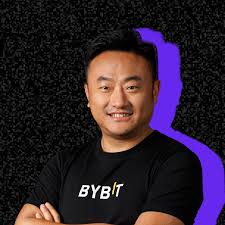
Hello everyone. A few facts about today's guest. One of the most influential figures in the world of blockchain technology. Founder and CEO of Bybit, the world's second largest crypto exchange serving 81 million users worldwide. He built a global infrastructure spanning 243 countries and managing an average daily trading volume of over 19 billion. The man who proved in 2025 that radical honesty and nerves of steel are the most valuable assets in business. Benjo, thanks for being here, mate.
Thanks. Thanks, Alex, for the kind intro. It's crazy to think now if you make a global transfer, it takes three days. I think the financial world will be upside down after five years.
Why did you ask why you didn't stay in New Zealand?
Yeah, you cannot take a shower for more than five minutes. I can imagine, for example, my mom paying with crypto anywhere. If you look at all the global crypto exchanges today, the top five are all run by Chinese. Crypto, crypto, crypto, crypto. I think this will change the financial world.
So the situation happened. You lost $1.5 billion.
I never want to do layoffs again.
You're the second largest exchange, but
We're number one something.
Forex was always suits and tie. Crypto, what is a scam? You know, am I worried about quantum computers?
Everybody is talking about legalization, license, regulation. Still, I feel like I'm the most responsible person. Feeling was really shitty.
Stable coins are now controlled by the US government.
None of us know how to build an exchange. The thing with crypto is the industry moves so fast. The opportunity for not building a product and catching up in that wave will cost you maybe the future of the company. I like the phrase nerves of steel. Some people call me nerves of other stuff.
Yeah, you proved that. We'll talk about this later. So, we recorded before a lot of times and we usually talk about crypto with you and about the crypto market and what's going on there.
But today I want to dive into your journey as an entrepreneur, as a personality and talk more about how you think, how you make decisions and how you build that big company. Let's start from the very beginning because I was shocked when I knew that you were born in China but at a very young age you moved to New Zealand and as I understood you moved without your parents, you just went to school.
Yeah. What happened?
Well, so that was when I was 12. I moved to New Zealand. Luckily, during that time, I think it was early 2000s, there's a whole wave of Chinese kids going to study abroad, right? And luckily, my parents ran an agency service. They were one of the first agency services that sent students overseas.
Oh really? So they had a company.
They had a company and they were one of the first in China that did it. So they were sending kids to UK, US, Ireland, New Zealand, Australia. And so my parents had the luxury of going to all these countries and seeing the schools and then kind of evaluating the school system, the education system. And in the end, they were like, well, you know, after their research, they figured out New Zealand is very safe. Because they're concerned if you send someone very young to a place maybe full of guns, it's dangerous, right? So I think New Zealand was kind of the choice and they did it in a way that since I was 10, they would send me during summer break to one country just to experience. So I first went alone to language school. So I went to Australia for two months, I went to Ireland for two months and UK for two months and then New Zealand. So I loved New Zealand the best because it was the last one and I managed to speak a little bit English better. So that experience was good.
But I guess so of course nowadays in China a lot of people speak English. But like early 2000s I think it wasn't so popular. So you didn't speak at all.
No, I didn't speak at all. So but New Zealand turned out to be a very memorable place and I picked it. Their idea was they don't want me to be living with families because you're kind of experiencing things. So they said I should live with host families. So local families who take you and you live with them and they have kids typically and you socialize and that's kind of really the best way to learn English. But it's also a gamble if you think about now. Like I wouldn't send my 12-year-old because you never know what kind of family it's going to be. They're 12 years old. It could be misleading. I don't know. Drugs, things. Yeah. So, it's kind of a gamble and my parents were quite bold, I guess. Adventurous.
They made some test of their business model on you.
Yeah, pretty much. Yeah. Yeah. Yeah.
So, how long did you stay there?
Um, I think I stayed there for close to six years. Yeah. Six or seven years. Basically from 12 to almost 19. Yeah. Yeah.
That I think that's quite interesting experience because when I was a kid from first year of school till year seven I studied in boarding school. So I lived there for five days a week and I just came back for a couple days on the weekend to see my parents and everything. And I remember that time because it was really strange, like now if I'm trying to reflect, that period I was kind of scared, I didn't really understand what's happening. Of course sometimes there was fun because a lot of other kids and you can kind of set yourself free. Because no one is looking clearly for you. But on the other side, that's a tough period because you're alone in the ecosystem of other people where everybody is trying to take their position in society and no one cares about you because you're like the only people who cares about you. That's your parents, but they're far. So, how did you feel that time?
I think it's you either survive and thrive or you perish. I think it's more like that because when you're so young, especially you're in a new country, you don't speak the language and you have to face challenges and problems by yourself. So I remember one of the challenges I had when I first went to New Zealand was the host family always had many rules. So one of the rules was that you cannot take a shower for more than five minutes and there was a rule that in the morning you can drink a little bit of milk but you cannot drink too much. So that the host family parents were running out of milk for coffee. And what I noticed is every time in the morning you go to the fridge, there's always a little bit of milk left. So I can never touch it. So I was really frustrated. And then so one day I went out and then I forgot something. So I have to come back home and come back after half an hour. I left it to the bus station. I came back and you saw that drinking the milk. I saw cartons of milk. So basically the host mom would wake up half an hour before me, hide the milk so that I cannot drink it. And I was so mad and I went to the school. I want to complain but my English was not good. But by the time I got there my host mom was there. So she was already there a step ahead of me complaining about me. So when I went to the principal and they were like well it seems like there's unhappy and I couldn't explain myself. So in the end I had to change host family. So you had a lot of these small things that you have to confront by yourself at such a young age and even though you could get help but help is very far away like my parents were far away. So that helped I think kind of to shape into a character that you have to solve problems by yourself and I think that's a good resource to have.
Yeah, 100%. I have the same feeling actually. Um I have an experience living in a host family after school. I was in Dublin in Ireland for a couple of months studying at the university. And so I lived in a host family and I didn't have that type of story. So I was able to drink the milk. But the funny thing is I was complaining about food every time because the family I've been living with ate very strange food like every time kind of cakes with carrot and I don't know, got beef or something. So that was impossible for me, you know. I came from Moscow and I wanted... You're also in Ireland. It's not a place for food. Yeah. That's not a place for food. And so we were young. We were like about 17 years old. We always wanted to go to pubs and drink beer and everything. And I was like, okay, so how to manage this thing? How to let them know that I'm good. They don't need to take care of me. And everything. But I remember that feeling that you feel uncomfortable and sometimes you are not able to manage this and you need to like I don't know just find out how to live in this situation that's so annoying, that's so uncomfortable but I agree with you that it teaches you how to live the real life because we always see that type of situations in our lives and our businesses and things. Yeah, that's cool. But then so you've been in school there, but then you moved to the United States to college.
Yeah, I went to the US for college.
Why did you ask why you didn't stay in New Zealand?
Um there's a number of reasons. So I've been there for so long and I know I mean I love the country there, but it is so far down under. It's right and one of the things you notice is typically what the people discuss around you is like rugby and local things, it's not connected to the world, right? And I asked myself do I want to grow up and do I see myself as a farmer in New Zealand, do I see myself... and the issue is I already see myself if I study in New Zealand continuously I could obviously get a nice job and everything, but I feel like I can already see myself 30, 40 years down the road. It's a life where there's no unpredictability. So, and I want to go somewhere where I can be really kind of connected to what's happening and back then even today I think for finance for a lot of new innovation, Silicon Valley, the US is kind of leading the way, right? So I figured I really want to go to US for college and another nice thing a second part of it is because US offer good scholarships. So I tried, I applied to like 10 or 12 different schools and in the end I picked the one that offered me a good scholarship. So that was kind of why, you know, you get a scholarship, you can go and then you can learn.
Did you see yourself enter entrepreneurship at that time or you didn't understand what you're really going to do?
No, I never... so even in college I think when I started I didn't know what...
What did you study in college?
Economics. Economics, but it wasn't like I had this lifetime goal that I knew I want to study economics and again if you got into crypto there's no way you can plan it because when you go to college crypto doesn't exist, right? Crypto, crypto, college. Yeah, crypto existed much later so I think because of that I just go with a feeling, I go with whatever I like and pick many different subjects and I try to feel out. Initially, I thought I was going to do psychology because everyone was doing psychology in college for some reason. Um, and a lot of good-looking girls were doing psychology. So, I was like, okay, let's try psychology. I tried a few classes. I was like, I had motivation in psychology. I didn't, even with the girls, I didn't pick psychology. So, but then with economics, I had a really interesting professor and I loved him and so eventually I picked economy as my major. Yeah.
Yeah. And so you studied at college but then you didn't have a lot of experience working in the US. Yeah. Because you finished college, you had some experience there or no?
I had... so so I read one of the interviews and you told that you had a kind of job there but then you moved back to China. Yeah. Yeah. So the story was again when I graduated I also didn't know what I want to do. So I said, okay, what at least I know. So when I don't know my long-term goal, I always ask myself what I don't want to do. So because for four years in college, my college was in Indiana in this tiny little town called Richmond. And I was like, I've been in the US for four years. I never lived in a big city. So I know I don't want to be in a small city. I want to go check out the big city. So I specifically moved to New York first. I moved to New York not because I know what's going to happen. I didn't know. I just moved there and I started looking for jobs. So again, I started applying to 20, 30 different companies.
So Bitcoin already existed.
Yeah. But then there's no way I would know, right? Well, I went to a Quaker College, so it was all about nonprofit initiatives. Yeah. Yeah. Yeah. So and then I went to New York and I started applying. Eventually I got into a big company called Westco and what I did is procurement. So I was a procurement agent. What you do is you buy things for like big companies, you use like this IBM system and the area I focused on was avionics. So I was buying airplane parts for airplane companies and sourced it from manufacturers like Eton and all these places. So that's what I did for half a year in New York.
So what I... again once I started, I was sitting in the cubicle and next to me there was this Indian girl and then opposite me is this local guy who's been working there for 15 years and my title was like a procurement agent and he's like a procurement agent manager which is two levels above me. And I see him like it's going to take me 15 years to get there to get opposite cubicle. And then I look at the girl next to me. I said, how long you been here? She said, well, I've been here for five years. I'm like, for five years? I'm a junior procurement. She's like a senior procurement. I said, okay, that's five year me. 15 years there. And what about that guy in the office? That guy, his name was called Greg. So he would come in the office in a nice BMW motorcycle and he looks the nicest guy. Really calm guy, but I can see this guy's wild because driving this motorcycle and he comes in. He's been there for like 30 years. Okay. I say, okay, so it's going to take me 30 years to get office.
So you exactly understood what kind of roadmap you got there.
Okay. I've been there for after three months I see myself again and that's my problem. If I see myself 15, I'm like okay. So what I did I went to Greg's office. I knocked his door. I said look I've been there for three months. I know I'm still young but I want you to notice me if you can give me more work, if you give me more to do. I want to take on more responsibilities. And by the way I speak Chinese blah blah blah. So he said yeah okay I remember you. And then that's it. So I never had interaction with him until six months later. He came to me with another guy and they grabbed me into the office and they said, well, you know, we actually have this project going on in China and we need someone who understand our system to go over there and take on this project. Would you want to go?
Ah, really? Yeah. So you got an offer from them to go to the...
So they sent me back to China. Yeah. Yeah. So okay. Um are you going to give me a raise? He says, yes, I will double your salary, which is I think $1,500 to $3,000. I was like, great. $3,000. Amazing like fresh graduate you know six months. So and then they sent me back supposedly there's a new project coming up. So but they just started in China so they didn't have a big company. No no they had a big company but the company is so big this Westco is a Fortune 500 company. So this company this mother company is huge and we are like a small company underneath. Which got acquired 10 years ago something like that. And the mother company has a big office in China, but they need this procurement part to help them. And this procurement, nobody can go there. So they sent me there basically. So I have to go there and then come and help to set up this whole operation and everything.
So that's how the China story got started.
By the time I got there, the project took forever. Like I was there for another three months and it still doesn't take off. Like they're still signing contract, negotiating. So the whole time just paying me sitting there.
So you didn't see any kind of movements? Yes. Like just made some operation work and...
I was playing games. I was playing games all day long in office. Yeah. And I met my wife there by the way and my wife hated me. She was playing games as well. No, she hated me because they had to work. She wasn't in the company and the office manager Nancy, she's this hardcore Chinese lady busting balls. She's like blazing and she was like hardcore. Let people do overtime all the time. Yeah. And if she look at me, I'm just playing games. And she couldn't do anything to me because I don't really directly report to her. Yeah. Yeah. Anyway, so all these other people in the office hated me because I'm just playing games all day. Yeah. So that's what I did. But I was so bored and then I started looking at other opportunities. So eventually I landed this forex company trying to do expansion into China. And initially it was a global company as well. No, it's a startup. Has a startup because I... I've seen now it's a global company now it's a top three in the world back then it was a startup and I had interviewed the CEO to look for a translator in China so the CEO is looking for a translator to go into...
Yeah. Yeah. Yeah. Yeah. Yeah.
That's an interesting story because so now you do finance. Yeah. Cryptocurrency. That's finance. And so New York is like the biggest city for that opportunities and all of this like biggest company financial companies sitting there and so that's interesting that you didn't come back. So you had like six years in New Zealand then four five years in the US and then you came back home. What did you see there and what kind of differences you saw between the US and US opportunities and the local market where you were like you were into culture you spoke Chinese and everything and I think that's much much easier to understand people around you when you're in China. Like did you see any kind of difference between opportunities?
I think China at least from 2010 to 2020, that 10 years was really a booming 10 years. Yeah, for sure. Everything just economy everything was and everyone talked about was how do I become an entrepreneur? How do I start up something? Right. And then because that kind of was the way where Tencent got big, Alibaba, yeah, all these big internet companies in China. So it had a really good environment for a lot of good developers who came out of Tencent, Alibaba which is why actually if you look at all the global crypto exchanges today the top five all run by Chinese. Yeah for sure. The reason being is they are tapping on to the benefit of the Chinese economic boom where you have a huge talent pool of developers that are willing to commit. You have good developers in other countries as well like India, Vietnam, even Russia, right? But the internet companies in China they had this thing called 996. You wake up 9, you start working from 9:00 in the morning to 9:00 at night six days a week and that's the norm. It was kind of built by Alibaba 107. Like 12 hours a day six days a week. Yeah so that's the very norm. That that it's impossible to imagine that type of work ethic in Europe or US, is insane, impossible. So the work ethic is insane. Insane. That means if you took an existing model that happened in the west or anywhere, China would just execute everyone. Mhm. Right. So I think that's how a lot of the crypto exchanges took over. But coming back when I was in China, I didn't do crypto at the time. Right. So and then I started doing forex and I noticed people around me all talk about how do I do this, how do... and I knew this was kind of the vibe. And if you ask me again what was the vibe, the difference I felt was that and also being Chinese I can really utilize all these resources in China and be able to speak English and know what's going on internationally. I think that's kind of the advantage I had. It was also I was doing forex something from abroad that started to become popular in China. So yeah, so American company didn't really rush that like that. Yeah. So Chinese companies, Chinese people were trying to find opportunities and to run the company. So like everything were faster. Yeah. And everything was faster. And you had WeWork was huge over there. And you go to WeWork people just brainstorming, talking about ideas like to other people not working. Like it's very much like that 10 years if you go to Shanghai like if you go to people just ideas about what they want to do.
I was in Shanghai. Yeah. Yeah. So luckily enough the forex business took off and you know we had office in Shanghai. So I was immersed in that environment. So I think it was that environment that kind of planted the idea of at some point I want to be entrepreneur because before that whole time I didn't have idea. I was okay with working in the company which I did in New York and they sent me I was happy but the problem is I don't get happy if I see myself already what's going to happen in five, ten years and so that's the challenge. Yeah.
So but did you have that type of mentality when you moved from US to China like were you ready to work 9 to 9 six days a week or was that uncomfortable for you because you grew up in a different mentality different people I'm 100% sure that New Zealand people are not ready to work so hard. So hard. Yeah. So in the US that's a grown market already and there was like really good place at that time. So 2010 because like too much money, too much startups like everybody's paying really good. So how did you feel when you moved to this like fast market?
So um I was fortunate enough because with that forex company I was one of the very early staff like number seven, number eight staff.
Oh so you joined them just at the very beginning.
At the very yeah at the very beginning and I was 22 I think. And then the CEO just gave me a lot of trust. He just like you know Ben I like you. You're this young man and you seem capable. So they okay from a translator I gradually became kind of the director over there for whole greater China region, right. And then I start to hire at some point we got to 200 people. So I had although I was working for a company I had very similar entrepreneur experience where I was the only one making all the decisions for China because obviously in Cyprus they don't know what's going on in China they have to listen to me and trust me. So with that trust I didn't really care about money but I just want to prove myself. So that's kind of what I did and with that experience that really helped me to become entrepreneur down the road I think.
But did you really earn big money at that time or...
I think I earned very big money for my age. Um, I think once I turned full-time after two or three years, maybe I was earning I started to earn about $10,000 a month for like a 23, 24 years old in China. That's insane. That's really good money. Yeah. So, um...
Yeah, at that time the market was so competitive in China, I guess. Yeah. Like people just were...
Yeah. So, I'm very happy with the salary, with the income that I get. I feel like this is a very rare opportunity. But what I cared the most was I had freedom to call the shots basically to hire whoever I want to do. So I start to hire support, operation, BD and I put everything together and then even legal team, compliance team and I had to be the one dealing with local government talking to them, taking clients out and design the product and then design the campaign literally like how to run an exchange. I did that for like seven years with this forex company. So everything I learned today was really kind of started back from there. So to me the real money is not the money I learned that then, it was the experience. Without the experience I wouldn't be here today. So that's kind of how I see it. Yeah. Yeah.
Yeah. And actually I think forex market and cryptocurrency market are quite similar. I mean at that time now forex has changed a lot. Yeah. But I think there are a lot of similar techniques to how to run business. And I remember the time when the Forex was so popular. A lot of people were trading Forex. But then I remember the situation when everybody started talking like Forex is a scam. Any kind of platform can scam you if they want because they're just drawing these charts and everything. Do you remember that time?
Yeah, of course. You had the biggest competitor we had was Apari who was from Russia and then Exynus was also Russian. Yeah. Both of them. So we competing with them heavily. I mean even today for the forex industry people are talking about because it's a broker model. If it's a broker model you can trade against the client but a lot of people get confused even the banks trade against the client so trading against client if you trade anything unless you're in the exchange model where it's like today in the exchange if it's a broker typically their license allows them to take exposure from the client meaning if you bet long someone need to bet short against you. Yeah. So typically it's the house that would provide the liquidity for better execution whatever. Now what regulators don't allow is that when you are doing that you are giving clients a disadvantage such as you're giving them extra slippage. You're making their slippage I mean execution slower. you basically find ways to screw them and then to make money. So this is against the law. This is something that people are talking about. But typically people get confused and think being a market maker is something conflicting but at the end of the day if you're trading especially on a broker who do you think you're trading against, you know, so yeah of course especially like you're trading against professional market makers and AI technology. I think that everybody should understand that. Yeah, because it's I think the error when people trade it just against other people. No, no, no. What clients should care about is am I getting the entry point I wanted? Yeah. If I want to enter at let's say gold price of $10,000 if I enter at the price I want, that's going to be next month. Yeah. And then if I exit at the price I want, then why do you care who's trading against you? As long as the price is what you want, right? Yeah, of course. Of course, of course. So, um...
That's an interesting thing because you were quite young, 24, 25 years old and so you were at a good position. You were able to build a company, run the company in China. Yeah. And make decisions and so you earned money and I thought you had a lot of opportunities there. Were you able to get any option or any percentage of equity in the company?
It was mostly just shares. I mean sorry commissions. So like you just get KPIs and commissions from... Yeah. So I think at the end of seven years I made like one or two million.
So you were there for seven years.
Yeah, I was there for seven years.
Ah so like that's a lot of experience. Yeah. Yeah. Oh okay. And so what forced you to leave the company? Did you see the opportunity in crypto or what happened?
Yeah. Yeah. That's what... so the story is my wife gave birth to my first boy. Mhm. And when I saw my first boy, I'm like, okay, I mean, this is a lot of call Bitcoin. Yeah. Yeah. No, no, no, no, no. I see a Bitcoin on his forehead. No, I wish it was that direct. No. But I saw my first boy. I just felt like the responsibility is huge. And I again asked myself how long can I do this forex thing and by then Forex industry is kind of reaching the ceiling. Mhm. So if you look at when I left Forex, which is 2018 to now, the Forex industry didn't really change. It's about the same. That gets to the top. Yeah. And so and if you look at from 2010 to 2018 that eight years there's huge competition in Forex. There are a lot of new platforms emerged like XM, you have IB, you have forex.com, you have Apari, you have Xynness, they all like booming, right? But then now everywhere it's stagnant. It's a saturated market. So I want to... I asked myself I again I see myself in the industry in the next 10 years. I will be comfortable but I don't see exponential growth and I don't feel like I can learn something. And then when my boy was born I was looking for things and I stumbled into crypto and that kind of immediately got me interested. Not because I think I'll make money. It's just I feel like this technology is crazy. I think it's going to change the world. I think it's going to change how financial system works because I understand how forex works or how banking industry works. I think this would change financial world. Yeah, for sure. So that's how I just told my boss and said I want to quit and I basically I didn't ask for anything. I just quit.
Did you get any kind of bonuses there?
I'm sure they gave me something. I can't remember. But um I didn't have a plan again. Mhm. So I didn't have a plan.
You didn't make any MVP or something when you left. So you just...
No, I again I didn't know what I... I just knew I had an interest in crypto. Cool. So for six months I kind of was like a YouTuber as well. I had a YouTube channel.
Yeah. Yeah. Yeah. And you talked about crypto.
Yeah. Yeah. I was talking a little bit of crypto, but that was 2017. Uh I was talking about projects and looking into it, but I was just so fascinated by the technology. Yeah. Two facts. The first one I really like how you always ask yourself about the future. So an example in the US like when you watch your colleagues and we're trying to predict what's going to happen with you in 15 or 30 years and here is the same situation when you just saw the ceiling. So just yeah you just ask yourself what's going to be next. Yeah. What kind of opportunities, what kind of lessons I can get here. That's really interesting. Yeah. Um, but the second thing I remember when I first met crypto, there was December 2016. I've heard about Bitcoin before, but so December 2016 is the first time I bought Bitcoin. Early early. That with a price $650. I remember right now.
When did you sell though?
That's the story about. So I was in LA and I had a friend who was so much into crypto because he had a friend who already made like millions on crypto at that time 2016 imagine. Yeah. So early sir early and I remember he told me so I know the guy who made $50 million on crypto. I was like you're crazy, you're using drugs or something. I don't know what you're doing but so it doesn't exist. But he told me about Bitcoin a lot. Like every day I was in LA for a month and every day I met him and he told me you need to buy Bitcoin. You need to buy Bitcoin. He told me about this limited supply and everything mining and I was trying to get into this but for me that looks 100% as a scam like 100%. And I bought some Bitcoin but so I had 20 bitcoins. I remember there was BTC-e exchange. Do you remember that one? No. They got scammed then. Uh, so I bought it with a price 650 or something like this. 650, 770 and of course I sold it after a couple months when it got to $1,200. So I doubled it. Yeah. And I remember my feeling about that. So this is 100% a scam, but I doubled my money. I need to get that from the market and run away from there. Yeah. So that was the feeling. And so I sold it and next time I was in... I remember like catching myself interested in crypto was like after a couple years maybe 2018 or something where was like the next bull market and for me that was super strange industry. I couldn't understand how that can grow because like only small strange guys on like forums on the internet were interested. How did you catch this opportunity? Why you understood so early that crypto is the next future financial market? What like makes you feeling that's a good one?
So I always knew about Bitcoin because I was in forex and people discussed it in the industry. Yeah. So from 2012 I think it was my first time hearing about it. I'm scam for sure and I just ignore it. So by 2017 I noticed something very different because 2017 remember it was ICO of course Ethereum started ICO and then you had all this crazy ICO boom and then one of my friend who is also in the forex industry someone I respect a lot he started to tell me you really need to get into it and after I dig around I feel like a lot of my other smart friends are getting into crypto. I'm like, okay, this is maybe not because you look at people around you, you're like these guys are not stupid. It's probably not a scam. It's worth paying attention or we got to get scammed altogether. Yeah. So, but my idea when I got into it, I wasn't on the side of how to make huge money. So, I started looking to projects. Now, what the ICO age did is it brought in a lot of talent people like me. The reason is it opened up everything. It was like it was decentralized everything. Decentralized post service, decentralized a coffee mug. As long as you can write a white paper, you can do ICO. Yeah. Although 90% of them is scam, but what I did I was reading every single white paper. Yeah. And I made a YouTube channel. Remember I told you and I was fascinated because it was like reading fairy tale from people's imagination. How? Because when you write a paper you got to really put some rationality into it so people can buy at least it makes sense on paper on rational. So how does water become decentralized? How does telecom service, laundry service become you kind of think a world can be completely decentralized? There was like IoT, AI there was all these things to me I was just all day long emerged in this idea of certain things. So that's why I think it will change the world forever. Not because the money because I saw all the technology but although a lot of them are dream vision you call it fantasy but I think it got into me so I was like okay this is probably the future and that made me enough to give up my job and then get full-time into it although I didn't know what I was going to do and so I just start keep reading these white papers and get into it. So that was the goal.
So could you... as I understand right that white papers that's like just people's imagination and everything just inspired you.
It did inspire me inspired that some of that ideas could be possible. Yeah. Could be a lot of them are wild but some of them you do see a pathway there.
Yeah. I remember that time because I sold my bitcoins but I was following that and I was reading like what people trying to do and it was a funny period for the crypto because teams were able just to make some notes in a Google docs, post this and raise like $100 million for this idea. That's crazy. 99% of that like didn't do anything. But 99% of them died today. Yeah. Yeah. Yeah. For sure. That's for the crypto community that I think 2017, 2018 that's the most important age in a crypto era because a lot of people understood that's the place for making money.
2017 it's the introduction of smart contract. Yeah. That really changed things right before that bitcoin if you're smart contract you start to have many things. So yeah crazy. So, um Okay, gotcha. And then, you started trading by...
Yourself. Yeah. With an exchange that already exists and you found a problem that they don't have enough liquidity or your orders doesn't work.
How it happened, how I decided to launch exchange is of course I was fascinated by all these ideas and when I'm convinced, I start to invest.
And I end up losing most of my money.
So you started buying altcoins.
I was buying coins all over the place and I lost a lot.
That's the reason why you don't buy it anymore.
Yeah. No, listen. So exactly. So that's why and also that's the reason I started exchange.
I'm convinced this technology will change the world and also I'm convinced this place is full of scam because I was on two extreme side. But then all these altcoin investment brought me back to earth. But I was like, okay, there's still opportunity in this technology. And I asked myself, what am I good at that can actually make an impact rather than buying coins and looking at white papers? And I'm like, well, I'm good at trading and I'm good at running exchange.
So I started to trade and that's when a logic came like, okay, back then there was only Bitmax who was the largest, 80% market share, whatever. There was no Binance then.
And they traded especially Bitcoin as...
Yeah, perps and Ethereum as well. Inverse contracts. So I made some trade and the whole trading experience was completely terrible at the time because I was coming from the Forex time where the whole industry is very matured. And here is Bitmax was this blue and white color, looks like Windows 95. This is like you've been used to Mac and all of a sudden you're forced to use Windows 95. And you're like wait, this technology is supposed to bring you forward but now it's bringing me backwards. And I'm like okay, this is something I can do, at least I can push the exchange boundary a little bit better. So that's how I started running that idea to run the exchange.
But as I remember you didn't really start an exchange, you made just only one function. You started inverse contracts. And that's how you started. But let's talk about how - did you make all of this by yourself or you found a team? Because I remember there were four founders, co-founders together. How did you find these guys? Because that's a young industry and not too many people believed in crypto at that time. How did you inspire those guys to start something with you? Or all of them were from Forex?
No, no, none of them were from Forex. Forex people hated the crypto back then.
But a big competitor now.
No, they don't see competition. This is a small industry. This is a scam.
That's interesting because Forex is big.
Yeah, that's interesting because if those guys believed in crypto, they could run a crypto exchange with their skills and everything. And I think I'm the only one who came out of Forex.
Yeah, that's interesting because now for traders, for users, that's kind of competitors.
No. Back then it wasn't. Back then nobody looked into forex and crypto. I mean, forex was always suits and tie. You're in conference, you talk about fundamental analysis, what the Fed does, what's non-farm payroll. You know, all these things. You have analysts on CNBC. Crypto? What is a scam? You know, this thing. So it was different.
How did you find your partners?
Actually, two of them saw my YouTube and then they reached out to me. They were doing a, they had an investment firm, but they were too busy looking into projects. They were like, 'Hey, can you help us to look into projects?' I'm like, 'Sure, I'll help you, we work together.' So I met two of them and we just clicked. We would just meet each other, we would just talk about ideas and things. And then at some point they were like, 'Well, we shouldn't be just doing investment' because they were this investment firm and I was just helping them out.
They invested in crypto already?
Yeah. They had a fund investing here and there and they were making good money too. And then yeah, so we got together and I was asking them, hey, you know, I see this opportunity. Do you want to do this together? And they're like, 'Yeah, sure. We'll finance it. We'll do it together.' So initially they were helping me to finance this project. Until Bybit got big and they joined full-time basically. Well, not big, but after like three months or four months of launching, they joined full-time basically.
That's cool. So they were already in crypto then.
Yeah. So they were in crypto, but then the hardest part was to look for the technical partner because none of us know how to build exchange.
Yeah. So I think not too many people at that time knew how to build smart contracts and everything. No one knew how that works.
And in forex everything is mature. You have companies that provide trading platform. You buy the software, and then you had a bridging company like oneZero, you had all these things. I was looking for companies like that in crypto but there's none. Like what do you do? You have to write it. Okay, we need to find someone who knows how to write code. So we were looking, from this friend to refer a friend, and eventually found our technical partner who came out of Tencent. He was one of the number 10 staff from Tencent, really high up technical guy.
He's been trying to do his own entrepreneur thing. He had a team of like 10 people following him. He just started something, a project, and didn't really go anywhere. So they were kind of lost. And then we just got him there like, hey, join this side, this is much better. And he decided to join.
So the moment he joined, we just got together. We spent like, I think, three months in a small apartment, just nobody leaves. And we're just looking at Bitmax documentation like, what is this commercial contract? Let's figure it out. But one thing Bitmax did really well, which I respect a lot, is they put every documentation publicly online.
So that helped you a lot. They really had the idea of open code basically.
So how the design, how the matching engine - what they didn't share is the code of the matching engine but they said there's a matching engine, there's this. So we start to understand okay there's a cross engine, there's matching, there's this and that. And then plus figuring it out, we managed to patch something together. And even when we built it, we actually tried to solve the overload issue that Bitmax had.
Yeah, that I remember that time because every time when Bitcoin grew up really fast and people started trading actively, it shut down. They always were falling down. Cool. And so you launched the product and how did you get your first client? Through your YouTube or what you started doing?
Because there wasn't too many influencers at that time. There wasn't too many social media talking about crypto. How did you get your clients?
So, we launched our first Bitcoin inverse contract in December 2018. And for three months, we didn't get any customers. We would get some scammers here and there because we were giving out little bonuses, but there was no real user trading.
And then the whole company was telling me, 'Ben, we need to launch Ethereum, Ripple, which are the next tokens that Bitmax had.'
And I told them, 'Guys, you can launch 20 things. Nobody will care. Nobody knows who we are. We're too small.' I look at the book, we have three more months. If we don't survive in the next three months, the company shuts down. So we had about six months runway after development. It took us six months to develop. We had one year of capital. So we have six months left.
We have to figure out how to get people to know this product. And then that's when we look at, okay, where do clients come from? They look at YouTube or they go to Twitter, right? So we would contact these YouTubers and Twitter guys to promote Bybit and they would charge us like $500 per YouTube video or per Twitter.
And these are like accounts with half a million followers. To me, that's mind-blowing because in Forex, if you had half a million followers and I pay you commission, you'll be making like half a million a month. You wouldn't be charging me $500. When you charge me $500, it means you don't know how to monetize your audience.
You're literally charging the wrong way. So, I told the team, 'Stop developing Ethereum and all this other stuff nobody cares about. Give me an actual affiliate backend, which nobody had back then.'
We were the first one to invent full affiliate marketing.
I don't remember that actually. So I thought that Binance first did that.
No, they copied us completely for the affiliate program. So we were the first one introducing that because Bitmax, OKX at the time, they had the referral code.
You just go on, you have an account, anyone can have an account, you have the referral code, you give it to your friend, your friend gets 50% off and that's the deal.
But how much money you're making, you don't know. There's nothing. There's nothing for affiliate marketing. I remember they pay like $5 per registration or something like this.
That means if you have YouTubers or influencers, you don't know how to monetize in crypto, right? And of course, there's no full-time influencer back then. Everyone just out of hobby talking about crypto.
So, we spent another two months developing this exactly same affiliate product I had in Forex because in Forex I designed myself. So this one I also designed. So I know exactly what the influencer wants. They want a CRM to be able to generate multiple links. You can use Twitter for one, YouTube for one, you can see clicks, click-through rate, how many registrations, deposit percentage, and then what's the commission rate. So we spent two months and after designing it, we just got a few very big influencers.
What I did is I invited them to our office in Shanghai because they wouldn't trust us. I remember the first guy in a mask who came to...
Yeah, there was the first guy in a mask. Who came to your office and there were like I don't know 15 people or something like this.
Yeah. So these guys they were worried we're going to run away. So what do you do? You fly them. You sit down with me face to face. I take you out for dinner, whatever. And I tell you this is your commission. I show them the backend. I tell you it's going to make you rich because it's going to help you convert. Stop charging people $500. It's better off on commission.
And eventually that really took off. So, and then we start signing all the influencers. It was so easy back then. Like now it's so competitive, back then it was almost impossible to not get in.
All these big influencers would sign on board. They would respond immediately. And so it was blue ocean back then and we basically signed up all the influencers on Twitter, on YouTube, and that's how Bybit initially got started.
Yeah. That's crazy. So you got this from Forex? Really? So that's how the forex market works.
Oh yeah, forex heavily relies on affiliate marketing.
That's crazy that no one before you did that in crypto. Because for me, forex industry and crypto industry are so similar in some points.
But this is really cool and I think that thing changed the industry a lot because once other competitors understood that works, they started doing their affiliate portals and for sure the market became more competitive but the whole market grew up so fast because so many people got involved into crypto. You knew about crypto because of Twitter, YouTube, so you just saw every day crypto, crypto, crypto. Most of the people came like 2020, maybe 2019. That's insane.
There was a Binance already. Yeah.
So by 2018, Binance, I think 2017-2018, we came out at the same time but we were on different tracks. You were derivatives, they were spot.
Yeah. So that's kind of, we were parallel. We never crossed...
Yeah. And Bitmax was my big competitor. It was not Binance at all, right? It was Bitmax. And luckily also we were able to take a lot of market share from Bitmax because they had a US issue.
And Arthur Hayes kind of had issue with the US government, I remember.
And then he had to step down. And when he stepped down, a lot of the hardcore Twitter native guys started to look for alternatives. And that's when Bybit popped up and so we took a lot of the users from Bitmax.
But at the same time FTX started.
So FTX, we were in the same track. FTX was also derivatives. So we were kind of competing with FTX at the time as well.
Yeah. So if we look at that roadmap from the very beginning, from the first inverse contract till today, let's try to find like the three most important strategic decisions that you made that helped make Bybit. As I understand the first one is the affiliate portal, because that helped you grow faster, that's kind of blue ocean where you get a lot of clients from. So what are the other two?
2021, early 2021, we made a decision by January that we want to expand not only in derivatives. We have to expand into spot, earn, fiat, all these other crazy product lines. So by end of 2020 we had about 700 people.
Employees? You mean employees?
No, 500 people I think. We were number two in derivatives, we were very good, profitability everything was very high.
But then one thing changed the whole industry is now being labeled as Web3.
Before, everyone thinks crypto is a small thing. And I asked my shareholders and the senior managers, I said look, this industry is becoming the next generation of internet, we're going to really change the world. Now, how many new users coming to crypto? And our derivative traders, let's ask ourselves. I say, okay, what do these new users need? They need fiat, they need spot, they need earn, they need crypto card, all these new things. We're like okay, if we're good at building product, we need to take this advantage and make sure we can grow as big as we can. So we made a decision to expand massively then.
Within one year we grew to 3,500. So we hired 3,000 people in one year.
We were not hiring people. We were hiring companies. We would go to a company literally, we would say how many people you have? 500? Join me, we want to build this, help me to build this and this. So that's how it started. By end of 2021 we launched spot, fiat, earn, options, all these crazy products you see today. A lot of them were built from 2021 to 2022.
Mhm. That was a crazy momentum shift of the exchange.
The players who never changed and adapt, who are they? They all been kind of obsolete. Bitmax, they were focused on derivatives, staying with derivatives...
And then they got left out.
Deribit, right? They got sold to Coinbase.
So yeah, all the exchanges started to do massive portfolio of products. So that was a good decision, if we didn't catch on, we wouldn't be where we are today.
But there was a good period at the market at that time so you earned a lot of money. And I remember after that, that was a bull market because you earned a lot, the market grew up very fast, and so you were able to hire people and invest a lot of money into all of these products. But then there was an interesting story when the bear market came and you weren't able to continue burning money so fast and build all of these products. And I think that's a quite interesting period in a company because you need to make a decision what to focus on. The first way is we can continue burning money and invest into all of these projects but we are not sure how long the bear market will be and we are not sure that we will be able to cover all of the costs. On the other hand, you have the tough decision to cut some employees, to cut some projects. And I remember you closed some part of the project and you cut some employees, maybe 500 or thousand. So how did you make this decision? How tough was that for you?
It was very tough. So I made a decision I never want to do layoffs again. But you know, if you look at the time from when we launched in 2018 before '21, it was all bear market. So we started the whole company in the bear market. So we're very prudent. '21 was really the first bull run we experienced and we decided to do massive expansion. So we hired up to 3,500.
And by 2022, mid 2022, we started laying off. And then we laid off to 1,500. We laid off almost 2,000 staff.