If you're from Myanmar or from Nigeria, you don't get the same sets of financial instruments, financial infrastructure as someone who lives in New York or London. People are living in the same time, but very different access.
Right? So access is a huge problem. It's crazy to think that we are living in this internet age where everything is, you know, so fast, but transfer of value and money still takes three to five days and so much so costly.
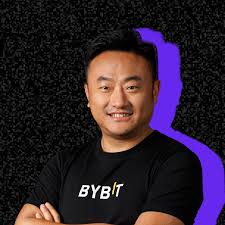
Hello everyone. This is And Then Labs. And today I'm here in Singapore for Token 2049 and also the Formula 1 weekend. So I'm here. I have a very special opportunity. Now I'm sitting down with Ben Zhou. He's the founder and CEO of Bybit. And thank you for taking the time with us. And today I want to go beyond just crypto and trading. And I want to talk about the bigger picture, the future of money, AI, stable coins and tokenization, how finance world could change over the 10 years.
Thank you. Thank you for having me on the show. Yeah, it's a pleasure to be here.
Very okay. So let's start with the future.
So my first question is AI, stable coin and tokenization are all growing very fast, right? So if this continue, what do you think the financial world will look like in 10 years from now? Do you think banks, exchanges and payment company will stay be the separate business or will they slowly become part of the financial system?
Yeah, it's a very good question. I think first of all, let's look at what we have now, the current financial system, right? I would say the current financial system, there's a lot of issues with it. Number one is segregated. Segregated meaning that if you're from Myanmar or from Nigeria, you don't get the same sets of financial instruments, financial infrastructure as someone who lives in New York or London. People are living in the same time, but very different access.
Right? So access is a huge problem. Number two, I think transfer of value still very costly and it's not 24/7. One of the example I was talking to, I was in the Paris Blockchain Week and I was talking to a regulator and he told me the biggest pain for him because he also on the side owns an Airbnb. He said there's a lot of tourists that come to Airbnb Europe. When even he says he has Americans come to Europe have no way of paying him other than international Swift transfer, which will take three to five days and maybe $50 in fees. Or Western Union, things like that will still take not instant. Right?
Very expensive. Right? And it's crazy to think that we are living in this internet age where everything is, you know, so fast, but transfer of value and money still takes three to five days and so much so costly. And to address the first problem, I think what internet did is to level the playing field for information. Before internet everyone have different sets of information access. With internet now, the moment you have internet you know pretty much everything everywhere else who have internet. That knowledge gap is closed through internet. And people say blockchain and crypto is the magic just like internet that would do to finance. That we will level the playing field for access. So that's why you can see today you have tokenized the US stock now, you have tokenized Hong Kong stock. You have a lot of RWA that is coming on chain. So that you can see that someone from Myanmar or in Nigeria now can have access to these asset previously they couldn't have.
That's true, that's true.
Right? And through stable coin you can do very fast instant payment within, you know, seconds at a cost of maybe 50 cents or 20 cents. So I think this two is going to change how fundamentally finance works and I'm, you know, I think more and more product will come on chain and gradually the future of exchanges is not going to be Nasdaq or New York or London but it's going to be wherever the on-chain infrastructure is and these on-chain infrastructure exchanges are. Yeah, and that's kind of our goal as well.
Okay, that's very interesting because technology can move very fast but the people may take some time to understand the trust it, right? So and that brings me to the next question. Crypto is becoming much easier to access today, right? Giving people access to the industry is not very enough. People also need to understand how to use it safely. Right? So for the next billion users, what do you think is the most important? Better financial products or better education and trust?
Well, I think trust is always probably the number one thing and I think the industry is moving towards to be a lot more trusted than when we first started in 2018. Compared to then now you have EU regulating crypto, you have Singapore, US everywhere. So with regulation coming on it, it obviously gives a lot more trust to the because crypto exchanges like us are hold exactly the same standard as a bank, right? How we do KYC, how we do AML, how we do transaction monitoring and all of that. So I think trust in the future is the fundamental. Any exchange for any users you should look at what license they have, how long they have been in the business and what are the size and reputation, right? And then I think after the basic layer of trust you built for me is to building that user interface. To make it something as easy as to navigate in your phone or any phone, any clients can access and just download the app, do the KYC on the phone and be able to make deposit and withdraw safely using the simple app. So I think to really bring that 1 billion user in, trust the fundamental and then user experience and access gateways these are the second part. Yeah.
Okay. Right. I think it is very important, right? So because even if we build better technology, people still need to understand what they are using, right? So if we are look at the products themselves, one of the biggest challenges could be tokenization. So my next question is let's imagine that one day stocks, bonds, funds, gold and other tradable assets are all in on available on chain. So at the point what becomes the most important part of the system? The technology itself or the liquidity or the platform and that trust people.