Back
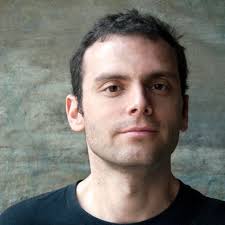
Olivier Pomel
Co-Founder, CEO & Director, Datadog

Keeping AI Honest: The AI Wave Seen From the Inside | Olivier Pomel, Datadog | RAISE Summit 2026

🎥 Jul 09, 2026 📺 RAISE Summit ⏱ 18m 👁 37 views
Olivier Pomel, Co-Founder & CEO of Datadog, in conversation with Karim Jalbout (Konstellation Advisory). As the platform watching over much of the world's production software, Datadog has a unique inside view of the AI wave — Pomel shares what's real, what's hype, and how observability itself is being transformed by AI. Recorded live on the Master Stage at the Carrousel du Louvre, Paris, on July 9, 2026. Livestream powered by Cursor. RAISE Summit is Europe's leading AI gathering, bringing together 9,000+ founders, executives, investors, researchers and policymakers. Learn more: https://www.r...
Watch on YouTube

About Olivier Pomel

Olivier Pomel, co-founder and CEO of Datadog, discussed the company's growth and strategic focus during several public appearances in mid-2026. At the Guilds Summit, he described Datadog's experience navigating a COVID-fueled acceleration, a subsequent deceleration, and a reacceleration driven by AI, noting that the company had slowed hiring during the downturn and that rebuilding that growth took time. He stated that AI has most transformed Datadog's software engineering, describing a shift for its 3,000 engineers from mostly writing code to mostly not writing code. At the RAISE Summit, Pomel said the company's strategy is to add products in adjacent categories and solve the "whole problem end-to-end," moving beyond observation into automation. He also noted that customers across industries are adopting AI and seeing costs rise, but often lack understanding of their spending and outcomes. On Datadog's Q1 2026 earnings call, Pomel stated that digital transformation, cloud migration, and AI are long-term secular growth drivers for the business. He said the company is investing in deploying into more geographies and in its "bring your own cloud" products to run on customer infrastructure, seeing this as a potential growth lever. Pomel also noted that training workloads are becoming a market for Datadog, with hyperscalers using the platform to monitor their super intelligence labs. Regarding the impact of AI agents on the business, he said Datadog's usage-based model means it does not matter whether usage comes from humans or agents.

Source: AI-verified profile updated from Olivier Pomel's recent appearances. Browse all interviews →

Transcript (60 segments)
I
Interviewer0:04
Fantastic. Well, welcome Olivier back to your hometown Paris.
O
Olivier Pomel0:09
Yes, not quite. I'm from the suburbs, but you know, close enough. Yeah.
I
Interviewer0:12
And big game tonight by the way, 10:00. So, I'm cheering for you as well.
O
Olivier Pomel0:16
I will watch.
I
Interviewer0:17
So, for those people that don't know, basically Datadog is like a massive digital watchtower that looks at all your digital systems. They basically look at all the metrics that a website gives out, all this data information, and make sense of it, and it sends signals to all the engineers in the companies that pay for them, so they can figure out if something goes wrong, how to fix it. So, I think 3 billion revenue was the wrong estimate, right?
O
Olivier Pomel0:46
Yes, technically we're between 4 and 5 billion now, growing about 30%.
I
Interviewer0:50
Well, pretty incredible. This company got started over 16 years ago, and we'll talk a little bit about what Olivier has learned about himself, but CEO co-founder for 16 years, growing at 30%, where has this growth come in at consistently 30% and such high revenue?
O
Olivier Pomel1:08
Well, there's lots happening right now, you know, I mean, you've heard about the whole AI thing, and it's a, you know, look, the way like in terms of problems we solve like we solve the problems of engineers having to deal with complexity. Like they have more machines, more applications, more services, more everything. And that keeps scaling up over time. Over the last 10-15 years, everybody was moving to the cloud, and that was generating a crazy amount of scaling and complexity, and everything was becoming digital, and that drove our growth. Today, companies are building and adopting AI, and that's adding another layer of growth that's touching pretty much every single part of our business. So, we've re-accelerated growth over the past six quarters, I think. And in great part, that's because there's just so much that's being built, so much that needs to be watched and monitored and secured and kept running, basically.
I
Interviewer2:03
And what's super interesting I did a couple of sessions yesterday is that obviously with the AI growth is just more data. You have more metrics. You have more traces, more logs, more information. So, how are you adapting to the shift? And what's the impact on customers? So, you have a lot of CFOs who are saying, "Hang on a sec. My AI cost is going through the roof. Does that affect also your margins? Can you keep up that 30% growth?"
O
Olivier Pomel2:32
Yeah, I think all in all, it's a big opportunity because everybody right now across the whole customer base, from the startups to the AI natives and with all of the big enterprises like the big banks and train companies and whatnot in the middle, everybody is busy adopting AI. And everybody is seeing their cost skyrocket. And everybody is also finding that they're not in the position where they can really understand what's actually needed. Are they spending the right amount to get the right outcome? What are the outcomes, by the way? Like it's super hard. When you zoom in into specific parts of the business, you can see the outcomes, you can see value, you can see things. When you try to add everything up across the whole business, it's a lot more difficult. And I expect that to remain difficult for maybe a year or two, basically. But for us, that creates a huge opportunity because we can be there to help understand who's doing what with AI, what outcomes they're reaching with it, how much they're spending to do that, and how they can get better at it. One analogy I would give is right now we just invented air travel and we're sending postcards by buying business class tickets for them. That's the way we use AI models in general.
I
Interviewer3:46
I think we can be so much more efficient. There's so many more things we can do for so much cheaper that there's a lot of room to optimize.
But the cost issue though, in terms of your margins, are you getting challenged from people saying, "Hang on a second, like I want more data, more data, more insights, and you've got to manage your cost. Are you increasing your prices or"
O
Olivier Pomel4:05
No, we're usage-based. So, if customers send more data or if they use more, basically that's built into the model. We're not seat-based like a lot of the traditional SaaS companies are seat-based and they're challenged in that maybe they get less seats because they have more non-human agents using their systems and maybe they need to bundle more functionality within those seats. We're usage-based. We're still bound to the same dynamics, right? At the end of the day, we have to show value. And there's only two reasons people buy software. They buy software to make more money or to save money. At the end of the day, that's it. So, we still have to deliver that.
I
Interviewer4:40
Yeah.
O
Olivier Pomel4:41
But the business model itself is amenable to adding a lot of AI functionality and getting a lot more data.
I
Interviewer4:47
Yeah. It's pretty interesting as well because recently you've made a pretty good acquisition as well. You bought an ML business that allows you to create agents that can also fix. Can you tell us a bit more about that acquisition?
O
Olivier Pomel5:01
Yes, we had acquired a company called Adaptive ML, which also happened to be headquartered in Paris. And Adaptive is what the product does is it helps you train your own models based on evaluations that you build with maybe some frontier models or other models you can already use in your product. And basically allows you through reinforcement learning to own the models and reach a different level of performance and cost. That's amazing. And that's something that we're actually not continuing that product. Like, we're not selling that product anymore, but that's technology that we're using internally to build our own models. Whether that's today models that replicate what you might do with some of the frontier models. So, basically thinking models, but specialize on our use case that can be 100 times faster and 10 times cheaper. So, that's definitely something we want. But in the future, we also have our eyes on building models that can be end-to-end world models for our problem space. So, instead of a post hoc investigation, say for example, I've had an outage and I'm asking, you know, Claude or ChatGPT to explain what happened and they're going to,
I
Interviewer6:14
Mhm.
O
Olivier Pomel6:15
call some tools and reason and give you something. Instead, think of a model that takes your telemetry data as an input. So, say you send your metrics, your logs, your network telemetry, your code, your traces, and everything into the model. And then, that comes in on one end, and on the other end, what you get is, "Oh, this is what's going to happen in the future, and that's the problem, and this is what you should do about it." And the equivalent there is the I think of the self-driving car models. Like the self-driving car models are all end-to-end now. It used to be you had all these subsystems and those rules and everything else. And now, instead, what you have is models that take cameras and maybe lidar in, and then, what you get out is pedals and steering wheel.
I
Interviewer6:58
But, that's a super interesting shift. So, basically, again, this concept of self-healing software. So, it watches all your systems, it figures out what goes wrong, and then, in the past, you would just watch it, but now you're actually fixing it. So, in a way, Datadog is both the judge, because you're judging what's going on, but also, you're the actor, because you're also now fixing it with your own AI agent. So, are you conflicted in any way? If not, it's a great way to make money. I'll create my own bugs, and I'll charge a lot to fix them myself.
O
Olivier Pomel7:32
Yeah, yeah. Well, I mean, that's a good question, because if you zoom out a little bit, the need to separate the actor from the judge is precisely why our customers buy us, right? Historically it was because our customers were using many different cloud providers, many different applications, and then they need one single way to observe, to secure, to manage everything. Today they're doing that with AI models. They're going to use many different AI models. I think it's pretty clear that nobody is going to be all in one model, all in one OpenAI, all in one Anthropic, all in one some open source. They're going to have a mix of different models. And they will need us to observe, manage, secure, and verify the correctness of all those models across.
I
Interviewer8:15
And where do you see I think one quote was 40% of all cases can now be completely fixed autonomously if you want to use the autonomous car example. Do you see us get to a place where everything is 100% or do you still see human intervention coming in?
O
Olivier Pomel8:32
Oh, it's a couple of angles there. The first one is self-healing software is actually a lot harder than self-driving cars. And the reason for that is the roads pretty much all look the same. There's not a high level of variability. They don't change very fast. So if you think of software, imagine, if every year the road got more complex, if every year you added one branch to each intersection, or you had cars jumping on you, all these things that make the model so much more complicated. And by the way, the roads are changing so fast like software that you can't train a model and start using it for a few years and start using it afterwards because your model from a few years ago is obsolete. So self-healing software is a lot more complex.
I
Interviewer9:17
So what self-driving car?
O
Olivier Pomel9:19
At the same time, look, self-driving cars were built like the technology largely works. Like we're in the very final fine-tuning of it, but if you climbed into a Waymo, for example, the technology works really, really well.
I
Interviewer9:36
And what level of trust would you need to have for you to feel comfortable on an AI independent autonomous way to fix thing? 50%? 90%?
O
Olivier Pomel9:43
Way more than 90%. And the reason is twofold. You need to be right way more often than a human. Because
I
Interviewer9:54
you get it wrong once, the customer is going to pull out.
O
Olivier Pomel9:56
Yes, exactly. Like, you will tolerate being sent the wrong direction by a colleague. That's fine. That happens all the time. By a machine, not so much.

I
Interviewer10:04
Yeah.
O
Olivier Pomel10:04
And we've learned that, by the way, in the early days of the company, we tried to calibrate the system and we asked customers, "Is it better to send you a false negative or a false positive?" And everybody would tell us, "Oh, send me a false positive because I can decide whether it's real or not. Otherwise, I might miss something." The reality, though, is you send a customer two false positives in a row and they turn you off forever.
I
Interviewer10:27
Yeah.
O
Olivier Pomel10:27
There's little room for error there.
I
Interviewer10:29
Yes.
Which then brings me up to the next point around your commercial business model. So, you've been going, I mean, traditionally, your core customers are traditional customers. And now we've got this new AI-native clients coming through. They're growing, I think, at over 30% a lot faster than the traditional business. Is there a risk that you're just riding a massive hype of AI infrastructure, the bubble will crash all of a sudden, the traditional businesses that kind of were the core of the business become less of an anchor for you and you lose focus?
O
Olivier Pomel11:00
Yeah. Well, I mean, when you look at the customer base, we cover the whole spectrum.
I
Interviewer11:04
Right. So, we have
O
Olivier Pomel11:06
The top 10 AI companies that operate at crazy scale and they have crazy growth.
I
Interviewer11:13
Mhm.
O
Olivier Pomel11:13
We have the rest of the AI natives that are still growing fast, but more normal. Like, they're not companies that are adding 10 billion of ARR a month or what we might see in some of the top AI labs.
And then we also have all of the older cloud natives, so the companies that were the digital platform we use every day, but that are pre-AI. And then we have the traditional enterprises, so your bank and the companies that have been around for 50 or 100 years, right? And what's really interesting is that yes, of course, we see the top AI labs, we see them like the growth is crazy. Like they're growing so fast. We see also the AI natives growing very, very fast. But then we see the cloud natives have accelerating growth, at least in their consumption of compute and the number of applications they're writing and that's largely driven in their case by coding agents and by them building their own AI agents. But we also see the traditional enterprises accelerating. Like we've seen acceleration of growth for our business of the traditional enterprises every quarter for the past four quarters, I think, and we've seen an inflection point. And what's interesting is it's not driven by crazy build-outs. Like they don't build huge GPU farms.
I
Interviewer12:35
Something for you to watch because I think when I read the latest reports and obviously the stock market is looking at you to being able to do this fine balance. And one of the things they've all mentioned is you've got the Apple stickiness in a way because once you buy one product and you add so the security, infrastructure, AI, why would you want to shift? So I think it's a pretty interesting opportunity in the way that you're shaping yourself.
O
Olivier Pomel12:58
Yes, the strategy is platform strategy is we keep producing adding products in adjacent categories. We solve the whole problem end-to-end, which is why we're also so excited to go beyond observing and into really automating and yeah, so that's the next frontier for us.
I
Interviewer13:14
And it's a great shift. Now, I also want to spend maybe the last couple of minutes just on you. What's incredible about Olivier is that you don't have many co-founders that have been active for 16 years, have been CEOs. There's always a change at some point. You're still here, still going strong, as passionate as you probably were 16 years ago. I would love to understand two things from you. And one is, how do you not get sucked into the hype because you've been quite consistent, still growing at 30%, which means you're adapting quite well. And what have you learned about yourself in this journey? The Olivier from 10 years ago, how different is this Olivier from today sitting with us here?
O
Olivier Pomel13:53
Yeah. So, I have much higher expectations than I did when I started.
I
Interviewer13:58
Fair enough.
O
Olivier Pomel13:58
I think we readjusted expectations as I went by and same thing with my co-founder. Yeah, it's interesting because we've never been tempted to think that we were winning at all. Like, when we started the company, it was super hard for us to fundraise. Nobody wanted to give us money. We were this weird company that was doing infrastructure in New York and all of the companies doing infrastructure were in the Bay Area. My co-founder and I didn't work at a hyperscaler before. Like, we didn't work at Google or anything. And so, nobody trusted us. And I think a lot of the smart money thought we were morons, you know. And I think it really focused or framed the way we thought about the world. Like, we thought, "Hey, we probably don't have it right. So, we're super scared of getting it wrong. So, we're going to try to learn as much as we can from the market."
I
Interviewer14:56
I love that, by the way. Fear is one of the best drivers. You just kick ass and focus on making it happen.
O
Olivier Pomel15:03
That's the first thing. When I see all the people who start companies today and are very successful with their first fundraising, I'm always telling them, "Hey, look, you haven't done anything yet. Like, this is like the biggest mistake you can make is to not be scared." Because you need to be constantly scared of getting it wrong. And we built that into the culture of the company. Like, we're here not to teach customers, we're here to learn from customers all the time. That frames all of the interactions we have, the way we manage ourselves internally. So, that's a very important part of the company. And then after that, as we've grown, like we've become more successful, but we've also been through so many of the weird market gyrations. Like, we went public in 2019.
I
Interviewer15:43
I mean, that's 7 years ago, yeah.
O
Olivier Pomel15:45
Yes, but our lockup expired the day the COVID lockdown started. The very day. Like, that day everybody was going crazy in the US. The market crashed, and that was the day our lockup expired.
I
Interviewer16:02
Did you lose a lot of people? What was your retention rate?
O
Olivier Pomel16:05
Well, there was no, I mean, thankfully, that was a crash that lasted 2 weeks, and then the markets went back up.
I
Interviewer16:11
Yeah.
O
Olivier Pomel16:11
But that day, I for the first day employees could sell, basically, we watched the stock go down 65%. And then we've seen it go up again, and down again, and up again. So, I think it vaccinated us against paying too much attention to what's happening to the stock market, and really focusing on the fundamentals, like what you actually need to build. Like, at the end of the day, if you build the right things, if you solve the right problems, you find enough customers for it, if you sell them well, things are going to sort themselves out in the end. You'll grow the business, you'll have a profitable business, and you'll be fine.
I
Interviewer16:43
I'm sure there's not one founder in this room that has not gone through an incredible rollercoaster of the highest of the highs and lowest of the low. So, I fully agree. And then, one of the things that you mentioned earlier, and I'm going to quote you, which is, learning over knowing. So, constantly having to learn versus pretending that you know everything. But, going back to my earlier question, what's different about the Olivier sitting here today than 16 years ago? What is the one or two things that you look at yourself and go, "Wow, I'm such a different person now." Or maybe you're not.
O
Olivier Pomel17:16
Well, I don't know. Maybe I'm not all that different. I think the one thing I do is that I'm more deliberate about managing my own psychology, yeah. So one example is you talked about the highs and the lows, right? I try to make sure I get the lows in the morning, not in the evening. If I get them in the morning, I can act on them, I can deal with them during the day, and then I'm at peace with them in the, like, bad news. And at peace with them in the evening, and I can go to sleep. If I get them in the evening, then I don't sleep, and that's not good.
I
Interviewer17:48
And that's so that's like a real problem the next day because you lack sleep, but
O
Olivier Pomel17:52
Yes. Yes.
I
Interviewer17:52
Olivier, we're out of time. Thank you so much for being so open with us, and good luck on the ambitious, incredible 4.3 billion this year, and the transformation that you're leading in AI. So, a big round of applause.