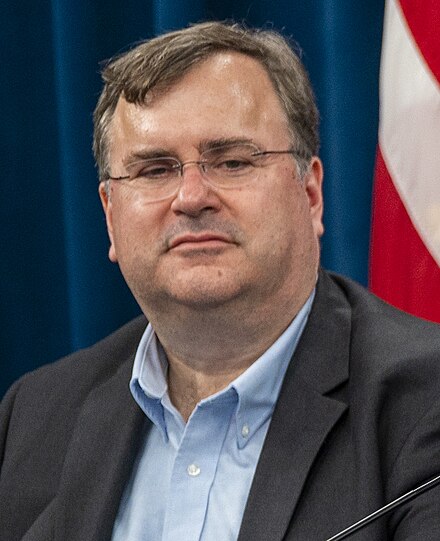
President Trump was threatening personal and political retaliation because I tried to help Paris going.
Do you think you'll be penalized?
You're not planning on leaving the US, are you?
Reid Hoffman is the co-founder of LinkedIn and one of the world's most successful entrepreneurs playing pivotal roles in the success of influential companies including PayPal, Airbnb, Facebook, and Open AI. And now he is a leading voice in AI, helping people utilize this new technology to empower themselves in their life and careers.
You were part of what they call the PayPal mafia who went on to create Tesla, YouTube, Reddit, SpaceX, LinkedIn, and become multi-billionaires. And so I've got so many questions.
What are the key factors of a great entrepreneur's mindset?
One is you have to understand that you don't get to an optimistic future by trying to avoid failure. When we started LinkedIn, everyone said this won't work. But just because you don't have 100% chance of succeeding doesn't mean that you shouldn't do it. But there's also a set of skills that are rare that you can actually teach to entrepreneurs that makes you much more likely to be successful.
The first is and then how do you know when to quit the job? What's your view on work life balance? And if you were advising anyone to build wealth in 2025, what would you say?
Here are some simple tips. So one is read what is your take on AI? It gives us superpowers. Now there will be costs to it but like electricity it does electrocute people but it's essential for human society.
And is there anything that the average person should be doing to capitalize on the opportunity that AI presents?
100%. This is what you do.
So quick one before we get back to this episode. Just give me 30 seconds of your time. Two things I wanted to say. The first thing is a huge thank you for listening and tuning into the show week after week. Means the world to all of us and this really is a dream that we absolutely never had and couldn't have imagined getting to this place. But secondly, it's a dream where we feel like we're only just getting started. And if you enjoy what we do here, please join the 24% of people that listen to this podcast regularly and follow us on this app. Here's a promise I'm going to make to you. I'm going to do everything in my power to make this show as good as I can now and into the future. We're going to deliver the guests that you want me to speak to, and we're going to continue to keep doing all of the things you love about this show. Thank you. Thank you so much. Back to the episode.
Reid, as I read through your life, it's remarkable in it's almost impossible that one individual could be involved in so many companies that have had such a big impact on society, but at the same time someone be able to seemingly see the future over and over and over and over again. So, because as I read through your life, I thought this can't be one individual, this can't be one lifetime. It begs the question to me, what is in your view the causal factors that set you up for such a life?
That's interesting. I've never been asked that question before. Um, probably it's a combination of the fact that my passion is who are we as human beings and where are we going? So like that's from a very young age like I've been like and I think I got it by reading science fiction right this kind of like what is the scope of humanity like you know Isaac Asimov's foundation and you know this kind of stuff.
And then um I ended up growing up I was born in the Stanford hospital I ended up growing up in Silicon Valley and so I got the exposure to technology can change the world.
And so focusing on thinking about, you know, kind of this intersection of humanity and technology. And of course, obviously, science fiction has some play to that, too. Although most of the technology in science fiction is just fiction, right? Just like we have wormholes and we do intergalactic travel. It's like, as far as we know, there is no such thing as wormholes for intergalactic travel, right? I mean, all current contemporary theory of physics would suggest that there isn't. I mean, there may be wormholes, but they're not for, you know, put your Star Trek spaceship in it and go somewhere.
And then probably the other part of it is, um, I played a lot of board games when I was a kid and so it gave me a very deep sense of strategy and so approaching life.
Yeah, exactly. Wow. This one here, you probably remember this one.
Yes, I do remember that. Right. And the names on the cover.
Borderlands. What age were you when you started playing Rune Quest? You were very young.
Uh when I started playing Rune Quest probably 10.
And what is the link between the life you lived and the board games you played as a 10-year-old?
Um well mostly as a function again like the role playing games is like strategy, right? So it's kind of um you know how do you uh kind of think about like uh like an adventure is both a narrative experience but is also a strategic experience like you know how do you save the town from the from the you know the bandits you know that kind of thing.
And so um so it gave me a deep sense of kind of like how does strategy and tactics and problem solving um and how do you do it as a group, right? Because you know in fantasy role playing games it tends to be you know especially when I was doing it as a kid a set of blokes. I hear it's now a little bit more gender balanced which is good and especially for the blokes we're not just geeks by ourselves here, right? Um and um and so and the way that I got to doing this is I was enough because this is kind of the focused, you know, kind of kid I was is what I um I'd heard that the Chaosium had their offices were down the street from a friend of mine's. And so I literally walked in the door and started hanging out at their office.
And they're the maker of this game.
They're the maker of this game. The chief editor, I think, wanted to get me out of the office. So he said he handed me the pre the the in-development draft of this and said here go look at this and so I took it home as an obsessive kid. I I like redlined it. I worked my way through it and I brought it back. Like he gave me a Friday and I brought it back on Monday. So he failed on his get this kid out of the office mission. Right. But he's he was then and I I I still remember this look of vague irritation when I handed him this because he's like, 'Ah, this kid is handing me this thing. Oh, I don't want to be a mean guy.' And then he started looking at it and went, 'Oh, this is actually good work.' And he was like, 'I want to use this work.' And I was a kid, so I didn't understand. He needed to pay me to use it. I wasn't that wasn't why I was just doing it because I wanted to show that I that I knew how to do this stuff.
And so he then wrote me a check. Um, so it was my like my very first paycheck to to be able to to use the work in the publication. Um, because you know this is how copyright that that means he then owns all the work that I did so he could publish it.
And is your work still in here today?
So edits that you made to this game are still in here. At what age?
Wow, that's incredible. And how much did he pay you?
Uh, it was like $160 or something. It's not bad for a 12-year-old.
Yes. No, no, no. My dad was originally opposed to fantasy role playing games. It was like, uh, what what are you doing? Like, you know, go like be on a path to a real life. And then when I brought home the paycheck, I was like, well, maybe that works.
And what was your what were your dreams at that age? What did you think you were going to be when you were older, sort of 12, 13, 14 years old?
Frankly, I had no idea other than the following entertaining thing, which is since both my mother and father are lawyers, when I was asked when I was 12 what I wanted to be when I grew up, the answer was not a lawyer.
Yes. Well, because lawyers um look obviously a bunch of barristers on the side of the pond. Um, lawyers are essentially modern gladiators who are paid to be the gladiator of whatever their paycheck is, whether it's a client or whether it's, you know, being a full-time employee and so forth. And it's quality work. It's important for society, but like I was like, 'No, no, I want to create things. I don't want to be a, you know, belt on my sword and, you know, go to verbal battle for, you know, whatever the, you know, contract or litigation or any of those things.' And I was like, 'No, no, no. I actually want to go build things.' And so I didn't know what I wanted to be when I grew up other than and maybe I still don't know, right? Um but what I evolved to is I normally have about a two to three-year plan that's iterating, right? And that's that's tends to be what I do.
And being born at Stanford Hospital is pertinent as well. I don't think people in the UK and around the world necessarily know the significance of that. But can you explain why that's important?
Silicon Valley um is a it's a network of a generative platform. So like one of the things that it that I have learned to think about is networks amplify productivity. That's not just as we get to you know why it is I conceptualized and founded LinkedIn but but it's think in terms of networks. It's one of the reasons why cities are such uh engines like basically if you really look at economies it's city regions and it's because the city region creates a network right it's a network of could be suppliers and all the rest but also talent and capital and knowledge and communication and strategic lenses onto the world and so Silicon Valley has been an like people go oh I'm a genius it's like no no I'm in Silicon Valley right and really helps. And so being born in Stanford gave me this a set of different you know kind of perspectives. One technology is a lens into the future. Another one is as an individual you can go create a technology or technology company that can be a lever that can move the world, right? And that an individual, you know, from anywhere can kind of do that. Um, and all of those things were part of the luck of being born at Stanford.
Yes. Well, I don't choose. You don't choose where you're born.
But a lot of people were born there and they didn't go on to do the things that you did.
People like to tell stories of manifest destiny cuz I am great. It I would have been great anywhere that I was, right? And it's self-delusional. I mean, yes, I think I'm smart. Yes, I think I'm hardworking. Yes, I think I'm strategic. Yes, I think I have skills that are rare in the human condition, but any great achievement also has luck, right? And and I can point it in any companies. I can point it at any individuals. Um, and for example, one of the basic luck is like I had exposure and connection to Silicon Valley. If I didn't have that, the technology destiny or the technology achievements I've done wouldn't have been able to do those or wouldn't have been able to do those the amazing way that I did them.
So, what would you say then? Because there's people that listen to the show all around the world. Um I we just Spotify Rap just came out and globally we have quite an extensive audience. It's funny. It's funny that it's so globally distributed, but I think it's a factor of being on YouTube and speaking English. What would you say to people that are born in we've got an audience in Cape Town and Indonesia and Australia, New Zealand? What would you say to people in those parts of the world? Can you still be quote unquote massively successful?
Yes. But but you have to think so. Um and I see you have a few of my books there. um my very first book, The Startup of You, um which um came from the commencement speech I gave at my high school, the Putney School in Vermont, because I was like, 'What do I say to a bunch of 17-year-olds, right?' And I was like, 'Well, be the entrepreneur of your own life.' And what that means, there's a chapter in there that says, uh uh the bad advice you're usually given is just follow your passion. And the problem is the passion your passion might be very passionate but does do you have a strategic advantage there is that something you can do and so applying the rules of entrepreneurship yes of course you have to be passionate about what you're doing because if you're not passionate you can never be world class unless you're passionate about what you're doing but that's not the only thing and so you look at okay what are the market realities what's the market what does the competition look like and within those what can your aspirations be and there's a whole chapter on that in that book because that's by the way, similar to how you plot out if you're founding a company, right? If you're founding a company, you have to think the same way about this, but think about it as an individual.
So, if you're in Cape Town, there's many great things you could do. Now, if you say, 'What I'm going to do is create a search company to compete with Google,' uh, don't do that, right? I mean unless you really have some real unique thing because remember you're competing with this intensely powerful not just the company but the network of Silicon Valley which attracts amazing talent from around the world capital knowledge and they're all sharing it with each other at a very fast clock speed and so wherever you are that doesn't work. Now what you do think about is okay what can the thing I do. So for example um you know on I love podcasts as you know I you know Masters of Scale possible etc. And so I had the the delight of of um of doing like interviews with Tobi Lutke, all right, or Daniel Ek.
And what you do is you look at part of their success, Shopify, you know, Spotify is is what how do I run my strategy from here? Like how is it that I'm competitive and and can win a global field marketplace that Silicon Valley doesn't do? And so for example, one of the things that they're different in the cases cuz like for example in Spotify that was hey I can get the record labels to give me a chance to start doing the business by doing just Scandinavia. Prove it and then expand it. Whereas those record labels the capital to do it in the US would never happen and hence you have Spotify. And in Shopify it's hey the Silicon Valley tends to go oh e-commerce is over. It's owned by Amazon. we're not going to do any of that as a platform. Maybe, you know, this thing or that thing, but we're not going to do it as a platform. Well, but they're wrong. And I can do a long play. And then once I get to this network effect of a whole bunch of, you know, small and medium businesses doing their own, you know, kind of websites and e-commerce, then I am the platform for that. So, it's kind of a long under the radar strategy where you're not directly competing with Silicon Valley companies. And by the time the Silicon Valley companies go, 'Oh, there's a major opportunity. You've got it.' So those are plays that you can do if you're smart and strategic, but you have to know like uh Tobi Lutke um like is deeply informed about what's going on in Silicon Valley. Like when he's charting a strategy, he's aware of that. He's got connections. He visits. I mean, I'm a friend of his, right? And um and that's part of like if you're doing a global software play, you have to be aware that your competition is global.
There's an element of self-awareness required here.
And it's funny because when I was younger, I certainly didn't have that self-awareness. I thought that I could start a social network from my bedroom without ever doing it before. And I wasn't necessarily thinking about the geographical situation or Silicon Valley. um how important is self-awareness as an entrepreneur and how does one cultivate it to know what they what challenge is actually befitting of their skills.
So I think um self-awareness is generally a very good thing for all human beings. Um and um you still have to be irrationally ambitious which is I think very important. And so sometimes self-awareness and and just you know uh immense ambition sometimes don't go together. It's better when they do but that's fine. What you do have to do is be very aware of what your competitive space looks like. Right? So just about everybody who succeeds in a substantial way is good at being competitive, right? And and you if you're blind to your competition, you're kind of hosed. If you're successful, it's just because you're lucky, right? Because uh and that's part of what I was referring to earlier in luck. you if you start a business where you have the luck where competitors haven't identified it haven't and you get a long head start on it that's an instance of luck not all the successful companies are that way but that's very that that can be very good and very useful on that.
Um but you have to be very aware of what the competitive landscape looks like now that's also true of individuals right um because it's like well who am I competing against is a relevant question but it's uh You can be kind of competitively blind as an individual and still be very successful because of the way it works. But if you're competitively blind leading a business, leading a startup, almost always that's hosed, right? That's one of the reasons why like you know the all investors in Silicon Valley always ask about your competition and if you say I don't have any competition, you're like well if they disagree with you they're not going to invest because they go you're competitively blind.
Is there any such thing as an entrepreneur in the sense of you know people always ask me they say can anyone be an entrepreneur and a founder and there's so many different types of companies one can start these days that it's a quite tricky question to answer but do you think anyone because there's going to be people listening to this now that are in they're managers in companies they're you know they're working in a law firm or whatever and maybe they've got an idea I mean everyone's got an idea and they don't know if they're the type of person that should pursue it or not is there a framework one can one run through to decide that.
Yeah, I'll run through a framework to to help the folks. The um the short answer is no. Not everyone should be an entrepreneur just like not everyone should try to be a professional musician, not everyone should try to be an athlete, not everyone should be you have to look at what your competitive advantages are and does your disposition, skill sets, path give you a competitive edge in this case at being an entrepreneur, right? Because any game that's competitive, right, and entrepreneurship is a highly competitive game. That's that's part of the, you know, it's as competitive as trying to become, you know, a globally renowned actor. It's as competitive as trying to become the CEO of a major bank or anything. So it's it's a competitive game.
So for an entrepreneur what you have to do is you have to say okay well um I have to be uh able one of the classic ones to uh to take substantial risks now it's not being risk blind entrepreneurs are actually not risk blind or occasionally they are and occasionally they're lucky and it works but almost all the successful ones realize that I'm that when you start a company you're default dead Right? By default, the company is out of business, right? And so, you're trying to get to a point where it's default alive versus default dead.
Then there's a whole bunch of different things that go into that game. So, one is um well, can you go get the capital? Um are you in in a market that allow you to get the capital? Um can you move to a market that allows you to get the capital? Um how do you pitch the capital? How does pitching capital go? And then you get this this kind of flywheel going between you know capital um talent uh business realization capital talent right and you're doing that and the business realization obviously includes customers includes go to market includes building products and services etc and by the way it's dynamic so you say well I went and worked at a large company and I learned a bunch of things like well yeah but you didn't learn how your default dead you didn't learn how to launch a new product you didn't learn how to how do you start with a small product and grow to a larger product, right? You didn't learn how do you set up a team from scratch? And by the way, a team from scratch when the vast majority of human beings like more certainty in what their week looks like, right? Like I'm going to come work at a place because I can continue to work at a place and as long as I'm capable of what I'm doing, I keep my job, right, in terms of what I'm doing. And so I understand the certainty. So, so entrepreneurs have to do all that sort of thing.
So in addition to kind of risk taking, you have to be good at bringing many resources from different uh vectors into your vision and working with you. So there's investors, there's employees, there's customers, there's advisors, there's partners. You have to bring the right set of those people along with you in this iterative this this kind of you know iterative journey. Um you have to be able to grow yourself and learn because the game changes. Um, like one of the metaphors I use to to to train and and conceptualize young entrepreneurs is kind and there's a bunch of different parallels between military strategy. It's part of like the board games thing and and and business strategy, but it's like Marines take the beach, army takes the country, police governs the country.
Three three very crude broad generalizations about how you do it. So you go, what's your marine strategy? Do you have because you must as a seed series A you must have a a good strategy how you get on the beach how you get you know initial product market fit how you're heading towards scale product market fit okay you're there how do you win the country right the market right what how do you get to scale product market fit how is that going to work how are you going to play against competition different in these two how do you get up to scale you have to learn this game is different than this game right and you're learning new things as you're doing it so you have to have this kind of um what I refer to as being an infinite learner. Like you're learning what the new game is. Because by the way, no entrepreneur shows up at door one at day one going well I know how to do marketing. I know how to do sales. I know how to do uh product development. I know how to do engineering. I know how to do engineering operations. I know how like no no you have to bring all that in. You'd be learning what you need to learn in order to do that through that. And and and and that's part of how you you grow into that.
And then by the way once you've established a business because the thing another thing that brings in a lot of competition is people say oh that's a valuable business I'd like to possibly that and then you then a new generation of heavy competitors come in so can you can you kind of keep your position and grow your position in a market which is the police part right the police part yes exactly and so so you have to you have to look and each of these three is different games and there's more games than that but it's a a way of kind of simply understanding that So, uh, always being learning, being an infinite learner and changing your mindset. And so, frequently, like for example, when I'm talking to an entrepreneur, um, especially the first few times is I will push them on their vision to see if they're learners. Now, one, they should have persistence and grit because like, no, I've thought about this. I've got a good plan. This is how I'm going to go to market. I understand what the competition looks like. Because if they go, oh, you're right. I should totally change it. you're like, okay, you have to have some grit and persistence. But on the other hand, if they're not like going, oh yeah, no, if we encounter that, yeah, we'd have to do something about that. Like if our competitors started doing that and maybe we would do this, right? So they also are learning, they have flexibility. So you want that combination.
Like one of the things about startups is uh you have to um bring kind of this dual lensed focus of things that seemingly are a little contradictory. So like persistence, flexibility. Another one is right now long term. Right now you have to do right now, but if you don't have a long term of how you're building something that's insanely ambitious, you're never going to get there. If if you shoot for the hillside, you're never going to get to the moon. You have to shoot for the moon. So you're shooting for the moon, but it's me and my two friends in a garage right now.
It's interesting because the middle bit, does that matter?
It does, but it's it's a remember like the Marines, Army, police.
Army when you're doing the Marines is the middle bit.
So, so it does, but it's not by the way and one of again mistakes and that's part of the reason why there's another chapter in Startup of You is ABC planning. The mistakes is like you have a plan and then you have a plan B. It's like no no you have a plan and then you have a lot of micro plan B's, right? So, you're kind of like, well, if that doesn't work, then let's try this. If that doesn't work, then let's try this, you know, and and you're iterating through them. And when you know to do a major pivot, because by the way, many successful businesses also do major pivots. Um, PayPal started as encryption on cell phones, right? That's that's where it started, right? So, you do major pivots. It's when you go, 'Oh, my current plan, which I've iterated for my first plan, is worse than my first plan.' like the market circumstances, its chance of succeeding, those are now worse. That's when you think about, okay, let's do a major pivot.
So, with your analogy of invading the beach, how do you know what beach to invade? Like, how do you know if you've got a good idea? And how do you know what a good idea is? Because most people, as I said, listen to this, they've got a business idea.
And how do they know if it's good? And part of the issue they often have is they've heard anecdotally or they've seen that someone else is already doing it. So they go, 'Oh gosh, it's already been done.'
Yeah. There's call it two kinds of ideas. And frankly, by the way, you think, you know, there's over eight billion people in the world. The fact that you think you're the one person who's thought of this idea, you may not be doing math. Well, right. Um so so thinking you're the one person who's thought of the idea that's mistake right the question is are you the person who can pull it together in the momentum and and pull it together and it's still by the way that may be well okay that gets down to 100 people okay well am I the one who's in motion right now am I the person who's willing to take the risk quit my job and do it um and you never really get down to one right So, so startups are risky businesses.
Like one of the things this gets back to entrepreneurs like I think the greatest chance and even when I was starting LinkedIn after having started SocialNet after having you know uh co-founded PayPal as a board member even when I was starting LinkedIn what I would tell the people like look we have about a maximum of 20 25% chance of being successful right just to be clear right we're going to try to grow that to 100%. Right? But but we're a couple people in a garage right now, right? Like there's all kinds of things that can go wrong. Anyone who's telling you it's 100% now, they're lying to themselves or they're lying to you. And and you know, like I'm very realistic in my strategy. And so so you're you should never think you're starting something 100%.
Now within the ideas, you go there's roughly speaking two kinds of ideas. One kind of idea is people generally think that's a good idea. They think it's a good idea because you go to customers and customers say, 'Yeah, I'd like that.' Right? They go to they go, 'Oh, well, hey, AI is going to create a whole bunch of new SaaS businesses, right? Oh, yeah, that makes sense. New technology transformation, a whole bunch of or people in e-commerce, they're going to want to buy this kind of stuff.' Okay, you know, makes sense. So, there's a stack of things where they're pretty measurable as ideas like you can measure them with customers. You can you can you can do feedback and polling and other kinds of things. Now the good news there's good news bad news on this category. The good news is you can derisk is there a market for your idea mostly. Not not entirely but mostly. The bad news is so can a lot of other people.
Right. And so in this category there always tends to be competition and your competitive strategy generally speaking needs to be why against like in this category you should be expecting competition. Why am I going to win out sufficiently against this competition in a global arena? I have invested in those businesses. Greylock invests in a bunch of those businesses because we do we're you know one of the best VCs in enterprise on the planet. You know blah blah blah.
Then um the other kind of I think which is the one I tend to start and the one I tend to most invest in is people think that you're uh that you're crazy when you're starting your business. And by the way that can be a by the way and frequently you are right but but people think you're crazy which means most people think you're crazy which means your competitive field is a lot less right? So for example, I'll give LinkedIn um as an example and I'll give Airbnb as an example. So LinkedIn um I go and I say hey um individuals will join this network and bring in their and establish a public identity and profile and bring in their network and and use that even as the vast majority of the billion people register for LinkedIn are you know basically work at companies right they're not starting company like it's a great platform for entrepreneurs entrepreneurs get it right away but like I'm like well I'm working at a company is am I going to seem disloyal to my company if I establish a profile here you know because back back when we started it like no one's going to use that.
Well, because like they're worried about uh will their company fire them or not give them a bonus or something else because they have a LinkedIn profile because they're saying they're disloyal.
So, it looks like they're shopping cuz I mean for most people that use LinkedIn now, you don't see it as I'm looking for another role.
2003 literally everyone said to me this won't work because you're individual focused. you need to be selling products to companies.
And so I was like, 'No, no, I think I'm right about the way the world can and should be.' Right. And um and so, uh I'm going to take that risk. And that's the contrarian risk. I'm going to take that risk and I'm going to I'm going to play it forward. And if I'm right, I will create something that will transform the industry that will be amazing for individuals, amazing for companies, etc. And we can go obviously whatever length you want to go through the LinkedIn journey, we can do that.
Now, Airbnb is an as an investor example. So, Airbnb was my first investment at Greylock. And so, and I was at Greylock because David Z, who was my partner, who was the Greylock partner, who was my most valuable board member at LinkedIn, convinced me that I should do venture at Greylock. and I'm very close to David. And so I bring in Airbnb as an investment and David looks across the table from me and says, 'Look, every VC has to have a deal they're gonna fail on. Airbnb can be yours.'
Yes. Because Airbnb at the time had so little volume in its transactions that the founders could have called everyone who used Airbnb that week if what they did is dedicated making phone calls like you know five minutes of phone call you know through through the week. That was how small it was. And David's argument at the Greylock round table was look, this is very strange. Staying in other people's houses, you know, like the danger of something going wrong. Um, cities are going to hate it. Hotel lobbies are going to try to outlaw it within cities, you know, like this is just going to be a train wreck all over the place. And I was like, no, but I want to take the bet. And he's like, great. like we hired you as a partner. We think you're smart. Go ahead. Right now, to David's credit, six months later, the transaction volume in Airbnb is like this classic hockey stick. It was years of very small and then it grew to being very big.
Um, so the hockey stick hadn't started yet. And David came to me and said, 'Okay, cuz like the always be learning is also useful in venture capital.' He came to me and said, 'Okay, you were totally right about Airbnb and I was I was totally wrong. What did you see that I didn't see? Like, how did you know when I was sitting there blowing smoke at you saying this is going to be a total failure? You said, 'Nope, I'm g I want to do this.' I said, 'Well, look, you were right about all of the risks about that could happen with Airbnb.' You were absolutely right. Any of those things could have made the business worth zero. But this is the reason as investors we do a portfolio because yes Airbnb could be zero but if it worked it was going to be huge right it was going to transform an industry this is the kind of investment I like doing as an entrepreneur or as an investor and I said look we had a plan for each of those risks we had a plan A we had plans B we're going to try to navigate it isn't that we could guarantee the risk but the fact that everyone else saw those risks meant that we had years of no competition that we could establish the network, we could establish the marketplace and then once we're there, we are the marketplace for how that works. And that's the kind of investment I like doing. That's the same thing with LinkedIn as I as I founded it. Same thing with, you know, kind of uh with Airbnb as an investment. And so that category of investment you cannot validate with the customers.
I was going to say so if everybody thinks it's a good idea, it's probably not a big idea.
Yes. It it's much more challenging to be a big idea.
Interesting. Really interesting because it's funny because when people pitch you, they say, 'I've asked everybody and everybody thinks it's great.'
So, that's probably an indicator that it's probably not big or they're bullshitting.
Yes. And I'm looking for both in my creation of ideas and in my funding of ideas. It's not dumb people who think it's a bad idea. It's smart people who think it's a bad idea.
You want smart people to think it's a bad idea.
Yes. Because then you have something that's contrarian because that's what contrarian contrarian isn't I don't understand technology at all and I think it's a terrible idea. It's like, well, who cares? You don't understand anything, right? It's smart people who think it's a bad idea, right? And then you have a theory of the game that's a good one, not perfect, very risk, can be very risky about why they're wrong.
So, I'll give you the LinkedIn example. Literally, John Lilly, partner of mine at Greylock, I recruited him into Greylock later. He was the CEO of Mozilla that I was on the board of, super smart guy, friend of mine. I sat down with him about LinkedIn because this is how I go when I'm starting a company. I go to all my smartest friends and I go, 'Here's what I'm doing. What's wrong with it? I don't want to have the conversation with them go, 'Oh, it's great. Useless. Doesn't help me, right? What's wrong with it? Why will this go? Why will this fail?' And so I sat down with John. We had breakfast at a at a breakfast place in Silicon Valley. I said D. And he's okay. You got you know, I'll be your friend. You It's never going to work, right? Right? And I said, 'Okay, well, why do you think it's never going to work?' It's like, 'Well, look, you'll never grow the network. Like the first person who comes in, no one else in the network, not valuable for me. Why should I invite someone in until you have like, you know, I don't know, 500,000 people, a million people, there's no value in the network. So, there's zero value. So, it's never going to grow. You're never going to get anywhere, right?' And it was a very smart specious thought that was probably the key thing for starting LinkedIn was how do you get to millions of people in the network because that's the only place where the value proposition kicks in, right? I knew that if you had a thousand people come in, 900 of those people would be exactly like John. They'd go, 'H, I don't see anyone else here in this network, etc.' But I knew that some of them, somewhere between 10 and a hundred of them would go, 'Oh, I see what this could be and I kind of want to play with it.' So, you know, I'll invite Stephen. I'll invite, you know, I'll invite some people in. And then as it very slowly starts going, then all of a sudden there's enough people in, it's interesting, it's curious, and you could grow to being valuable. So I knew that that by persistence through those initial exploratory people, people who were curious, people who want to experiment with it, people who got the vision of it, you know, etc. said that all of that I could grow to your initial critical mass and then it would kick in.
The model of LinkedIn obviously I know LinkedIn more today than I did back then in what 90 no 2002
2003 is when we turned it on.
Really? Yes. Wow. And back then, was it a social network as it is now where there's a news feed and people are talking to each other or was it more of a public CV?
It was a public CV with a search capability and ability to communicate with people.
Okay. Interesting. So, the network effects were slightly less important than the model is today because a lot of people today are using it not to search for a job or a professional, but to talk about themselves or to share their life, etc.
And we knew that we would get to growing network effects. Like for example, again part of the you know marines, army, police is your network effects may very much evolve. You may start with no network effects. That's fine.
Yes. Yeah. Yeah. So am I right in thinking because around then there were social networks emerging that were very focused on people conversating with each other whereas LinkedIn by design it didn't really really matter if anybody was chatting to you about what they ate for dinner that day. So a new network could penetrate the market that was less dependent on the like social networking component because if I go on there and make a profile and put my CV up, it doesn't really matter if I don't come back for 4 days.
Cuz I can get an email that will bring me back in saying, 'Oh, there's a job here.' But once my profile's up and ready, I'm now giving value to the rest of the network just by being there.
Yes. And that that's a virtue, not a bug, because it was part of how we solved the critical mass problem.
Yeah. I was I I could never understand how LinkedIn did that, but now it makes sense to me.
Cuz I always think it's building a social network is just it's asking for like hell in your life.
Yeah. Well, I'm kind of a specialist.
Right. Uh you know, uh one of the first investors in Facebook, one of the first investors in Friendster.
Oh, right. I didn't realize you were invested in Friendster as well.
You were part of what they call the PayPal mafia. I know you used a different term
network. It's it it it's it's less it has less pizzazz, but we weren't really a criminal group, right?
but mafia's cool as well.
People people love the term mafia. And through that time, you worked with the likes of Elon. You knew Peter Thiel from your days at university. Um I mean, everybody asked this question about PayPal and why it was so successful, but also why so many of the alumni of PayPal went on to become multi-billionaires. I think seven people that that were part in that sort of part of that sort of early PayPal founding team went on to create Tesla, YouTube, Reddit, SpaceX, LinkedIn. Was it talent density? Was it was that what made the PayPal mafia?
Well, it certainly was a component. And so it's it's it's it's a couple of things. So one um that high density talent of folks who are willing to take intensive risks want to do contrarian things believe in what their contrarian thing is against common sense wisdom. That's one part. Another part is um when PayPal went public it was one of it was a it was a technology winter. It was one of two technology companies that went public that year.
Right. So all of a sudden and then got bought by eBay. So all of a sudden you had this talent group of people that had a bunch of money in their pockets and the network within and that believed in the consumer internet. So the network of Silicon Valley at that point had thought the consumer internet was played. They were going into clean tech and to enterprise. So if you ask if you try to ping a venture capitalist about I have a new consumer internet idea, they wouldn't even make a meeting with you. They would take a meeting if it was clean tech. They'd take a meeting if it was enterprise software. Right now then you get all the the the PayPal people coming out going, 'Hey, I can fund my own initial idea. I've got this great idea, YouTube, right? LinkedIn and I can fund it and I can get it going.' And then and this is part of the web 2 movement. This is a I I coined the term internet 2.0 and then Tim O'Reilly uh made the much better term web 2, right? And so the uh these folks going, 'No, no, the consumer internet is like that was just the first wave on the beach. The tsunami is still coming, right?' And so we were all out investing and we were talking to each other because frankly we're like, 'Well, these these VCs don't get it. Like this is coming.' And then of course you started seeing you know YouTube and you started seeing LinkedIn and you started seeing and it was like okay like we will like these are important things that we're going to invest in and that that's that's part of the reason why the that's the uh because by the way remember you know uh bad competition right is one of the reasons why not just talent not just capital but also competitive steering is part of the reason why the PayPal network or the PayPal mafia had such a massive uh suite of success.
You know, I often hazard a guess at what the like the the fundamental game of business is for a startup founder. And I've hazarded a guess before that it's recruiting the best group of people you possibly can, binding them with a culture that gets the best out of them and setting them a vision that's worthwhile. But from reading your work, there's a couple of things and just from hearing you today, sales is so like whatever your go to market is, and it can be sales, B2B, enterprise, etc., But like for example in in social networks it's usually a viral you know a viral marketing or viral growth plan.
So when I say sales I actually mean like selling to...
Oh yes, employees. 100%. Yes. And like you must...
You said like partners, investors.
Yes. Because you have to come on board my vision. Invest in my vision. Because by the way a partner when you're a startup is also investing your vision. An employee is investing your vision. Right. How do you be good at that? There's a limited set of skills that you can actually teach to entrepreneurs versus the entrepreneurs just learning by doing. One of them is pitching, right? One of them is understanding how do I communicate my vision in a way that other people can go, 'That's really exciting. I want to join your vision with you.'
And if I was a young entrepreneur telling you, right, I want to be better at pitching my vision so I can get world-class people to join me, world-class investors, partners. Is there any advice you could give me on things I should and shouldn't do?
Yeah, absolutely. And by the way, we could spend the entire podcast only doing this. I mean, there's a very deep well, but here's some simple tips. So, one is the mistaken lesson that most people learn is to try to do reality distortion. It's like, no, no, no, no, no. Silicon chips to make ice cream shakes. It's the thing. No one's thought of it. It's really big, right? And people like, 'Okay, what you're convincing me is you're crazy.' Right? Like you're literally like, 'Please leave now.' Right. So, you have to realize that all pitches are dialogues, right? And you want to be listening to smart people and generally speaking, everyone you want to be recruiting, you want to be recruiting smart people. You want the absolute best talent working with you. You want the absolute best talent working in your company. You want the absolute best. So you want people who are thoughtful and asking good questions. Like for example, I pitch insanely aspirational businesses, but I don't pitch them saying, 'Oh, LinkedIn is guaranteed to succeed. There's no universe in which LinkedIn won't be the transformer of professional work and careers.' What I do is say it can get here. Like we have a real chance at this. Now, we have to navigate these risks, but if we navigate these risks, we're going to be here. Right. And then people say, 'Ah, you're credible. You have a huge vision. You're compelling. I think you can do this.' Right? And then they come on board with you. So, one of it is to pitch the huge vision, but show that you're aware of the difficulties of getting there. Right? Now, you don't have to go through all of them. You just have to go through enough of them or a big enough one that the person goes, 'Okay, great. I get it. You're seeing it.' Right? Another part of it is to say, 'This is part of the reason why competition is important is like I understand what game I'm playing.' Right? Here's my theory. This is what competition plays in. This is why I think the market will favor me. This is why I think technology trends will favor me. This is why I think I have a very unique edge. And you know in Blitzscaling which I think is another book on your thing, most consumer internet plays are what we call Glengarry Glenn Ross markets which is first prize is a Cadillac, second prize is steak knives, and third prize is you're fired. So you have to be pitching why you're possibly first. Yeah. Right. Because there's only going to be a couple of winners. Yes. And so like this is why we can win. Right. And so now there's also mechanics in pitching which is you know how do you tell a story of it? Part of the thing I tell entrepreneurs is to even if the person doesn't ask you the risk, tell them what the risks are and how you're navigating them because it'll establish trust, right? So like for example in pitching investments now this I didn't know until I started learning it in terms of a mechanic of pitching is and entrepreneurs tend to go, 'Oh, when I need money is when I write out my PowerPoint and I knock on the door and say hey give me some money.' That's a foolish time to start the conversation. Much better to start the conversation when you're not saying give me money. So if you like as much as you can in all of these things, start the conversation well before you're getting to a potential contract of any sort, a partnership or an investment or even an employment contract. Like so for example, always be recruiting doesn't mean oh I want to hire you right now. It's like okay find great talent. This is one of the things I learned from SocialNet and brought into PayPal. Find great talent and start talking to them, right? Even if today you don't have the right position to hire them, right now obviously there's a whole bunch of great talent, you could waste a whole bunch of time, you want to be talking to people that, you know, you either really would love them to join at some point not too distant future or they know other people who would be like that. Because by the way, part of when you meet great talent, you realize how to like because you're always adding new great talent. You're like, 'Oh my god, we need people like this. How do we bring them in?' So for example, one of the things that I learned that was, you know, from SocialNet that I brought to PayPal was at SocialNet, I was trying to hire people who had 10 plus years experience doing the thing that we were hiring them to do before because the classic kind of wisdom that you get from business schools is make sure they have experience on their CV. Look, they have to be able to do the job, right? No question. But if you said two years of experience and an insane learning curve, that's much better.
An insane learning curve. By that you mean someone that's rapidly learning, self-teaching.
Yes. And learning on the job and going and figuring it out. And so when I went to PayPal and like when the company was founded, I was on the board of directors. I was like, 'This is what you're looking for, not this.' Right. And so back to your like PayPal mafia question, that's because we hired those kind of people, right? But it was a very limited set of people in the company who had had more than a couple years experience working within payments, within banking, within you know because it was the I don't know learning curve.
When you look at your portfolio of investments and the entrepreneurs you meet, do you think young entrepreneurs realize how significant hiring is to their eventual outcome? Because they tend to focus on like how good the product is or sometimes capital. But I just looking at my own portfolio, I often find myself like feeling like an old man because I'm telling them that like spend more time hiring, not just hiring your friends because they're willing to come work here.
Yes. A proxy for a founder. If you're not spending a third of your time hiring, you're very much underdelivering. This is the thing. It's like look life is a team sport. Companies are team sports, right? If you could just do it yourself, you wouldn't hire anybody. No, you're hiring people. So, like you say, well, I've got a really good, let's, you know, you use a European football analogy. I've got a really good striker. Great. Well, we don't need to worry about the halfbacks or defensive or, you know, goalkeeper. No, no, you have to hire all things. And you go, well, I'm a really good halfback. That's great. You need the others, too.
I think when I was young, when I was 18, 19 years old, I somewhere in my brain thought my outcomes were going to be determined by how hard I worked and how good my ideas were. And it wasn't until I accidentally hired someone fantastic that I realized the absolute tremendous impact that an A player can have on everything. And that was just such a mental shift for me.
Yeah. Literally, I think Zuckerberg puts this in a very good way. He wants to hire people he would work for. And why is that? Because that's a demonstration of high talent. Okay. Yeah. Yeah. When you're a young founder, you're somewhat insecure though. You think, 'Oh god, why would that person want to come work here or I can't afford them or you want to hire the best people you can.' And by the way, if you can hire people who are better than you, oh my god, it makes you much more likely to be successful.
Yeah. Yeah. It's my experience that young founders don't really think about that because they're also insecure. So they think, I can't manage that person.
Yeah. Well, but your theory of management is look, if you can hire someone where your only management technique needs to be let them loose, that's best. Like just go, right?
And is there anything practical about hiring? You know, people say like hire slow, fire fast or other sort of like cliche advice around hiring that matters. Like how important is it that they're culturally aligned or...
So culture can matter. I would say look in terms of and hopefully it's not a cliche but hopefully a heuristic principle, references are more important than interviews. Right? We get a lot of repetitive experience at being compelling in an interview and if you can't and by the way some great people aren't compelling in interviews. Right? They're not really great at selling themselves but oh my god are they amazing in the field. They're like an engineer and you're like okay but oh my god can they do great things. In which case like do whatever you can to hire that person. So if you ask me you can only have references or only interview 10 out of 10 times I'll hire the person on the references.
You surely you're not talking about the types of references where they give you the references.
No, no, no. And this is one of the features of LinkedIn, like you want to find references that will give you good perspective. Now, even if you can't go find someone that you know or you have a tie to or is what you refer to frequently as an off-balance reference sheet, you not the one they give you to be a reference. So even if they say oh here's you know I'm reading here's my reference you know Bob or Susan you call Bob or Susan and you say this is a standard question I will use all the time but especially if I'm calling someone who's a given reference say look I believe every person is a combination of strengths and weaknesses and if you don't give me a weakness I will believe it's so bad that I should not hire this person. Right? So if you say there's no weakness, I'll just go, okay, I understand I shouldn't hire this person. Thank you very much. Right? In that they will almost always give you something. Right. And you can think about because we are all combinations of strengths and weaknesses. Like I'm one of the best people to have on your side for creative strategic problem solving. Like one of my employees once told me he's like, I would never hire you to run a McDonald's. Like I wouldn't hire me to run a McDonald's either. I'd be terrible at it, right? So that's combinations of strengths and weaknesses, right? And so everyone has them. There is no one who is all strengths. I mean, people tell themselves that, but that's self-delusion, right? And so, so you have that conversation with a reference and the reference will tell you something because they're not used to saying it. They might say, 'Oh, you know, he, you know, Susan or Bob, they're a perfectionist.' He's like, 'Oh, so they get their work done slowly because they're, you know, like you push them because they're trying to get the one that's actually like more they spend too much time working.' You're like, 'Oh, that means they're unintelligent about how they do the work.' Right. So, you can push them into where they're like, 'Yeah, yeah, yeah.' Like they can get a little disorganized when they're stressed. Okay, great. Right. And then you can that gives you by the way because when you get that from reference one then when you're calling reference two you say oh I heard that the person is disorganized like can you tell me a little bit about that? Yeah. Got some ammo and they can't then say oh no I've never seen that. They'll probably give you a little bit more context.
Yes. On all these great people you've worked with specifically, you know, you during that PayPal period of your life, one of the things I was reflecting on is they're all independently successful people, but they're all very different people. And that in and of itself is evidence that there's not one version of success. There's many different types of success. Presumably, there's many different types of entrepreneur leader. Yes. Give me a flavor of the different types of entrepreneurs you've worked with and what you know because I sat with Walter Isaacson and he talked to me about Steve Jobs, Elon Musk etc. and I was like Steve's really great at hiring people. Elon's not as good at the people team building part, but he's better at this part. So, no entrepreneur wins at every game.
Generally speaking, as an entrepreneur, you should try to play the games that you have a massive competitive edge on. Same thing is true. So some people, for example, like take Aneel Bhusri at Workday, right? He is thoughtful, intentionally cultural building, very professional. So it's a HR product for work. His contrarian idea was going to the cloud and that people were going to do cloud software. For the first I think it was 500 people that Workday hired he would always do a cultural interview at the end because to make sure that the first 500 people all kind of shared cultural things so once you get through all the competence and all the rest of the stuff he would make sure that was a fit and that's part of how you get cultural coherence that's like one example right. Another example Elon is the like I have a big idea and I convince myself 100% that it's absolutely going to be the case like I am going to settle Mars. We're going to terraform Mars in our lifetimes, which is no. It's impossible. No human being on the planet, including Elon, is going to do that within Elon's lifetime, right? But I'm going to go all in. I'm going to work really hard. I'm going to be technologically sophisticated. I'm going to work against the odds, right? In order to make that work. That's a, you know, Aneel very professional understands the workplace smart. Elon like I think I was like the second person he pitched SpaceX to and his pitch though to my defense was I'm going to send a turtle to Mars. I'm like that's not a business and you're competing with national governments and like Russian subsidized rocket programs and so forth. This is not a good equity play. I was wrong. He was right. Right. There's not a good equity, you know, kind of play.
He pitched it to you as an investor.
At what point was SpaceX at when he pitched it?
That was before he started it.
Yes. And I'm going to send a turtle to Mars. And then it became, I'm going to send a gelatinous cube with plant seeds in it to Mars because they'll grow. I'll be the first person who will send life to Mars. And you're like, okay. Right.
What did you think genuinely when he said that to you?
I thought he'd gone off his rocker.
Really? Well, yeah, of course you would. Yeah. Like someone's my friend said that to me. I think I'd make a couple of calls just to check in. You know what I mean? Like, is Elon doing okay? Just told me about this turtle.
Yes. It's like that's not a business, right?
Has your opinion of him changed over time in terms of his potential and ability as an entrepreneur?
No. No. I've always thought of him as one of the world's great entrepreneurs. Always.
Yeah. All the way back to PayPal days.
Really? Yeah. Yeah. Yeah. No, look, he has done repetitively amazing things. Now, he pitches everything with the same level of certainty, right? Like, you know, I have this idea for online banking. I have this idea for boring tunnels under cities. I have this idea for creating a pneumatic tube for Hyperloop to all of them. He has the same level of I am 1,000% right that this is like guaranteed to be part of the future right and I may be the unique person to make it happen right so you have to have some discernment but his on base batting is pretty good for such major ideas but it's not 100%. Yeah, people kind of excuse that though. Of course, if you get one that's big, that's fine, right?
On the hiring side, has he been up there with the best or is he not a direct hirer of people like Steve Jobs was?
Um, he hires well. Matter of fact, you can't be a great entrepreneur and not ultimately hire well. Um I think some people are better hirers. Some people also have like are the kind of people that people would work for forever. Um Elon tends to burn people out a lot. Like there's lots of burnt out people in his wake. And when you go and talk to those people, what you hear is some people say, 'That was the best work experience ever and I never want to work for him again.' And other people say, 'That was the worst work experience ever and I never want to work for him again.' So they're all, 'I never want to work for him again.' Right? So, you know, as kind of a dynamic because he basically looks at them as disposable parts and, you know, go as hard as you can, right? And then afterwards, you're out. Don't care.
Yeah. He goes hard, but he also thinks your only relevance to me is your relevance. Your only relevance to me is can you help me with my mission? And after you're done, after you can no longer help me with my mission, you're not relevant to me anymore.
What do you think of that approach?
That's not my approach, right? LinkedIn mirrors my approach. I literally am referencable by every entrepreneur that I've ever worked with, right? as a board member and as an investor, right, who, you know, even ones that I've like fired as CEO and so forth, those people will say, 'He was really good to work with on these things.' They may also have some critical things. There's no problem with that, right? But like literally like when I'm pitching an entrepreneur, I like call anyone that I've worked with, right? because I try to work with people in a way that even when we're at a difficult moment because I disagree with them intensely about how well they're doing or what they're doing or something else that I'm doing it in a collaborative constructive way. And so my goal is to work with people like anyone I want to work with Brian Chesky, you know, Mark Pincus, etc. I want to be able to work with them for, you know, the rest of our lives.
What's interesting is I think these strategies fundamentally come down to what you think matters in life. Yeah. The most because you could optimize even you could optimize more for building more companies or something at the expense of something else. And it's a trade-off of something else. Like you could go harder. But there's a trade-off happening here. And we often because Elon's done these crazy things like the cars and the neural links and this tunnels and the now the AI and the X and the spaceships and stuff. We go, 'Oh my god, that's so amazing.' And I do that as well as one person can do that much. But we almost never talk about the trade-off.
Yes. Yep. You're 100% right. And it's so this goes back to the point about self-awareness. It's like it's so tempting for the brain to go, 'Oh my god, I want that. That's what I want.' Because you're not seeing the trade-off. Yes, you're not seeing the darkness. That is 100% correct. And look, I respect it. I understand the burn people out like treat them as disposable assets that when they burn out, you just jettison them. And you can be very Elon's not the only entrepreneur who is very successful doing that, right? But for example, on the other side, like if you go to Mark Zuckerberg and you talk to the people who work for him, they're like, 'That was great. That was the best working experience of my life. Of course, I'll work with them again.'
Interesting. Because there's a lot of entrepreneurs that are coming, rising through the ranks at the moment that have kind of been raised on the Elon philosophy of do tons of things. Do them intently. Do them with less of a regard for I guess the human consequence.
Do them with less of a regard for work life balance. Yeah. Well, you have to have the nature of this thing because it's you know, you're by nature dead as a startup. Work life balance is not the startup game, right? So like when we started LinkedIn, we started with people who had families. So we said, 'Sure, go home, have dinner with your family. Then after your dinner with your family, open up your laptop and get back into the shared work experience and keep working.'
If you say that today though, you're toxic.
The people who think it's toxic don't understand the startup game and they're just wrong, right? That the game is intense. And by the way, if you don't do that, then eventually you're out of a job.
I mean, the people that say it's toxic are often those that have never had to do it.
Yes. And look, that's fine. It's not that everyone has to work at startups. Working at startups is a voluntary choice, but that's the game for a startup. And so that's how we try to balance in the early days of LinkedIn. We try to balance how to be human because we like a third of the company had kids, right? And so you're like, okay, like we all have to work this way. So we can't say, oh, you third, you sure you guys can go home and you're out of the office and then call in or whatever. No, we'll all go for dinner and then we'll all plan on getting back to work after dinner. So you get time with your family, you get to have dinner with your kids. It's the right human thing, right? But we're working hard and Saturday morning we're working.
Is there a way to build a startup in your opinion where you have work life balance? And I define work life balance maybe as being able to see your friends often, spend time with your family often.
Um only in two circumstances. One, it's a small startup. It's both an absence of competition. That's the general one is it's so small no one's really competing with you. That's fine. Right. Right. An ice cream van in a village. Yeah. Yeah. That's fine. Right. Number two, you have some such intense competitive mode that people can't compete with you. Like say for example, you have some like the only thing that matters in this business is contracts with these three companies and you have those three contracts. Okay, fine. But absent that, that's the reason because the startups that you're if you're in a valuable space, the startups that you're competing with, right? Like we had to make the deliberate decision. The startups we're competing with aren't going home for dinner, right? They're serving dinner at the office. That's what we did at PayPal. We serve dinner at the office at PayPal. Right. Right. And that was a deliberate thing. We were one of the first companies that started not only serving lunch, but serving dinner. Right. And then other because this is the learning network you get with Silicon Valley. Other companies are looking like, 'Oh yeah, we're going to serve dinner, too.' So people don't go home. Yeah. Don't go home. Keep working. Right.
To some people, this does it sounds somewhat toxic, right? It sounds like, 'Oh god, but that's not what life's about. This is like capitalism. This is people just wanting to make loads of money.'
Well, choose what your life's about. That's fine. There's nothing that says you have to do that. And what gives you the right to tell other people that they can't do that? I mean, like, what are you patronizing? Like people choose their own lives, right? So, and people can choose that. Now, you have to understand the game. It's like, well, I'd like to be a world-class Olympic athlete, but I really only want to swim two hours a day. Well, that's nice, right? Not going to happen, right? You have to understand the game you're playing. If you're playing an Olympics game, like someone who's trying to compete in the Olympics and swimming, they're swimming seven days a week, 12 hours a day. Right. So choose the game and you say, 'Well, it's toxic.' Fine. Not for you.
I think the important thing which I see some companies doing well is just to be honest about that when you're onboarding people and don't shy away from the fact.
Exactly. No, that's like in early days of LinkedIn when we were talking to people, we'd say, 'By the way, this is how we work, right? We work six and a half days a week, right? We do get people home for dinner, but everyone including Reid is expected, you know, online working after dinner.'
And do you pay people more for that than the average rate or...
So they get paid in equity and this is one of the things again is you know the first I don't know some hundreds of people at LinkedIn all don't need to work anymore. Because their equity is enough that if they choose not to work anymore, that's totally fine.
Which is a trade-off that was clearly worth making. You stepped back as CEO after four years when you were at LinkedIn, right?
So I had awareness of strengths and weaknesses like I know how to do the CEO job, right? And I think at kind of 150 people or less, I'm as good as anyone else, right? Like that scale of CEO job is a scale that operates within my strengths and weaknesses. When you start getting to call it 500 people, a thousand people, part of the CEO job ends up becoming like how do you govern the community of the company? Now it's not the only thing but like okay like you know what the kinds of things that Jeff Weiner that I learned from him on was all right well you start thinking of recruiting not as you going out and individually recruiting people or helping your hiring managers recruiting people but you think about recruiting as a general strategy for the company and how does that general strategy work and how do you have like for example you get to this point in these scale companies where you start having onboarding days. So like for example, new employees start at one of the onboarding days and they start as a group together, right? So it's kind of like okay we're going through kind of how it works and we're integrating people into the different groups like you know the sales people they're all start and they're going into the different groups but like we're approaching it as the engine of the company and the things that I you're only world class but the things you're passionate about the things I'm passionate about is like the technology strategy the product strategy the kind of the big idea for what you're doing there and I love working with super high-powered talent. And one of the things that I had kind of learned is well that's the reason I like working with founders. That's the reason I like working with CEOs because to some degree it's like okay you're the talent I'm working with on this company right in order to do that. And so I was like I like doing more of being a board member working with CEOs more than I like being the CEO once you get past you know 150 people. So that's what I should be doing. And what I need to do is I need to get LinkedIn to a point where it's already, you know, it's already kind of hit breakout velocity, right? And so you can recruit now a world-class CEO that you can work with, right? And that's what I should do. And you know I like for example the entire time that Jeff Weiner was the CEO of LinkedIn my primary office was immediately next door to his.
Interesting. So you stay close but you again this is another point of self-awareness which a lot of founders don't have but the great founders that I've met and interviewed whether it's I don't know Brian Chesky or whether it was some founders from the UK like Ben Francis from Gymshark and Julian from Cuvva one of the things that really defined them was they did a low ego move to move out of that CEO role which is typically associated with like the glitz and the glam because they knew that their skill set was in branding or marketing or something else.
Or just vision. Vision for the future of the company. A lot of CEOs don't do that because the CEO title comes with a certain esteem. And yes, everybody, myself included, does have a big ego, right? But my ego is you have to attach the right way. My ego is attached to LinkedIn succeeding, right?
Yeah. Yeah. Yeah. Yeah. Yeah. It's a big difference. LinkedIn went public in 2011 with a 4.3 billion valuation and then Microsoft later paid 26 billion to buy LinkedIn. At the time it was reported you owned about 11% of the company which made you a multi-billionaire. How does life change when one becomes a multi-billionaire?
So it's funny. I try to never like one of the funny things I never repost things that call me billionaire and so forth because I try to not have that identity. I am aware that it's an accurate descriptor. Right. But it's not like the way I think of myself. I don't think of myself as Reid Hoffman billionaire. I think of myself as Reid Hoffman technologist, Reid Hoffman public intellectual, Reid Hoffman creative strategist, Reid Hoffman etc. So I try to change my life as in those directions, not in the wealth direction. Now, of course, you know, I travel around in a private plane, you know, I own houses in several different areas of the world, you know, that kind of stuff. Right. But I try to live a life within those, you know, high wealth things as much as an upper middle class person as I can. So, for example, before I came here to do the interview, I got here a little early, so I went to the nearby Starbucks, had a cup of coffee, pulled up my laptop, was working on it. You know, because that's the way that I want to live, right? And I want human relationships that are like that. I think human relationships are really important. I feel lucky to have relationships with some people who are these really, really amazing people. But by the way, there's amazing people who are like world celebrities and there's amazing people who the world doesn't know about. I just like going through life with amazing people. And that's part of what I mean by that.
You've always been associated with the left side of politics. Your parents were very left-leaning to say the least. I heard that you got pepper-sprayed when you were a kid because...
Because I was a kid on my father's shoulder at a demonstration against the Vietnam War.
Okay. So that's I mean it's in your DNA. The thing about being on the left is it's typically the left that have an opinion of billionaires that they're evil.
Yes, I'm aware of that. But not just billionaire. I've been called evil by a number of people on the left.
Really? Yes. Of course. Look, they are wrong that that is a necessary correlation, right? But I try to understand people. I understand their perspective. I disagree with it, but I understand it.
It's I mean, you're one of the few people that's still a billionaire and on the left, it seems.
No, I'm not actually in the valley, especially in this election cycle. Uh well, it's the public facing people that we see on the podcasts and stuff.
Look, so part of the reason why I think less people were public about it this cycle was because President Trump was threatening, you know, personal and political retaliation. And so you had to have a certain degree of courage to stand up, right? And so and courage in the public area, not just courage in taking risks and so forth, but in the public arena for doing that. And so I literally had conversations with billionaires who were like, 'Oh, look, I really applaud what you're doing and I think what you're doing is the exact right thing and that's for you, not for me, right?' And so I was aware and because they kind of did the simple min-max and they said, 'Well, if Harris is elected, I won't get penalized for not having supported and if Trump is elected, I will get penalized. So, I'm just going to stand out of it.'
And do you think you'll be penalized?
I think that there's a greater than 50% chance that there will be repercussions from a misdirection and corruption of the institutions of state to respond to my having tried to help Harris get elected.
You must spend time at night thinking about what that might be because if I would...
Yeah. Well, look, it's a range. And look, I hope that it's only in the soft end of the range, like IRS audits or phone calls like, you know, Trump made saying, you know, deny Bezos that DoD contract because, you know, he owns the Washington Post and I don't like him. You know, that kind of stuff. I hope it's in that arena, right? Could get much worse, but I don't really want to speculate on it because I don't want to give anybody any ideas, right? But like I think I would safely win a bet that there will be political repercussions that are essentially undemocratic, un-American. And direct to me. Yes. I think I'd safely win that bet. I'm hoping it's in what I'm terming the soft arena.
You're not planning on leaving the US, are you?
No. No. Well, my residence is outside of Seattle and you know we have a constitution. You know that kind of thing.
Because Mark Cuban was the same, right? Mark Cuban was very public and vocal. He's a billionaire. He was very pro-Kamala Harris, very anti-Trump through the cycle. He took a lot of flack as well. Yes. I mean, I follow everybody on Twitter, so I watched it play out. And it was kind of like he was stood in no man's land just taking shots from everywhere. And you were kind of in the same category.
Would have been much easier for you to just shut the up or fall in line or something. You know what I mean?
Well, but that's the problem. You can't allow that form of neofascism, right? is precisely when you feel fear. I have huge respect for Mark Cuban. When you feel fear, stand up because that fear that you're feeling, that's your feeling as a powerful wealthy person. Right. And if you're not going to stand up, who is? Right.
Can you see any redeeming qualities in Trump? I know you're pro-Kamala Harris.
Oh, yeah. Well, I think he's going to bring a wrecking ball and some of the places a wrecking ball are useful. Like so for example if you say hey on regulation you want a new regulation replace two that kind of refactoring is a good thing. Hey we going to need a bunch of energy in the future and we're going to need good clean energy. I understand everyone doesn't like nuclear I don't care we're going to do nuclear like I can see a number of things that could come out that'd be very positive and I want those things to happen. And matter of fact you know part of being an American you know I'm going to try to make the next four years as great for America as I can. Right. My precise complaint with some of the people I'm in political opposition for is don't ever try to break the country. Try to always be building the country. It doesn't matter if the person you agree with is in power or not. Be working towards a good collective future. And so I'll be doing all of that. And I'm hopeful for some of that from this administration.
Do you think it's a good time for entrepreneurs to be building companies with Trump coming into power?
Um fundamentally I think it's always a good time as entrepreneurs to be building companies. So one is like you have a good idea the times now go do it. Capital markets harder. Fine. Actually if you can get capital you get competitive differentiation from the people who couldn't. I mean it's like so you have to it's always like trying to figure out how to turn the negatives into positives in terms of what you're doing. Now I think Trump will be broadly very good for entrepreneurship because I think he's going to reduce a lot of regulation. Some of that regulation will have very negative consequences on the society which you know as a society person I'll be concerned about like climate like you know you get the new EPA person coming in environmental protection agency you ask him what the job is and he says we need to drill more oil wells right you're like that's not the EPA that might be the commerce secretary or something else the energy secretary that's not the EPA so there will be a reduction of regulation because we do have climate change. We're living in it and it's going to get worse. So those will be places where there will be real damage from the wrecking ball. But for entrepreneurs building new businesses, like for example, I've invested in a number of fusion and fission businesses because nuclear because that's the clean energy that we're going to need to, you know, just to bring more of the billions of people into the middle class and to try to remove carbon from the environment and so forth. And I've known the regulatory stuff is ferociously bad for that. Well, actually, in fact, I have hoped that they're going to reset that thing and so all of a sudden that entrepreneurship turns out to be in retrospect wise. But I think they're going to reduce regulation across the board for all entrepreneurs, right? So, I think that's helpful on entrepreneurship. Now, they're going to be probably much more closed at the border and immigration is an important part of entrepreneurship. You want to be able to get the best talent from anywhere in the world. It's one of the advantages that's helped build the US that I think is going to be more uneven anyway. So it's like goods and bads.
One of the things that is very different I think in this administration with the people he's appointed is there seems to be quite a few entrepreneurs being appointed to fairly important high roles.
Well, by entrepreneurs you mean zero experience ever doing the thing they were doing before?
Potentially. I was referring particularly to Elon Musk, David Sacks doing I think he's doing AI and technology. I think there's another guy who looks like he's built a business before.
Yeah. So, David Elon obviously super smart, very accomplished. You work with both at PayPal, right? Yes. Right. And now David knows crypto very well. So, he's the AI and crypto czar and the PC person. He knows crypto very well. He hasn't yet done anything in AI like he hasn't been mentioned as an investor or like when I talk to all the AI entrepreneurs you know as a desired person for them to work with and so forth so you know he's very smart so I presume he knows something but you know AI I think yet TBD what he knows and what he tweets about is anti-woke AI is the most important thing you're like that is not that he's not even on the top 100 of the issues around how to you know promote and build and navigate AI but he's very good at crypto's done a bunch of good stuff there. So that'll be and Elon obviously understands AI quite well.
On this point of speech as well, obviously there's quite a big shift in speech that's happened in the last I'd say two years really from Elon buying Twitter where I saw a drastic shift globally in what we think is okay and not okay. What's your thoughts on the change in speech? Good, bad, positive, negative.
Um, so I, you know, gave a couple days ago here in London the Sir Isaiah Berlin speech and one of the lines that I used in the speech was, there's competing freedoms. You could say there's a freedom of speech to say whatever I want to say and then there's a freedom to try to offer something in civil discourse where I'm not going to get harassed by a whole bunch of antagonists, right? Um, and obviously they're both good virtues and what you want is the right blend from them. I think that a lot of folks like for example what's happening on Twitter and X right is just virulent right it's just toxic it's terrible like when I tweet anything including hey you know I think the following thing is great entrepreneurship I get a oh you evil liberal you know I hope you fail terribly and blah blah blah like, okay, I was tweeting about this great entrepreneurship thing, right? And that's the kind of theme in twitterx.com. Um, I prefer what you kind of see on LinkedIn. It's like, look, you can say critical things, but you try to say critical things within the theme of, oh, well, that entrepreneurial thing, I actually don't think it's going to be as good as you think, and this is why.
What's the difference in the design of the platform that results in two different types of behavior there?
Uh well Twitter is anonymous. It allows a lot of bots. Um it encourages like it says freedom of speech. Like if you're tweeting a rape threat, that's fine. It's freedom of speech. You're allowed to do whatever you want, right? Uh LinkedIn is you're tied to a named profile that's tied to your identity. If you're reported for saying something that's frankly uncivil. Doesn't even have to be as bad as a rape threat, right? Just uncivil, like you're cautioned, right? It's removed and you're saying, 'Hey, by the...
way, that's not for the platform. And if you keep doing that, we'll remove your ability to post, right? So, on the Twitter example, what Elon said is that if it's legal, then it's fine. Yeah, but is there an upside to having an environment where people can anonymously say what they want within the constraint of the law? Um, look, I think there are, it's important to allow, one of the things I think that online platforms give us is the difference between freedom of speech and freedom of reach.
Like I think it's okay for people to say such thing as vaccines are evil plots to put chips in people and they give us autism. It's 100% wrong, right? And every credible medical authority goes vaccines are good. And so you go, okay, a thousand people get vaccinated or call it, you know, a 100,000 people get vaccinated and 50 of them have adverse conditions to the vaccine, right? That happens out of 100 thousand, right? But a thousand people or 10,000 people might have died otherwise, right? That your lottery for everyone being vaccinated is a very good lottery. Everyone should do it, right? Because by the way, you are more likely to have died in the lottery than have an adverse condition. That doesn't mean there aren't people who have adverse conditions. So all quality medical professionals, medical researchers agree. I am allowed legally on x.com to say vaccines are evil plots, right? To control the American people, to sell drugs and make drug companies profitable and blah blah. And I can say all that and you see all that rampant on Twitter, rampant, you know, in talk radio and, you know, and all the rest of things. You can say that that's a problem, right? I'm okay with people saying it. What I'm not okay with is promoting it and having it have broad reach. So on this point of the vaccine, so just to clarify my position, I think vaccines are a wonderful invention that have saved a lot of people's lives. So that's my position, but I want to interrogate a little bit with the vaccine rollout in particular. There's a lot of things that we didn't know at the time, right? So the lab leak thing, I had Boris Johnson sat here and he said, 'Oh yeah, we think it's a lab leak.' If I had said that on this podcast a couple of years ago, I would have been kicked off YouTube.
And so having a forum where you can even entertain ideas that are contrarian.
I also think is important. And I exist in the sort of dichotomy of like speech is important but at the same time, you know, yeah, look, I was on the support people being able to say lab leak category because by the way I do think freedom of speech is a good thing and part of the reason I have freedom of speech is sometimes you have a contrarian idea that should have freedom of speech.
Yeah. But there should be, and look, how do we make decisions as a society of what expertise, like how what truth is, is we convene groups of experts, like in a science we have a group of scientists review a paper before it's published, we have scientists able to reproduce things, in a jury we have 12 people who listen to the case and make a decision. So we use groups of people as experts and different kinds of expertise for different kinds of things to make a judgment and we should also bring in expertise.
Right. Right. Now, that doesn't mean that even when all the experts say that's completely wrong, you should say you can't post it. Like I loved what Twitter did pre Elon, which is they said, 'Hey, you can post vaccines are this evil plot by the government to control you, but we're going to put a little box around it that says, Oh, and by the way, experts disagree. Here's where you can go get the facts.' So, you can say it, right? But we'll also put in in selective cases expert opinion. And I think that's like for example a balance of how to do freedom of speech and freedom of reach because I do think look I should be able to say the world is flat. I should be able to go on and say the world is flat and by the way LinkedIn wouldn't take that post off because it's like well it's civil. I'm just saying the world's flat. I'm out of my mind, right? But I'm being civil. So the LinkedIn principles are not you must say something unscientific truly true. It's you must say something that's civil.
I also think people shouldn't be deplatformed or cancelled because of their speech even if you disagree with it providing it's in the constraints of the law. I sat with a...
Well by the way I generally think agree on the constraints of the law but I also agree on, I also think importantly civility. And civility means well like no threat of violence.
Okay. Yeah, I agree with that. You shouldn't be threatening anybody with violence.
Yes. Um, I sat with a, I'm going to say astrologer. I don't even know if that's the right word. It's not astrology, was it? Who's what's cosmetologist? And he told me the story of Galileo discovering that the world was round and Galileo basically being threatened by everybody. Um, because it threatened the I think the Catholic institution at the time. And then well because the preaching of the church was asad. Yeah. And so that's a cautionary tale although it's a long time ago and there are always going to be strong forces that are heavily incentivized around some kind of ideology.
And that I mean that does happen today.
And these forces are powerful forces. Um so allowing dissent even if it's coming from someone who is not credible.
I strongly in defense of that.
Right. I just think that and like so you know I don't mind people criticizing me. I don't mind them criticizing my arguments. I don't mind them criticizing my choices of who I'm going to support politically, right? What I'm going to do philanthropically. I strongly prefer that those criticisms be backed with some knowledge and intelligence and some good argument point of view. And I really want it to be a civil discourse.
It's interesting because the human brain when we think about it from an evolutionary standpoint wasn't designed to deal with a thousand people tweeting at you that you're an idiot. And as a podcaster, as someone who's in the public eye yourself, who is a podcaster, but also a famous entrepreneur, you have to deal with that. Like you have to deal with that in a way that's just we weren't designed to.
And I struggle with it. I struggle with when I first came into the public spotlight when I started doing Dragons Den Shark Tank in the US. Um opening my phone and being exposed to just a barrage of like noise on the brain.
Now, whose responsibility is that? Is it my responsibility to like delete the app or is it the platform's responsibility to moderate people expressing their innate human jealousy whatever it is you know.
So the classic thing that humans make in reasoning is they go A or B, right? Okay. And your answer is both. Okay. Right? So there's responsibility on both sides like it's like oh no it's the responsibility of the individual it's like well like are you kind of saying I have zero responsibility there's zero I can do to be positively contributory here. Of course you can, right? So for example, like it's totally possible to say I have a freedom of speech network and if you are engaging in threats like for example, you're Trump and you're tweeting that Mark Milley should be executed when he is the joint chief of staff general. That's a threat of violence. That should be removed, right? You know, so it's totally doable to say violence has no place on this platform or threats of violence. Now, violence is illegal. Threats of violence is not.
Right. One of the theories I had many years ago and I don't actually think this theory was based on anything other than I read it and it sounded good. So I used to say it was that over the next 10 years and I used to say this about six seven years ago on stage social networking would become more and more siloed into these smaller interest-based networks. And I was thinking the other day in the taxi like oh my god that's actually happening now. You're having like blue sky and threads and you've got your Instagrams and your rumbles and we've got more and more social networks that are more like centered around different pockets of people. What is your theory of social networking over the next decade, two decades?
I'm always open as an investor to interesting ideas. Right. Here we are in a business podcast. So, I'm always looking at stuff. Um, look, I think they will grow to be an increasingly, just as they've grown massively in the last 20 years, they will continue to grow to be an important part of life. I think there will be different social networks that fit different parts of our lives. Um, that's part of the reason like for example, like back when I started LinkedIn, it was also thought to be, oh, no, no, no one's ever going to do a business network. It's only going to be social networks, right? It was only going to be at the time it was like Friendster, then it was MySpace, then it was Facebook. It's like look, there's only going to be that. There's never going to be those. And then people say, well, there's only going to ever be one social network. And you're like, well, actually, in fact, we do have like Twitter and we do have Snap and we do have, right, there's multiple ones and I think there will be more. Um, so I think that we're going to have more social networks and they're going to fit into different people's lives. They're going to have different community cultures for them and so and I think not only will they get multimodal but they'll use AI in different ways and so forth and part of that invention like one of the things I tend to think people say well what ideas are you looking at as an investor and I'm like look I'm looking for that great idea that I haven't thought of that someone out there amongst the millions of entrepreneurs has got that great thing and can possibly make it work that's what I'm looking for so when I look to future of social networks.
Now, to give a little bit more of a specific answer, like I tend to think social networks need to both have individuals as customers and societies as customers. So, you need to think about like that balance of you need to think about both in how you're designing them, right? So, it's and that doesn't mean no freedom of speech and you know, autocratic because I actually think more or less you should allow people to post whatever they want as long as it's civil, right? And if you want to choose to have an anonymous social network, that's fine. Like there's a definite rule for especially when you get to places where the government is oppressive, you know, go to in Iran or or or a Russia or something else. It's like, well, anonymity is important for saving your life, right? But on the other hand, you should also be thinking about like, okay, what does this mean as society? And part of what we want in media networks is we want to be collectively learning. So, if I'm posting that, you know, vaccines are an evil plot for corporations to try to kill our children, you're like, well, you're trying to persuade people to do something that's bad for them and bad for society, so we should respond in some way. We may still allow you to post, but we may put a little box around it saying, you know, here's what experts, you know, here's what all of the doctors at all the elite hospitals, you know, survey says 99.999% of them, you know, there's only one out of all the doctors at elite hospitals who don't think like these vaccines are a good idea.
And do you think social networks have been a net positive for society?
I think broadly. Look, it doesn't mean that they don't have some challenges. Like people criticize Facebook for example. Um but actually in fact a billion people get on it every day. They share their experiences, pictures, lives with loved ones, friends, etc. All of that's very very positive. Um I think Twitter unfortunately has taken a turn for the worst. I think if you go, you know, where is the largest site which has the most untruths on it? I think it's Twitter, right? Um, but you know that doesn't mean it can't also be improved and fixed over time.
Whenever I speak to entrepreneurs like today's guest, Reid Hoffman, the co-founder of LinkedIn, there's one problem that always comes up. But today's sponsor, LinkedIn, has a solution that I think you'll want to hear. Connecting your business with the right people can be tough. You can spend a lot of time and money trying to get it right and still nonetheless fall short, especially when it comes to B2B marketing. While you're not doing business with one person, you're dealing with teams making decisions together. Through LinkedIn ads, you can get access to the right audience so you can build relationships with their 1 billion members, 130 million decision makers, and 10 million C-suite executives. You can also target specifically by job, industry, company, and more. It's no surprise that LinkedIn is the highest returning paid social platform. To help you get started, LinkedIn is offering a $100 credit to launch your first campaign. Just go to linkedin.com/doac24 to claim your credit. Now that's linkedin.com/doac24. Terms and conditions apply.
There's so many different takes that I've heard on AI. I've spoken to Mustafa Suleyman. I've spoken to lots of different, I know you know Mustafa because you invested in his company, right?
Yeah. We co-founded Inflection.
Oh, I see. So you co-founded Inflection which then sold to Microsoft.
Well, it did a commercial deal with them. It's still going as a company.
Oh, okay. All right. Because Mustafa moved over.
Yeah, he moved over because he wanted to do consumer agent and inflection is doing B2B software sales. Now, what is your take on AI and how should we be thinking about it? How should Dave and Jenny, the average person with, you know, working in a company or building a small startup think about AI?
So, I think AI is in a, look, so I last year I published a book called Impromptu which is the first book on AI co-written with AI, right? To show as well as tell that AI is not just artificial intelligence, it's amplification intelligence. It gives us superpowers. Right? As part of that, I'm publishing a book in January called Super Agency which is our human agency even with this agentic technology can and will be magnified. We will get these superpowers. And super agency is the time when a lot of people get access to a new general purpose technology, the transformation of society that comes and it's like printing press or electricity or cars or mobile phones. It's this amazing transformation of all of our lives because not only do I get the superpower by having AI, the fact that you have a superpower with AI also increased my agency. So for example, you're a doctor who now has access to AI, your ability to help tend to lots of people's healths now just get amplified. And it's the same thing like when a car was created, a doctor could now have a broader range of places they could visit to go help. That part of his car is have that super agency. It's not just I can drive places now because the doctor can drive places that also increases her or his agency and also my agency through super agency. And that book's coming out in January.
There's a lot of gloom around AI as well. There's fear all the time with new technologies. Is any of that gloom warranted?