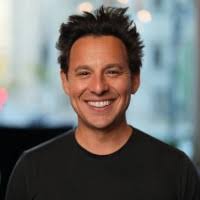
It completely changed my energy levels. It made me exothermic again. It made me excited again. It made me want to recommit year after year after year to Shopify and to Toby and to this mission that we're on.
Go a little deeper on your father and how that's impacted you and what that relationship was like.
At 17 years old, the rug got pulled from me and I was forced to basically grow up overnight. Ultimately, if you think about the mission of Shopify, it's we want to create more entrepreneurs. We want to make entrepreneurship more accessible, but we think that entrepreneurship allows anyone to do that. It's the great equalizer. The way that I think I add the most amount of value to Shopify is the same thing that I want to be world class at, which is I want to be a great storyteller.
I want to start with what areas of your life do you think you have what other people would consider unreasonably high standards?
Maybe start with, I mean, professionally I think I am pretty hard on myself in terms of achievement. Years ago I read something about the concept of abundance versus scarcity mindsets. And I think generally I do not have an abundance mindset about the things in my life. Some of that may be, I don't know, this is going deep as in the first minute, but some of that might just be like multigenerational trauma which I actually believe in. I think I carry some of the weight of my grandparents, Holocaust survivors, the weight of my father who struggled his whole life financially. But I think the way it manifests most is probably with my own career that I still don't think I'm doing enough, that I have enough, that I am enough. And that's probably the largest area where I think I have very high standards. Maybe the second one is just I have very high standards for relationships. I think that the friendships that I have, I hold very dearly in my life. And because I hold them dearly, I hold them up to a very high caliber of quality. And sometimes that disappoints people. Sometimes it means those people disappoint me. Those will probably be the two major ones.
Go a little deeper on your father and how that's impacted you and what that relationship was like.
My dad is an immigrant to, we're sitting here in Montreal. He immigrated here in the 50s. His parents were Holocaust survivors. After the Holocaust, they were in the concentration camps. They survived. They went to Hungary to a town called Debreczen. And during the Hungarian Revolution, things are really bad for everyone, but especially for Jews. Canada had this amazing program where they let 40,000 Hungarian immigrants come to Canada in the revolution. So actually in Canada if you meet Hungarians generally they came in '56 because this sort of cohort of Hungarians came in the 50s. They all came by boat. And my dad, when they got here they didn't have any money. They had no, didn't know anyone here. They certainly didn't have any education. So my grandfather ended up selling eggs at a local farmers market not too far from here called the Jean-Talon Farmers Market. And he created this egg stand. He called it Lapierre. It still stands there today. My uncle runs it. It's been around for I don't know 75 years, something like that. And I think my dad was always very ambitious. He had that sort of immigrant ambition. He wanted to have a better life than his parents had and he wanted his children to have a better life than he had. And growing up, he always sort of made us feel like we had enough. There was never sort of a sense of scarcity in the house whatsoever. It was only later in life that I realized that it was a bit of a fugazi. It was fake, that we really didn't have very much. But at the time I didn't know that, it felt like I had enough. And where things came to a head, and you and I have been friends for a long time so you know the story, was when I was 17 my dad was arrested. He went to prison and that was sort of the first time that I saw true vulnerability. That's where it all sort of, the facade of a secure foundation came crumbling down for me. I just moved, we were living in South Florida. I just moved to Montreal here. It was 2001 to go to McGill. Mom calls and says dad's been arrested. He was arrested for white collar crimes and for business crimes and I was mad at him. I was disappointed at him. I was too young to fully have the maturity to know what this all meant. And I think a lot of people talk about, you know, how trauma in their lives dictate the rest of their lives. I think the moment actually, there's an apartment not too far from here on the corner of Dr. Penfield and Peel. There's an apartment in that building. I think it's apartment 405 where there's probably not there anymore, but there was a hole in the wall where after my mother called me to tell me my dad was arrested, I took the phone and threw it against the wall and dented the wall. We can sort of get into what happened after that, but if you sort of fast forward today, my dad's back in my life, I have a great relationship with him. I think like a lot of people that are of my vintage, I'm 41. You do begin around this stage of life to have this epiphany or at least this realization that like the relationship of parent and child flips a little bit. In some ways, I feel like I'm sort of the parent to my parents now. I wasn't ready for that. That sort of came out of nowhere. My parents turned 70 and I just, something changed. But my relationship with my dad is loving and I have deep admiration for the life he's given me.
But certainly I think some of the trauma he sustained from being an immigrant, from being the child of Holocaust survivors. I've adopted that through his experiences, but also through the fact that at 17 years old, the rug got pulled from me and I was forced to basically grow up overnight. Was that the moment where your standards for yourself changed? Because I guess what I'm getting into is like so often we're born into a situation, a household, we're surrounded by people. We don't choose them. We don't choose our parents. We don't choose our zip code. We don't choose concentration camps or anything like that. We're put in these situations and we adopt the standards of the people, the mindset of the people that we're in and then there's like another level to it often for a lot of us. If we're not born into a situation where a parent has a high standard for themselves, then we don't adopt that ourselves. And I think a lot of entrepreneurs share this constant I can be doing more, I can be doing better. There's a gap between where I perceive I could be and where I am.
I remember we moved to South Florida in 1996 or '95 or so. I was around 12 years old. The area we moved into, it was in Boca Raton, Florida in Palm Beach County. Boca is well known as being a fairly wealthy area, but we were not wealthy. I mean, again, when we lived in Montreal, I didn't experience any, there was always food on my table. I always felt like, you know, I didn't always have all the stuff that I wanted, the, you know, the Air Jordans, but I had one pair of Air Jordans. And so I didn't live a life of where I didn't have enough growing up. But I remember moving to South Florida and that was the first time I think that I realized that other people have a lot more than I did. There were gated communities everywhere, but we didn't live in one. There were incredible private schools everywhere, but I couldn't attend one because it was too expensive. It was sort of in that age group, in that sort of range where I began to realize that my father wanted to have a better life than he did. That he wasn't living in a community where we were the average or we were above average. We were living in a community where we were below average. I remember asking my parents why I couldn't go to private school. There were these beautiful private schools all over Boca Raton, these with these big beautiful gates and these wonderful buildings. And I remember asking my parents, why can't I go to Pine Crest or St. Andrews, which are the two big schools? And my mom said, 'We can't afford it.' It was like $30,000 a year, which was an insane amount of money for my parents at that point. And I think that's actually around when I began to get my first chip on my shoulder. Something didn't sit fully well with me. And I think the way it manifested was ambition, competitiveness, some insecurity. So, I mean, there I was going to a public high school in South Florida. I was a, you know, I was a short Jewish kid from Montreal, Canada. Moved to South Florida. Had no friends or family. There were 4,000 students at the school. And there were students from all different backgrounds. Some live in Boca. Some were being bused in from Delray, a much lower income community. There were police officers because that's what you had at big American public high schools. And I was scared shitless. I don't know sort of what drove me then, but like within a year I was like president of student council. I was wrestling varsity because I figured out actually one of the advantages of being short and kind of stocky was I was a pretty good wrestler. And so I was able to change my circumstances by sheer will at that point.
The second thing that happened around that same period of time was that I really, I was 13 and as you've heard before, you heard me talk about all 13-year-old Jewish kids go to a lot of bar mitzvahs almost every weekend. And I was enamored by DJs. I thought these DJs at these bar mitzvahs were like magicians. And I really thought these were the coolest people I'd ever seen. And although my dad didn't have a lot of money, the one thing he did do and he's done this my whole life was anytime I had an idea and I shared with my father, he would say, 'Great idea.' He actually, there would be a physical manifestation of that which was that he would make me these business cards and tonight you and I are having dinner at my home and we go to my home office and I would show you those early business cards, but I still have them lined up in my office. Every time I had a silly idea about a business, my father would come home with a business card that said my name and the business name. And it was this very simple physical device that was the equivalent of him saying, 'You absolutely can do this. You have the capacity. You have the willpower. You have the entitlement. Like you can do this. You have the permission to go do this.' And I ended up DJing 500 bar mitzvahs after that. Started my own DJ company, hired myself, and that was sort of my relationship with my dad over my life, which is that I don't think I fully understood the baggage he was carrying with him his whole life. But he was unequivocally supportive and loving of me. And even when years later when he went away and we lost all our money, it was tough for me to hate him because ultimately what I really believed was he was doing it for me. That he was taking massive risks with his own life and his own freedom in order to give me and my two much younger, one of my sisters is 10 years younger, the other is three years younger. He was doing it to give me and my siblings a much better life. And he was willing to risk what ended up being five or six years of federal prison time to provide that for us. And as I sort of reflect on my upbringing and my childhood, it'd be difficult for me not to credit his transfer of confidence to me with kind of how I ended up. So I have anxiety now. I am constantly, you know, trying to do more, feel more, build more, have more. That feeling of scarcity is in me. There's a bunch of negative externalities that come with that. But the other thing that came with it is what I believe to be an incredible amount of ambition. And that ambition and that energy. You and I have a lot of mutual friends and I think most of our mutual friends would describe me as someone that is constantly high energy. That high energy mostly comes from a place of drive and excitement and I heard this great quote that part of being happy is being excited by all the elements of your life. I'm excited by all the elements of my life and I think that while I probably have a complicated relationship with my dad, I am here and I have this life partially because of him.
You know what doesn't belong in your summer plans? Getting burned by your old wireless bill. While you're locking in itineraries, your wireless bill should be the last thing holding you back. That's why I recommend the switch to Mint Mobile. No gimmicks, just a smarter play most people overlook. You make smart trade-offs everywhere else in life. Why not here? All plans come with high-speed data and unlimited talk and text delivered on the nation's largest 5G network. Use your own phone with any Mint Mobile plan and bring your phone number along with all your existing contacts. It's a small switch that compounds over time. Just like any great decision, most people leave money on the table. This is how you stop doing that. If I had needed this product, it's what I'd use. The savings are unbeatable. This year, skip breaking a sweat and breaking the bank. Get this new customer offer and your three-month unlimited wireless plan for 15 bucks a month at mintmobile.com/nowledgeproject. That's mintmobile.com/nowledgeproject. Upfront payment of $45 required, equivalent to $15 a month. Limited time new customer offer for first 3 months only. Speeds may vary above 35 gigabytes on unlimited plan. Taxes and fees extra. See Mint Mobile for details.
You know, people talk a lot about product market fit, sales tactics, or pricing strategy. But the truth is, success in selling often comes down to something much simpler, the system behind the sale. That's why I use and love Shopify, because nobody does selling better than Shopify. They built the number one checkout on the planet. And with Shopify, businesses see up to 50% higher conversions. That's not a rounding error. That's a game changer. Attention is scarce. Shopify helps you capture it and convert it. If you're building a serious business, your commerce platform needs to meet your customers wherever they are on your site, in store, in their feed, or right inside their inbox. The less they think, the more they buy. Businesses that sell more, sell on Shopify. If you're serious about selling, the tech behind the scenes matters as much as the product. Upgrade your business and get the same checkout that I use. Sign up for your $1 per month trial period at shopify.com/nowledgeproject. All lowercase. Go to shopify.com/nowledgeproject. Upgrade your selling today. Shopify.com/nowledgeproject.
Going into all the elements of your life. I know you're very selective about the things that you take on and the things that you do and you say no to a lot. I want to explore that a little bit. What do you want to be world class at? And so what are the key elements of your life that you're pushing on?
I am not a generalist. I've never been a generalist. If you were to ask Lindsay, if you'd ask my wife, in fact, if you were to ask my 8-year-old daughter Bailey or my six-year-old daughter Zoe what our family motto is, they'd all tell you the exact same thing. It is how you do anything is how you do everything. That is our family motto, which frankly it means because they're six and eight, means it's my family motto and I've just sort of told them that's their family motto and they've adopted it wholesale. Eventually they'll be old enough to decide whether it's for them or not. But that motto, certainly for me and Lindsay, my wife, it describes our life. There is an intentionality about everything that we do in our lives, the way that I think about leading this incredible company with my team Shopify to the way Lindsay thinks about cooking dinner to the wine that I've been thinking about you and I are going to drink later tonight. There's a great intentionality about all these things and I think that makes life fun and interesting. But what I've come to realize, this is my 16th year at Shopify. I'm 41, so I've been here for not quite half my life, but almost. The way that I think I add the most amount of value to Shopify is the same thing that I want to be world class at, which is I want to be a great storyteller.
I don't think I'm there yet. I've met truly world-class storytellers. We can sort of get into some of those later on. I'm not there yet, but that is the thing I want to be the best at. I love playing tennis. I don't think I'm ever going to be a world-class tennis player. I love to ski. Don't think I'm ever gonna be a world class skier. There are things in my life like DJ, I don't think I'm ever gonna be world class. There are things I do in my life that are fun, that are strictly for enjoyment, and I enjoy the craft of it, but storytelling in particular is something that when I look at all the different things I've done at Shopify, it's the thing that I think has added the most amount of value to the company. And this also speaks to my dynamic, this yin and yang dynamic that I have with Toby, which is that I've sort of always, in hindsight now I can sort of see this, but I've always sort of viewed my role as he is the greatest product person I've ever met in my life. He's this incredible tech visionary, especially when it comes to commerce. And my job has kind of always been to take the brilliant things he's built and tell the world about it. Tell investors, tell the media, tell our merchants, tell partners. And it gives me great joy. I love doing it. It's that, you know, when your Saturday morning feels like your Monday morning, you know, you're on to something really great, which is sort of the opposite of, you know, what people describe as like Sunday scaries, which I've never felt my whole life, but I know people do find that to be a real thing. It's storytelling.
I love that. And you also want to be a world-class father and husband.
Those are harder things. Very difficult to ping the satellite and get a ping back to know whether or not that's actually happening. With storytelling, I can get third party objective feedback. Being a world-class father and husband, it's more difficult to track that. But those are things that are very important to me. It is very important to me that my kids believe that I'm a world-class father and my wife thinks I'm a world-class husband. And that comes actually less natural to me than storytelling. Storytelling is sort of my ground state. It's the thing that I would do if I didn't have anything else to do and I was left to my own devices, I would tell stories. I like telling stories. Being a great husband often means doing things that are unnatural. A simple example that I think a lot of us fall into the trap of, seems to be more of a something that men suffer from at least in my experience which is that Lindsay comes home with a problem and my immediate reaction is to try to help her solve that problem. I don't know if it's biological. I'm not sure if it's my amygdala or my lizard brain but there's some, my reflexively I go into problem solving mode. It feels like that's what I'm supposed to do. And eight out of ten times it's not what she wants. And so because I know that I'm bad at that, we've created these, you know, our version of mnemonic devices which is like I now ask her, do you want me to solve this problem or do you want me to just listen? And almost always she just wants me to listen. So in the opposite of like someone asked me a question on a topic and I can go on a tangent about a story, I actually have to spend a lot of time moving from my amygdala to my prefrontal cortex to actually be a great husband to her. Same thing with the kids. Often what I realize is my reflex with Bailey and Zoe is often the wrong thing. Bailey tells me about a problem. I go in solution mode and what Lindsay will often say is that's not what she was asking you to do. She just wanted to be heard or she was looking for your advice or she wasn't looking for you to solve the problem for her. So that journey I think I'm not at the sort of escape velocity yet with those two things I want to get good at.
I think it's interesting because a lot of people who hold themselves to high standards in any area, hold themselves to high standards in every area and they want competing things. They want to be world class at their profession. They also want to be world class at being a father and world class at being a mother or partner and they want to be world class at everything. And these things often are in conflict with each other.
When I was younger, I used to play Street Fighter. And Street Fighter, when you pick your character, you basically pick a character for two reasons. One is based on appearance. You want the big character, you want the small character, you want the woman or the man or whatever the character might be. The second element is you'll get the scores and either they're great at defense and then they're bad at offense or they're great at jumping but they're bad at kicking. I think kind of life is like that a little bit too that you have to sort of pick what you want to be good at. You cannot be good at jumping, defense, offense, kicking, punching in sort of the metaphor of Street Fighter. I think you have to pick. And I think that's kind of what prioritization is. It's deciding what you want and then reminding yourself of what you want. There are things that every now and then I get a glimmer of, you know, have I traveled the world enough? Probably not. Do I take my kids on enough, you know, like month-long trips, safaris? I don't. I can't do that right now. I have to select what I'm going to do. I can't be everything to everyone. And I've kind of made peace with that years ago that at this particular phase of my life, this is what I need and this is what I want. It's also the reason why I'm very particular about who I spend my time with because I do believe that there are genuinely energy vampires and energy catalysts in humans. There's also energy vampires and energy catalysts even in geographies. I mean, I moved to Montreal two years ago partially because Montreal was this place that Lindsay and I kept finding was this energy catalyst for us when we would come into the city, we'd spend time here. Something changed in our brains. And I think you have to be deliberate about those things like what do you want to be good at? What do you want to spend your time on? Who do you want to spend your time with? Where do you want to spend your time from a geographic perspective? And I think if you try to do all of it all the time, you end up being very mediocre.
Most people don't want to prioritize because I mean they do in a way, but they don't want to say no to anything. They don't, it's sort of like think about the courage to close doors and it's really hard to say no to things.
It's especially hard, especially if those things, there's an element of things that give you joy. I don't think you can live, I don't think if you use the lens in your life of how you do anything is how you do everything, you have to be very careful about how you do things because if you want to do everything well or you want to do everything with intentionality you just have to be selective. I don't know anyone who is great at everything. The mentors in my life, the role models in my life, they tend to be spiky objects. Shopify is a team of spiky objects. We often joke about it as like the island of misfit toys, but what we really mean is that there's no consultant in the world that would have put together the team at Shopify. In the early days, kind of in the middle post-IPO days and certainly modern days right now in 2025 there's no team that, no one will put together this team but it works. Why? Because there is this commitment on our team that whatever the thing you're responsible for, you are going to try to be the very best in the world at that particular thing. Product design, sales, storytelling, finance, legal, whatever that might be. That's the commitment. And then every year you have to requalify for that commitment. When you look at other companies, I've sort of poked on Google a little bit on this only because I know a few people there that are like this, but you do see much more well-rounded executives and more well-rounded leaders. It's actually the reason why net-net I always prefer founder-led companies than professionally managed companies. I think founder-led companies are more interesting.
Talk to me about the notion of re-qualifying for your job every year. What does that mean?
It's sort of, I mean, it's in the same way that like we have this trust battery metaphor that at Shopify those with autonomy have a very high trust battery and those that end up having to leave the company it's because their trust battery is so low that like an old cell phone it just cannot be recharged. You don't know exactly are you at 46% or 66%. But you know the direction where you're at. The same type of thing exists for this re-qualification that you can tell when someone, I think you can tell when someone is re-qualifying for their job. What that means is if you think about the growth of Shopify which it grows, we're growing a lot, forget sort of the topline revenue or free cash margin growth or anything like that but just like the growth of Shopify product areas, GMV, the number of merchants, the geographies, the impact we have on the world, it is growing at this massive pace. I think in order to be on our team, especially to be a leader at Shopify, you have to believe that, you have to want to keep getting better. Meaning stasis is not acceptable. The thing you did last year may have got you a high five and an attaboy and a pat on the back and all the great stuff that comes along with that. That is not good enough anymore. And actually at Shopify, I think that's truly, I mean, the source of that energy is Toby. That there's probably no one that I've ever met on the planet. I've worked with Toby now for almost two decades. You know him very well too. He's a friend of yours as well. There is no one that pushes himself to be the very best at product and technology the way he does and so he inspires all of us to just continuously say okay last year was pretty good, this next year I think there's another gear left. That's actually the gift that he has given me in my career is that he's consistently over almost two decade period he has been the person more than anyone in my life maybe other than Lindsay who has seen a better version of me than I saw for myself. He keeps reminding me all the time. It happened a couple weeks ago. We were on an offsite that there is another gear in me. And so now he presents that optionality, that opportunity and now it's up to me to actually go through. And I think for someone with my personality, with someone with my ambition, that works very well for me.
What does it look like when he reminds you that there's another level for you? Does he just come, he doesn't come to you and say, 'Hey, Harley, there's another level for you.' What does he say?
He's much more German about it. Which is funny because he sort of calls it the German thing for him, but it's actually also like the Jewish mother thing for me, which is, you know, you just got 98% in your exam, you go see your mom, and your mom says, 'Great. What happened to the other 2%.' Which actually I've now learned it's actually very much a, at least the way it's been described to me is that it's actually an immigrant thing that a lot of immigrant parents are like that. Like that's great, but like what happened here? How can you do better? So that's part of it. The other part of it is just that when he gives me a compliment, it is because I went so above and beyond. Like he basically sets a bar for me of what great looks like. And doing my job really well is the expectation. Knocking it out of the park, going like resetting what corporate storytelling looks like or how to do earnings, when you do that exceptionally well that's when he says that was a great job and he is very thoughtful about how he explains how he gives those, that was really great. He kind of shows you that thing you did that is so far beyond the expectation of the industry that you were resetting it. There's this really great thing we talk about which is it'd be really great, I say this a lot but I adopted from him which is every person that works at Shopify should be able to go to their industry conference whatever area they're in business and they should give the keynote about how they're doing their job completely different than everybody in the crowd which is like the most global maxima not local maxima thing. It is like the local maxima is like you're at the top of the mountain. You're doing better than everyone else is doing your job. The global maxima which is like Toby in a nutshell is there's a whole other mountain over here. That's how you re-qualify and that makes it incredibly challenging but also incredibly rewarding. There's this thing about life's work. I think it obviously gets lumped into happiness and contentment and all that sort of stuff also. We can talk about how to find your life's work, but ultimately I think the way you continue to do your life's work is when you feel fundamentally that you can see serious progress. It's not type one fun. It's like type two fun. And type two fun is a type of fun that you only realize that it was fun after you complete it. In the middle of the race, it's not really that much fun. It's at the finish line. You're like, 'Wow, that was fun.' That tends to be the developmental journey of Shopify.
A little anecdote about the, that's your job, that's what you're supposed to do. I was at an NFL training camp and I was with Kyle Dubas who was the GM of the Maple Leafs at the time. We were watching this practice and this rookie receiver caught the ball and it was a great catch, but he started celebrating. The coach came over and he's like, 'That's what you're supposed to do. Why are you celebrating? I'm paying you to catch the ball. That's your whole job.' You're paid to catch the ball. And it stuck with me ever since then.
That's right. It is. I think when you're playing at a certain level of play, whether it's through podcast or through business or through sport or music, you know, or art music, if you want to be above average, most people can get there. Practice, determination. But this idea of thinking about things in sort of this local maxima versus global maxima perspective creates a whole other surface area of which you can go and do crazy and cool stuff. I do think that is difficult to do by yourself. I think you actually are one of the unique situations where you hold yourself to such a high standard that you actually don't need anyone pulling you to get better at your craft because you hold yourself to this ridiculous standard. Most people are not like that. Most people need someone else to help them pull up to the next level. And if you find someone like that and you sort of mutually commit to one another, I mean, that's real partnership. That makes for, that's how you build a hundred billion dollar company. I think it's fascinating because I tell my kids that, right? Like when you're at school, like try to partner with the people who are going to hold you to the highest standard, who are going to demand the most from you, who are going to show you what you're capable of and what you can do. And they take that too and they hold other people to really high standards.
That's right. That's right. And then you sort of, you know, it is ironic though almost paradoxical that you know the people that you often hang out with in high school or school in general tend to be very much like you. And what I've actually experienced is that I actually think the best partnerships at least from a business perspective are people that are totally not like you. Totally. And not sure Toby and I would have been friends in high school. I was class president. He was like taking apart computers in his bedroom. The people you tend to spend more time with that you gravitate to, you tend to have similar interests with, you tend to have similar skill sets with, you're both into basketball, you're both into, you know, debate club or whatever it might be. But actually, if you're in high school right now and you're watching this and you want to start a company, my advice would be if you're in like drama club, go find someone in the AV club and then go find someone in like the computer, like the coding club and go find someone like who's painting and those should be your co-founders because each of you now can bring different skill sets to the table and together you can build something remarkable.
My youngest wants to start a company and he's like why should I go to university? Why do I want to go to college? He's like I don't need that. And I'm like, well, maybe just to find a co-founder, you do it. Yeah. I want to come back to sort of re-qualifying for your job though because you switched from being COO to being president or chief storyteller as you call it. Talk to me about that transition, how you came to realize that was the thing because you went from thousands of people reporting to you to a smaller number. Usually if it's a lot of people, it's still much smaller at a seven or eight thousand person company. Like a small number of people, still a lot of people, but yeah.
That was, okay, so a couple things on that and a couple different sort of levels of abstraction I guess. I do believe that there are different phases of companies and I think at the early phases of companies it's just mayhem, like everybody do everything, it's like Swiss Army knife time and in those early days of Shopify there's a photo that every couple years I put out on social media of me like mopping the floors, you may have seen it but like I may have mopped the floor once or twice, but it's sort of a metaphor for like those early days that like the floor is dirty. You do everything. That's kind of how it works. And then I think, you know, as the company begins to operationalize, you begin to have teams and organizations and general managers and divisions and all that. I became chief operating officer around the just post-IPO until around 2021, I think. So, for six years, I did it because that's what Toby asked me to do. We'd never had a COO before and it was sort of this way of me looking after operations, specifically business operations. It didn't come naturally to me. But back to sort of the lifelong learner and the global maxima thing and Toby pushing me into different directions, I was like, I'm going to get good at this. But it was never natural to me. Never felt like I was in my flow state. But I liked it. I liked having a big team. I liked being responsible for a lot of things. There was a little bit of ego in there. I felt very important and it took me a while to realize that maybe this isn't for me. Maybe I'm not the right person to do it. Around the same time, I had someone that we had hired that was reporting to me who was running our payments team, Kaz. And in almost every interaction I had, it did sort of feel like, man, Kaz really likes operations. Like it feels like his ground state. He's kind of always doing it. And so I saw glimmers of like what people that are truly operationally minded look like. But a couple hurdles I had, one is that I don't think I was ready to admit that this was not for me. This wasn't my thing. I don't like to
Admit that I'm not good at something. I prefer much to get better at it. I also, I think I was afraid to say the thing I want to do is like storytelling. It felt like maybe that's not enough. And it came with, you know, smaller team. It came with, it just came with less, you know, less areas of responsibility. Even though each others were shallow, I was like, what I really want to do is this other thing. It's like one area of responsibility, but it's really really deep. Is that enough for me? It became obvious to me that that wasn't the right thing. And actually, I think it became obvious to Toby that like I wasn't very happy. I wasn't being my exothermic self.
And for someone that's always been exothermic, that's always been high energy, in those sort of at the end of my COO stage, I didn't have it. I just, I wasn't meeting merchants the same way that I, like I love meeting merchants, my favorite thing in the world. I just, I wasn't. It was clear I was in the wrong gear and it was Toby that identified it and said there's this other thing, we could find someone to be the chief operating officer. And it was actually between myself and Cass taking it. It was Toby Shannon who initially took it, who was a great chief operating officer as well. Toby almost gave me the permission to say this other thing that you think is maybe not enough. It's like, it's totally enough. Like this is super important and more importantly you can be world class at this thing.
And that was this like huge aha moment that reminded me that okay, the Venn diagram of what I love doing, you know, like it's like the Ikigai almost perfectly described, like what do you love? What does the world value? What can you get paid for? I forget all the different components of it, but that's generally the Ikigai. Immediately as I began to even understand what Ikigai was, I was like that's it for me. It's like this role, the storyteller, the president of the company where my job is to infect in the most positive way the world with the Shopify message that every enterprise merchant on the planet that should be on Shopify, I'm going to convince them to do so. That every partner that should work with us, I'm going to convince them. That every investor knows exactly how great of a company this is. That every media opportunity I have that I'm going to talk about the journey, this product, this incredible piece of software we've built, why it is so important, why it is so dramatically different than everything else that has come before us.
I don't know, it was four or five years ago. It completely changed my energy levels. It made me exothermic again. It made me excited again. And it made me want to recommit year after year after year to Shopify and to Toby and to this mission that we're on. I fell in love with the mission again. I almost forgot about the mission for a while. It became so operational. And what it also substantiated was that I didn't have to be good at all these different things. If the one thing that I feel I can be world class, to go back to that concept, is sufficiently value-add that will change the company, that will change the trajectory of the company, that's enough. I am enough to do that.
And I really think that most companies end up looking at a buffet of their leaders and looking at the slots that are available and just go like, go here, go here, go there. And I think it takes a very thoughtful and very often a founder CEO or founder leader like Toby, someone like that to say, okay, here are the players I have. Here are the things that are most important. I'm going to skill match. So, it isn't who's been there the longest or who's had that job somewhere else. It is who is the very best person on the planet, not at the company, on the planet for this job. If that person exists here, that's the job they should do.
It allowed me to recommit for a lot longer to Shopify, to working here, to helping to build this company. It's made me a lot happier. Even Lindsay would say that between 2020 and 2022, which I use those years because we're still in COVID and like we're still work from home and I wasn't around a lot of people and as a power extrovert that was challenging for me, but simply changing my areas of responsibility completely re-engaged me and it feels like this is a job that I always should have had. I think Shopify had to get to a particular size and place for me to do this. It almost feels like Shopify kind of grew into the company that would allow me to be its storyteller. I couldn't have done this in 2010 or 2013 or 2018. It had to happen at the right time. And I'm super fortunate that it did and grateful that it did.
I feel like you've had more of an impact than you think, not only on Shopify, but on other companies. I feel like the storytelling and getting out there more, like you've really changed the bar for a lot of other companies as well. So, not only Shopify, but you've sort of set, other people didn't even know it was possible to have that sort of impact.
I mean, that means a great deal to me. That goes back to that industry, you know, conference that we talked about as a metaphor that, you know, I try to stand, I want to be able to stand up at the conference of every chief storyteller, every president of any company in the world and say, here's, I'm doing it differently. You know, Lulu is on our board, who's an amazing, probably one of the greatest comms geniuses on the planet, talks about this go direct. She has a famous go manifesto. That's kind of what I've always been doing. This idea that even the way that I treat earnings, it's not an earnings call for me. It's a storytelling opportunity.
And I love seeing all these companies now, you know, now you see a bunch of tech companies turning the camera around and them being like, here's how the earnings went. Like, been doing that for a while now. And so I'm...
I think it's really fun. And because I'm now seeing other companies do that, I'm like, okay, so like now how can I keep going from here? How do I, like what's the next step here? How do I re-qualify? I've done that already. I've done the go directive on earnings. Like what's the 10x version of that? What's the global maximum version of that? And that makes it really fun.
Despite what you may think of yourself, I think of you as a world-class storyteller.
How did you develop that skill? What does that look like? Like how do we make other people world class or better at storytelling?
Practice really helps. You know, now I get to do like The Knowledge Project. This is like, this is a big podcast. I'm not trying to, you know, blow smoke or flatter you, but this is a big podcast. I didn't start by doing the Shane Parrish podcast. I started by doing a lot of tiny little local podcasts and watching them over and over again. You know, I know there's some people that hate watching themselves on camera. Maybe this sounds like narcissistic or something, but I don't mind. I actually like watching it because I was able to remove connector words, for example. I say um a lot less than most people do because I've watched myself do it a lot and I'm like, I'm gonna fix this particular issue.
That's the first thing. The second thing is I think a lot of people end up trying to emulate other speakers. I see a lot of, in tech in particular, there was an era where like everyone kind of sounded like Gary Vaynerchuk for a little bit. I know Gary well. He's a friend. I think Gary's incredible, you know, speaker and his keynotes are legendary. But that's his style. And then you see other people that try to do the whole Rogan thing or the Shane thing or the Tim Ferriss thing and I don't, I never tried to be somebody else. I wanted to be the version of me which is a little bit excited, not always as perfectly articulate. I speak very quickly. I want to make sure everyone understands me. But I've sort of developed my own style of it.
And maybe the third thing which is probably obvious but great mentors, people that I deeply look up to when it comes to speaking. And I think the person that has probably done the most for me in terms of watching how he speaks, how he captures the attention of a crowd with story is Seth Godin. I think Seth Godin is the world's greatest storyteller. He could tell a story about Brussels sprouts. I have a great story about Brussels sprouts that he talks about. He could tell a story about coffee or purple cows. And watching him and talking to him and learning from him, and then it's just reps. How many reps have you done? I mean, the reason that Toby is such a great coder is he's written more code than probably anyone else at Shopify even now. I mean, he doesn't write as much code now as he once did, but just in terms of longevity of software development, he's had more reps than other people have done.
We hear this about athletes all the time that like the greatest athletes were the ones that got up early that went to the gym before everyone else got to the gym, like they had a double workout. That's a big part of it. I think the other thing is the content you talk about. I think it is really easy to talk about stories that are your stories. When I tell a story, whether it's about Shopify or it's about my life or my family or DJing or something like that, I always start with my experience when I was 13, when I was 18, when I traveled here. I think by starting with you and you putting yourself into the story, one, it can't be wrong because it's your story, it's happened to you, but two, it immediately invokes, if it's true, you can speak with such conviction, with such passion.
The easiest story for me to tell is out of Shopify because the story of Shopify is a story of entrepreneurship and my story is also of entrepreneurship, my family story about entrepreneurship, my friends around me. You know, almost every one of my best friends, they're all entrepreneurs. Some of them are in the restaurant business and some of them are in fintech and some of them are lawyers, but what they all have in common is they all are first and foremost entrepreneurs. So the storyline that I've chosen is entrepreneurship.
And it's not an accident that the company that I've committed to for so long, for decades, is the entrepreneurship company. Could I sell cars or could I sell biotech? Maybe. I don't think I can tell the story in that way. I think part of what is wonderful about modern-day business leadership is that we are not selling widgets.
I think, I don't know if you've ever watched like some of the old, like Glenn Gary Glenn Ross movies or, I mean frankly like...
Oh yeah. ABC, right? Closing.
Always be closing. You know, coffees for closers. You watch some of these old school business or even, shoot, Wall Street, Michael Douglas, amazing movie. You watch these movies and you see these like business owners in these movies and it's a reflection of course of the society at the time but they were selling widgets. The executive could be selling tires or the executive could be selling soda water or they can be selling whatever. It didn't matter. They were implementing the same strategies to sell one widget as they would any other.
In many ways, business is now way more personal. And I think one of the advantages of it being more personal is that you're able, as a, like the company can attract people whose personal mission is tied into the company's mission. I don't think that there are any, when I look at every leader that I admire, business leader that I admire, entrepreneur that I admire, there's no accident for why they're at their company or why they built their company. Either they experienced a problem themselves and they went to solve the problem or they had something happen to them when they were younger in life and that kind of changed their mindset around that product. There is a deep connection to it.
I mean, Firebelly Tea, my little tea company that I started with Dave Segal that you're now involved with a little bit. The reason I wanted to start this company with Dave is like there was no one on the planet more passionate about tea. And the fact that David Segal, who created David's Tea, was not running a tea company in the modern world was ridiculous. All he cares about is tea. Of course, he should start a tea company. He already started one because of, you know, some interpersonal issues. He ended up leaving his company. Of course, you should start it. If you are deeply passionate about something, I wear a James Perse t-shirt every day and today I'm wearing all James Perse.
Of course, James Perse is successful because no one thinks about GSM counts or rib more than he does. No one thinks about Japanese cotton versus American cotton more than he does. No one thinks about, actually these are, they're called the parachute pants. These are his favorite pants. When I hung out with him a couple weeks ago and we both literally walked in wearing the exact same thing. Of course, these pants are amazing because he made these pants for himself. It just turns out that thousands of other people also want to wear those pants.
The idea that the people that are running businesses are deeply connected to those businesses and the products they're creating, I think, is a new way to run companies that our parents and grandparents didn't have. Some, you know, go back 150 years. Some of the bakers truly loved baking, but some of them just did so because they had to survive. My grandfather had no interest in eggs whatsoever. Anytime I tried to engage him on eggs, I got a blank stare. He wasn't selling eggs because he cared about eggs. He was selling eggs as a means of survival.
Forced entrepreneurship and passion-based entrepreneurship are very, very different things. And the idea of us, you doing your life's work and me doing my life's work, that is a concept that was foreign to our parents and grandparents.
Totally. They did sort of what they had to to...
Life's work. That's a nice, you know, like I can, I never said that to my grandpa.
That's a luxury, young man. You know, wow, aren't you lucky? That sounds like a hobby to me.
You know, as opposed to they were rough and tumble. They were like do whatever we needed to do to survive. If it was eggs or it was garments or whatever. You know, we're sitting in Montreal right now and about 10 kilometers north of here is the Chabanel garment district. The Chabanel garment district is an iconic area. It's probably four streets by four streets and American Apparel, Buffalo Jeans, Algo Industries, so many companies, Kastor & Pollux, more modern companies, Essence is based there now. Moose Knuckles is based there. It's this tiny little area that so much of the apparel industries that we know today were created out of.
Why did that exist? It existed because it was the lowest barrier to entry. The needle trade or the schmata business, which is sort of the Jewish version of that, the reason you see so many Jewish immigrants go into the schmata business, the needle trade, is because low barrier. They couldn't go to biotech. Biotech had a high barrier to entry. You couldn't have no money and start a biotech company or start a pharmaceutical company or start a technology company. But the clothing business, you need a sewing machine and that's it.
It's wonderful that we have that industry that's been built here, but there's a lot of people that ended up building those companies that built it because they had no choice as opposed to because they chose to be, like James chose to be in this industry.
You're the second person in the last month who's mentioned him and his shirts. I got to check these.
You got to check them out. They're great.
I want to come back to mentors for a second. So Seth Godin is one of your mentors. You have a personal board of directors in different aspects of your life whether it's relationship, business, storytelling. Walk me through some of the categories you have and some of the people that are in those categories.
One thing that I think a lot of people, and I myself made this mistake, was that you end up when you think about the idea of a mentor, you end up thinking about the 360 of the mentor, like I'm going to emulate everything about the mentor. My experience has been that back to the spiky object thing that any mentors that anyone watching or listening have in their lives, they probably are really good at something, like really good. Obviously, they wouldn't be a mentor otherwise, but they're probably lacking in other areas entirely.
And I had a mentor early on in my life that ended up convincing me to go to law school. And I won't say his name now because I'm about to say something fairly, well, he won't mind, but I won't say his name anyway. He's the one that convinced me to move to Ottawa to go to law school. He convinced me to go to law school to become a better entrepreneur, not to become a lawyer. Great man. I've known him since I was a child. I was actually, years before, I was the ring bearer at his first or second, I think his first wedding or second wedding. Which brings me to my point is that like this guy is an amazing career mentor and helped me more than almost anyone else. He's not what I would call a marriage or relationship mentor. He's on his third marriage now.
And he's happily married now, but he's on his third marriage. If you try to cargo cult everything about one particular person, you're going to adopt all their good stuff and all their bad stuff. Instead, it's much easier to figure out what are the couple things I want to get good at. Entrepreneurship, being a great dad, being a great philanthropist, a great DJ, I want to be a great tea entrepreneur. And then looking at who's really good at that and ask them specifically to help you with that narrow category as opposed to being a lot more broad.
The other thing that happens is that there's a timeliness to these mentors, meaning someone that was your mentor. I don't know if you've ever had any business coaches or any coaches in your life.
So, I think I have a great coach in my life right now. It's probably my third or fourth coach that I've had. One of the things I think about coaching and business coaches in particular is at some point you end up hearing a lot of the same stories or lessons or tools. Meaning they have this wonderful toolbox and part of what you're paying them to be your coach is for them to open their toolbox and show you all their tools and you can adopt some of them for yourself. But eventually you've seen the entire toolbox and that's a really good time, and it's not a negative thing, it's not a criticism, it's a really good time to sort of move on to the next coach.
The same thing goes with mentors. I don't think, with very few exceptions, there's probably not going to be any one mentor that's going to be your life mentor in perpetuity because ultimately you are going to change, they're going to change, you're going to want some new perspectives.
But one of the things that Lindsay and I did before we got married was we began to look at the couples we knew, most of them meaningfully older than us, and saying who do we think has a really good relationship, a really good marriage, how can we kind of emulate that? And we didn't say anything to them at the time, but then after we got married, we began to nonchalantly start spending time with them, like double dates with them and kind of seeing how they interact with each other and what their style was with each other. And we ended up developing kind of these relationship mentors. We ended up developing parental mentors. And it's been awesome. It's been this incredible thing.
And some of these people that are sort of quote of our mentors are famous people. Lindsay and I recently created our family foundation and we want to have a real impact on our foundation. I got a chance to meet David Rubenstein who created Carlyle Group and I interviewed him for Big Shot, which is my little Jewish podcast archive that I have with David. And David Rubenstein talked about the rules of how he does philanthropy. So, as an example, he talks about like he'll only write a big check for an organization or a foundation or a charity where, I'm going to get these kind of wrong, but effectively it's the project wouldn't start without him or the project wouldn't end without him or he can see the efficacy of the investment in a 10-year period and it's deeply personal to him. And so he sort of puts up these rubric and if it fits those categories, he's in. He'll give, in David Robinson's case, he'll give like 10 million or hundred million dollars.
So, I began to ask David about philanthropy well after the interview happened. Tell me about this and how do you look at that as well? I'm not necessarily sure David Rubenstein is a mentor per se, but he has helped me shape my own understanding of philanthropy.
So, he's sort of one that's quite famous. But, we also have some friends here in Montreal who are not well-known. No one knows them. They're very quiet philanthropists, but the way they do it is kind of strange. It's all about, like some people talk about impact investing. They kind of take this entrepreneur approach to philanthropy, meaning they'll be very precise about what they donate to. So they'll walk into a hospital and they'll say, why is there a lineup here? And the foundation people, the hospital will be like, well, unfortunately there's only one machine and this is very popular. This is a cancer screening machine. They'll say, great. How much is a second machine? They'll be like, it's $2 million. Okay. Do you have capacity for it? Not really. What do you need? Well, I need a radiologist for it. Well, how much is that?
And then these people will sort of go away. They'll come back to the hospital literally a week later. They'll say, great. We figured out that you need a radiologist. You need a machine. You need a new location. You also need to change some power for this all to work because you don't have enough power supply here. So, we think it's $4.5 million. We're going to go and raise $4.5 million for this exact thing, this precise thing. And lo and behold, six months later, you walk into this hospital. The machine is there. There's no lineup anymore. And everything is solved. So they are not doing this sort of blanket philanthropy. They're being very precise.
And so we've been able to kind of find these different people in these different categories. And it's amazing because you get this cheat sheet for anything you want to get good at. I started DJing again recently and so I began talking to, there's this amazing shop here called Moog Audio. Amazing, like legendary music shop in the world but certainly here in Montreal. And so I started going to the shop more often, hanging out there and like listening to the DJs and end up meeting one of the DJ guys, Alex who runs the shop, and asking him like so how do you think about like when you beat mix, what do you do? Is it eight beat counts or using new technology? How do you think about fading? There's something called stems in DJing so you take a song, there are three stems, there's basically the drum base, like the beat, there's the vocals and there's the instrumentals.
And I was like, when I was DJing we couldn't necessarily identify or isolate stems. I was like, but you seem to be doing that a lot when you're DJing and I listen to your SoundCloud stuff. And he's like, well, here's how we do it. You can do this in every category of your life. And it doesn't have to be these famous people. It can be a random person you end up meeting at the DJ shop. And it's been amazing for me and Lindsay. It's been amazing for my own life.
But I will say that a lot of people try to emulate something like that and there's this cringe factor involved that I find that most people can't get over. And the cringe factor is often I have to send a lot of text messages and a lot of emails and a lot of, even now that some people know me, I still, like I have zero cringe in my life. I don't worry about cringe at all. I never feel that way at all. So if there's someone that I really want to get intro to and start working with and start getting mentorship from, I will go full-on and I will never be disrespectful, but I have no issue with rejection whatsoever. And I think that's the largest blocker why more people don't create these personal boards of directors.
Let's go deeper on that for a second. I think you hit on a really key point, which is I kind of think of this as like most people don't want to look like an idiot in the short term to look like a genius in the long term. And because they're unwilling to do something where somebody might say no, or it might make them look, you know, you want to start skateboarding. Well, you've got to get on a skateboard to actually start skateboarding, but you're going to look like a fool for the first few months or maybe weeks or years or whatever, but you're unwilling to do that. And so, you never get better at these things.
I have very high cringe pain tolerance, whatever you want to call it. I have no issue with that whatsoever. I think that this gets easier also with age. I find the older I get, the less I really care about that stuff. But yeah, I think most people are not willing to look stupid for a period of time.
I think the other thing is that I think about this all from the concept of like entrepreneurship. In my office here in Montreal, Shopify office, I have the original screen print that Ben Francis used to create Gymshark. It was a gift. It's a super meaningful gift that he gave me. I love it. I have it hung up in my office. Part of the reason why it's up there is because I think that it's an amazing gift. And Gymshark is this homegrown success story on Shopify. It exemplifies everything we stand for. It's incredible. But the other reason I have it up there is because what most people don't know is that that was not Ben Francis's first company. That Ben Francis actually had a bunch of failed companies before he landed on Gymshark.
And I think about this idea of this cost of failure, not just from an entrepreneurship perspective, but in general, you have to basically figure out with anything you're doing, what is the cost of failure here? If the cost of failure is really high, you really have to think about it. You have to sort of do a little bit of like the math of is the benefit of success worth the cost of failure? In some ways, it's just not.
But I mean, for $39 a month, you can build a store. It's not a pitch for Shopify, but $39 you can build a store. If it works, blow it up. If it doesn't work, try something else. There are still too many people that are apprehensive, that don't want to put themselves out there because of this fear of failure. And I've long believed that, you know, getting really really comfortable with being uncomfortable is magic. It's totally magic. And I wasn't always good at that. I don't think you need to be born with that. I think you can learn that. I think you can learn resilience.
But I don't know anyone that I admire who's had success who has not gone through that period of making kind of, looking kind of dumb. Have you ever watched the first interview you've ever done?