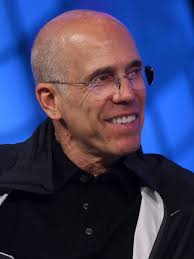
It is Wednesday, September 23rd. In November of 2023, Jeffrey Katzenberg said at a conference that within 3 years, artificial intelligence would replace 90% of the labor it takes to make a studio quality animated film. 90%. A big proclamation. The comments got a lot of attention at the time and freaked out many people in Hollywood. After all, Katzenberg is a legendary figure in animation. He led the resurrection of Walt Disney's animation studio in the late 80s and 90s and went on to co-found DreamWorks, which was a pioneer in computer-generated animation with Shrek and Madagascar and How to Train Your Dragon. After Jeffrey sold DreamWorks to Universal in 2016, he's become a tech investor through his company WndrCo and famously tried and failed with a short form video app called Quibi. RIP Quibi. So, we're coming up on three years after those comments. No, AI has not eliminated 90% of the work in animation, but it is starting to impact the production process, even amid all the skepticism about AI and the animosity between the creative community in the Los Angeles area and the tech overlords in the Bay Area. Now, Jeffrey is here on the town today to make a new proclamation, not a prediction per se, but more of an overture, a plea of sorts for a stronger relationship between Silicon Valley and Hollywood. And because of his background straddling both worlds, Jeffrey says he's the perfect person to broker a truce of sorts. In a long essay he published today on the website formerly known as Twitter, he argues that creative and tech need to drop the hostilities and start working together. The technology tools are powerful, but they're not what make a story matter. At the same time, the energy that Hollywood people are spending trying to make AI disappear is energy that they are not spending deciding the terms on which it will exist. Quote, 'As the barriers and the costs come down, more films will get made, not fewer.' Katzenberg writes, 'Studios will get to take more risks, there will be more seats at the table, and very soon, entirely new forms of storytelling.' Okay, a lot there. And so, we've got Jeffrey here to discuss with me and Lucas Shaw from Bloomberg. Today, it's Jeffrey Katzenberg, AI, Hollywood, and Silicon Valley, and can't we just be friends? From the Ringer and Puck, I'm Matt Belloni and this is the town.
All right, we are here with Jeffrey Katzenberg, partner of WndrCo, co-founder of WndrCo, former CEO of DreamWorks Animation, former head of animation at Disney, head of production. What was your title at Disney?
You were you ran I was chairman of the studio. You ran the Walt Disney.
I was actually chairman of the Walt Disney Studios.
There you go. Legend in the animation world. Uh, welcome Jeffrey.
Happy to be here. Thanks for having me.
Okay, so Lucas and I have many questions for you and a lot of them are about this article, this column that you just posted. You can go on the Twitter and read it in its entirety.
It it is X. I refuse to call it X. I will it will always be Twitter in my heart.
But why are you doing this? Why are you getting involved in this?
A decade ago, uh, I headed off to Northern California to find a third act. Was super excited to partner up, uh, with this, uh, amazing young man, half my age, twice as smart as me, Sujay Jaswa, who was um, uh, helped build Dropbox. And we set out to both build and invest in tech companies. And then this last January, February, I started to see a a quality a level of innovation going on around AI video gen that just got my attention because although not there yet, clearly was on a trajectory of something pretty exciting uh going to happen out of this.
Yeah. You mentioned in the article that it was like when you first saw what Pixar was doing in animation.
Yes. So that then got my interest of wanting to go, you know, my curiosity was peaked and therefore off I went on this adventure to actually go see meet with as many of the companies as I could to see what is the state-of-the-art of just higher-end high quality uh AI generative video. And and while I started again, I was started to get excited about what I would see when I would meet with the companies and and and the researchers, it was interesting to me because I consistently found something missing in the conversation, which is a a either a lack of understanding or appreciation for uniqueness of creativity versus creating. And I know they sound like all they're almost the same thing, but as you saw in my essay, they're actually quite different. And even when I asked uh AI things to to express the difference, you know, uh between creating and creativity, they also uh had a pretty wide gap between the two of anyway.
But you call you say the tools are powerful, but they are not what makes a story matter. Taste is not something that can be synthesized. It is uniquely human. So basically you're saying the difference between creativity and what the AI models are doing which is essentially reasoning not creativity.
And you saw a gap there. So at the same time uh here in Hollywood I think that the the fear and resistance to AI has just grown greater and greater and greater and some of it for good reason which is around what I think is the single most fundamental you know piece of all of this which is credit consent and compensation right so the the gap between let's just call it Northern California and Southern California for the purpose of this conversation is growing and getting greater at the very moment in time in which it should be doing exactly the opposite of that because together there is actually a spectacular opportunity for these tools to be put in the hands of the best artists, the best storytellers. not to replace them, but to enhance their capabilities, to give them more options, to be able to do things better than they've ever been able to do them before and faster than they've been able to do them before. The outcome of which is more things will get made, different things will get made. And in my opinion, we're at a moment in time which is if these two worlds come together, there will be a renaissance in Hollywood. something that I think everybody would love to see happen.
Can't you at least understand the grave skepticism of the tech industry? It hasn't exactly been a positive for the traditional entertainment industry. It sucks up all the advertising that supported the television model. It has led to the ability to do full freight major movies for television. So the theatrical business is struggling and when you talk to rank and file people in the industry it's not that they don't understand the technology constantly changes it's that they don't trust the purveyors of the technology.
Maybe Matt again I'm no one's been perfect in this to be to say the least and the rate of change has accelerated the velocity of it is so fast right Now that that's the I think that's the motivation for me to see that don't look behind us, look in front of us, you know, and I think what's in front of us, in fact, I I I'm convinced that what is in front of us is in fact going to be extraordinary opportunity. And yes, the pathway through this over these last couple of years, it's been highly disruptive. You know, you think about it, what is the the business as itself has actually been hollowed out and what it's left with is these sort of two extreme ends of the business and everything that was at the core of it. What Barry Diller many many decades ago talked about the singles and doubles business which is making great stories by great storytellers made for different segments of the audience and through many many many different factors. We arrive today at a point where we're in the four quadrant business and that business itself has very has extreme limitations you know huge capital investment in it and so in fact it's the opposite of democratizing storytelling in it is actually made it less accessible.
And you think AI could lead to the return of the singles and doubles.
100% it will I'm certain of it.
Why I mean we're talking about the To clarify, we're talking specifically about the movie business, right? Because we're not
Well, you we can talk about the TV business, too, which is also become wildly expensive. You look at the per hour episode cost of making television today, it's extreme. And so the enterprise around really the entire ecosystem of content creation is got to there's an opportunity to actually uh reinvent it.
I have a question related to sort of where you started in a lot of ways with your with your essay, which was the transition from hand-drawn animation to to CGI animation that you kind of both saw and then actively participated in Disney and DreamWorks for those who didn't live through that.
Sure. Because there was I imagine at the time you know whether it was you know uh silent pictures sound pictures at every new big transformation or technological moment there is concern about job loss there's concern about displacement and just sort of societal change. So did the transition from hand-drawn animation to computer animation kind of cause that type of dislocation and what what did that look like for people who worked in animation at the time? was incredibly disruptive. When I arrived at Disney in 1984, there was a animated movies were made. Every cell was uh hand-drawn, hand-painted, hand-scanned and there were departments of there were, you know, a hundred inker and painters in their own building on the animation on the lot at at at
The building's still there. They still have the paint. It's called the ink and paint department there in this and there were 120 people who worked in ink and painting.
We developed a system with a little company from Northern California called Pixar. This was before they made movies.
CAPS a computer animation system there that actually innovated inking and painting. It be it was now done by computer. It gave us all kinds of new options and opportunities that were never possible before. and I talked about them in the in the essay in it. And so yes, there was a displacement of people on the one hand, but there was a whole new set of crafts and skills where and by the way, some of those people did transition. You asked me earlier, Matt, when we were talking about what happened at DreamWorks. It was this
You just to say you famously announced that from here to for
After Shrek all DreamWorks movies would be computer animated. No more hand-drawing. And people freaked out, right?
The last hand-drawn animated animated movie made there, which is actually a movie I to this day still love and appreciate, was a movie called Spirit: Stallion of the Cimarron. I think that was the last hand hand-drawn animated. And
Uh, it it didn't relative to what the CG animated movies were doing. It made money,
But it was not the audience was moving beyond that 100%. They they were no longer interested in that. So you talk about there was dislocation but there was also the creation of opportunity. So net net computer-generated work versus hand-drawn. Were you were you making those movies with fewer people? Were you making them for less? Were they just better?
More of them were made everything about it.
Well, they were less expensive or more expensive because this gets to the question that I'm curious about which is that three years ago you pronounced that AI
Wrongly. Let's just say your words not mine but I was I was going to get there.
You pronounced that AI would take 90%. I'm surprised we've gotten this far into our interview and we have not actually said the word Quibi out loud yet.
Oh, we're getting there too.
Uh, but you did say that in 3 years, which would be this November, 80 90% of jobs would be gone to AI. That obviously has not happened.
I didn't say 90% of the jobs would be gone. I just said that you would be able to make an animated movie with in 10% of the time with 10% of the resources. And that was wildly wrong.
So why is it wrong? Why have these major animation companies like Disney and DreamWorks and Illumination, why are their movies so expensive still?
Um because they are crafting them with the best tools that are available to them today. And it is actually not unlike a hand-drawn animated movies. you know, they're doing them them as effectively as they can with what they have today. And what I'm saying to you is what they will have tomorrow is going to change that process dramatically. And it is going to allow, by the way, it is still going to be the human touch at every level. There will be a writer, a director, there will be actors in this. You're not you're not a you know there'll be a composer, there'll be a storyboard artist, there will be all of the sort of driving elements that have the human touch that are about creativity are going to be the ones using the tools. The tools aren't doing the work. They're in the hands of artists.
But it is going to take fewer artists to be able to do the work. If you look at uh by example Toy Story 5, which I thought was spectacular. I I I have to say I thought it was every bit as good as the first movie. It is brilliant. There's 68 animators on that movie. I think the movie is like 98 minutes long and they took them 5 years to make the movie. Something's wrong.
But so do you think that AI will make that process? You obviously think it will make it more efficient. Do you think that it will make it will both make the animation better and cheaper or because with computer-generated it seems like at least in time it did make it better. It didn't make it cheaper.
Well, only because there are efficiencies here that are very I think are are pretty clear here in that somebody actually can work faster. Faster does actually make it cheaper, right? But that's not the point of it. And that and I have to say that's not I'm just saying to you there is going to be an outcome out of this.
So I mean well if you talk to people at Pixar and we have a lot of listeners at Pixar and I talked to people there they say that they have become a lot more efficient in the technology that they use. The problem is is that the labor costs keep going up. They make their movies in California. They have a very well compensated and deep bench of people. And that's why these movies cost $200 million.
Matt, I I am not here in any fashion, shape, or form to diminish the excellence or to to knock the what Pixar.
But if you took over Pixar tomorrow, you'd fire half of them.
No, I actually I don't think it can work that way. Okay. And that's the that's the mistake here is I think I may We'll find out. Yeah, I'm going to find out. Right. Toy Story and Pixar never ever ever could have been launched out of Disney in the 1980s.
Like that's a non-starter. We did not have the culture. We did not have the expertise. We did not have the forward brilliance of Ed Catmull and John Lasseter. They had a vision for something that was different and they had tools that were different and
You believe that the a the Pixar of AI is one of these companies that is circulating around the Bay Area right now.
No, I think I'm going to have to start it.
I was going to ask what is your angle here? Are are are you investing in any of these companies? But you you say no, you're going to start it because you have this thing that's percolated, this new company that was reported on by the information a couple weeks ago.
Prematurely. Uh, and but the but here's
You're doing it with a guy from Sora.
Okay. My no again that was speculation here. So all very premature. My partner Sujay when he read the essay. He said three words to me which is what has is really what got me sort of going here. It's it's what fired me up. He said because I said listen I don't know that I just want to go back into the movie business. I love the movie business, but that's 10 years ago and I've got a third act and this is a new world. He said, 'No, no, there's a much much bigger opportunity here, which is instead of telling people, why don't you show them and what you really want to demonstrate is what is AI for creativity mean? What happens when you actually take the greatest research AI research talent, you know, with a frontier model that is respectful of copyright and consent and credit. What happens when you actually build a set of tools, state-of-the-art tools that are in service of storytellers? And it doesn't matter whether it's a storyteller of an animated movie or a live action movie or a TV show or by the way promote into uh the YouTube world and to Tik Tok and actually to consumer. What happens when you actually create the tools, the workflows for people up and down that stack to be able to do things they were not able to do before with video. 5 billion people a day watch video. It is the single greatest way of information and communication and knowledge and entertainment like it touches everything. What if you actually could now develop the tools that all of that can get elevated all of it can move to a higher quality and a whole set of new things that none of us actually even are imagining today. That's what got me excited and that's what I'm trying to figure out.
Are you thinking you would build a foundation model or you would build tools around existing technology
Again? More to come. What I don't want to do,
But would you be the consumer platform? Because obviously that brings up the Quibi comparison. Do you feel a little bit vindicated on Quibi? I know you've been dragged around about it and the money that was spent.
Matt, we're going that direction now. It's almost like you were just a little early.
Okay. Here's the thing I would say to you. Mhm. You're looking at your notes. How to respond to Quibi question.
No, not at all. I actually covered it. No, it's actually different than that. Is is that I have felt and this has been consistent through my career. I have always gotten more than enough credit for things that I have been involved in that were successes. I'll say it again, more than I needed for things or was maybe even entitled to for successes. Fortunately, I've not had that many failures and I have always felt I should own my failure. I shouldn't run away from it. You know, we had those conversations around Quibi. I love the idea of Quibi. I love the content that we made. I love the fact that I had the opportunity to take a moonshot. Why and how it didn't work. I have I can't I mean, you know,
But here we are 5 years later and we're talking about short form video professionally created, creatively driven for some kind of app.
Yeah. Well, and it's there's no question that the concept of Quibi is actually finding extraordinary traction on a global basis everywhere around the world. these long form pieces of story told in snackable chapters,
Right, is as as a form of consumption and distribution is having huge huge success.
Your your product was not cheap.
Okay. But by the way, I would say to you that if AI for creativity will actually take that business, which right now is bottoms up and will raise the quality in a extraordinary way. another place where again building the right tools and putting them in the hands of talented storytellers I I think that is a gigantic business opportunity.
Yeah, you write in the piece there is no scientific path to crossing this divide that anyone in the field can articulate today understanding that gap is where we will find common ground. So that's what you're doing.