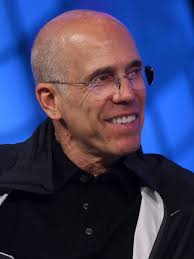
Just to give context, I'm sure very few people in this audience actually read it because it's way too long. But in essence, I spent a good amount of time in this last six or nine months trying to look at the world of generative video. I kind of went across the globe and looked at all of the amazing work that's getting done, and while I was incredibly impressed and excited by it, I found an essential ingredient either not understood, not appreciated, not valued, or even dismissed, which is the human touch. What is the difference between creating and creativity? And there's a real distinction between that. On the other hand, likewise, the growing fear and resistance in Hollywood is just palpable. And the only way in which this is going to achieve, I think, the most optimistic outcome is for these two worlds to actually come together and understand that together, they actually can create a genuine renaissance in all forms of video, but particularly in great storytelling.
So I wrote this essay, which really starts from the perspective of being in the center of this through several chapters earlier in my career. And I shared with James a particular very relevant moment here. So I would say late 1980s, '88, '89, somewhere in there. So I'm running the Walt Disney Studios at the time. We're having this extraordinary renaissance in animation: Little Mermaid, Beauty and the Beast, Aladdin, Lion King in the works. And I see this little short film called Luxo Jr., made by a company in Northern California called Pixar. The creative genius behind it was John Lasseter, who, interestingly, had been at the Walt Disney Company in the animation company before I got there. So the first thing I did is I went there and I did everything I could to recruit him and have him come back to join the studio and give him a real leadership position there. And he just was not interested at that point. He and Ed Catmull were well into their adventure of building Pixar, supported by the amazing Steve Jobs. So I then went to Steve, and to make a long story short, made a three-picture deal to develop Toy Story into a feature film and go on from there.
So the interesting thing about this, relevant to it, is that within Disney, the traditional animation studio, which right now, at that moment in time, is literally on fire, could not be hotter, could not be doing better. My boss was Roy Disney. So Roy was the nephew of Walt. He was the person who recruited Michael Eisner, Frank Wells, and myself to come to the company. And Michael... he was vice chairman of the Walt Disney Company and he was the head of animation. So within animation, I reported to Roy, and over the course from 1984 till this time, had actually a very, very good relationship, was very deferential to Roy. And when I made the deal to develop this inside of the animation studio, there was enormous rumblings about, why are we doing this? Why are we supporting this company? It's not our brand. We don't own it. It doesn't embrace our legacy and our heritage, the handcraft, the beauty of it. You can imagine all of this, but they all thought it was a shitty idea. Nothing was ever going to come of it. So they just sort of humored me mostly, but not all.
And then we got to the point where they actually had a movie and it was ready to be greenlit. There was a story reel on it, and the characters — Tom Hanks and Tim Allen — were all cast in the film. And it was a $21 million budget, which was a third of Lion King. And I said, OK, we're going to make the movie. And Roy came to me and started very nice and very polite: 'I don't think this is a good idea. It's just undercutting everybody at the studio. And you shouldn't do this.' And I said, OK, well, let me think about it. Which I did for a second or two. And then the next day I said, listen, I understand, Roy, but it's different and I think it's fine. And we've got a long-term deal with these people and we should go do it. And he said, well, we're not. And I said, OK.
So he went to Eisner, who was my boss at the time, and said to Michael, Jeffrey wants to make this movie. And for all these reasons, it's a mistake and we shouldn't make it. So Michael comes and says, show me everything. And the one thing I will say about Michael, whatever our divisions were in all the years we worked together, the thing we were always simpatico about was creative ideas and stories and stuff like that — we just were so complementary to one another in the creative process. Anyway, long story short, Michael goes through, runs the story reel of it, I fill him in on all the details, the budget, all of that, and says to me, make the movie. I'll handle Roy. And that's the only reason that movie got made. And I can tell you today, and I've had this conversation, if you try to start Pixar today inside any studio, any of them, it's not possible. It's just the entrepreneurial spirit that you need — all rules, all knowledge, everything you've done one way before, you have to have a clean slate. So you need a clean slate.
No, and I think what's interesting when you think back, first of all, as you were talking, I was thinking timing-wise, that was very close to the first CG shot we ever did, which was on a movie I also was a part of called Young Sherlock Holmes. And that was John Lasseter. And John Lasseter was inside Industrial Light & Magic at the time, before George sold Industrial Light & Magic, which then went to Disney and became Pixar. So it all gets very incestuous here. But because my career was synonymous with George Lucas and Steven Spielberg, George Lucas obviously was incredibly interested in technology right from the beginning. I'll take a little side note here. We just finished the 50th anniversary documentary on George making A New Hope. And interestingly enough, there are interviews in this that no one's ever heard because the recordings were so bad that you couldn't hear anything he was saying. And we just used AI to dig it out. So you're going to actually hear him talking at the time about making A New Hope. And it's pretty phenomenal. And that's going to air probably in January. So as a segue, anyway.
When we were doing Jurassic, we actually had the benefit of time because we had started to do the movie at a point where we were still using stop-motion technology and CGI was nowhere near ready. But there were two people inside the company. Dennis Muren, who was like the godfather of special effects, had taken a hiatus, and there was a young 20-year-old we called Spaz. Spaz was Steve Williams, and he was a genius computer operator, and they were tinkering away while we had puppeteers with Stan Winston. We had, frankly, every single visual effects technology you could get your hands on. So we are meeting continually in this room, similar to what I'm sure engineers go through, in the same way we're exploring every single thing we can possibly use, because Steven basically said to me as the producer, I want a full-size dinosaur on the set to run. And he said it with a completely straight face. And that was my problem. So we're in the same boat. As filmmakers, we're trying to solve problems, and we're trying to use technology to help us solve the problem. So we're all sitting in a room. One day I get this phone call from Dennis Muren, and he says, I think I've solved the problem — not for the whole movie, but you should take a look at what we've done. So six of us are sitting in the theater, and we put up a wireframe on film of a dinosaur, just the skeleton of a dinosaur running across the screen. And everybody in the room jumped in the air because we were like, this is way beyond what we were planning to do. We scrapped everything, and I had to make the phone call, which I think explains what people are feeling today. These things happen like that. And I think we're feeling this in the industry right now, where there's lots of different techniques that people are relying on to get things done, to create images. But everyone knows that when this confluence happens, it can literally change overnight. And I think that certainly I witnessed that with Jurassic Park. We did ultimately 63 shots. And I think those shots hold up today. If you look at the movie again, by the way, the payoff, interestingly...