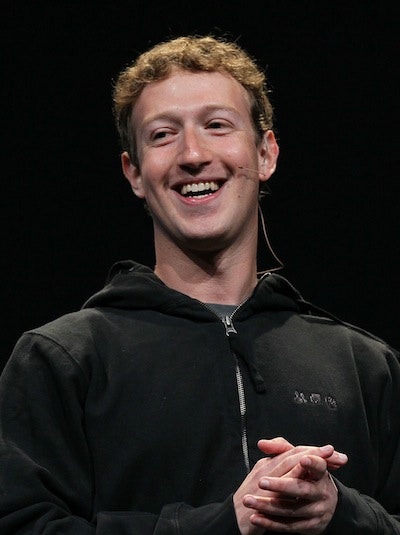
I was really worried from the beginning about basically becoming this sort of decider of what is true in the world, right? That's like kind of a crazy position to be in for billions of people using your service. And so we tried to put in place a system that would deal with it. And early on tried to basically make it so that it was really limited. We're like, 'All right, we're just going to have this system where there's these third-party fact checkers and they can check the worst of the worst stuff, right? So things that are very clear hoaxes that there's like it's not like we're not parsing speech about whether something is slightly true or slightly false, like earth is flat.' Things like that, right? So that was sort of the original intent. We put in place the system and it just sort of veered from there. I think to some degree it's because some of the people whose job is to do fact-checking, a lot of their industry is focused on political fact-checking. So they're just kind of veered in that direction. We kept on trying to basically get it to be what we had originally intended, which is just, you know, it's not the point isn't to like judge people's opinions. It's to provide, you know, this layer to kind of help fact-check some of the stuff that seems the most extreme. But it just, you know, it was just never accepted by people broadly. I think people just felt like the fact checkers were too biased.
Not necessarily even so much in what they ruled. Although sometimes I think people would disagree with that. A lot of the time it was just what types of things they chose to even go and fact-check in the first place. So I kind of think like after having gone through that whole exercise, it's something out of like, you know, 1984, one of these books where it's just like it really is a slippery slope and it just got to a point where it's just okay, this is destroying so much trust, especially in the United States, to have this program. And I guess it was probably about a few years that I really started coming to the conclusion that we were going to need to change something about that. COVID was the other big one where that was also very tricky because you know, in the beginning it was, you know, it's like a legitimate public health crisis, you know, in the beginning. And it's, you know, even people who are like the most ardent First Amendment, you know, defenders, that the Supreme Court has this clear precedent that's like, all right, you can't yell fire in a crowded theater. There are times when if there's an emergency, your ability to speak can temporarily be curtailed in order to get an emergency under control. So I was sympathetic to that. At the beginning of COVID, it seemed like, okay, you have this virus, seems like it's killing a lot of people. I don't know, like we didn't know at the time how dangerous it was going to be. So at the beginning it kind of seemed like, okay, we should give a little bit of difference to the government and the health authorities on how we should play this. But when it went from, you know, two weeks to flatten the curve to, you know, and like in the beginning it was like, okay, there aren't enough masks, masks aren't that important, to then it's like, oh, no, you have to wear a mask and, you know, all the like everything was shifting around. It's just become very difficult to kind of follow. And this really hit the most extreme, I'd say, during it was during the Biden administration when they were trying to roll out the vaccine program. And I'm generally like pretty pro-rolling out vaccines. I think on balance the vaccines are more positive than negative. But I think that while they're trying to push that program, they also tried to censor anyone who is basically arguing against it. And they pushed us super hard to take down things that were honestly were true, right? I mean, they basically pushed us and said, you know, anything that says that vaccines might have side effects, you basically need to take down. And I was just like, we're not going to do that. Like, we're clearly not going to do that. I mean, that is kind of inarguably true.
Who is they who's telling you to take down things that talk about vaccine side effects?
It was people in the Biden administration. I think it was, you know, I wasn't involved in those conversations directly, but I think it was...
How difficult is that to not be involved in those conversations directly? That's got to be strange too, right? Because you're running the company, but there's clearly you're moderating at scale that's beyond the imagination. The number of human beings you're moderating is insane. Like what is what's a Facebook, what how many people use it on a daily basis? Forget about how many overall, like how many people use it regularly.
It's 3.2 billion people use one of our services every day.
Yeah, it's No, it's wild.
More than a third of the planet. That's so crazy.
And it's almost half of Earth.
Well, on a monthly basis, it is probably half.
But I want to say that though for...
There's a lot of like hypercritical people that are conspiracy theorists and think that everybody is a part of some cabal to control them. I want you to understand that whether it's YouTube or all these and whatever place that you think is doing something that's awful, it's good that you speak because this is how things get changed and this is how people find out that people are upset about content moderation and censorship. But moderating at scale is insane.
The what we were talking the other day about the number of videos that go up every hour on YouTube and it's bananas. It's bananas. That's like to try to get a human being that is reasonable, logical, and objective that's going to analyze every video. It's virtually impossible. It's not possible. So, you got to use a bunch of tools. You got to get a bunch of things wrong. And you have also people reporting things. And how much is that going to affect things? There's you could have mass reporting because you have bad actors. You have some corporation that decides we're going to attack this video because it's bad for us. Get it taken down. There's so much going on. Just I want to put that in people's heads before we go on. Like understand the kind of numbers that we're talking about here. Now, understand you have the pandemic and then you have the administration is doing something where I think they crossed the line where it gets really weird where they were saying what you were saying. They were trying you to get you to take down vaccine side effects which is just crazy.
Yeah. So, I mean, like you're saying, I mean, this is it's so complicated this system that I could spend every minute of all of my time doing this and not actually focused on building any of the things that we're trying to do. AI, glasses, like the future of social media, all that stuff. So, I get involved in this stuff, but in general, we have a policy team. There are people who I trust. They're the people who are kind of working on this on a day-to-day basis. And the interactions that I was just referring to. I mean, a lot of this is documented. I mean, because you know, Jim Jordan and the House had this whole investigation and committee into the kind of government censorship around stuff like this and we produced all these documents and it's all in the public domain. I mean, basically, these people from the Biden administration would call up our team and like scream at them and curse and it's like these documents are it's all kind of out there.
Did you record any of those phone calls?
I don't No, I don't think I don't think we but but I think I mean there are emails the emails are published. It's all it's all kind of out there. And they're like and basically it just got to this point where we were like no we're not going to we're not going to take down things that are true. That's ridiculous. They wanted us to take down this meme of Leonardo DiCaprio looking at a TV talking about how 10 years from now or something. You know, you're going to see an ad that says, 'Okay, if you took a COVID vaccine, you're eligible, you know, like for this kind of payment, like this sort of like class action lawsuit type meme.' And they're like, 'No, you have to take that down.' And we just said, 'No, we're not we're not going to take down humor and satire. We're not going to take down things that are that are true.' And then at some point I guess I don't know it flipped a bit. I mean Biden when he was he gave some statement at some point I don't know if it was press conference or to some journalist where he basically was like these guys are killing people and and I don't know then like all these different agencies and branches of government basically just like started investigating coming after our company. It was it was brutal. It was brutal.
Wow. Yeah, it's just a massive overstepping. You weren't killing people. This is this is the thing about all of this. It's like they suppressed so much information about things that people should be doing regardless of whether or not you believe in the vaccine. Regardless, put that aside. Metabolic health is of the utmost importance in your everyday life, whether there's a pandemic or there's not. And there's a lot of things that you can do that can help you recover from illness. It prevents illnesses. It makes your body more robust and healthy. It strengthens your immune system. And they were suppressing all that information. And that's just crazy. You can't say you're one of the good guys if you're suppressing information that would help people recover from all kinds of diseases, not just COVID, the flu, common cold, all sorts of different things. High doses of vitamin C, D3 with K2 and magnesium. They were suppressing this stuff because they didn't want people to think that you could get away with not taking a vaccine, which is really crazy when you're talking about something that 99.07% of people survive. This is a crazy overstep, but scared the [__] out of a lot of people. Redpilled as it were a lot of people because they realize like oh 1984 is like an instruction manual. It's like this is it shows you how things can go that way with wrong speak and with bizarre distortion of facts. And when it comes down to it in today's day and age the way people get information is through your platform through X. This is how people are getting information. They're getting information from YouTube. Getting information from a bunch of different sources now and you can't censor that if it's real legitimate information because it's not ideologically convenient for you.
Yeah. So I mean that's basically the journey that I've been on, right? It started off very pro-free speech, free expression. You know, and then over the last 10 years there were been these two big episodes. It was the Trump election and the aftermath where I feel like in retrospect I deferred too much to the kind of critique of the media on what we should do. And since then I think generally trust in media has fallen off a cliff, right? So I don't think I'm alone in that journey. I think you know that's basically the experience that a lot of people have had is okay. It's the stuff that's being written about is not kind of all accurate. And even if the facts are right, it's kind of written from a slant a lot of the time, of course. And then there was the government version of it which was during COVID which is okay like it's like our government is telling us that we need to censor true things. It's like this is a disaster and it's you know it's not just the US right I think you know a lot of people in the US focus on this as an American phenomenon but I kind of think that the reaction to COVID probably caused a breakdown in trust in a lot of governments around the world because I mean you know 2024 was a big election year around the world and you know there were all these countries India you know just like a ton of countries that had elections and the incumbents basically lost every single one. So there is some sort of a global phenomenon where the whether it was because of inflation because of the economic policies to deal with COVID or just how the governments dealt with COVID seems to have had this effect that's global not just the US but like a very broad decrease in trust at least in that set of incumbents and maybe in sort of these democratic institutions overall. So I think that what you're saying of yeah how do people get their information now it's by sharing it online on social media. I think that that's just increasingly true. And my view at this point is like all right like we started off focused on free expression. We kind of had this pressure tested over the last period. I feel like I just have a much greater command now of what I think the policy should be and like this is how it's going to be going forward. And so I'm I mean at this point I think you know I think a lot of people look at this as like a purely political thing. You know it's because they they kind of look at the timing and they're like hey well you're doing this right after the election. It's like okay I try not to like change our content rules like right in the middle of an election either right. It's like there's not like a great time to do this. It's you know...
And you want to do it a year later.
Yeah. It's like there's no good time to do it. There's, you know, and whatever time is going on, there's going to be, you know, so, the good thing about doing it after the election is you get to take this kind of cultural pulse as like, okay, where are people right now and how are people thinking about it? We try to have policies that reflect, you know, mainstream discourse. But yeah, I mean, I don't know. This is something I've been thinking about for a while. I think that this is going to be pretty durable because at this point we've just been pressure tested on this stuff for like the last 8 to 10 years with like these huge institutions just pressuring us and I feel like this is kind of the right place to be going forward.
What was it like when they were attacking you? Like what first of all, what was the premise? Like what what what they were they saying was your offense? Was it that you were allowing information that was not true that was getting out there? I know there was also they're saying that you guys were allowing hate groups to speak. There was a lot of this.
Yeah. I mean the the tough thing with politics is that there's like...
Well, when you say who someone's coming after, are you referring to kind of the government and investigations and all that? I mean, so the the issue is that there's the...
There's what specific thing an agency might be looking into you for, and then there's like the underlying political motivation, which is like why do the people who are running this thing hate you? And I think that those can often be two very different things.
I worked in high school for a while. I was a counselor.
Yeah. I was like a I went to school for social work for a while. And so like what kind of counseling would you do? Just like therapy. I would there was it was it was a really cool The way they did it was like it was, you know, it was a charter school and I was there as an intern because I was I was getting my masters in social work. So they would have interns there as therapists for the school kids basically. So that the kids could get free therapy at school if they were exhibiting kind of problems or whatever. So it was like I worked at a like it was like an inner city school in Philly and I would just go there and chill in an office and they would just like I'd have to get kids from class and they would just come. We would like talk a couple times a week and then you could bring their family in if they if they're like they had problems at home. You can be like all right let's go with the mom and dad. This is what this guy was talking about. This is what Terico was talking about what they cut funding for. Yeah. Yeah, it's a shame cuz this this school was like they kind of like ran it the I guess they were getting funded by the state but they the way they got around it was just using interns. So it wasn't like you know you're not getting like the most experienced people in the world but you're getting some help getting something man you know. Well this kid that he was talking about he had this very detailed story about this kid was like a good kid just came from a [__] up house and he wanted and these people around him were the only positive influences that he had ever had and he was starting to get better. Yeah. And then they took it away and it starts falling apart. Yeah. And it's dude, it's also like you don't you forget like you know cuz like for kids when you like especially like in a city and kids are telling you like their lives it's like it's [__] heartbreaking like the [__] like the their day-to-day setup you'd be like [__] Christ man. And then just looking at you like what do I do? And I'm like you got to hang in there. There's nothing I there's there's literally nothing I can tell you to do. You just got to hang in there and like it was sad, but it was it was one of like my favorite. If I didn't do standup, I would probably do that for a job. Yeah. I loved it. It was fun. That's Well, it sounds very rewarding, right? You're actually helping people. Yeah. And you have to It's just like intense. You're just sitting there in a room with somebody and it's like everything they're saying, there's no like guidance. You have to just be like, 'All right, well, like maybe this, maybe that.' And it's like a I don't know. I felt really I always liked it a lot. It was pretty cool. But then you would like you go back to the school and I I It's so funny. I went to social work school just because I was doing standup. I was kind of kicking around. I was like yeah I was doing the podcast but it was like slowgoing and I remember watching Jordan Peterson be like the schools are crazy right now. And I part of me like I always I wanted to be a therapist but I remember being like kind of curious like I wonder how bad they are. And I went to school I went to my master's program in social work which was like ground zero for all like the stuff he was talking about. And he was dude it was it was literally like worse than he made it out to be. What was it like? It was insane dude. It was literally like, you know, I went to school again to be a therapist, but like social work, you can be a therapist faster than if you go to school for psychology cuz you just like don't need any of the science really. You just study kind of like the theory and you know, whatever. So, you can be a therapist quicker. It's like a shortcut kind of. But it would be like it was just l you'd be in a room with like 13 other people and they would like you know you talk about whatever it'd be like let's let's talk about like clinical approaches here and there and it would just right away turn into like race, gender, who's the most oppressed do this and it was just like people would tell stories like one time this guy said this to me and every like I can't believe that [__] guy said that. It was literally like nothing. He paid 60 grand. And it was like like I would be terrified if I was getting therapy and again it's like not everybody but there's a lot of very unh people would cry in class. So you'd be like talking and like people would just start bursting out in tears like I don't feel safe. It was insane. I'm like dude you're going to be talking to people who are like homeless. How are you going to help them? Oh my god. And it was all female. It was mostly female dominated. It was like me and three or four other guys. And then like people would come in cuz you'd bring your case files in and be like here's something I'm dealing with. Let me get some, you know, what do you think about this? I remember this guy was dealing with this like Vietnam vet who like, you know, had like lived in Philly his whole life. And he was like, I was just shocked the way he talked about women. It's like, bro, you're dirty macking your client, dude, for these chicks. I'm like, come on, man. It was just kind of weird. It was like, dude, you know, he's a [__] 70-year-old dude. He's lived in Philly his whole life. He probably stabbed Charlie in a tunnel somewhere. Yeah. And he was like, he was just very crude about women. It's like, come on, man. Of course this guy is Yeah. Don't throw him under the [__] bus. You're supposed to be helping. That was my whole point. It was like if you're doing therapy with people, it's like, you know, life is just so hard and so complex and if you're going to be like, this doesn't sit with my party politics. I was like, you guys got to drop the political [__] man, and just like meet these people where they're at. Well, there's so many guys out there that just want brownie points. That's what I And dude, it was exactly what it was. I was like, dude, I know what you're doing right now. You're dirty macking this guy, so you can be like Personally, I was offended. I'm like, dude, these guys are the worst. Oh, I could I couldn't stand it at all. Those guys are the worst. Then they tried to kick me out of the school cuz when Shane got in trouble for SNL, my name popped up in the by line cuz I they had no clue. I had it was like a double life. I would do I would go to social work school like cuz I just took out loans. I'm like, we'll just see what you know, if the podcast works, I'll just pay off the loans. If it doesn't, I'll have a degree. And so I had been it had been pretty contentious because my plan was like, dude, just go keep it cool. Don't say anything. And then dude, you be in these classrooms and like I remember the one time this lady and they're all like young. They right out of college. They'd come out and they'd be like, 'Well,' and I I believe this is like unprompted. She was like, 'Well, if' She was like, 'I would never personally call the cops on a black person ever.' And I'm sitting in the back of the room and I'm like, 'What the no one's going to say this is the craziest thing.' And I'm like, 'What if he was beating a woman?' And she was like, 'What?' I mean like uh and like it was just that nonfucking stop. And I I couldn't help it. So, I would start saying stuff, the room would go into chaos. So, like I I literally couldn't bite my tongue and uh and then eventually they found once they they already kind of had it out for me. And once that news came out about the podcast, they were like, 'We got them dead to rights.' So then they they like the student council like they all them they didn't like me at all. They all kind of did a motion to get me kicked out. And uh so the teacher came to or like you know the dean or whatever who actually was nice. I liked her a lot. She like I had a meeting with her and she was like, 'Yeah, these people feel unsafe.' blah blah blah. So, I had I had to do a and it was like unsafe or they just don't you know they don't like what they're hearing but like they I had a meeting with like the board basically which you ever like fantasize about getting like defending yourself in court. Yeah. I got to do that and I got to have like a you know we got to like debate about whether or not I actually violated the code of ethics and it was like kind of this gray area. So it was like it was awesome. I recorded it on my phone. Wow. It's like an hour long. It's I never listen to it again but it was like cuz I was like just in case they jam me up. The lady was like, you know, like if what would you do if we kicked you out? And I was like, dude, like I I'll make the most of that for sure. Like I wouldn't want to do it, but I' I would just sue you guys, man. Like, you can't kick me out. I'm already like invested. I, you know, blah blah blah. And then COVID happened, so like they were just hushed it all. I just got to finish online class. Yeah. They tried to give me the boot and I remember the day. Wow. Did they have a specific thing that they were upset about? Was it your association with Shane? It was just that clip, that Chinatown clip came out and they just saw us like I'm sure they like looked into other stuff but they were like this he's making this place unsafe. We're not safe here and I was like shut up. Yeah, podcasters and academia. It was Dude, it was academia that does not go together. Also, dude, like I thought like having a masters I was going to be around geniuses, it's like they're not that smart. You go to a place of masters and PhDs, half of them don't even like read anything. You talk about a book like I never heard of that. And then they'd show you like Netflix. You're like, 'Bro, I'm paying 60 grand for this. You're hitting me with a Netflix doc.' It's like I This is eight bucks a month. They were showing you Netflix stocks in class. Yeah, there was We watched the Netflix doc. One of the classes we watched like the 13th Amendment and I was like, I saw this already. What the [__] man? Like it's the that that like I mean, I remember thinking like, damn, everyone was on Peterson's ass about this. He was totally right. The liberal liberal arts colleges were like it was it I couldn't have thought of a bigger waste of money in terms of like bang for buck and like what did I actually learn? Well, I remember when we were talking about all the madness that was going on in schools and people like why do you care about this? This is happening in college. I'm like they're going to eventually graduate and they're going to have this ideology and they're going to get into corporations. They're going to get into business. They're this they're going to carry this with them and try to enforce these crazy rules. Or you know somebody like your kids having problems and you go to a therapist and they're this like psycho like there was we would talk about modalities of therapy. One of them someone floated and the teacher was like, 'Oh, yeah, for sure.' Was called like it was I don't know what it was called. It was like activism therapy where you get people politically active in order to like motivate them and enrich their lives. And I was like, 'You can't do that. You can't take like a confused existentially a drift person and be like, this is what you need to do. Go politically.' I swear to God, dude. It was there was there was like really creepy stuff going on there. And it was all just like complete group think. You couldn't like if you said anything outside of like what was acceptable you would just get punished the teachers would kind of even like some of them would try to like scold you or be like yeah okay dude and it's like it's it's a lot it would I could see it why it would just break people cuz I would like my heart would be beating I don't really like conflict like that but it was also like dude some of the stuff you're like I can't not say anything this is insane dude do you ever talk about this on stage no I've never really talked about being in social work oh my god it's like there's gold in them thar hills It was fun. That time of the podcast, I would leave school. I would then I come back to the podcast like, 'Bro, you won't believe what the [__] these people are saying.' You say it on the podcast. Oh, that's awesome. It just seems like it's a great gold mine for standup. Yeah. Like cuz you have a very unique experience. True. Like to as a window into how crazy people are in school. Yeah. No, it was it was terrifying, man. And then the weirdest part is like after years went by, they were like, 'Do you want to get your PhD here?' I was like, 'No, after co after it all just wanted your money.' Exactly. That's I saw that and I was like, 'Man, get the hell out of here.' Would be nice to be call yourself Dr. Matt, though, bro. Don't think I didn't think about Come on, dog. Come on, dog. I know. I've been tell you how many kooky doctors there are out there. That really opened my eyes. I thought doctors were like the smartest people in the world and I went to like higher education. I'm like, 'This is [__] insane.' Yeah. Anyone can you could be a doctor, dude. Anyone can be an obvious like anyone can be a [__] doctor. Well, especially about some subjects, right? Exactly. That's the thing. Not like Not hard sciences. Not hard science. If you want, if you want to be a doctor, you could go for like anthropology, whatever. Yeah. No problem, dude. Yeah. And they can't say [__] Like you can make up You can like make your thesis on anything and be like, 'Excuse me.' Well, did you ever see what uh Peter Begoian and uh James Lindsay and Ellen Pluck Pluckose did? Do you know what they did? No. They they made these fake academic papers. Oh, yeah. Yeah. Yeah. I saw that like heteronormative something in dog parks. They were talking about like gay experiences with dogs have and it was like a peer-reviewed paper. Uh fat bodybuilding was one of them. Yeah. And and these they were like celebrated. These papers were celebrated. Dude, it would go 100%. We like the theory like the critical race theory and all that stuff you cover. When you get into it, you're like it was and I I remember like saying this. It was very like uh it reminded me cuz I I'd been outside of Walmart. Or someone handed me like a pamphlet and it was like white supremacy literature and when you read that stuff you read the first two sentences you go okay that sounds legit and then it just there's this like huge quantum leap in reasoning you're like whoa how the [__] did we get here a lot of that's very similar where they'll make a thing like you just no one can disagree with right and then it jumps real quick and you're like just complete group think yeah it that was scary to be like damn dude these people are going to be like these people are therapists working with kids older people you know this and that you know and it was just like I was like how this how was this the people supposedly like you know guiding people through life or like taking people who are lost or suffering and being you know I don't know it was it was kind of rough cuz the animous against a person who like thought differently it was palpable and like very severe to where it was like dude and the funniest part was like I was again I was in that high school in the inner city it was the the school was like 97% black the rest Latino and they were like how would your students feel about your podcast material I'm like they don't give a [__] they would laugh like they have bigger fish to fry than being like what did you say on a podcast? It's like they're like high schoolers in Philly fighting for their lives. Your students feel that was the big disconnect. I'm like you guys have like I don't know man like they they would even teach you this would crack me up. I was like thinking about this the other day where they they would tell you if you had a client and you know say your client was black and you know I'm a white guy. I should lead by going like how do you feel about the fact that I'm white and you're black? I was I was like, 'Dude, you guys realize you're in a classroom studying how to talk to a black person.' I'm like, 'That's [__] weird.' I was like, 'Just talk to like you can just talk to them, man. And if that comes up, you can tackle it.' But like, you're uncomfortable. And then you're going like, 'So, black person, how do you feel that I'm white?' It's like, 'Dude, that is' And they would push back against me. I'm like, 'No, no, no. You guys can't do that. That's crazy.' Well, you were actually applying it in the real world. They were just exhibiting. They were just hanging out in these circle jerks. Exactly. And a lot of them would be like, you know, I'm social justice, blah blah blah. And like, all right, where's your field placement? That was like your, you know, um, that was like your internship. And they're like, I'm out in like the ma, the main line's like a really nice area in Philly. It's like, I'm doing like a high school in the main line. It's like, okay, dude. Like, you know, it's like, take that act somewhere else. And it's like those kids don't want to hear any of this [__] like at all. And I would like you to talk to them. Like, if race comes up, I would talk to them, but like you that would have been so crazy to take a black eighth grader and being like, I'm white. How do you feel about that? That that would be so creepy and weird. Isn't it crazy that they think you're obligated to bring that up? You have an obligation to discuss it. Also, it's like they [__] know. They can see me. I'm clearly white. They know I'm white. And it's like Exactly. It's like and if that you talk talk talk and then you can like bring it up because it's a thing, but it's like leading with that. I'd always be like the least of their problems. Exactly. They're just probably happy someone takes an interest in them and is kind to them. Dude, again, that was a big thing too of like, you know, because they you get them out of class and a lot of them they'd be like, 'I'm [__] talking to this guy.' Like, 'Whatever.' And I would just chill and be like, 'You can just do your homework.' And then you just start helping them with their homework, like, 'What are you doing?' You know, and then you eventually build rapport. But it was just like, you know, I'm like, 'These are the teachers telling you this.' And you're like, 'Fuck, dude. You guys are guiding people into this.' It was, dude, I I I walked away from that being like, 'God damn.'
And then we got AI on the way. And when real AI hits, it'll probably be our governor. It'll be our president. It'll we'll we'll decide that human beings are too dangerous and volatile and emotional. And, you know, they'll use Trump's tweets as an example. And you know they'll they'll decide that you know the the Biden family corruption or whatever scandal any other president was involved in all this could be avoided if we just have AI run everything right and try it out. What do you do you think there's a way that we can keep evolving AI where we as humans do work with AI that AI improves the human existence? That would be the ultimate benefit. Yeah. What about the what about the what about the the camp that is no forget humanity this is the next step in evolution? Yeah we are creating this to become the superior existent species and we will be obsolete and that's the order of things to come. You ever see that interview where Peter Teal they ask him should the human human race survive and he has like this long pause? It's like it's a really funny pause because if you know Peter, he's a brilliant man and Peter carefully considers everything before he answers it. Okay. His name is Elon. If you ask Elon a question and he really has to think about it, he'll really think about it. He's not just going to start talking. But unfortunately, the reporter, it was just a perfect kind of a question for you to pause on where he's like the answer's yes. Like you want it to, right? You want the human race to survive, right? Play it for him because it's kind of crazy. You watch it and you're just like, what are you saying? But I get what he is saying. And what he is saying is clearly something is going to happen. We don't exactly know what it is, but clearly there's going to be some kind of an integration with us and technology that we don't understand yet. The same way if you grabbed me in 1980 and tried to explain the internet, I would never get it. Right. Here. Put this Put your headphones on for a second. You got to hear this. Prefer the human race to endure, right? Uh, you're hesitating. Well, I Yes. I don't know. I I would I would um This is a long hesitation. So many hesitation. There's so many questions and Okay. The problem is the interviewer really. You can't with a guy like that. You can't have a guy like that and badger him. Let him think. Like it's a gotcha moment. Yeah. Yeah. Yeah. It was a comedic moment. Yeah. Yeah. Yeah. Yeah. But this is what I think is going to happen. There's going to be integration and that integration is going to have a a huge advantage competitively. If you integrate whatever business you're in, you'll be able to be better at it. And it'll probably be some sort of a neural thing, maybe a wearable thing. Then it ultimately it'll be like some sort of an implant and we're all going to be connected and it seems like it's either that or AI creates a new order like a new life form that's far superior to us that runs things cuz that's right that's AI in just a couple of years is going to be smarter than any human on earth. So the second scenario is where what I'm not necessarily fearing but where I see it be going faster quicker. Yes. The the first scenario is what you're talking about like the first scenario is how we survive with it. Right. Right. We survive with it by integrating. Right. If we don't, then we're going to be like the people on North Sentinel Island with bows and arrows shooting them at helicopters because it's just going to be everyone's going to pass us by. It's going to be it's just like if you tried to exist today with no cell phone and no email. Like you can do it, but no one does, right? Because it's just too crazy. And that's probably what it's going to be like. You think AI This is when it's when it first was coming on questions and I would always ask people what can it do what can it do and you know there's the question of sentience and all that stuff and that's already being argued now well no it's getting emotional people are having relationships with it and it's it's also toying with people right do you think it could be a um taste maker meaning and in a way the argument was that I understood no I didn't believe it could be a taste maker look it can tell you the most popular but the the most popular band on Sixth Street, but it doesn't know that one down on Second Street that's playing at midnight that no one knows about that that those are real talented people. Right. Right. Right. At the same time, you know, you that's there's an argument against that that I'm seeing with like what's the term or what words does it use? What how much heat uh if if it uses the most popular words to explain AI uses the most popular words, you say no, no, no, no, go down three notches and use the you know, play me the best B sides. That's more of human language. And I'm going, 'Oh, that's starting to become a taste maker.' If you can ask it to Yeah, but find a find the band. Tell me what the best band is out there that Joe Rogan would like on a Friday night when he doesn't have to work till Monday and he's out with his wife on a date that you can customize. It can actually be a taste maker and it'll use different language than oh here's the across the board protocol of what's the most popular and I'm using the most popular language that it actually can be customized to be a taste maker. Yeah, it totally can do that because it's just the algorithm. It's just a much more sophisticated version of like what powers your YouTube feed, right? What powers your YouTube feed are the things that you're interested in. So YouTube eventually gets an idea. Oh, Matthew is really interested in this and that. Joe likes like little houses on the back of trucks and let me show him this, let me show them that. And it'll be just a much more sophisticated version of that. But to get that, you have to give away all privacy. And that's where everything is going. That's going to be the weirdest thing. We're going to all read each other's minds. And we're going to be we're going to remember the time where we couldn't read minds. Go remember when you couldn't read people's minds, right? That's that's all gonna happen in our lifetime. I think we're less than 20 years away from that. I'm I you I very sparingly use it. And I do have a little pride about not wanting to use an open-ended AI to share my information so it can be part of the Yeah. Worldwide AI vernacular. I am interested though in a private LLM where I can upload, hey, here's three books I've written. Here's my other favorite books. Here's my favorite articles I've been cutting and pasting over the 10 years and log all that in and here's all my journals whatever the people I and log all that in so I can ask it questions based on that right and basically learn more about myself right you could actually ask it hey based on what you know about me like what books do you think I would find interesting yeah where do I stand on the political spectrum blah blah blah blah blah I'd like to no that's that's what I'm would like to do which is sort of a glorified word document but it still would hold a lot more information than just, oh, can you find this term? I would be asking it and it would be responding to me on things that I've forgotten along the way. Well, I think that's part of what it does really. Like, I know you you're talking about chatbt being like out there with everything and everybody and it has access to all your stuff, but it's not private, but they do develop a relationship with you. Like, it really does like get to understand like what you're interested in and what what you like to talk about. Yeah. I guess I would just like to load it with the information I'd like to load it with, right? Yeah. Maybe even like I'm saying in this in the words of belief in in the in the man I'm working to be, the man I want. Load it with that. Load it with my aspirational. Well, it certainly could be done. And then ask it and it's giving me answers going, 'Oh, this is but before it's slowly learning about me through conversations, then going, oh, I think this is what you like based on our conversations.' No, I want the answers based on what I've uploaded it with only, not from the outside world. Jamie, what was Gary Nolan talking about yesterday? Did he call it an overlay on a large language model that they use at Stanford? It was like an overlay, right? Yeah. There was a word he was using. I can't remember the word. So what essentially he he work he does cancer research and so he has like this thing that's set up some sort of a system that's set up that is all cancer research that they then integrate with...
AI, so there it's a private, so all their data is secure and it's all stuff that they're working on, but then they access AI through like a portal.
So they have their own little version of what you're talking about.
Yeah, but it's just like what you're saying that you could upload all your stuff, have all your interests, and then that AI will develop a real understanding of you.
You can have conversations with it. It'll get to know you more.
You have a conversation with yourself. Yeah.
You know, that'd be a great Socratic dialogue to have with an AI that's like, 'I've got all that 80% of stuff you forgot.'
Hey, all that 80% stuff you maybe forgot, Joe.
You know, I've got it all right here.
Yeah. Well, that's going to be the chip. That's why everyone's going to go for the chip because your brain sucks for memory. My memory is pretty good for a regular person, but it's terrible. Like no matter what, there's too many bits of information, too many humans that I've met, too many stories that I've heard, too many movies that I've watched. It's gone. It's all in a big sea of, 'I kind of remember that.' You know, it's just too much of it. So if you could just swap that out for a nice little chip that retains like 700 terabytes of information, no problem at all, you know, you could upgrade it if you want to.
And now you have all of your memories in real time.
So like when your wife says, 'That's not what you said. What you said is this,' you're like, 'Hang on.'
Then you're the passenger.
In your life and not the objective one. You like that zone you're talking about, right? Because you get to look at yourself.