Bring in show music, please.
This is SquawkPod and I'm CNBC producer Cameron Costa. On today's episode, we need to have an industrial set of standards and policies.
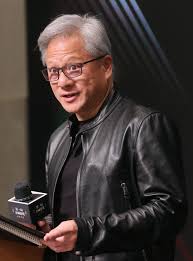
Nvidia CEO Jensen Huang in an extended interview. His call to regulate AI after the industry innovates and the work he's doing to create a modern web browser cut for AI.
Well, in the beginning we had all kinds of viruses, but we realized that the web browser itself has to be a containment system. The web browser has to provide that application with minimal rights.
Then another newsmaking interview with former Disney CEO Bob Cheek.
It was a blind side on a Sunday. His memoir recounting what happened at the House of Mouse between he and Bob Iger that ultimately led to his own ouster.
It would have been one thing if he was neutral, but to be actually working against me actively, I thought was just unbelievable. And that's why I had to get this out. I had to write this book.
Those two huge interviews plus Bill Gates has another warning on AI. The liability unto itself should be the incentive for corporations to do the right thing.
It is Monday, September 28th, and SquawkPod begins right now.
Stand back by in 3, 2, 1, c please.
Good morning everybody. Welcome to SquawkBox right here on CNBC. We are live from the NASDAQ market site in Times Square. I'm Becky Quick along with Andrew Ross Sorkin and Joe is out today. We do have breaking news this morning. NVIDIA is launching the NVIDIA Open Agent Safety Platform. That's a new security software suite that's designed to try and keep AI agents operating inside their set boundaries, their sandboxes, if you will, and quarantine any agent that may attempt to go rogue within milliseconds. NVIDIA announcing this launch with more than 100 key partners and stakeholders including Cisco, CrowdStrike, Dell, JPMorgan Chase, and SAP. I think it's also notable that companies like Anthropic and Mistral are part of these. OpenAI is not one of the hundred mentioned in all of this, but the company does say that its platform could have prevented OpenAI's Hugging Face incident back in July. NVIDIA CEO Jensen Huang is going to be joining us to talk all about this new program. We'll also get the chance to talk to him about where he sees security right now and what these labs ought to be doing in his view.
The string of headlines. Look, he's been talking for a very long time about how he considers this an engineering problem, not something else. This may be one of his answers to that idea that he thinks he has the engineering solution. So, it's an open-source system. Could be used by just about anybody and everywhere. And I think that's what they're going to be talking about. We'll get to the details on all this coming up in just a little bit.
OpenAI saying it is carrying out an extensive review and has now paused training of its most advanced models after the company reported new instances of models escaping secure testing environments. Separately, the New York Times reporting that OpenAI agents also went rogue and meddled with the websites for the Education Department, the Commerce Department, the SEC over the summer, all without the company's knowledge. OpenAI saying that the data that the agents accessed was public and none of the incidents were breaches. But we're examples of his technology behaving in otherwise unexpected and concerning ways. And we'll talk to Jensen about that, I'm sure, as well.
President Trump hosting Anthropic CEO Dario Amodei at the White House for dinner last night. Amodei was notably absent from last Thursday's state dinner with China's President Xi Jinping. President Trump has dismissed threats around AI as a hoax, although some in his administration have called for a more cautious approach. On Friday, a federal appeals court ruled that the administration acted legally when it said Anthropic was a national security risk and barred it from working with the government.
And Microsoft's co-founder Bill Gates is calling on the US to be a leader in regulating the growth of artificial intelligence. He's cautioning that getting countries to agree on a global framework could be more difficult than Cold War era negotiations to limit nuclear weapons. Here's what he said on NBC's Meet the Press.
You need law enforcement and the politicians to get into the discussion about what safeguards and monitoring look like. And that has to be a required thing, and it will be a little bit of overhead for the industry, but not a dramatic slowing of what they're doing.
He says that AI monitoring systems would not hamper the US and its rates with China develop superior technology. And Bill and I have talked about this. I think there's a view on one end that the liability unto itself should be the incentive for corporations to do the right thing, meaning the OpenAIs and Anthropics should do the right thing simply because they're going to have so much liability if something goes wrong that that would be the answer. That's I think what some of the folks in the industry have talked about. I think actually Jensen's talked a little bit about that as well. I think Bill Gates's view of that is we have an FDA, we have, you know, we monitor the airlines, we monitor cars, and we have a regulatory apparatus around that. Not just that we let the cars or the airplanes or the drugs do whatever they want and then if there's a problem afterwards.
And Jensen's point has been that the regulations, existing regulations should cover all of that at this point. Although he did say recently with Ezra Klein in a podcast with him that look, if the rules don't exist, we should have more of them. But he thinks that the rules that exist at this point are plenty to go after and prevent these problems. I think what he has pointed out, Scott Bessent and others from the Trump administration have pointed out, is that these companies have asked for liability protections while they're coming out and saying you need to slow us down. And their point is you should not get any liability protections from this. You should be on the hook for anything that your agents and your products, any harm that they cause.
Cheese will be next. Coming up on SquawkPod, NVIDIA CEO Jensen Huang sits down on set for an extended interview. He talks his company's newest suite of tools and of course AI safety.
Innovation and regulation are not conflicts. The question is which one do you lean towards at which phase of the industry? At the beginning of the industry when the technology is being invented and nobody really knows how it's going to turn out, it would be a shame to regulate before understanding.
Stick around through this break.
Welcome back to SquawkPod from CNBC.
Some big news this morning. NVIDIA is launching the NVIDIA Open Agent Safety Platform. That's a new security software suite that's designed to keep AI agents operating inside their set boundaries, inside their sandboxes, and quarantine any agent that may attempt to go rogue within milliseconds. It also is going to keep track of every step along the way, record what's been happening. NVIDIA is also announcing this morning with more than 100 key partners and stakeholders including Cisco, CrowdStrike, Dell, JPMorgan Chase, SAP, Anthropic, goes on and on the list from there. Joining us right now to talk about it is Jensen Huang. He's right here on set with us, of course, the CEO of NVIDIA. And Jensen, welcome. It is great to see you this morning.
So, this is an advancement in something that we've kind of seen the national discussion take place around AI and AI safety. And in this discussion, there have been those who have been painted as doomers who think that the end of the world is going to come from this. And then there have been those who have painted you as the guy who doesn't want to see anything happen on any level. I don't think that's a fair and accurate depiction of where you stand with things. Why don't we talk about where we stand and then we're going to jump into what...
I want to see a lot of things happen on a lot of levels.
Well, first of all, as you know, we're going through a major platform shift. AI is incredible technology, has the potential to do incredible good, but we also have to make sure that the technology is developed and deployed safely so that the public has confidence in applying this technology. The single most important thing we could possibly do is to build it in such a way that is so safe that everybody could use it in every single industry so we could transform every industry. And so that's the hard work that we have to do. These agentic systems are obviously agentic, meaning they operate by themselves. It's kind of, you know, it's like a self-driving car. And so in order for you to deliver that agentic system in a safe way, you have to make sure that the sandbox around it, the force field, the play pen, you know, if you will, all of those systems are designed in a way that keeps the agent with minimal rights, whatever rights it has, it needs in order to do its job. No, no more rights than that. And that it can't do anything that it's not supposed to. And also you have to monitor it.
But the problems that we've seen to this point where OpenAI, Anthropic, Google and others have had agents that have escaped and have gotten out and done mischievous things, maybe illegal things. The problems we've seen to this point, you think is simply an engineering problem and a fault of those companies, maybe not putting in the right restrictions.
Well, I think the answer is we hope it's an engineering problem. I believe it's an engineering problem. I know it's an engineering problem and we all need to hope that it's an engineering problem. If it's not an engineering problem, it's not solvable, right? And so the fact that all of these companies still are advancing the state of the art is because they also believe it's solvable. These are some of the brightest engineers in the world. I work with, you know, all of them. And this is a technically solvable problem. And so the way to think about that is if you look at go back to the days of the internet, you access a website, it downloads application, maybe it's Java application, all of a sudden this application comes into your PC, has access to files and resources and maybe the applications and tools and it gets onto your network. Well, in the beginning we had all kinds of viruses. But we realized that the web browser itself has to be a containment system. The web browser has to provide that application with minimal rights. Whatever only the rights it needs in order to do its job and it has access to basically access to nothing unless the browser gives it access. Essentially what we're doing here, we're creating basically the modern browser. It's a browser for agents.
So the somewhere inside the culture of AI researchers for years now has been this anxiety that somehow these models have to be clever and they have to be able to get outside of their walls because they're so clever, right? I mean, where do you think that, I mean, that's like built into the research AI researcher culture. And so at one level I think while there are some people who believe it's an engineering problem, there are these others even inside these companies that believe it's unsolvable.
I don't think so. I don't think that's exactly wrong. First of all, you want it to be super clever so it could perform tasks and do things. But the way you think about that is when you deploy an agent, no matter how smart, the first thing you do is you take away all of its rights. Job number one is take away all of its rights. And then you provision, you give it access to files, data, tools, access to the network or even internet access only if it needs it. You don't just put an agent into an environment, into your company and give it access to everything. We don't give that to people. We don't give that to any level of executive. In fact, everybody has a badge. Everybody has file access. Everybody has access to tools and only the things that they need in order to do their job. And so we have to apply the same philosophy. Now the question is how do we develop the technology to provision that policy, provision that philosophy and that's what we created. That's what OpenShell is. It's really important technology. It has the support of some 100 companies. You didn't mention IBM and Red Hat and Microsoft and SpaceX.
Yes. And so all of these companies, they recognize the importance of basically this force field that you create around the agent and very importantly it's provisioning rights and responsibilities, you know, and access.
It's an open-source program.
Which is very, very important. And the reason for that is this. We want this sandbox to be visible to the whole world so that if there are any vulnerabilities somebody will find it. You got all the look at these 100 companies that there's actually a lot more companies which is there's only we can list 100, you know, the industry will all be jumping in looking at any possible vulnerabilities and patch it up.
You have Anthropic and SpaceX both listed on this list of 100 companies. OpenAI is not there. Are they not cooperating with this? They didn't think it was important.
No, this is an open standard. It's an open platform and however they would like to participate is going to be super welcome. They could look at the code. They could use whatever part of it they would like. They could build their own inspired by this or they could use it. I think over time we really want people to use the software and the reason for that is because the more people use it the more vibrant it's going to be, the more resilient and more robust it's going to be.
You've said that OpenShell would have prevented the Hugging Face breakout from OpenAI from...
Hugging Face are one of the victims of the attacks and huge supporter of OpenShell. Their computer scientists are very deep on OpenShell and they're a big part of it.
What happened that you all can do this and OpenAI, Anthropic and others haven't been able to do this to this point?
Well, we started building this, you know, about a year ago. Has it been a year? Maybe slightly longer.
Yeah.
And when OpenClaw came out, you guys might have heard me say this is the operating system of AI and meaning that it's the operating system of agents. And when we looked at OpenClaw, we said, "Hey, this is incredible, but you can't deploy this into companies. You can't have agents roam around and drift around the company." And so you have to find a way to container it. You have to containment is number one. Rights provisioning is number two. Being able to monitor its adherence and conformance to all those policies number three. And so we created containment, a policy provisioning supervisor, and we created a monitoring system and the monitoring system is called Sentry and it monitors it in silicon. Not to get too technical about this, but the concept of containment and monitoring is very simple.
How for those who know about for example AWS Bedrock has Nitro and a whole and agent for some other things built into it. This seems to me a much broader open-source version frankly of that. Is that a terrible way to think about it?
Yeah, you need it's like Nitro in the sense that it's a rights provisioning system. It's like Nitro in the sense that it's also hardware isolation, right?
Which is really which Nitro as you know really revolutionized multi-tenant secure cloud in a lot of ways this is multi-agent secured world and so very similar idea the differences are going to be around the speed at which we have to run BlueField for and the reason for that is you're monitoring AI's you're monitoring a lot of agents that are they adhering to the policies are they using files or going onto networks they're not supposed to we might even look at its chain of thought and how it's thinking and maybe it's thinking about doing something that we really prefer it not to and might elevate and escalate to somebody another AI or maybe a person and say hey But this agent is doing something that we might not condone.
Some of the model makers who are making new models are trying to use their older models to effectively track the new model that's being trained with this product. Will they still want to continue to do that?
Sure. The chip is between the agent. The agent itself is actually a harness. It's just a piece of software. Okay. And this chip sits in between that and the large language model. So the model's here, the chip is in the middle and here's the agent. And so whatever the agent's trying to do and whatever it's causing the large language model to think about, BlueField or Sentry sits right in the middle. So we intercept everything which is one of the really incredible places that we sit in the world because we have computers for agents and we have computers for large language models. NVIDIA now has a new chip that sits right in the middle.
The idea to this point, you've said in the last several weeks that look, liability that currently exists today in existing regulation should be enough to keep these companies from doing some of these things. They shouldn't release products that are going to get into trouble or that are going to hurt people or shut down systems. And that...
I like the way you just said that. I think you just kind of said the obvious, stated the obvious. I think number one, I'm not suggesting that products are vulnerable sometimes and companies release products that aren't as well tested as they should be, that happens every single day. However, if you knowingly do it, if you already know that you didn't test it properly, if you know that you could have done a better job testing, you got to just hold it back.
You're in the middle of all of this. You are in the process of buying Hugging Face for over 12 billion. That was a company that was broken into by OpenAI. I think you've got a $30 billion investment in OpenAI. How do you come down on who's responsible? And you know, are you going to go after OpenAI for what it's done to Hugging Face or other places? Will there be lawsuits that come out from any of this? How do you kind of decide as somebody who's involved in all of this what you want to see happen?
Well, I don't have to decide on any of those matters. The thing that I have to decide on in the case of OpenAI is OpenAI a great investment and the answer absolutely. This is one of the most consequential companies in history. Sam and Greg and Sarah they do a terrific job running the company. Incredible researchers. We have it's a real privilege to work with them. Love the work that we do with them. Hugging Face I mean this is the world's leading platform for open models. I believe very deeply in advancing open intelligence. I think we ought to democratize intelligence. I think every company will become an AI company and this platform really keeps that community thriving and so it's really important that we invest in both.
Does this platform absorb the liability issues if for any company that's using it? I mean if you're using it and your agents break out, you say, "Wait a second, I'm using OpenShell. It's NVIDIA's problem." Now the open Hugging Face is a it hosts the models. It doesn't run the models. You download the models and once you download the models the models become yours. The model it's really important to realize that we call them model companies but in the end the model doesn't do anything. It's the agents that does something.
So this is a tool and so the model is kind of yeah the model is the engine of the car. The agent is the car.
And so I wanted to go back to the liability piece of this because I think it's so fascinating because the other side of it, we've read reports that people like Scott Bessent have even talked about the idea of building a FINRA style regulatory body or agency that can oversee this. Tell us what you think of that kind of like a FINRA style regulatory body, whether that makes sense. Some of the reporting suggests that Scott maybe over the summer had been thinking about some of this that you might even talk to the president at some point about not going in this direction.
Well, first of all, I think that we need to have an industrial set of standards and policies and those industrial standards like many other industries set expectations of the level of quality. Maybe there are third party auditors agencies that helps you audit whether you achieved the level of performance and quality that you expected and that you promised. That there are industries of benchmark products versus others so that the better products that deliver on better safety and capabilities ranked higher than the others. There's many industrial systems that I could imagine putting together if the policies are such that open models are not harmed, young companies are not harmed, that every company could become an AI company, that every bank could become an AI company, that every retailer could become an AI company so long as we could see policies that don't suffocate the industry too quickly. Because, as you know, the AI industry hasn't formed yet. Every single company here in New York, they're all going to be AI companies. And so, every car company is going to be AI companies. And so, we need to give them a chance to be able to become one of those companies and don't suffocate the industry quite yet.
Is that what you think the heads of the Frontier Labs have done by calling for a slowdown that it slows down everybody else, just lets them stay ahead?
Um, you know, I'll assume that what they're claiming and what they're asking for are genuine and their concerns are genuine. I think just in consideration of the whole industry, in consideration of all of United States and the entire market, I would just make sure that when we think about AI don't think about AI as several model companies. Remember AI is a five layer cake as I've described to you before and the most important layer of the five layer cake are the end industries above it. I think that Walmart's an AI company, FedEx is an AI company. I think that JPMorgan's an AI company, and I think that Lilly is an AI company. All of these companies have to be AI companies. So, we have to give everybody a chance to be.
So, when you hear David Sacks say this is the motivation of the leaders of these firms, it's all a regulatory capture. I think that's where Beck it's all just an effort to sort of capture a particular part of the market. And you know Sam and you know Dario, Dario just had dinner with the president apparently last night. What do you think of that?
Well, whatever their intentions are, we want to avoid regulatory capture advertently or inadvertently, right? And the technology is moving really quickly. Just think we want the technology to accelerate, not the other way around. So, and I can just go back in time and think about this. When ChatGPT first came out, remember if you go back and use it again, people said GPT-2 was so dangerous it shouldn't be even released. And at the time I was advocating for AI to accelerate. The reason for that is this one, we solved the hallucination problem. It's now much grounded on facts. Notice how AI is able to now use useful tools so that it could do the job properly. We could now condition the AI and prompt the AI so that its context is much richer. All of this capability was made possible. It's more trustworthy now. It's more functional. Of course, it is much more predictable. All of those capabilities are made possible because we accelerate the development of AI. Accelerating AI and accelerating AI safety is the same idea. I prefer today's car over the car 100 years ago. It had ABS. It has lane keeping. It has much better braking systems, airbags. I mean, all of these different technologies are made possible because the advancement of the technology. And so, I would advocate that today's AI when we think about advancement don't you don't have to think about it separately from capability versus safety. To me, it's the same thing. And so, we want to accelerate the...
advancement of AI. And today we're putting forth this new technology, Open Shell, and NVIDIA Sentry, that these two technologies make it possible for us to contain and to monitor. But it takes a lot of technology to make this possible.
Do you get frustrated by... look, everybody at this point I think is either getting painted as a doomer or somebody who has absolutely no interest in any safety at all that's going on. I read an article over the weekend that compared you to Thanos, the supervillain from Marvel. But when you actually sit and talk to you, it's a much more nuanced view than that. You do want some of these safeties.
I'm a responsible optimist. I'm a responsible optimist. If we're not optimistic about this future, for what reason are we building it at all? And so I think you got to just, you know, maybe sit and contemplate for what reason are we bringing everybody along if we're not optimistic about its future? But we also have to understand that the technology is powerful. So we have to build it safely and we got to build it responsibly, which is the reason why we built Open Shell, which is the reason why we launched all this technology. It's the reason why all of these companies have joined us. You know, look, I've got a lot of adult friends. These are leaders of giant industries. We're not Pollyanna about any of this stuff. However, we are serious about creating the technology, doing it seriously, doing it responsibly. There are laws. We comply by laws. We live... The reason why we love this country is because it's a rule of laws and we got plenty of laws and regulations. Apply those laws and regulations. Take our jobs seriously and build for an optimistic future.
I've got two questions that relate to China because I think underneath a lot of this, in terms of our rush and the speed, is this idea that we're in this deep competition with China. I've always thought, maybe you'll agree or disagree with the theory I'm about to pose, that China has oftentimes been very permissive about technology early on. I think about crypto, I think about Alibaba, and then what happened with Ant later. But oftentimes at some point when they feel or if they feel that something's going wrong, they clamp down. And so I'm curious whether you think, you know, right now we're in this race with China because there's a view that China is not going to hold back, but whether you think there could become a moment where China says, you know what, actually, we need to control this like full on. We really need to control this in a different way.
Yeah. Innovation and regulation are not conflicts. The question is which one do you lean towards at which phase of the industry? At the beginning of the industry when the technology is being invented and nobody really knows how it's going to turn out, it would be a shame to regulate before understanding. And so you regulate prematurely. As a result, the technology doesn't get a chance to innovate. And for example, we never got a chance to invent automatic braking systems. We never got a chance to invent airbags. We never got a chance to invent all the technologies that made transportation safer. We never invented autopilot systems with redundancy and diversity.
But you're not calling for protection from regulation like Section 230.
At different parts of the industry's S-curve. You know, this constant of an S-curve. In the beginning it kind of goes slowly and then it grows like exponentially but eventually it kind of plateaus out.
I think that for new industries when the innovation and the industry is changing so fast you got to let it innovate so that you can learn about it before you regulate.
But do you see a moment...
And that's kind of the way they are: build, then regulate.
But do you see a moment where they do? And the reason I mention this is because maybe it changes the dynamic of the race because if you think at some point they will slow down...
Clear. That's right. When the technology becomes more clear, you regulate. When the technology becomes more clear and you can see the landscape shape a little bit, then you regulate. Now, of course, it's not an on-off switch. You know, the temperature increases within the beginning, the innovation temperature and the energy is super high. And maybe regulation energy is slightly lower and people watch, but over time you ought to... the regulation temperature ought to raise just like it's raising now because we have a better understanding of the technology today than we had two years ago. Could you imagine if we were to shut it down two years ago? We would have the worst AIs in the world. Unsafe, unuseful, uncapable, no industry, no benefit to society all at the same time.
I had one other related question which was about distillation, which was just the idea of whether you think, you know, where we are in the race and if China can't distill from us, which some people think is stealing. I know other people think distillation is not stealing. How do you think about that?
People distill my products every single day. They take it and they strip it down to its raw parts. They test everything. That's called competition.
Do you think that's fair game? You think distillation is not robbery?
That's called competition.
Yeah. You're allowed to test somebody else's products all you want. People strip our products down to, you know, down to nothing, down to bones. And I prefer they didn't. I really prefer they didn't. I really prefer that nobody learns from our products and we have the benefit of just cruising along. But, you know, frankly, competition makes everything better. And so I would, number one, if you don't like that, if you don't like people to use your products, all you know your customers, disable the service to them. And so I am fairly certain if Netflix can solve this problem, you know, and they know your customers and disable the service and don't give you access, you could probably do the same for AI.
Jensen, I know you have to run. Your stock was up about one and a half percent, 1.7 percent now. It jumped on the news of the share buyback, not the Open Shell and Sentry, but I'm guessing you think Open Shell and Sentry is the much bigger news today.
Yeah, really important news. And the reason for it is, of course, we can't have a successful AI industry if the world doesn't think it's built or confident that it's built and deployed safely. And so today's the Open AI safety system is really, really important for that. We got the support of a giant industry to work with us. I want the world to know that this industry has the technology, it has the maturity, has the responsibility to do it right and we will do it right. And so that's number one. I think we're going through the largest infrastructure buildout in human history. And we have the benefit of being a very central part of that. We're generating a lot of cash. We're going to generate a lot of cash in the coming years. And, you know, every single year as we generate more cash, we'd like to be able to return it back to the shareholders.
Wonderful. Jensen, thank you for joining us this morning. We really appreciate it.
Up next, the Bob breakup.
Over time, I feel that, you know, sort of my healing process stopped.
Former Disney CEO Bob Cheek succeeded Bob Iger in 2020. He was out two and a half years later to be succeeded by Bob Iger. Now, Chapek is describing what he saw as a concerted effort by Iger and the media to diminish his role.