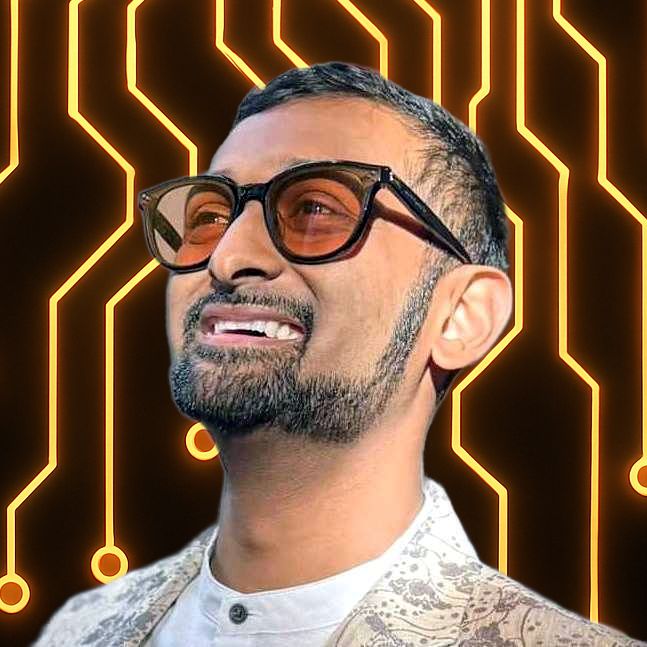
Please welcome Chief Strategy Officer and co-founder, Brian Venturo.
Good morning. Welcome back. Yesterday was all about building with AI and quickly moving your first agent to the best agent. Today is built for ambition. So I want to tell you where our ambition came from, because not every tech company starts in a Silicon Valley garage. Ours started in a [__] garage in New Jersey. And you know, to quote our former governor, Phil Murphy, we're from Jersey, baby, and you're not. So we started with a crypto mining hobby. We chose GPUs because we thought we had a chance to find an edge with ASICs, the specialized chips built for mining. We didn't think we could. GPUs gave us something we could actually work with. Then crypto winter hit in 2018, and we had a conversation internally that was pretty simple: crypto is either going to zero or it isn't. And if it doesn't, owning a ton of GPUs is going to have a ton of value. That was the bet. That was it.
But almost as soon as we made that bet, we started asking, "What else can we do with these things?" We kept hearing from startups and friends that couldn't get the GPUs they needed — people with ideas they wanted to pursue and work they were ready to do who simply couldn't get access to the compute. The volume of those conversations overwhelmed us. So we started building a cloud, and a big part of the idea was that our customers shouldn't have to become experts in managing hardware just to do their work. We could take that complexity off their hands. One use case became two. Then we started seeing more and more industries using compute for simulation and other really demanding applications. Every conversation made the opportunity look bigger, and we had an unusual advantage at that moment when customers weren't using the GPUs: crypto mining could help us pay for them. That gave us room to invest while our customer base grew. It was a particular moment in time, and we were really fortunate to be in that position.
Then in 2022, we saw what was happening with text-to-image models. You could describe something and a model could create it. Looking at those early results, we felt that capabilities were starting to change in a fundamental way, and we wanted to build for where they could go. We went all in. People thought we were [__] crazy. I'm trying not to go off script here. My marketing team will kill me if I curse too much. This is the most I've ever been on script in my life. So, they thought we were crazy. And this was maybe five months before ChatGPT.
Sometimes when people think you're crazy, you're actually just a pioneer. Now, of course, you still have to make it work. And that's what the last five years have felt like — building at a breakneck pace alongside partners whose needs keep growing as the technology gets better. One of the hardest parts for us has been deciding where to focus. There's always another technology. There's always another thing we could build and always another direction we could take the company. We've had to keep asking: what actually matters to the people that rely on us? What will help them move forward, and can we deliver it well? Those questions helped us make decisions as the possibilities have expanded.
Yesterday I talked about what happens when someone can connect pieces of knowledge that used to be beyond their reach. We've had the privilege of watching so many of you build the capabilities that make that possible. Now we're getting to see the problems you're choosing to solve with them. It's an incredible thing to be part of. We started by asking what else we could do with a GPU. Today we get to work alongside people asking questions that could change how we discover medicines, design machines, and understand the world. And the part that excites me the most is getting to see what those discoveries will mean in people's lives. That's the ambition we're here to talk about today.
Expertise only gets you so far when you're building something that's never existed. The smartest thing that we ever did was admit what we didn't know, then go learn it alongside the people closest to the hardest problems. That's you. We gained deep expertise in the process. A lot of what CoreWeave is today, our customers taught us.
Inside CoreWeave, we describe ourselves in two ways that sound like they contradict each other. One is fearless risk-taking. Second is having superior risk mitigation. Those aren't opposites. We rebuilt the cloud from a clean slate when most people doubted the opportunity. Frankly, they doubted us. But we committed to growing the business using tools that we're really proficient with. We build against demand we can see, and we financed the company that way from day one. People called that unconventional. I'll take it. It was a huge compliment. It's also how most great infrastructure in history got built.
You know, anybody can take the swing, but you have to grind it out until you get where you want to be. And not everyone has the stomach for that. So we go looking for the grind. We want the workloads other clouds weren't designed for. And the team's pushing so far ahead that nobody's written the manual yet. We love to run with our customers toward the hardest problems. We love it.
Throwing more GPUs at an issue is the easy answer. Ours is the smarter one. Mission Control keeps infrastructure running harder and longer. Arena lets you prove performance before you bet production on it. Our tooling runs from training through inference to agents. All of it was built with the people who needed it, so they can focus on what they came here to build.
We've got a word for the people who do the hard work and see it through: pioneers. Pioneers are the ones who figure out how to navigate old ways of thinking, who keep trying despite repeated failures, who know when to cut bait when they realize they're chasing the wrong thing. The next real breakthrough is coming from the pioneers.
Every pioneer you're going to hear from today has a story that ties to ambition. And the question we'll be asking them in different ways is: what does it take to keep going after it stops being fun?
Parag Agrawal ran Twitter. That's the job people spend an entire career chasing. He left and focused his ambition elsewhere. Dylan Patel started SemiAnalysis as a one-man research shop in 2020. Today, the people building AI's biggest data centers read his work before they place their bets. Jenson Button: in the entire history of Formula 1, just 35 drivers have won a championship. He's one of them. Sure, he's talented, but you don't pick up 15 Grand Prix victories in 18 seasons through talent or good looks alone. Just ask Mike in Trader, who we finish with. Talented, undoubtedly good-looking, no [__] chance.
[Laughter] That's not written that way, by the way. But let's see how well he holds up after we put him in the hot seat with Sean Evans and a table of increasingly hostile chicken wings. It's going to be another great day at Fully Connected. So let's go, and thank you very much.
Please welcome Chief Revenue Officer, John Jones.
Okay. Good morning, everyone. Thank you, Brian. That was great. How about a big round of applause for the tracksuit? That was fantastic. All right. Today's theme is built for ambition. And one of the interesting things about ambition is that it's often misunderstood, along with the vision of the pioneers and the visionaries who are creating that ambition. And Brian talked about that — sometimes you might even appear crazy. And one of the interesting things about ambition is that it's often misunderstood for such a long period of time that you do appear crazy. But I'm here to welcome one of the visionaries of Silicon Valley who's a pioneer and who had an ambition, and I'm going to share a conversation I had with him three years ago that will blow you away. You might know Parag as CEO of Twitter and CTO before that. But if you don't know him yet as CEO of Parallel Web Systems, you're about to. Please join me in welcoming Parag Agrawal.
All right, they're unsold. Okay, Parag, thank you for joining us today.
Thank you for having me. This is such a fun audience.
It is. And the venue is great. So you and I have known each other for a long time. I told you I was going to do this, but I'm going to share a story that I've never talked about publicly. You and I had lunch right after you founded Parallel. I don't think — I'm not even sure if you had many team members yet. You certainly hadn't raised funding yet. This is about three years ago, which doesn't sound like that long ago, but it wasn't too long after the ChatGPT moment, and people were figuring out what generative AI was. And you told me three things, every one of which, by the way, blew me away three years ago. And it turns out you were right about a lot of things. And I also probably thought you were crazy about some of them. So the first thing that you told me was: hey, I actually think that the traffic on the internet will mostly be taken over by AI, and that the volume of that traffic — number one, will be taken over by AI, but number two, to take traffic on the internet and generate it means you have to request information. And the second thing you told me was that information would be requested by a term I hadn't heard yet, but agents. You and I talked about agents. And so the initiator of these requests would be agents. And the last thing you told me, which I hadn't even thought about yet and it hadn't occurred to me, but you saw this before many people saw it, was that the answer coming back to the AI agent requests would also come from AI. And so traffic would be dominated by AI. The requesters of that traffic would come from AI, and the answers to those questions would also come from AI. That was three years ago, and that's crazy. So bring us forward from that time. Tell us about how you thought about that, and tell us about what Parallel Web Systems is working on today.
Well, first of all, John, thank you for not calling me crazy to my face back then. Listen, we started Parallel a little over three years ago now. And as John said, the obsession that took over was that the models would keep getting better. As models keep getting better, we will build agents which will do more and more. And as that happens, you have to understand the limitation of models, which is that they appear smart and they appear all-knowing. So any application you now end up building with them sets a new expectation in the customer's mind that they're all-knowing. And our definition of all-knowing is: if there is data out there that we can read on the internet, we can Google our way to it — why shouldn't my AI agent know that information? And so that was the core belief: that agents will use the web just like we have, but they'll do it a thousand x more was the number I threw out three years ago. And at the time I thought it would take a long time. And today I think I was too pessimistic on both the scale. I think, like, if you ask me today, the number should be higher, and I didn't think we would have made this much progress all within three years. Today at Parallel we build web search and a collection of APIs that agents use when they're trying to either do work or for regular consumer products too. And the simplest way to think about it is: we build a Google for agents.
And in order to do so, the core insight is that agents, even if they look and sound like humans, are actually very different. So when you build a web search for — or a way to access the web for agents, you have to do it very differently than you've done in the past. In part because we could do it at such crazy scale, that we built a GPU-native index. It operates at crazy scale. We can do web search much better and cheaper for agents. And the fun part is happening now, which is that we're having to build new business models for the web too.
I remember after you and I had that conversation — thank you for the background. I remember after you and I had that conversation, you had walked me through your hypothesis. It was clear you had high conviction. I love the conviction that you always have when you and I chat. And other people who we know in common would say, "Hey, have you talked to Parag yet about what he's doing?" And I said, "Yeah, I talked to Parag." And they would say, "Yeah, I think he's just doing web search again." And I said, "I'm pretty sure that's not what he's doing, but you should talk to Parag about what he's doing." And when we think about all of us who are in the world of AI, it's human nature to bifurcate things between modern or next-gen and legacy. And sometimes web search maybe gets put in a legacy bucket, but I know that's not your view, although web search is a known term. And so maybe you dovetail behind that a little bit with some of the work that you're doing. But we're on the keynote main stage. The theme is ambition and pioneers. Why are we talking about web search?
Listen, we initially said we're designing web search to be done a thousand x more. Now, if you think of all of the infrastructure that has been built for web search over the last 20, 30 years by Google, these systems operate at crazy scale. Now we're saying we're going to do it at 1,000x the scale. Systems don't survive that three orders of magnitude scaling without a very fundamental redesign. And what makes this problem even more fun today is we also have to invent a new business model, a new incentive scheme for people putting content out on the web to keep having the incentive to do that. The web for humans was built on advertising, subscriptions and transactions. The web for agents: advertising becomes way weaker, subscriptions become way weaker. So we have to figure out these new business models. Now, the good news in taking on these crazy challenges is that we get to use accelerated compute and GPUs, which have crazy amounts of memory and crazy amounts of memory bandwidth and a bunch of flops, and apply them to an old problem in a way that hasn't been done before. And when you can take a problem, scale it up in a massive way, create a new business model to acquire data, but then build these systems that weren't possible to build even two, three years ago, and immediately find an extraordinary amount of demand for these systems, you get on this amazing iteration loop where you see a lot of the web, you see a lot of queries, you learn how to do better, and you have a really fun feedback loop. And that makes the system become better week on week, month on month.
It's interesting that you're talking a little bit about what I would call maybe commercial innovation and consumption model innovation. And everyone knows usage consumption and fixed consumption, and then there's project-based consumption, and what does having a virtual nurse look like and how do you charge for that? And so one of the things that you and I spent a lot of time talking about is: we're in the heart of Silicon Valley. This is Mecca for technical innovation. But as important sometimes as technical innovation, which is required, is operational innovation — to build, for example, CoreWeave at scale globally — or commercial innovation, which CoreWeave has also led the way on, is equally important. This is a developer conference. How should developers think about innovation and what to do next? And the world's changing so fast. Maybe I'll just bring up a conversation you were asked about backstage, which is: how do you even keep up with all of this?
I think I don't as well as I would like to. I know the world is changing really fast. It is extraordinary. I have every agent out there. It's an occupational hazard that I have to use every one of them. And despite having all of these agents, I think I'm less on top of things, and I am always behind and I miss things. But I think the thing to stay sane that seems to work is you can rely on a few long-term invariants. So there's a lot that changes week on week, but if you look back at the last six months, what actually happened: models got better, and simultaneously capable models got cheaper. And if you look ahead a few years, for our company, what do we believe? That these trends will continue: the frontier models will be bigger, more capable and more expensive; a good-enough model for a job will keep getting cheaper, and the variance between the two will keep growing. At the end of the day, these models will require web search. My bet is that for every 10 or so GPUs that go into doing inference with LLMs for some kind of agent for work or consumer use cases, one or two of those GPUs will go into the web search problem, because agents need a lot of the data. The rate of change of data on the web is also accelerating, and you need to get the agent the right context, the right data, because once intelligence is commoditized, a lot of differentiation comes from having the right data. And you have to get it from whatever the trillions of pages on the web, of which several billion are changing every day. You have to figure out which thousand tokens I need to bring to an agent. And in order to do so, we as a world, as a society, are going to spend one to two GPUs on a web-search-like problem for every 10 we spend on model inference.
That's a long-term invariant. So as long as the trend lines I spoke about hold — now, if somebody ships a new model this day, today someone ships a new agent, a new kind of thing is in vogue and it's growing — as long as it's following these rough mental models and trend lines, I'm sitting here feeling pretty good.
On this thread, the other thing that we were talking about at backstage just ad hoc — and we're just going to go completely off script, not that we had a script to start with — was that all of us are actually managing agents. And the different thing about managing agents versus people is you're just working all the time. And we were joking about you wake up in the middle of the night and you go check on your team, and how do you keep up with that? By the way, and you're managing agents, I'm managing agents too. If anyone is not formally in an engineering organization, the best way to freak anyone out — and I learned this firsthand through experience — I started sharing my screen on Zoom. I had my Claude Code experience open, and everyone said, "Oh no, John's coding. Turn off all of his permissions." So that was awesome. How do you manage a world where you're the CEO, you're running a team, you're managing humans, you're managing agents, you're managing all that interaction, and you're trying to do that within the guardrails of building a durable company with product-market fit while serving customers?
So I think, to an earlier point, things are changing fast. A thing that if you tried to rely on an agent for six months ago and it didn't work, perhaps works now for some of those things. There are some things that still don't work. Now, if you believe that agents and models will keep getting more capable, I would rather try one too many things with agents and fail, and be a leader in how I'm learning by pushing the limits, than sit on the sidelines and be behind and a follower. But it's a deliberate choice, right? As a small, agile, fast-moving startup, for me that is the right strategy. So I am going to push agents, push models beyond what they're capable of today, and suffer the consequences of having tried that, and then I'll try it again in three months, and at some point it's going to work. But when it works, I'll probably be one of the first few people in the world who will experience that. And that will inform my product, my strategy. So this is a very intentional choice for me.
Now, tying back to our theme around ambition: the more — listen, the more agents you have, the more people they have, and if you can make them productive, you get to do more. You get to do more faster, and you get to increase the scale of your ambition, right? So if you think back to, like, you start a company and you're like, "Okay, we're going to build a bunch of infrastructure for agents to use the web," and you can have some ambition on the scale of the system and how fast you will go. And I think what's happening to me every few months is that simultaneously the scale of our ambition is going up. We thought, oh, if we grew at some scale, revenue 5x, 7x, that'd feel good. No longer feels good. We thought that if we shipped products at a certain cadence it would feel good. No longer feels good. You have to go faster. And so it's this strange contradiction where the more we can do every day, the worse our lifestyle is, because now you can do even more and more. And it's like the limits are your ambition, the limits are your agency, the limits are your ideas and your awareness of the world. And so you feel like the bottleneck all the time.
That was one of the things that actually led to the partnership between Parallel and CoreWeave — is just us sitting down. I think we took a walk around your new location in San Francisco, and we just both were talking about the same thing and saying how can we move faster, and then how can we move faster together. And so I appreciate the partnership going to market and the technical integration that's happening. You're one of the pioneers not just in Silicon Valley but viewed as one of the pioneers globally with a big vision. Three years ago, you and I had a conversation that completely blew my mind. What do you want to share about where you think the world's going and what's coming next, where everyone in this room three years from now will say, "I was at Fully Connected when Parag said something that actually ended up coming true and I thought he was crazy"?
Okay, I'm going to tell you John's story while I think about the answer. Yeah, I came to John for that walk because I was in desperate need of GPUs. Like a lot of people, when you're growing fast and you're bad at planning into the future, despite having a vision for the future, you try to call people who can sometimes do you a favor at small scales, and people you can rely on to build solid stuff and then treat you right as an infrastructure provider. Now we are an infrastructure provider, and we like to show up for our customers in the way we see John and CoreWeave show up for us when we're in a moment of need for our core strategy. In terms of the visions for the future, I think it's starting to happen, right? I think one of the things I've been obsessed with is that the web will transition from pull to push. So we've been using the word web search because it's the word of today. An agent asks a search engine: here is a query, give me tokens that I can use to make progress in my work, and it's pulling information from the web.
In three years, a large amount of the usage on the web will be a system like ours pushing information to an agent to trigger an agent waking up and starting to do work. What that requires is a lot more always-on, proactive agents. You're starting to see the first generation of those in the last few weeks, I would say, of agents that feel like they're always on and working for you and they're around all the time, instead of you going to ChatGPT and starting a chat and it's like this one thing you pulled out of it. That is going to be more and more the case. And when that happens, the web will have moved to being pushed to. So our system will create a feed of things that are actionable for your agent or for you, based on everything our system learns about you, in order for your agent to almost never have to go search the web, because the web is coming to you proactively.
Awesome. Well, Parag, thank you for joining us. Thank you for sharing your ambition. Thank you for sharing your vision, and thank you for the friendship.
Please welcome EVP Product and Engineering, Hen Goldberg.
Thanks, everyone. Today is about ambition and about the people who set a high bar and then keep raising it. Dr. Feli sends her regrets. Unfortunately, she's unable to join us today. But we are very fortunate to have one of the leading thinkers on AI infrastructure to join us: Dylan Patel. Dylan's firm, SemiAnalysis, covers the supply chain end to end. They also built ClusterMAX, an independent rating of GPU clouds. We are honored to be featured in those ratings, being the only cloud provider to earn the platinum rating three times in a row. But today I did not want to talk to him about that. I invited him to talk about where the bar should be and where we are heading next. So please welcome the founder and CEO of SemiAnalysis, Dylan Patel.
Thank you so much for joining us today. I think it's a great start — like we talked, John and Parag talked about the models and agents, and now we can talk more about how we see these technologies becoming more pervasive and more used by more customers as part of your work. I know you talk with a lot of folks that are trying to make the technology useful for their businesses. Yesterday we talked a lot about how everyone is building with AI, right? Everybody in this room and many other rooms are now building in AI, not just the labs. But together with that, what we also hear is that people are missing the confidence in whether they are doing it right. Again, we just heard from Parag. He's not sure that he's doing it right yet and whether he's effective with using the technology. What are you seeing, and what do you think we as an industry need to build in order to give those builders the confidence?
Yeah. So I think that when you look across the industry, there is a significant amount of experimentation, and you have to experiment to figure out what works. People have ultimately landed mostly on their main decisions regarding models, or how are they using certain closed models from frontier labs like OpenAI, Anthropic, or how are they going to use open-source models, and as open-source models scale up in capability, how do they do that. But then there's so much more on top of that. There's how do you do the inference of those efficiently, what sort of SLAs do you require, how does your cloud help you do those things, how does your service provider help you do the things. And then furthermore it's about building all the management on top of that. How do I pull the right things into context? How do I let the AI search through a limited set of data to find the right context rather than just telling it this is what you need? How do I properly securitize management and rights to different sets of data for different people when they're using a foundation model or an open model? And how do you plumb all these things together and then integrate that into your workflows, of course. So a lot of people are building things, trying to come up with different solutions for each of these. It's a very fragmented ecosystem. And there's a ton of innovation, right? No one knows the right way to do these things. And so it's very — you know, there's definitely tons of mistakes along the way, and I think customers have to just try and fail to see what will actually work.
I love that you mentioned this fragmentation. In my past, when we were building things like Kubernetes and that ecosystem, one of the things that was a high priority for us is to make sure that there will be no fragmentation, because that flywheel then breaks, right? You don't get that interoperability between systems, and you have to choose a path, right? Do you see any signs of convergence, like standards in this space?
I mean, I think generally everyone's adopted the OpenAI API compatibility, right? That's a standard, I guess. But really, once you move out of the model layer into application and how you interface with it, it really hasn't. And a big difficulty of this is: we found that you take the existing model, you use it, you build a ton of scaffolding on top, and then the new model comes out, and a lot of the scaffolding actually hurts performance now, whereas before it helped it materially. And it takes tons of experience to understand what to build on the side of the scaffolding. So you end up with a lot of different systems: new model comes out, you change it up. You do many things to figure out how to co-design that model, that infrastructure, that scaffolding all around it. Security is another one, right? People were not comfortable sending models all of their information. But now, as you can start deploying open-source models in your own cloud — whether it's on your own GPUs or through their serverless infrastructure — or, you know, people get more comfortable with the frontier labs, Anthropic and OpenAI, as they continue to beef up their data retention policies and such, people are more and more comfortable sending more data out, or they're getting less comfortable sending their data out in certain cases. And each of these things has led to the security landscape evolving a lot in terms of what you offer the model, what you give it, how you plumb it. So I unfortunately don't see much standards.
There are companies doing sort of horizontal applications within AI. There's people that are doing, whether it be law or coding or some other horizontal application. There's so many companies doing things in each of those fields, and each of these fields has their own standards, what they want, their own concerns around data privacy or sovereignty or security or what they offer the model. And so it really is very complex. And you're seeing AI companies reinvent themselves very quickly, right? Perplexity was just on, and they're really great, and they were a search company and now — you know, we didn't use them at all — now they make a Slack agent which integrates into all of our data. And there's all these connectors, and, you know, actually we use them a ton. I think our daily spend with Perplexity now is a few thousand dollars a day. And it's pretty interesting because I didn't like the search. I didn't use it. I just used ChatGPT. But now I use their Slack agent a lot because it's a way better harness. And as models evolve and as use cases evolve from chat to ChatGPT to Claude Code to now persistent agents within your workforce and sort of the AI co-worker, things will keep changing. And there's many, many different use cases for models and how you integrate them. So I don't think there's going to be a standard. There really can't be a standard if the industry is as big as it looks like it's going to become.
This is like not the most optimistic. I mean, it is maybe for some folks. I think it can also be overwhelming, like I—
I think this should be — this is really great for someone who's building a lot of infrastructure.
So actually that's one of the things that we've talked about backstage, and also, you know, when we talk about where we should invest. I think two things, like you're saying, are happening right now. One, the pace just doesn't allow teams to stop and think, "Okay, how do we — do we need to standardize?" But also everybody experiments and reinvents, so you don't have — like, if I have time to invest, where will I invest? Am I going to invest in building that standard, or am I going to continue and reinvent my company, which is also hard. And do you think the industry—
Or the customers that you talk to understand that? Because on the flip side, you know, if you just hear the news all the time like how things are easy and it's accessible and now there, you know, you can build your rack Vera Rubin in your garage. I'm just joking, but like we'll get there and things will be simpler and cheaper and easier. Do you think that the industry understands that, or are there things that they underestimate from a complexity perspective?
I mean, I think it's two things, right? I almost don't find tinkering with things as fun anymore because everything is kind of easy. You know, tinkering with like, you know, opening up something, trying to figure out something, adding a feature, these things are really easy now. But what does that mean, right? If small tasks are easy, then you just chain together and make these really complex systems, and then those things get really hard. And that's where it's fun. And so like tinkering is maybe not fun, but like wholesale doing something from zero to one is very fun because it's possible, right? Like if I remember being a teenager and it's like, you know, to figure out how to do X, Y, or Z, you had to crawl through so many forums, you had to ask questions on random forums, you had to like just bang your head against the wall. Now you just like ask the model, so it's easy. But you know, flip side is because the amount of work we're trying to do is so large, the complexity of these systems is so complex. It's almost impossible for, you know, one person to have it all in their head or a model to have it all in its context, and that's where all the difficulty comes. I'm not sure. You know, maybe tinkering is not fun, but you know, the next thing building is much more fun, right? And so that's sort of like I think a... Yeah, I think that's sort of my take on that.
The thing I keep saying lately all the time, how fun it is to be an engineer. You know, building infrastructure my entire career, we had to be boring and behind the scene, and it didn't matter, and just make sure that everything is up and running. And now for the first time, there are those problems that are really hard that we haven't solved before, and solving those systems is something that I love doing. Like that's, you can see me smiling, I hope it comes through, that's where my passion is. You actually talked about it, of how the gains, you know, talking about the problem of systems is how someone can bring kernels and models and silicon together, and you can get like 100x improvement compared to 8x. You didn't mention the cloud there though. Like, is that something that you see as an entire stack?
Yeah. Yeah. So I think when we look at clouds, they're in, and generally AI companies are becoming very interesting, right? Every company that is a cloud is moving up into becoming an inference provider and adding managed services for various subsets of AI. Every company that's an inference provider is now building their own infrastructure. Every company that's, you know, has a big application is now looking at, or big, you know, building models, they're trying to build their own cloud as well, right? And so everyone is sort of becoming a homogeneous sort of, you know, at least like everyone's problem statement is everything. But at the same time, you know, everyone's sort of specializing in different things. The reason why everyone is trying to do the full stack is because cloud is very important, right? You go online and you're like, 'Okay, I want to rent some GPUs,' and then you build your workload on top. That's great. But it would be really awesome if the cloud already had all the software installed, or had, you know, a serverless API or a managed inference service for you already. So then you don't have to worry about any of that. It'd be really great if they had some sort of container spin up, right? You know, not just API endpoints, but also doing environments, doing containers, because everyone, you know, AI was initially primarily just GPU-based. Now CPUs are becoming more and more important, but hey, I want to spin up a core to do this or that task. I want the model to be able to access a core or a VM that got spun up, do some task, and then shut it back down. This is definitely like, how do you interface that? And today, like, you know, someone might go to, you know, CoreWeave and rent the GPUs, and go to Modal and do the endpoint or the environment, and go to another provider and set up the inference, and go to another provider for their security management of their storage, and, you know, go to another provider for their storage bucket, right? All of these things will be different clouds, but if you fit it all together, if it's all interfacing more tightly, that's definitely going to be much more advantageous. You know, CoreWeave has done a good job of building some of these layers, and I know, you know, a lot more is on the roadmap to trying to optimize these things. But yeah, certainly, even if you're not working on the models and the kernels, there's so much more co-optimization you can do between the cloud layer and either those models or those chips or all of those other things on the application and deployment side. So infrastructure and code is more and more important each day and each week and each month. You see so many gains from... we see measured performance differences in the same GPU in different clouds on different tasks. It's just there's so many knobs, the complexity here is so large, no one really can wrap their whole head around it, right? Which is, you know, going back to the earlier comment of like, tinkering is not as fun, but building complex systems is.
That's been our approach, I would say, like from the get-go, right? That the idea that you cannot think about cloud anymore with separated layers like it used to be the world in cloud, that you will have a contract between one layer to another and that's it. But now what we see with the workload is that you actually need to have an understanding of the entire system and the entire stack, and you need to bring that data, right? Like things that we are doing with Mission Control, but also CoreWeave Forge that we've announced yesterday is how we connect all of that. I'm, you know, in my head, I'm also because tinkering is easy, I hope that as an industry we will go faster through that phase, that everyone will try to DIY and build themselves, because there's also real risks when you try to build those kind of complicated systems. You actually called that out, right? You guys published a security report, and that's definitely very important actually to everyone, right? Everyone is, it's not just like enterprises and not just regulated industries, because people feel like they need to make sure that their data stays their own and that they can trust the environment. And then there was a follow-up on that, how people should be worried about agents autonomously taking over NeoClouds. And in your report, you highlighted you haven't seen the bar where it should be. What do you think, like how people should think about it, like how they can protect themselves?
Yeah, I mean, we're by no means like complete security experts, but you know, one thing that's like obvious is like if your cloud has, you know, some software that is out of date, then that's obviously a problem because, you know, we're seeing vulnerabilities be found more and more and more quickly. We've seen, you know, if you look at Linux and the CVEs that exist, there's a couple thousand now, up from, you know, tens just a few months ago, right? AI models are making security and pentesting so much more easy. So during our review process of ClusterMax, which is our, you know, sort of way of rating clouds by security lifecycle management, networking, storage, and many other factors. There's dozens of factors. We, you know, we saw all this about models being so good at cyber issues, right? It was one thing to check this software version, it was another thing to just tell the model, 'Hey, can you see...' and OpenAI and Anthropic models refused. So it's actually like not even frontier models, but trailing, you know, models that are open source that don't have as many restrictions. It's like, 'Hey, can you try and get root access? Hey, can you go and see if someone else's cluster?' And there were literally, you know, there's dozens and dozens of clouds that we tested. There's over 200,000 in the world. You know, we tested over 80, and numerous, you could just get access to their storage system and see other people's files. You could get access to, you know, Slurm and see other people's jobs. And there was a case where even a NeoCloud had, you know, their respective country's defense, you know, industry on that cloud, right? Literally their like security agency was on that cloud, their air force was on the cloud, and we were just able to see all their job names. We immediately stopped because we're like, this is like probably we should stop looking, and immediately reported it. But like, you know, I'm sure we could have looked further if we wanted to, you know, if we were malicious actors. And so it's a wild west out there. You know, software is... and so like after we published the report, I think, and the title's a little bit not PC, right? 'Most NeoClouds Suck at Security' is the title of it.
Most, most. We, you know, maybe, maybe they all do, right? We're just not, you know, we just don't have, you know, the Anthropic moat to be able to try and hack, you know, every cloud. But anyways, I think, you know, many people came out and were like, yeah, this is like very concerning to us. Ilya Sutskever of SSI, he came out and said, you know, he's very worried about agents taking over NeoClouds after we posted that. It's really the wild west, and people are just like, you know, if you're sending your data to some serverless endpoint, well, then, you know, maybe you trust that provider, right? But then do you trust the underlying infrastructure behind it, and do you trust the other tenants that are on that cloud? It starts to become a really complex system where, you know, turns out me sending my closed-source code that is like, you know, core to my company, or my emails that are coming in, all of a sudden now can be snooped by someone else, right? You never know, right? So I think, you know, this top-bottom security view, we're in the wild west of AI where everyone's tinkering, but people definitely need to focus a lot more on security, because whether it's, you know, malicious actors accessing your data, or it is, you know, a rogue AI that's trying to take over humanity and, you know, finds a NeoCloud that has bad security and runs on it silently, is, you know, all of these things are possible, right? You know, one is definitely a much more... one is an action that you can actually defend against, which is like this, you know, security of your own data. The other is one that's maybe more societal, but it's definitely very real, and it's something that we need to dive a lot more into to understand and see and trust for enterprises and even startups as they deploy AI more pervasively.
It's, you know, I was quoted again from day zero that every CoreWeave employee is a security engineer. I mean, just thinking about how we take that seriously internally and how much we invest actually across the stack, like starting from the supply chain up to the software layers. I like your idea that customers should test things themselves because it will hopefully bring a world that we have more good actors than bad actors that will report things when they find that. So I think that's a... I will take a positive spin on that. What I did...
Well, all it means is all these vulnerabilities were already there, just like nation states, but now it's easy to find, or black hats were using them. So that's the flip side, right?
Yeah. What should I ask you, and I didn't... How do, like, where do you, like, what, where do you spend most of your time thinking about?
Yeah, I mean, we, my company, you know, goes all the way from like, you know, we have a reverse engineering lab where we tear down chips to looking at the application layer. And so, you know, obviously when we talk to CoreWeave a lot, we're focusing on the infrastructure layer. But the thing that maybe the cloud group and attendees here find more interesting is sort of around, you know, deployment of AI and how do you make that more easy? And I guess, how do companies even get capacity, right? There's no CPUs, there's no GPUs. I could ask CoreWeave, I could beg you guys to rent me some chips and, you know, or some services, and it's like very hard to get access. So like, I guess like flipping it around on you, like how do we actually get to use capacity? I know that this is just the day and age, and every good cloud is this way, whether it's, you know, CoreWeave or any others. But how do we move to, you know, a world where I can, you know, I can tinker and build stuff, but also like, you know, the infrastructure is ready for me to go?
Then I think that the positive thing that what you're talking about, like from having a bigger surface area and more services, again, one of the things that we've announced yesterday with CoreWeave Forge is just creating that free tier that gives you that end-to-end. So you have the sandboxes, and you have the serverless, and you have the models, and you can do RL and model distillation. So more services that are available for this developer without having the need to build everything, and then it's actually easier to scale. And that's something that is really important because as a company, again, our mission, you know, we talked about before about everybody's doing everything. I think it's also very important for companies to know what they're great at and where to focus and where is their expertise. And this is our expertise, right? Like running those kind of systems at scale.
Dylan, thank you so much. I'm sure that there will be a lot of questions, and you sparked some thoughts and hopefully some ideas of what people can build. I look forward to meeting you again, and I can't wait to see how ClusterMax 4.0 will look like. I'm sure it's going to be continuing raising the bar.
Yeah, that's the goal, is to keep moving the bar up, and, you know, the bar will keep moving. Yeah, I guess so much excited about that. Yeah.
What you're doing for the industry. I think it's really important to have that hands-on and in-depth insight into the infrastructure.
Please welcome Chief Marketing Officer Jean English.
Good morning. Few people have realized an ambition on a stage as big as our next guest. After a decade of competing against some of the best drivers the sport has ever seen, in 2009, he realized his ambition by becoming Formula 1 world champion. Today, he joins us at Fully Connected to discuss how he turned that ambition into reality. So, please give a huge round of applause as we welcome to the stage the Formula 1 world champion and ambassador for our partners, Aston Martin Aramco Formula 1 team, Jenson Button.
Jenson, thank you so much for being with us. Before we start unpacking your story, let's take a look at what realizing ambition looks like in the ultra-competitive world of Formula 1.
Millions dream of racing in Formula 1. Thousands have made the start line. Only 35 have gone on to become a Formula 1 world champion. Jenson Button is one of the celebrated few.
Nine seasons after making his Grand Prix debut, he joined the pantheon of greats and earned his World Championship. He never slowed down. He never gave up. He kept moving forward. This is how ambition is harnessed.
Jenson, what a career. Let's start the story by taking you back to your start-up days. You raced your first Formula 1 at the age of 20, but your first Grand Prix win wasn't until six seasons later. Start off by explaining how you kept your ambition alive during those first six seasons, and whether you ever doubted you could win a world championship.
First of all, good afternoon everyone. It's lovely to be here and to share my story with you all. It's really nice watching that footage back. Always brings back a lot of emotion. Also feels like a long time ago now. But the early days of my F1 career was back in... I got into Formula 1 in 2000, and I was 20 years old, and back then that was very young for a racing driver. Scored my first point in my second Grand Prix in Brazil, São Paulo, actually overtaking Max Verstappen's dad, Jos Verstappen, to score that first point. So that's how old I am. So that was really the start of my career in the sport. But as you said, it took a long time to get to that first victory, and that's what we all aim for in motorsport and in anything really, that we want to be the best. But Formula 1 is very difficult to be the best every day, and as it is in any sport. For me, it was more about the small challenges, the goals. The first one was out-qualifying my teammate, more experienced teammate in the same car. It would be getting a fastest lap in the race, being consistent through a race, having the most consistent lap times through a race. There were always small goals and targets along the way. And that's what kept me sane, because the main goal was to win a race and then eventually win a world championship. But I kept myself very busy with new challenges through my career. And that's why I was able to race for 17 years in Formula 1, always having new challenges, always needed something to strive for, to be better than what I was yesterday. So I really, really enjoyed my career in Formula 1 and the highs and the lows, and it was an emotional roller coaster. But I also realized I was one of the lucky 20 that got to drive a Formula 1 car, and, you know, it's not like football where there's many players in football. There's 20 of us around the world. That is it. And even if you're finishing 20th, you're still an F1 driver, but that's obviously not enough. You always want to be better.
It's amazing. 17-year career. Let's go back to 2009. Just in that defining moment, you're racing for a new team created by Ross Brawn, a legend in the sport, buys the old Honda team for a nominal sum. But few expected what would come next. But you go on to win six out of the first seven races, and by November you're crowned world champion. Describe for us the moment when you realized how you achieved that ambition, and what did it feel like, and how long did that feeling actually last?
Well, it was the end of 2008, which was not an easy time for anyone. Financial crisis, and Honda actually had to pull out of the sport, which was the team I was racing for. And we didn't have a team to go racing with in 2009. You know, it was hundreds of people that were going to be made redundant, out of a job. Not just not able to race, but just not having a job. So I worked closely with Ross Brawn to find someone to buy the team. He ended up buying the team for one pound from Honda. So pretty good deal. And he actually got Honda to fund the team that season as well, because it was cheaper than making, I think it was 700 people redundant within the team. So they funded us on a small budget, and we were able to go racing. Problem is we didn't have an engine, so we had to go and search for an engine because Honda wasn't there, and asked Ferrari, no chance. And then we asked Mercedes, and they gave us power units that we obviously paid for. And this car rolled out the first test and was one second quicker than any other car that had been testing for weeks. So a lovely feeling knowing that you have a package that can go and fight for victories. And then you've got to knuckle down. You know, you've got to make sure that everything is in place. When you get to that first race, you're ready to win. And we didn't have a lot of time. So yes, we won the first six out of the first seven races. And then the second part of the season, everyone else caught up. So we struggled, and mentally I struggled with that as well, because in Formula 1, you never know if there's going to be another opportunity to fight for a world championship. So I put so much pressure on myself to succeed that it actually hurt me in a way, because I was trying to push too hard, making mistakes, not performing at my best. And it took a team of people really around me to keep me calm and keep me focused in that situation. Led by my dad actually, who was fantastic and very supportive in my career, but he was always in the background, and he wasn't the person that was going to be shouting at me when I did something wrong. But he was a soundboard for me when I needed him. But that one time he's like, 'No, I'm not standing by and watching you throw your championship away.' So he pulled me to one side, and we had a good talk over a beer. Actually, it was the night before a race. Whoops. But he sort of made me realize what I'd achieved through my career, what I'd given up, and then I won the world championship the next day. So really special and an amazing emotion, and the adrenaline you have from it, the excitement, but it wasn't what I expected. You know, I finished the race, celebrated with the team, and then I went back to my hotel room for a couple of hours and just sat on my own, just thinking about what I just achieved, but also what I gave up to find myself in that position. And a lot of special memories came flooding back, big smile, lots of emotion, and then it changed from this excitement of what I'd just achieved to what do I do now? You know, none of us plan for what happens tomorrow when we achieve something great. And at that moment it's like, I need a new challenge. I need a new challenge. And that challenge was to go to a team that I revered for so many years in Formula One, and it was McLaren, to race against Lewis Hamilton, who was regarded as the best driver in the world, even though I just won the world championship. So that for me was the challenge. Go up against Lewis Hamilton. And Ross Brawn, if you weren't Brawn, said it was the biggest mistake of my life, but it wasn't. It was the best. The next three years were fantastic, and able to achieve so much more.
You having that support from your dad, it's an incredible sounding board and incredible support system for you, and that's amazing. You know, we'd be remiss not to talk about the most incredible race of your career, which is the iconic drive in Canada in 2011. So for those of you not familiar, I'm going to set the scene. So let's do this. So Jenson starts seventh on the grid. He collides with his teammate and picks up a drive-through penalty. Then he collides with our very own Fernando Alonso, who we love, and limps into the pit with a puncture. The race is red-flagged. It's causing a two-hour delay. And after the restart, Jenson goes on to surpass Sebastian Vettel on the final lap and win the race. And most drivers in his miles predict the race to be over before the restart. But what kept you believing the win was possible? And when did you actually allow yourself to think that it was on?
One bit that's actually missed in there is that I was last twice. And I think on lap 40 I was last. There were only 15, 16 laps to go. It was a crazy race. It was my whole career in one Grand Prix basically, the roller coaster. You never want to crash with your teammate. It's the first rule in a team. I did that with Lewis. I remember after the red flag, or during the red flag, I was like, 'I'm so sorry.' He said, 'It's all good. Just go out there and win.' I was like, 'Okay.' And then I collided with Fernando, who ended up being my teammate a couple of years later, which obviously was Fernando's fault. Always is the other driver. And then the fight back. But the reason why I stayed positive was I knew I had a good car underneath me. I knew that I had crashed with my teammate, who was the other driver for the team that was going to score big points because we were both quick. I knew I had to do it for myself, but more for the team. Like they deserved a good result that race. They built a great car. They'd done everything that they needed to do, and I just kept crashing into people. So that's what kept me positive, and that positivity gave me aggression, which gave me tire temperature. And that was a race that went from wets to dries, and I chose to go on to dry tires very early, which was always a thing for me. And I was able to be aggressive, get tire temperature, and drive the car at a much higher pace than what others were in the same situation. So you can't win without a good car, and you can't win without a good team. And I think we proved that that day.
That's time and time again. I think that's what it's all about. It is teamwork for sure. So now we talk about the sport as it is today. And you know, many of us are involved and watched Formula 1 and are involved in the sport. But it's arguably two races at once. It's the one happening on the track, and it's also the one that's modeled and simulated using AI. And with someone with two unique vantage points. You know, you have a role as your Aston Martin ambassador, and you have a role as a broadcaster. So you are privy to lots of different conversations in many different areas, whether it's the pit, the garage, the factory, on the track. I'm curious, how do you see AI changing the way that teams are able to obtain success on the track?
Well, technology has changed so much since I started my career in Formula 1. We didn't have simulators back then. And you know, the drivers weren't able to get into a simulator that would replicate what happened on track. We had nothing. When I won with Brawn, we basically had a computer game and a tub of a race car, and nothing moved. It didn't do anything. It just, you could just learn tracks basically. But now everything moves, and they're feeling the G-force in the car. They've got something connected to their helmet. So that's just one part of it. You know, Formula 1 cars, it's very limited how much driving you can actually do. When I was racing in the early days, we could finish a Grand Prix and go and test for three days. Now, there's no testing at all, apart from three days at the start of the season. So there's probably 75 days of the year that a Formula 1 car is on track. That's it. Every other day is the preparation of trying to make this car better. And a lot of that is done through simulations. And we've been able to run simulations through the years, and you know, hundreds of thousands of simulations, whether it's strategy, whether it's how an aerodynamic part works on the car. Now with AI, we're able to run billions of strategies to come up with what is the best. And also with designing the car. So it's, I would say there's a lot more going on off track than there ever has been. It's made the job of the driver a lot easier, I would say. They end up doing more sponsor and partner events like this because Formula 1's got so big. But the driving is such a small part now of what happens in Formula 1. There's so much simulation that goes on beforehand, whether it's driver included or not. I do feel that AI is fantastic for F1, but there'll always be that emotion that you need from a human driving the car. We can build an amazing car for a racing driver, but if it doesn't work how they want it to work and the feeling they have with it and the connection, it's never going to work. So there needs to be, I think, a good partnership with AI and humans working in Formula 1.
Yeah, I think the human is in the loop, and how AI helps to shape, whether it's, you know, in the wind tunnels. We actually, as a sponsor of Aston Martin, we sponsor the wind tunnel. We actually renamed it the air tunnel, the AI research tunnel. Just because so much of what happens in that simulation, and then whether we look at radio signals, we're looking at, you know, fluid dynamics, all those things. And you know, as a sport has changed, every car has really become like an AI car in a way, just to where it's been so much involved in how every single car is now and team is looking at how to use and leverage AI. You know, as a broadcaster though, you're hearing conversations that, yes, are within the team, but you're also hearing things on the paddock as well. What are the conversations you hear as you broadcast out to the world?
I think in Formula 1, the drivers, for example, are concentrating so much on the driving part over a race weekend. They've always said in Formula 1, this is more from the factory-based employees, that all the work is done before you arrive at a racetrack, and you can only just mess it up on a race weekend. And it's kind of true. You know, all of that development work that's done back at base, all the simulations and what have you, it puts the car in a window that it's at its best, and then you can just go and mess it up from the human sat in the car, which is true, and we've done it many times before. So I would say at the race weekend that there isn't a lot of talk about it because it is just doing its job as it should, and the drivers are able to just focus on the most important part of their job, which is focusing on driving. And that's a big thing with racing drivers. We're not very good at doing many things. We're very good at driving, and we make sure that we have other people doing everything else that, you know, normal day living basically, paying bills, massage, getting our food ready, managing our sponsors and money, everything is done outside so you can just focus on the most important thing.
That's incredible. Well, you do know we have two simulators upstairs. So if you, when you go check out the garage, if any of you have seen our garage upstairs, we have it upstairs in the AI pavilion area. So definitely check it out.
Just put a lot of pressure on my shoulders.
You know, just a little pressure, right? I don't know how many of you have actually gone and like done the simulation, but we do have a leaderboard. So if you want to try to race against Jenson, that seems like a fun thing, right?
No pressure at all. Okay, so Jenson, last question. And it's really the reason why we wanted to have the conversation in front of this audience. The engineers working in Formula 1 and the engineers that are actually in this room are structurally doing the same work. They're both operating right at the edge of what's physically and computationally possible. Two industries full of enormously talented and ambitious people. So what would be your parting message for the pioneers in this room who have the ambition and the talent, but perhaps haven't won their world championship yet?
I'll take this back to Brawn when I won the world championship. Ross Brawn joined the team two years before when we were Honda, and completely changed the way that this team worked. And this is the reason why we won the world championship, and the reason was because he removed blame culture within the team, which was a big thing because people were afraid and fearful of making a mistake and being fired for it. So they were able to open their wings, be free, and then, you know, within reason, try different things. And we came up with the double diffuser, which was a main reason why we had a competitive car. And it was an engineer in Honda that found this loophole in the regulations and pushed the boundaries of what we're allowed to do and built this double diffuser, which gave us more downforce. So for me, it's being able to be free and not being afraid of trying new things and taking risks to an extent. And that's how we see change.
Being bold and taking risk. We like that. So over 300 Grand Prix starts, one world championship, and a legacy that lives beyond the track. This is ambition realized. Jenson, thank you so much for being with us. We really appreciate you being here.
Thank you.
So every milestone we've heard about this morning, the pivot, the second act, the championship, can all sound inevitable in hindsight. It never feels...
That way in the moment. Ambition gets the headline, but the real story is underneath it: the setbacks, the close calls, and the decisions people make when things are going sideways. That brings us to the final conversation, and we're doing this one a little differently. Okay, so Mike and Trader's path to AI was anything but obvious. He went from a collegiate swimmer to trading natural gas, then a New Jersey garage full of GPUs, to building one of the world's most consequential AI cloud companies. His defining bet came before the industry caught up, and Mike and our co-founders believed that AI would demand an entirely new kind of cloud, and they committed to building it before it was clear to everyone else what the opportunity could become.
So let's get into the close calls, the hard decisions, and the moments when conviction looked like a lot of risk. Okay? And as the wings get hotter, so do the questions.
I feel like I'm going to die.
When does it stop burning?
I'm perfectly fine for First We Feast. I'm Sean Evans. You're watching Hot Ones.
Thank you very much, Sean.
I've watched so many episodes in preparation.
I watch your show. I am a legit fan.
I'm stoked, man. I've been waiting to do this for years.
This has like a lemony kind of taste to it.
Yeah, it has a lot of flavor.
Oh my god. Oh my god. Oh my god. Oh my god. Holy hot.
It's going to get weird here.
That's a really good question.
Oh my god. You really do your homework.
How did you find that out?
Specificity is a little alarming.
We're thrilled you've returned for a second try.