CEOInterviews.AI
Start App
Try: AI strategy tariffs earnings guidance layoffs interest rates growth

Dylan Patel

Founder, CEO, and Chief Analyst, SemiAnalysis

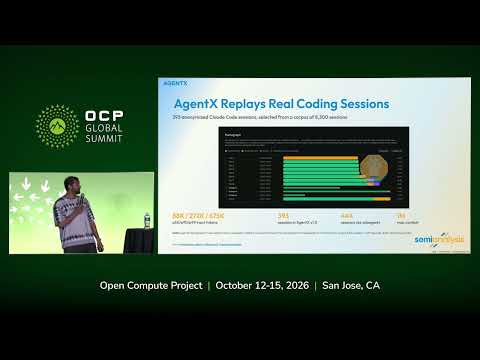
Search every verified Dylan Patel interview, podcast appearance, and on-the-record quote — each transcript cross-checked by AI and human review to confirm speaker identity. Dylan Patel, founder and CEO of SemiAnalysis, has been active in recent months speaking at industry events and on podcasts about AI infrastructure, compute markets, and semiconductor supply chains. At the Runtime 2026 conference, he discussed how OpenAI and Anthropic are purchasing most available compute capacity, noted that H100 prices rose from $1.70 to $2.80 per hour, and described SemiAnalysis' ClusterMAX program, which benchmarks GPU clouds for security and performance. He also stated that Nvidia is backstopping compute clusters to help the open ecosystem secure capacity, and projected $11 trillion in AI capital expenditures by 2029. At the CASPA 2026 CEO Summit, he participated in a panel on the semiconductor industry outlook, discussing pricing power, TSMC's margin trajectory, and supply chain bottlenecks in substrates and materials. Patel has also shared views on AI economics and security. On the Big Technology Podcast, he said he is "extremely bullish" on Anthropic, suggesting it could become the first $10 trillion valuation company, while noting its revenue multiples would need to compress. He argued that AI revenue requirements are often underestimated relative to the pace of infrastructure buildout. In interviews at the AI Infra Summit and Fully Connected 2026, he highlighted security vulnerabilities found in cloud clusters, including cases where AI models could identify weaknesses unprompted, and emphasized that inference, rather than training, will be key to AI cloud profitability. He also discussed the growing market of over 100 companies serving tokens using open-source models, and expressed optimism about AI's potential to reduce poverty and suffering, while cautioning that enterprise attempts to build internal AI capabilities often underperform frontier models.

Recent appearances

Verified interview transcripts

Notable quotes

“Well Elon you have to remember what Elon's trying to do right now, right? He's taking SpaceX and turning it into a Neocloud, right? Um in in in some sense, right? He's building ridiculous amounts of compute. And you know, he's only got, you know, if you talk take his balance sheet, you know, he's got what, like $80 billion of cash on it. $20 billion is going to go to um you know, rockets and stuff like that. But then”

“So I actually don't want to go into this too in depth because we're currently working on a demand model to sort of project 27 and 28 open anthropic revenue which is kind of is going to lay out in full detail the simply analysis. I do think we can say some things though right I'm going to give the overview for sure or you can go ahead too. Yeah, I was just gonna say like I think um it's very like people people tend to”

“What Nvidia started doing is saying we'll backstop your cluster, right? If you're a cloud, you're going to build a cluster, we'll either say hey, you can give us a revenue share on that cluster and then you can use our name as a price floor to go get the loan, or you can use our, or some other ways of doing that. And so Nvidia is loading up their balance sheet with all these compute commitments because it's the only ”

“The reason for that is it's OpenAI and Google. I mean, OpenAI and Anthropic primarily, they're just buying everything out there. And so when you look at the total industry in terms of gigawatts that exist, you know this is including AI and non-AI, in 2024 the entire world had 60 gigawatts of compute globally by the end of 2024, and by the end of this year we're at over 100 already. So it's nearly doubled in just two ”

“Um I mean I mean that's certainly the trend is all of these companies are trying to make chips, right? Um OpenAI showed, you know, I think for the first time ever in the industry that you can make a first generation chip that's really good. They le they let us into the lab. We tested on our open source inference X benchmark running all these open source Chinese models. Um, and the performance was better than Blackwel”

“So, I think I think um on the semiconductor side the biggest constraint um of course besides memory is substrates. um substrates, PCB materials, substrate materials, all of these components were severely underinvested in. Um much of the supply chains that create the materials in Japan, those firms are sort of a lot more conservative and unwilling to invest heavily in capacity. And so we've seen you know tremendous bo”

Other executives at SemiAnalysis

The summary and quote tags on this profile are produced with AI assistance from verified, first-person interview transcripts, then checked by our team to confirm the speaker's identity and the accuracy of every quote. See how we verify →