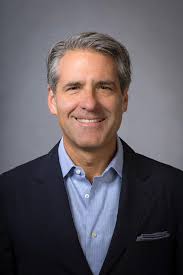
Welcome to You Got Burned. I'm Greg Byrne, athletic director of the University of Alabama. Each episode, I sit down with extraordinary leaders from sports, business, entertainment, and beyond to talk about leadership, culture, and success in a world that refuses to stand still. Elliott Hill joined Nike as an intern in 1988 and spent more than three decades working his way through the company. Four years after retiring, Nike asked him to come back, this time as CEO. He returned to an iconic institution facing enormous change and a fundamental leadership question: How do you evolve without losing what made you great in the first place? For Elliott, the answer starts with purpose. As he says in our conversation, we use sport to unite. That idea that an organization's mission can be about something bigger than profit is at the heart of our conversation about leadership, culture, and why the work matters. Here's my conversation with Nike president and CEO, Elliott Hill.
Hey, everybody. Welcome. Glad to have my friend Elliott Hill, the CEO of Nike, join us today. And just as a quick background, I'm sure we'll talk about some of this during the conversation. Myself, our family, my dad in particular, have a long history with Nike. My father was athletics director at Oregon in the 1980s all the way till 1992. When he took over, they didn't have two nickels to rub together. They were broke as a program. And watching the evolution of what's taken place with Oregon, but at the same time, too, the evolution with Nike. And obviously one of the great international companies. And Elliott's somebody that has been there for a long time with Nike, and started out as an intern, if I'm not mistaken, and rose now all the way to CEO with a short retirement period before becoming CEO. So, Elliott, welcome to You Got Burned.
Yeah, it's great to be with you today, Greg. I am honored to be here with you and it's a real privilege. And yeah, you and your family have meant a lot to Nike and not only to your family, but to the institutions that you've all served. You know, we've had great relationships and partnerships with all of you throughout the years and we're incredibly grateful. So, thank you for having me.
We were just commenting off camera here for a second about the weather. I was telling him that at the game on Saturday against Florida State, heat index is about 106 at certain parts before we had two different lightning delays. It sounds like it's a little more comfortable out there in Oregon right now.
Yeah, we're pushing about — it might be 60 right now. This morning it was in the low 50s. It's definitely fall. You know those days, Greg. You can feel the air changing and the leaves are starting to change color as well. But also, you also know this: once fall gets here, here comes the rain, too. So,
Only about 9 months of it.
Yeah, it's coming. We're ready for it.
So, You Got Burned, we're talking sports, leadership, business, how they all intersect together, and I don't know if there's a better company to talk to and a better person to talk to than you with Nike. Obviously, Alabama and Nike have a long-standing relationship. We appreciate the partnership. It's continued to evolve as our world is evolving. So, let's talk a little bit about your journey, okay? You grew up in Austin. You grew up in a single parent household with your mother. And sports, it sounds like, was a pretty active part of your life early on. Talk about how those foundational years and the precedent that it set for where we're sitting here today.
Yeah, well, so for my mother — I was raised by a single mom and she was a school teacher. She taught high school and she taught for close to 50 years in the Texas school system. And we grew up going to every sport you could think of at her high school. We had a really great athletic program. In fact, my first real big football game I remember was 1973. Our high school, Austin Reagan, played Tyler John Tyler in the Astrodome for the state championship against none other than Earl Campbell. You can figure out who won that football game.
[laughter] Who — I wonder who could tackle him.
Yeah, we ended up losing. I believe it was like 21 to 14. He scored all three touchdowns. So, certainly high school sports was really my grounding. And then in our neighborhood, and I'm sure you did the same thing, Greg, growing up — we didn't have 52 channels on TV. We were outside playing all day, every day until the whistle came to come in for dinner, but we also played organized sports. And so, yes, it's been a part of my life and I think it has helped. There's no question. It's helped shape who I am as an individual and as a leader. The things we learn through sport around setting common goals, breaking those goals down into each individual teammate has a role to play, and the commitment that it takes and the perseverance and all those sort of things. You learn at an early age because of sports and then without question, I've been able to apply all of those learnings to my career and, you know, starting as an intern to where we are today. So, I'm incredibly grateful for sports, for what it's created for me, but also for our company. You know, Nike was founded by a coach and an athlete. And you know that coach, Bill Bowerman, and that athlete is Phil Knight, and we were founded with the whole idea that we exist to serve athletes, and it is core to who we are. And so, it's fun for me to be able to take what I love and enjoy and apply it to the business world, just like you get to do every single day for the University of Alabama and all the athletes and coaches that you serve.
How did you know when — obviously I want to be able to talk about Phil and Coach Bowerman — when did you start saying in your life, 'Man, I'd love to be involved in sports in some capacity'? Didn't you do some work with the Cowboys for a little while?
Yeah, no. So, there was — I knew I wanted to be a part of sports literally from high school on, and I wasn't good enough to play D1 sports, but I wanted to be a part of a program, so I worked as an athletic trainer. That's how I helped pay my way through school, stay connected to sports at TCU in Fort Worth. And I thought I was going to be a doctor. I won't bore you with the story why I didn't end up being a doctor, but I got a degree in kinesiology, and coming out, I knew I wanted to stay connected, and I just was lucky the Cowboys were hiring a third trainer for the first time in their history. They'd always had a head trainer and an assistant trainer. I went over to interview almost as a joke, and I ended up getting the job. And I knew I loved being a trainer. I just knew that that probably wasn't what I wanted to do the rest of my life, but I used it as an opportunity to get connected to the world of sport, and that's exactly what happened. I went over and worked for the Cowboys. They helped me get into grad school. Grad school, did a paper on Nike. That's when I fell in love with Nike, and you know, I think for those that are listening to this podcast, I think the message, especially for young people, is take those chances and those opportunities, because then those opportunities open up other doors for you. And you know, it's a great example of — I wouldn't be here today if I didn't say yes to the Cowboys and Cowboys saying yes to getting me in grad school, me doing a paper on Nike, me saying yes to Nike. So, I think really that's the message for young people listening to this: is say yes and try to make the most of the opportunities that come our way.
So, I'm foggy on the years you were with the Cowboys. Was Tom Landry still coaching or was Jimmy Johnson there?
Tom Landry was still there. It was '86 and '87. Danny White was our quarterback in '86. He got hurt. We were six and two. We'd already won up at New York against the Giants, and so I thought, 'Okay, we're going to the playoffs.' And trust me, I needed the playoff money.
We didn't make much money, and then we ended up only winning — he got hurt. Steve Pelluer from Washington State came in and we only won one more game that year. So, it was our first losing season in 20 years, but also for me personally an incredible opportunity. I never traveled in my life. We played in the first America's Bowl in London. You know, my world starts to open up to the possibilities. I've never been to Philly, to DC, to New York. You go down the list of all the places that we played that year. It was an incredible, incredible experience for me. And Tom Landry, boy, what a legend.
And he was, as a person, how he's been portrayed, just a class act, and he treated everybody with the utmost of respect. So, he was a wonderful human being.
Well, and a long-time assistant for Coach Landry was Gene Stallings.
Who obviously very strongly tied here to the University of Alabama.
So, would he have been there at that point still or had he left the Cowboys by then?
He'd already left the Cowboys. Yeah, he had left. But anyway, trust me, growing up in Austin, Texas, I've had my share of connections with the University of Alabama along the way, that's for sure. Some great football games.
That's right. Yeah, so when you wrote that paper on Nike, was it when you were a student at TCU?
No, so in grad school, I went to Ohio University. At the time, Greg, it was the only place in the United States where you could get a master's degree in sports administration. So, I went there and I had a sports marketing class and I did a paper on Nike, and basically the whole paper was about how Nike used athletes to position their products, their innovations, to help drive revenue and growth. And that's kind of what it was about. And that's when I fell in love with — I already knew the company. I was already wearing the product, but I thought, you know what? That's an interesting angle for sports. You know, because at the time I was thinking college athletics, maybe going back into professional sports, and it opened me up to the business world and the idea of that. And long story short, I got fortunate that a gentleman from Nike came to speak at the university and I went to listen to his lecture. Afterwards, I went and connected with him and I bothered him for 6 months and he finally hired me and I started to work for Nike as an intern June 1 of 1988 in Memphis, Tennessee.
So, the big factory there in Memphis.
Yeah, we have a very, very large distribution footprint there. We also had a sales office there back in the late '80s, and so that's where I started my career was in Memphis, Tennessee.
Do you still have the paper?
No, I don't. I've been asked that. That's a great — I bet I, you know what? I might be able to track it down, but I don't have it. There are a lot of things I have kept throughout the years. That's one thing that I don't have and I wish I did.
Well, you never know because true story, when you come to Alabama for a game, you know, I'll have you in my office. In my office is a framed picture or framed shadow box of my fourth grade career report at Flying Hills Elementary School in San Diego about being an athletic director. And my mom found it when my dad retired at A&M and when they were moving into their home that they had built for retirement, my mom found it and sent it to me. So, I always jokingly say that I got an A on it. It's the only A I ever got in my life.
Well, look at — hey, looks like it served you well.
Dreams do come true, and I think that's a great example of you having a vision of what you wanted to be and understanding the commitment that was required to get to where you are today. And again, I think it's a testament to who you are as an individual, and I think hopefully it's an inspiration for people and kids listening to this to dream big, right?
Yeah, absolutely. And so, you talk about that. You talk about all the time — we're very fortunate for the positions we're in and what we get to do on a daily basis. It's very challenging, but I always try to make sure we're looking at it from a gratitude standpoint.
You started out as an intern. And we have — I actually, when we kicked off the fall semester here, I met with all the student workers. We have a few hundred of them, right? And I always tell them, 'Look to your left. Look to your right. That's your competition. What are you doing to separate yourself from your competition?' How are you anticipating being a step ahead, not having to be asked about going to do something? Now, some of it they're not going to know. They're young, right? But how do you continue to evolve in what you're doing? Talk about starting out as an intern at Nike and what you were doing, and when did you realize, hey, maybe I'll hang on here and do something beyond an internship?
Yeah, here's what I'd say. I probably knew a year to 18 months in that Nike was going to be the place for me. So I think that's story number one, and why I thought it was going to be the place for me: one, my personal values lined up with the values of the company, the culture, which I think is critically important. And then number two, Greg, I was surrounded by some really talented teammates that I felt challenged me and made me better. And then later on, what I did learn — I was a part of a growth company, a company that was growing, and with that I was given opportunities to grow, and not just me, my teammates around me. And I think the message again for those listening is: find a place where you feel comfortable and you connect with from a values or a culture perspective. Make sure you're surrounded by teammates that make you better, that inspire you, that motivate you, and then make certain that you're part of a company that's going places. And so, I think that's message number one. And the second message is: I never dreamed I was going to be the CEO. I wasn't — maybe I didn't have the confidence, the conviction, the vision. But what I did do, Greg, is I enjoyed learning. I was a curious learner. I liked to do new things, and I'd always look one or two steps ahead of me and I'd say, what does that person have that I don't have, whether it's skills or experiences or some of the intangibles? And then what do I have? And then what roles could I go do that would give me new experiences? And I call it putting tools in my toolbox. And that's what I did throughout my career, and I never stopped. I just kept looking up, and then, you know, the next thing you know, you wake up and here you are, you're the CEO of the company. Certainly not what I had thought when I started as an intern, but again, it was a place I felt comfortable, and I remained curious and continued to learn and grow, and it's been an incredible run, that's for sure.
How did you continue to add tools to your toolbox? You know, we talked with Coach Saban earlier today, right? He was the master of continuing to evolve in his...
I'll give you a couple really specific examples to try to bring it to life. You know, I was in the company in the late '80s, I started in '88, and by the late '90s, you could tell that in order for us to continue to grow, we were going to have to go outside the United States. And light bulb goes off for me: hey, I probably should get an experience outside of the United States. And so, I put my hand up and said, 'Hey, if you ever need someone to go overseas, I'll go wherever, you know?' And at the time, we had a big office in Hong Kong and a big office outside of Amsterdam, and long story short, I ended up — me and my wife and our young daughter — in Amsterdam, and so we were there for almost 5 years. And you want to talk about growing both personally and professionally, but that's a great example of seeing where the company was going and knowing that if I had an international experience, it would be an incredible set of tools for me and make me more valuable as a teammate to Nike. Another really quick example: I'm reporting to the CEO, this is before I retired, and to be a CEO, you've got to work with investors and you need to understand how to work with a board. And I went to our CEO at the time, Mark Parker, and just said, 'Hey, can I get more experience and exposure with investors?' And he started doing that, some group settings and some large stage settings, and then they helped me join — Nike did an external board, and you learn how. So, again, I think as an individual, the message for those that are listening, Greg, is you've got to be able to look above and see what tools do they have that you don't have. And then be open about how you go get those experiences, and be very explicit in how it doesn't just happen by accident, right? And you know, it always came from me having a conversation with the leaders around me of how I wanted to grow and develop and why, and I've been fortunate to have some leaders that have helped me do that.
So, how do you find that balance, right? You obviously have the responsibilities that you're in charge of at the time, you have interest in potential growth and adding tools to the toolbox, as you say. I always — one of the things I always say is the best thing you could do is do a great job with what you're doing with today, right?
Yep. And then, but also how do you learn and grow? People invested in you, people invested in me, right? They took chances on us, which we're very appreciative. And for those of us in leadership positions, you have a responsibility to give back and to grow and mentor people. But also sometimes you'll come across that person who seems to be much more focused on what's next rather than taking care of the business on a daily basis. How were you able to balance those so successfully?
Yeah, here's what — and you know, it's pretty basic, and sometimes basic and simple is a good thing. There's no question, and you've already touched on it, Greg, that number one, you've got to do your job and you've got to do it well, period. And that's one thing that, you know, you can't just start chasing new experiences without finishing the job that you're doing and doing it well. So, I always committed to — a part of that growth for me was making certain that I was delivering results in the role that I was in. Number two, be a great teammate. People want to work around people they enjoy being around. It's not that hard, right? Show up on time. Be prepared. You know, comb your hair, brush your teeth, look the part, you know. It's all the things we learned in first grade, right? Do your homework. But it is so simple that I think sometimes people overlook that. So, do your job, be a great teammate, come prepared, deliver results, and then oh, by the way, then that allows you to have those conversations about, hey, what about this? What about that? I'd love to — because people are more open to have those conversations with you when they know you're doing your job.
And you talk about — we do have students that watch this, right? Or listen to it. And you know, interestingly, I've always enjoyed talking to students. I'll speak in classes when I'm asked to do so on campus or at other universities. And when they say, 'Can I come meet with you?' It's amazing how many have shown up in my office, and I'm usually either trying to present myself decently and, you know, like you talked about, shave, brush my teeth, all those things. And they'll show up with a hat on backwards and flip-flops on and cut-off shorts, and I'm like, 'Hey, let me ask you something. Am I here to impress you or are you here to impress me?' And they're like, 'Well, I hadn't really thought about it that way.' I said, 'I have a job. I'm very fortunate for the job I have and I take it very seriously. At the same time, too, when you have an opportunity to be in front of somebody that you're trying to learn from, but also make an impression on, make sure you're doing those things that you talked about and presenting yourself in the right manner when those opportunities come along, and be prepared when those times come along, right? Have questions and thoughts, and don't just go in and kind of stare at the person and say, I don't know what to say.'
No, I mean, I think that's an excellent point. You know, I'll go back to the earlier story we were talking about me meeting the gentleman from Nike at school. His name is Tim Joyce. I did go up to him after the class and said, 'I'd love to meet with you.' And he said, 'Meet me tomorrow morning at, you know, whatever it was, 8:00 or 9:00 a.m. at this coffee shop in Athens, Ohio.' And back then, to be fair, it was a little bit more formal, but I decided to overdress — I put a suit and tie on to go meet him. I mean, this is Nike, right? And I put a suit and tie on to go say hello. And I think your point is an excellent point. You get one chance to make a first impression.
Yeah. So, as you were coming up through Nike, you were on the sales side, you were on the international side, the growth of the business — how did you learn the other aspects of what Nike was doing?
Yeah, there was a moment when I worked also trying to understand because we're a product company and an innovation company and a marketing company. I knew I wanted to have — so I primarily grew up in sales, as you said, the retail side, the commercial side of the business. I did work in product creation for a while, so that I learned — I ran our NFL, NBA, NHL business, which was super fun for me, working through design and development and manufacturing. So, I got to learn end to end. And again, that was a very deliberate move by me to, as you know, talking about putting tools in your toolbox. And then general management — I ran a retail division which I had a full P&L. I knew I needed a P&L responsibility, profit and loss responsibility. By the way, I also didn't have a strong finance background and I went and took a class on financial management for non-financial managers just to strengthen my financial capabilities. And that played — so it's one of those things where again, being honest about what it takes to continue to move up, and I did want to really understand end to end how the company ran from product all the way to the consumer. The one area that I haven't really spent a lot of time in is on the operational side, logistics side, manufacturing side of the business, but that's also — and you know this — that's where you have a great person reporting to you that shores that up for you. And I know enough about it to really understand it, but I surround myself with great leaders that know how to do that part of it as well.
Yeah, the reality when you get into a leadership position, it is rare where somebody has been in every area of their organization.
It can't happen. I never worked in compliance. I never worked in academics. I never cut the grass, right? But I have to at least know how those things work operationally. And so as you're aspiring and learning and growing, it's really important to be purposeful on those opportunities where you can be around those people who do those things. So, when we're going to replace the grass at Saban Field at Bryant-Denny Stadium, if I knew nothing about that, that wouldn't be good. That wouldn't help my decision-making, but I still — you know, you're going to surround yourself with people who understand it, understand how that logistics come about from that standpoint. And so, you know, whether you're running Nike or whether you're running Alabama Athletics, you have to surround yourself with really good people. And you have to surround yourself with really good people that will give you good, constructive, honest feedback to make the best decisions that you can.
No question. And my guess is you've been curious throughout your career, and while you might not have ever run the facilities and maintenance department, you at least ask questions in the room, in meetings, so that you learned about it and you know enough to understand end to end. And I think that's another message here for those that are listening: is to remain curious. And in those rooms when there's cross-functional, different departments in a room, when another department leader is speaking, that's not time for you to check out and check your emails. That's time for you to listen and learn.
And so, by being around teammates from other functional parts of an athletic department or, you know, Nike, that's the time to listen and learn and, oh by the way, ask questions. And so, I suspect you did the same thing, and that's why you understand what it takes to replace the grass, right? So, it's critically important.
Absolutely. So, you retired for a little while. Or you tried retirement.
Saw you in Austin, Texas. Remember that?