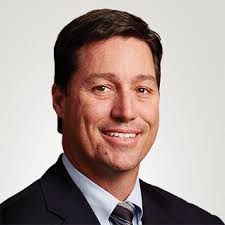
About Eric Colson
Eric Colson, CEO of Artisan Partners and a former data science executive at Netflix and Stitch Fix, has discussed the challenges companies face in leveraging data science effectively. In a February 2025 podcast, Colson argued that many firms treat data scientists as a support function, limiting their impact by only executing ideas from business teams. He advocated for giving data scientists autonomy and accountability for measurable outcomes, and for using trial-and-error experimentation with cheap failures to find winshol. Colson also emphasized the importance of decoupling algorithms from applications and enabling data scientists to frame problems rather than simply optimize within inherited constraints.
In earlier appearances, Colson addressed the asset management industry, stating that "a lot of true active management got diluted" as firms prioritized growth over differentiation. He described Artisan's model as centered on investments, people, and trust, and noted the firm's introduction of "investment degrees of freedom" to allow teams to deviate from benchmarks. Colson also discussed value investing, saying Artisan seeks stocks that are out of favor and positions itself differently from the herd, and highlighted the firm's expansion into global and alternative strategies, including a China post-venture strategy.
Source: AI-verified profile updated from Eric Colson's recent appearances.
Browse all interviews →
Transcript (12 segments)
I
Interviewer0:10
Right, Eric, I thought we would start by looking kind of generally at the asset management industry and where we stand at the moment and what it takes to be a successful active asset management business in today's environment.
E
Eric Colson0:27
That's a good question, Patrick. The asset management industry is highly competitive. When you really step back, we're measured almost every second, every minute, every day. The market's moving 24 hours. The number of participants in the industry are growing. During the pandemic, it definitely grew quite rapidly with more individuals at home getting into the industry, so we saw a little bit more volatility come into the marketplace. But at the core of it, it's a highly competitive industry with low barriers to entry. For companies to really withstand the test of time, you know, we've always stated you got to know who you are. For us, we're in the business of investments first, we're also in the business of people, and finally we're in the business of trust. Knowing those three things, and probably in that order, of really having an investment culture and knowing who you are and finding the right talent to come in and then building that trust, has helped us for the 25 plus years that we've been operating. Over that longer period of time, it's also very important to know who you serve. At the end of the day, I see a windfall that we serve the employees to make this environment an investment culture, we serve the clients, and we serve our shareholders. Knowing that as a business is just absolutely critical because that gets you the right people and the right match to operate over time given how competitive the industry is. To me, it's not too different than a sports team. You got to have a philosophy of coaching, you got to get the right players to fit that philosophy in that culture, and that magic comes together.
I
Interviewer2:10
How difficult is it to find those players? I mean, I realize that there are a lot more people wanting to come into the industry, but does it make it more difficult to find the needles in the haystack?
E
Eric Colson2:33
It does. When we started the business in the mid-90s, we deemed it an era of free agency. You had the opportunity to work at a large organization that had a house view, centralized CIO, centralized research, and some individuals didn't fit that organization, so they went out and started their own firm and you had a series of boutiques. But you really didn't have an operation like Artisan that created centralized operations, resources, marketing, and just created a home for talent to operate independently, not inside of a large organization with the house view but also not having to run your own organization to deal with legal and marketing and office space. We had a highly differentiated model in the 90s, and over the years you've seen quite a few firms operate and fill in the gap, so the spectrum of business models has increased. You see today probably one of the most competitive marketplaces for talent, especially with the growth of the hedge fund platforms, speaking more of the Milleniums, the Citadels, the Balyasnys. These platforms that tend to get younger talent, use risk management to control the walls around that talent, and they've been growing quite rapidly and consuming a lot of talent. So the industry is very competitive today for talent.
I
Interviewer4:12
Are there lessons that the industry perhaps should have learned over the last 10 or 15 years that perhaps haven't been learned all that well and instead put it now in a more challenging position than it perhaps need to be if it had reacted more proactively?
E
Eric Colson4:37
I don't know if it's be more proactive. I think there's cycles that all industries go through. I think the one that was most impactful for Artisan and many active managers was probably just the great dilution of active management. As you get more technology and more data and firms try to grow at an abnormal rate, then you get product proliferation and product engineering that now is deemed exposure management. So you had a lot of true active management, pure active management, that got diluted over time as people tried to get bigger and tried to provide more product to the end client. At the end of the day, you found a lot of firms creating strategies based on indexes and tracking errors and factors, and they use that technology and those statistics to just develop products, and it really diluted what is deemed active management. I think we're getting back to what is active management, and it's a highly differentiated strategy that brings philosophy and opinion and judgment into a portfolio to outperform the index, as opposed to just give you exposure. That's coming back. Is it something that the market will learn? Probably not. We all go through phases and will ebb and flow.
I
Interviewer6:22
One of our columnists made an interesting observation recently, which was that asset management is the one industry where you get penalized for changing. In that you set your philosophy and say this is what I'm going to do, this is what I'm going to offer you, and then we expect you to just keep doing that forever, even if you at some point realize that actually there's a better way to do things. So how do you at Artisan manage to balance those two imperatives?
E
Eric Colson6:54
I think that's a very abstract conversation statement because that's a theme we've put in place in the organization for quite some time, and we called it investment degrees of freedom. Each of the investment teams should take advantage of the current environment, which it's okay to be different than the index. If you're going to be an active manager, there's such a proliferation of exposure products in the industry, and many of the clients are getting frustrated with active management not differentiating. All of a sudden, it became okay to differentiate. So we put a theme in the organization called investment degrees of freedom. Basically, if you were a small cap or a mid cap manager, it was okay to stretch the boundaries, and if you were us, it was okay to add some non-US and you can use some other securities and asset classes. Clients were expecting you to outperform the index, and if you just showed up with exposure with an active fee, you were getting penalized and terminated. Once you realized it was okay to change and it was okay to be different, clients were comfortable with that. I think that's been going on over the last probably five to seven years, that the degrees of freedom were being leveraged inside of active management portfolios, and in some cases you can put it back into the contracts with clients to redefine the scope of the relationship. At the end of the day, we were hired to outperform the index, and in some cases like the US where you saw the public security shrink from 8,000 down to less than 4,000, there was a comfort level to add private, to add derivatives, or to add non-US securities. For the most part, we tried to add those degrees of freedom to differentiate, as opposed to don't change, don't do anything different than what you said otherwise you'll be terminated. I think that actually switched over the last five to seven years, and that's been advantageous to Artisan over the last 25 years more or less that Artisan has been operating.
I
Interviewer9:20
What are the other lessons that the business has learned that has been able to implement those learnings in a way that has helped deliver the kind of performance that we've seen?
E
Eric Colson9:37
For Artisan, one of the lessons that we've learned to outperform our competitors, to bring on talent, is to actually not change the principles of the business and the fabric and the economics of how we operate. So on one hand, it's okay to change how you execute a portfolio. On the other hand, what you don't want to do is change how you operate the business to a large degree, so that you provide a stable environment for talent to come to. I think that's one of the advantages of Artisan, is that we've had the exact same structure, principles, economics. Each of the teams have the exact same economic revenue share, and we've created a very stable environment in an otherwise very unstable or volatile marketplace. The marketplace is volatile, people can tend to be volatile at times, and so when you marry that with a very stable organization and treat each of the investment teams fairly, you get a reputation as a good home for talent. On that sense, we've learned we need to be very stable, we need to balance the volatility and nature of the business, but on the other hand we have to be flexible in the investment philosophy and strategies so that we can outperform. I would say the opposite for the firm: stability rules there.
I
Interviewer11:27
What does the future look like then for Artisan? I'm going to leave that quite a broad question because it could go in many ways.
E
Eric Colson11:37
Given that we just made the comment around stability of the organization, the organization is going to continue to be a home for talent, it's going to be a trusted partner for talent, and we're going to broaden the scope of strategies. We started in the 90s as a US organization in the style box phase, so small, mid, large, growth, value. We evolved into more of a global organization and put global strategies into the marketplace that brought in quite a few non-US clients. Over the last few years, we've added degrees of freedom into many of the portfolios that has pushed us into alternative strategies. Today, we operate with credit strategies, long short strategies. We just added what we call a China post-venture strategy, so it uses a mix of public companies and private companies. We're going to continue that progress towards degrees of freedom into alternative strategies, and we're going to continue to look at teams outside the US. The China post-venture lead portfolio manager is here in the United States and the rest of the team is in Hong Kong. So we're seeing more teams around the world that can fit our model and highly differentiated strategies that fit in other parts of the world. We see a continued push in that direction for the firm, but clearly staying in our lane of a talent-driven organization, giving degrees of freedom, and operating with a stable platform. I think that is a highly differentiated business model. We've brought on 10 teams in the history of the firm, and those are the same 10 teams we have today. We're very diligent in the talent that fits us, and I think the talent is likewise very scrutinizing of our organization. When you have that courtship that lasts for years, you get to know each other quite well, and when that comes together, it brings the longevity and stability that clients are looking for.