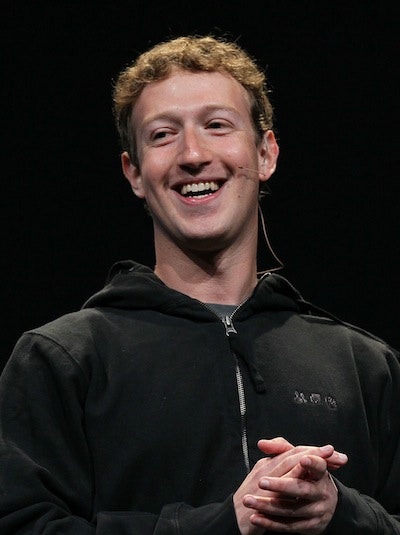
All right, BR, what's happening? Good to see you.
You too. What's going on? You know, chill week. Yeah, sort of. This recent announcement that you did about content moderation, how has that been received? Probably depends on who you ask, but look, I mean, I've been working on this for a long time. So I mean, you got to do what you think is right. We've been on a long journey here. I think at some level, you only start one of these companies if you believe in giving people a voice. The whole point of social media is giving people the ability to share what they want.
Pathway towards increasing censorship, because clearly we were going in that direction for the last few years. It seemed like we really found out about it when Elon bought Twitter and we got the Twitter files, and when you came on here and you were explaining the relationship with the FBI where they were trying to get you to take down certain things that were true and real, and certain things they tried to get you to limit the exposure to them. So it's these kind of conversations. When did all that start?
Yeah, well, look, going back to the beginning, like I was saying, I think you start one of these if you care about giving people a voice. I wasn't too deep on our content policies for like the first 10 years. We put in place systems to fight bullying. If someone is pirating copyrighted content on the service, it's like okay, we'll build controls to find IP protected content. But it was really in the last 10 years that people started pushing for ideological based censorship. I think it was two main events that triggered this. In 2016, there was the election of President Trump, also coincided with Brexit in the EU and the fragmentation of the EU. And then in 2020, there was COVID.
I'm sorry to interrupt you, but when it first came up in 2016, did it come under the guise of the Russian collusion hoax?
Yeah, and this is the thing. At the time, I was really sort of ill-prepared to parse what was going on. Part of my reflection looking back on this is I think in 2016, in the aftermath, I gave too much deference to a lot of folks in the media who were basically saying, 'There's no way that this guy could have gotten elected except for misinformation. People can't actually believe this stuff. It has to be that there's this massive misinformation out there.' So I took this and just assumed that everyone was acting in good faith. I said, 'Okay, there are concerns about misinformation. We should try to deal with them.' But I was really worried from the beginning about becoming this decider of what is true in the world. That's a crazy position to be in for billions of people using your service. So we tried to put in place a system that would only target very clear hoaxes, like 'Earth is flat,' not parsing speech about whether something is slightly true or slightly false. That was the original intent. We put in place the system, and it just veered from there. I think to some degree, it's because some of the people whose job is to do fact-checking, a lot of their industry is focused on political fact-checking, so they just veered in that direction. We kept trying to get it to be what we had originally intended, which is not to judge people's opinions but to provide a layer to help fact-check the most extreme stuff. But it just became a slippery slope. It got to a point where it was destroying so much trust, especially in the United States, to have this program. I guess it was probably about a few years that I really started coming to the conclusion that we were going to need to change something about that. COVID was the other big one, where that was also very tricky. Because you have the Supreme Court precedent that you can't yell fire in a crowded theater. There are times when, if there's an emergency, your ability to speak can temporarily be curtailed in order to get an emergency under control. So I was sympathetic to that at the beginning of COVID. It seemed like, okay, you have this virus, it's killing a lot of people. We didn't know at the time how dangerous it was going to be. So at the beginning, it seemed like we should give a little bit of deference to the government and the health authorities on how we should play this. But when it went from 'two weeks to flatten the curve' to, in the beginning, 'there aren't enough masks, masks aren't that important,' to then 'oh no, masks are important,' to the Biden Administration when they were trying to roll out the vaccine program, and now I'm generally pretty pro rolling out vaccines. I think on balance, the vaccines are more positive than negative. But I think that while they were trying to push that program, they also tried to censor anyone who was basically arguing against it, and they pushed us super hard to take down things that were honestly true. They basically pushed us and said, 'Anything that says that vaccines might have side effects, you basically need to take down.' And I was just like, 'Well, we're not going to do that. We're clearly not going to do that.'
Were you involved in those conversations directly?
I wasn't involved in those conversations directly.
How difficult is that to not be involved in those conversations directly? Fitness isn't just about what you do in the gym, it's also about your nutrition. But even with the best diet, some nutrients can be hard to get, and AG1 can help fill those gaps. AG1 delivers optimal amounts of nutrients in forms that help your body perform. AG1 makes foundational nutrition easy because there aren't a million different pills and capsules you have to keep track of. It's just one scoop mixed in water. It's such an easy routine to keep in the mornings. Ingredients in AG1 are selected for absorption, nutrient density, and potency, and are intentionally picked to work in sync with the whole formula for optimal impact. They are seriously committed to quality. AG1 is tested for hundreds of contaminants and impurities, and they're five free AG1 travel packs with your first purchase at drinkag1.com/jogan. That's a $76 value gift for free if you go to drinkag1.com/jogan. Seriously, get on this. That's got to be strange too, right? Because you're running the company, but there's clearly you're moderating at scale that's beyond the imagination. The number of human beings you're moderating is fucking insane. What's a Facebook? How many people use it on a daily basis? Forget about how many overall. How many people use it regularly?
It's 3.2 billion people use one of our services every day.
Yeah, it's no, it's wild. More than a third of the planet. That's so crazy. And it's good that you speak because this is how things get changed and this is how people find out that people are upset about content moderation and censorship. But moderating at scale is insane. It's insane. What we were talking the other day about the number of videos that go up every hour on YouTube, and it's bananas. To try to get a human being that is reasonable, logical, and objective that's going to analyze every video, it's virtually impossible. It's not possible. So you got to use a bunch of tools, you got to get a bunch of things wrong, and you have also people reporting things. And how much is that going to affect? Now understand the kind of numbers that we're talking about here. Now understand you have the pandemic and then you have the administration that's doing something where I think they cross the line where it gets really weird, where they're saying what you were saying, they were trying to get you to take down vaccine side effects, which is just crazy.
Yeah, so I mean, like you're saying, this is so complicated, this system, that I could spend every minute of all of my time doing this and not actually focused on building any of the things that we're trying to do: AI, glasses, the future of social media, all that stuff. So I get involved in this stuff, but in general, we have a policy team. There are people who I trust, they're the people kind of working on this on a day-to-day basis. And we did a lot of investigation into the kind of government censorship around stuff like this, and we produced all these documents, and it's all in the public domain. Basically, these people from the Biden Administration would call up our team and scream at them and curse. And it's like, these documents are all kind of out there.
Did you record any of those phone calls?
I don't think we did. But I think, listen, I mean, there are emails. The emails are published. It's all kind of out there. And basically, it just got to this point where we were like, 'No, we're not going to take down things that are true. That's ridiculous.' They wanted us to take down this meme of Leonardo DiCaprio looking at a TV talking about how 10 years from now or something. We're not going to take down humor and satire. We're not going to take down things that are true. And then at some point, I guess it flipped a bit. Biden, when he gave some statement at a press conference or to some journalist, he basically was like, 'These guys are killing people.' And then all these different agencies and branches of government basically just started investigating and coming after our company. It was brutal. It was brutal.
Wow. Yeah, it's just a massive overstepping. Also, you weren't killing people. This is the thing about all of this. They suppressed so much information about things that can help you recover from illness, prevent illnesses, make your body more robust and healthy, strengthen your immune system. And they were suppressing all that information. And that's just crazy. You can't say you're one of the good guys if you're suppressing information that would help people recover from all kinds of diseases, not just COVID: the flu, common cold, all sorts of different things. High doses of Vitamin C, D3 with K2 and magnesium. They were suppressing this stuff because they didn't want people to think that you could get away with not taking a vaccine, which is really crazy. When you're talking about something that can go that way with wrong speak and with bizarre distortion of facts, and when it comes down to it in today's day and age, the way people get information is through your platform, through X. This is how people are getting information. They're getting information from YouTube, from a bunch of different sources now. And you can't censor that if it's real, legitimate information, because it's not ideologically convenient for you.
Yeah, so that's basically the journey that I've been on. Started off very pro free speech, free expression. Then over the last 10 years, there were these two big episodes: the Trump election and the aftermath, where I feel like in retrospect I deferred too much to the kind of media and the government. The stuff that's being written about is not all accurate. And even if the facts are right, it's kind of written from a slant a lot of the time, of course. And then there's the government version of it, which was during COVID, which is okay, like our government is telling us that we need to censor true things. It's like, this is a disaster. And it's not just the US. I think a lot of people in the US focus on this as an American phenomenon, but I kind of think that the reaction to COVID probably caused a breakdown in trust in a lot of governments around the world. Because 2024 was a big election year around the world, and there were all these countries—India, you know, the economic policies to deal with COVID, or just how the governments dealt with COVID—seems to have had this effect that's global, not just the US. But a very broad decrease in trust, at least in that set of incumbents, and maybe in these democratic institutions overall. So I think that what you're saying, how do people get their information now? It's by sharing it online on social media. I think that's increasingly true. And my view at this point is, all right, we started off focused on free expression, we kind of had this pressure tested over the last period. I feel like I just have a much greater command now of what I think the policy should be. And like, this is something I've been thinking about for a while. I think that this is going to be pretty durable because at this point, we've just been pressure tested on this stuff for like the last 8 to 10 years with these huge institutions just pressuring us. And I feel like this is kind of the right place to be.
There was also they're saying that you guys were allowing hate groups to speak. There was a lot of this.
Yeah, I mean, the tough thing with politics is that there's... Well, when you say 'who someone's coming after you,' are you referring to the government and investigations and all that? I mean, so the issue is that there's what specific thing an agency might be looking into you for, and then there's the underlying political motivation, which is why do the people who are running this thing hate you? And I think that those can often be two very different things. So we had organizations that were looking into us that were not really involved with social media, like the Consumer Financial Protection Bureau. It's like, what does Meta have to do with this? But they kind of found some theory that they wanted to investigate. And it's like, okay, clearly they were trying really hard to find some theory. But it just kind of throughout the party and the government, there was just sort of... I don't know if it's a directive or just a quiet consensus that 'we don't like these guys, they're not doing what we want, we're going to punish them.' But it's tough to be at the other end of that.
Well, it's not good. I think the thing that is actually the toughest is that when the US government comes after you, I think the real issue is that when the US government does that to its tech industry, it's basically just open season around the rest of the world. The EU has fined the tech companies more than $30 billion over the last 10 or 20 years.
So when you think about it, it's like a hundred million here, a couple billion dollars there. But what it really adds up to is this sort of EU-wide policy for how they want to deal with American tech. It's almost like a tariff. And I think the US government basically gets to decide how they're going to deal with that. Because if the US government leads the attack against the companies, then the EU and all these other places are just free to go to town on all the American companies and do whatever they want. But I mean, look, obviously I don't want to come across as if we don't have things that we need to do better. Obviously we do. And when we mess something up, we deserve to be held accountable for that, just like everyone else. I do think that the American technology industry is a bright spot in the American economy. I think it's a strategic advantage for the United States that we have a lot of the strongest companies in the world. And I think it should be part of the US's strategy going forward to defend that. And it's one of the things that I'm optimistic about with President Trump. I think he just wants America to win. And we have a pretty good court system. The courts are pretty fair. So we've basically done a pretty good job of defending ourselves. When we've chosen to do that, we have a pretty good rate of winning. It's just not like that in every other country around the world. If other governments decide that they're going to go after you, you don't always get a clear shake at defending yourself on the rules. So I think to some degree, if the US tech industry is going to continue being really strong, I do think that the US government has a role in basically defending it abroad. And that's one of the things that I'm optimistic about will happen in this administration.
Well, that was a huge issue after January 6th. They removed the sitting president at the time. It was kind of crazy to remove that person from social media because you've decided that he incited a riot. So for him, without free speech, without people, without podcast, without social media, they probably wouldn't have had a chance because the mainstream narrative other than Fox News was so clearly against him. The majority of the television entities and print entities were against him. The majority of them. So if without social media, without podcast, they don't stand a chance. So they're uniquely aware of the importance of these platforms.
There are a couple of different things here. One is this is something where I think X and Twitter just did it better than us on fact-checking. We took the critique around misinformation, we put in place this fact-checking program which basically empowered these third-party fact checkers. They could mark stuff false, and then we would downrank it in the algorithm. I think what Twitter and X have done with Community Notes is just a better program. Rather than having a small number of fact checkers, you get the whole community to weigh in. When people usually disagree on something, they tend to agree on how they're voting on a note. That's a good sign to the community that there's actually a broad consensus on this. And then you show it, and you're showing more information, not less. So you're not using the fact check as a signal to show less information. You're showing more. And a lot of that stuff is best rooted out at the level of accounts doing phony things. So you get whether it's China or Russia or Iran or one of these countries, they'll set up these networks of fake accounts and bots, and they coordinate and they post on each other's stuff to make it seem like it's authentic and kind of convince people, 'Wow, a bunch of people must think this or something.' And the way that you identify that is you build AI systems that can basically detect that those accounts are not behaving the way that a human would.
And when we find that there's some bot that's operating an account, how do you differentiate? How do you figure that out?
It just... I mean, there are some things that are obvious. Like, if an account is posting 100 times a day, that's not a human. But it's more subtle than that. These guys are pretty sophisticated, and it's an adversarial space. So we find some technique, and then they basically update their techniques. But we have a team of effectively intelligence, counterintelligence folks, counterterrorism folks, AI folks who are building systems to identify what are these accounts that are just not behaving the way that people would, and how are they interacting. And then sometimes you trace it down, and sometimes you get some tips from different intelligence agencies, and then you can kind of piece together over time, 'Oh, this network of people is actually some kind of fake cluster of accounts.'
But is it a problem of people that are Bad actors, or is it just people that have unpopular opinions?
No, I don't think it's that for this. I think... but what I'm saying is, how do you determine? At what percentage of accuracy are you determining? Do you ever accidentally think that people that are going to get moderated are actually just real people? Yes, I think that's... I think for the specific problem around these large coordinated groups doing election interference or something, it's a large enough group, we have a bunch of people analyzing it, they study it for a while. I think we're probably pretty accurate on that. But I actually think one of the bigger issues that we have in our moderation system is this precision issue that you're talking about. The fact-checking changes that we made are going to be the thing that reduces the vast majority of the censorship mistakes that we make. The removing the fact checkers and replacing them with Community Notes, I think it's a good step forward. A very small percent of content is fact-checked in the first place, so is that going to make the hugest difference? I'm not sure. I think it'll be a positive step though. And we opened up some content policies, so some stuff that was restricted before we opened up. That's good. It'll mean that some set of things that might have been censored before are not. But by far the biggest set of issues we have, and you and I have talked about a bunch of issues like this over the years, is that you have some classifier that's trying to find, say, drug content. People decide, okay, it's the opioid crisis, we need to crack down on people dealing drugs. And then you basically have this question: how precise do you want to set the classifier? Do you want to make it so that the system needs to be 99% sure that someone is dealing drugs before taking them down? Do you want to be 90% confident? 80% confident? And those correspond to amounts of recall—what percent of the bad stuff are you finding? So if you require 99% confidence, then maybe you only end up taking down 20% of the bad content. Whereas if you reduce it and you say, okay, we're only going to require 90% confidence, now maybe you can take down 60% of the bad content. But you start getting to some of these classifiers might have 80-85% precision in order to get 90% of the bad stuff down. But the problem is, if you're at 90% precision, that means one out of 10 things that the classifier takes down is not actually problematic. And if you multiply that across the billions of people who use our services every day, that is millions and millions of posts that are basically being taken down that are innocent. And upon review, we're going to look at and be like, 'This is ridiculous that this thing got taken down.' Which I think you've had that experience, and we've talked about this for a bunch of stuff over time. But it really just comes down to this question of where do you want to set the threshold. We're going to set it to a higher precision, which means we'll get less of the bad content, but it will also mean that we'll dramatically reduce the amount of people whose accounts are taken off for a mistake, which is just a terrible experience. It's like, okay, you're going about your day, and then one day you wake up and you're like, 'Oh my God, my WhatsApp account just got deactivated because it's connected to a Facebook account, and the Facebook account is... or I'm using the same phone as a Facebook account where we made some enforcement mistake and thought you were doing something bad that you weren't because our classifiers were set to too low of precision.
Has that happened before? Where their WhatsApp app got canceled as well?
Oh yeah, because I mean, there are a bunch. So your Facebook app gets taken out. Say if you have a Facebook and you have a sock puppet account, and the sock puppet account is doing something bad, let's say the most severe, sure. Let's say someone is planning a terrorist attack. Okay, so we take down their account. But then let's say that person can just go sign up with another account. But I think, you know, how does WhatsApp get connected to that though? Well, if it's... I mean, we run these different services, and if they're on the same phone, it's basically one thing. Regulators or governments will come to us and say, 'Okay, you're clearly not doing enough if you kick someone off for terrorism and then they can just sign up for another account on the phone.' Right. They also think, 'Okay, well, we're not doing enough if we deactivate their Facebook account because they're planning a terrorist attack but we let them use all our other services.' Right. So if you're aware, yeah. So you understand how you get there. But then you just get to this question around the precision and the confidence level, and then you're just making all these mistakes at scale, and it's just unacceptable. But I think it's a very hard calculation of where do you want to be. Because on the one hand, I get why people come to us and they're like, 'No, you need to do a better job finding more of the terrorism or the drugs and all this stuff.' But over time, the technology will get better and it'll get more precise. But at any given point in time, that's the choice that we have to make: do we want to make more mistakes, erring on the side of just blowing away innocent people's accounts, or do we want to get a somewhat higher percent of the bad stuff off? And I think that there's some just some inherent trade-off there.
If you're a person and you work at some accounting firm, but you like posting about stuff, but you don't want it to come back and reflect on your life, you want to fucking post. You want to post jokes, you want to be silly. You should be able to be anonymous. I think there's nothing wrong with that. I don't think just because you state your opinion, people should be able to search where you sleep. That doesn't make any sense to me. But if you're going to allow anonymous accounts, you're definitely going to open up the door to bad actors having enormous blocks of accounts where they can use either AI or just programs where they have specific answers. I'm sure you've seen that before. It's come up on Twitter multiple times where they found hundreds of sock puppet accounts tweeting the exact same thing. So you have to have anonymous accounts for whistleblowers. I think the benefits of anonymous reporting on important things that the general public needs to know about, especially whistleblower type stuff, you have to have some ability to be anonymous. But if you're going to do that, you're also going to have the possibility that these aren't real people, that these are paid actors, or not people at all, or they're running programs and they're doing this to try to sway public opinion about very important issues.
Yeah. A lot of what we've seen too, I mean, there's the anonymous accounts. Also, just over time, I think a lot of the kind of more interesting conversations have shifted from the public sphere to more private ones. So WhatsApp groups, making sure that that's kind of good content that I want to be seen broadly, and then most of the jokes that I make are with my friends in WhatsApp, right, in groups. So yeah, I think that's sort of where the world is more broadly now.
Yeah, no, I think so. For jokes, for that kind of stuff, for comedians for sure. Because also, we'll say things that we don't really mean, we just say it because it's a funny thing to say. I think everyone does, for sure. Yeah, which is just a weird thing about taking things out of context, particularly on social media where people love to do that. But there is this problem of, let's just say that you're a country that's involved in some sort of an international conflict, and you have this ability to create a massive amount of fake accounts and sway the opinion of people. Yeah, and that's why that side of things, the kind of governments running these broad manipulation campaigns, I mean, we're not letting off the gas on that at all. I think every most categories of bad stuff that we're policing, everyone agrees is bad. No one's sitting there defending that terrorism is good, right? Child exploitation, or drugs, or IP violations, or people inciting violence. It's like, most of the stuff is bad. People clearly believe that election interference and foreign government manipulation of content is bad. So we have this, the type of stuff that the vast majority of our energy goes towards that, and we're not changing our approach on any of that. The stuff that we're changing our approach on is basically what people refer to as hate speech, which I think also comes from a good place of wanting to crack down on that, of wanting to promote more inclusion and belonging and people feeling good and having a pluralistic society that can have all these different communities coexist. Except everyone, yeah. But I think the problem is that you just all these things are on a spectrum, and when you go too far on them, I think on that side we just basically got to this point where there were these things that you just couldn't say which were mainstream discourse. So you know, it's like Pete Hegseth is going to be the Secretary of Defense. That's a mainstream position now. But a few years ago, that would have been a thing that you couldn't have said on our platforms because it would call for the exclusion of a protected category of people. And it's like, okay, on its face, calling for the exclusion of a protected category, that seems like that's okay. There's legal protections, there's stuff. But okay, if it's okay to say on the floor of Congress, you should probably be able to debate it on social media. So I think some of the stuff, I think well-intentioned, went too far, needs to just get rationalized a bit. But it's those two categories, misinformation and hate speech, I think are the ones that got politicized. All the other ones, which is the vast majority of the stuff that we do, is I think people generally agree that it's good and we need to go after it. But then you have the precision issue. So do you, on balance, maybe we should just leave that person's account alone because the pain of just nuking someone's account when you're not sure or you're making a mistake is pretty real too.
Right. Yeah, very, very complicated.
Yeah, it's all very nuanced. And you made a point earlier about the government supporting its companies. It would be a good thing for the government to support its companies. It makes sense. It's an American company. I think the issue that we're dealing with is companies as we're describing them have never existed before. There's never been a thing like Facebook before. There's never been a thing like Twitter before X. There's never been a thing like these platforms. And the government is, from their perspective, continuing the patterns of behavior that they've always exhibited, which is to have control over the media. I mean, there have been CIA operatives that have been in major newspapers forever. There's always been that sort of input that the government had in mainstream media narratives. They are in a position now where they're losing that. They've essentially lost it. And especially with this last push during COVID, the opinion and the respect that people have for the facts that are coming from mainstream journalism deteriorated in a way that I've never seen before in my life. An enormous percentage of the population does not trust mainstream media anymore. So what do they trust? They trust social media. Well, who's running that? Well, a bunch of people. And the government's attempt to remove the Hunter Biden laptop story from Twitter and from all these different things that we saw happen, the way they contacted you guys, what they're trying to do with getting you to remove real information about vaccine side effects, like this is a new attempt to crack down on this new thing which is a distribution outlet that's far more successful than anything they've ever controlled before, and they have no control of it. They had CBS, they had NBC, they had the New York Times and the Washington Post. When they were in control of narratives in that way, it was so much easier. There wasn't some pirate radio voice that came on and said, 'Hey guys, look here's the real story.' And that's probably the thing that led to Trump getting elected.
Yeah, I mean, the causality there is tricky, but there's a lot of things. Without it, he probably doesn't get elected. It's tough. I do come back to this point that every major incumbent lost their elections around the world this year. But I think that's also because of that revealing how kind of incorrect and dishonest some of these governments were.
So I think that's quite possible. And I do think that there is this cycle that goes on where within a society, it's not just the government that has power. There are cultural elites, like who are the people that people look to. And I think that basically it needs to shift for the internet age. And I think a lot of the people who people looked to before are kind of realizing, hey, they weren't super honest about a lot of these issues that we face. And I think that's partially why social media isn't a monolithic thing. It's not that people trust Facebook or X. They trust the creators and the voices that they feel like are being authentic and giving them valuable information on there. So there's going to be this whole new class of creators who basically become the new kind of cultural elites that people look at and are like, 'Okay, these are the people I trust.' And I don't know to what extent you feel like you got to be large because of social media or just the podcasting platforms that you used. But I think that this is a very big sea change in terms of who are the voices that matter. And what we do is we try to build a platform that gives people a voice. But there's this wholesale generational shift in who are the people who are being listened to. And I think that's a very fascinating thing that is going on. Because it's not just the government and people saying, 'Hey, we want a very big change here.' I think it's just a wholesale shift in saying, 'We just want different people to be the ones who are telling us what's true.' Like, who are the people who have the courage to actually just say that stuff? I don't know. I think that whole cultural elite class needs to get repopulated with people who people actually trust.
Yeah. The problem is these people that are starting these jobs, they're coming out of universities, and the universities are indoctrinated into these ideas as well. It's very difficult to be a person who stands outside of that and takes unpopular positions. You get socially ostracized, and people are very hesitant to do that. They would rather just keep their mouth shut and talk about it in quiet conversation. And that's what we experience, which is another argument for anonymous accounts. I think you should have anonymous accounts. I think you should be able to, if there's something like COVID, you should be able to talk about vaccine side effects and not worry about losing your job, which people were worried about, which is so crazy. And you're seeing a lot of the people that used to be in mainstream media got fired, and now they're trying to do the sort of podcast thing, but they're trying to do it like a mainstream media person. So they're like gaslighting during podcasts, and people are like, 'Hey, fuck face, like this, you can't do that here. It doesn't work.'
Yeah, well, it's a new medium. I know you know the history on this. It's like when people transition from radio to TV, the initial TV anchors were the same radio people but just being filmed while speaking on the radio.
But it turned out it actually was a completely different type of person that you need because on your radio is just... I think that that's going to be true for the internet too. It's not as cut... I think part of it is the format, right? The fact that you do these like two, three-hour episodes. I mean, I hated doing TV because, you know, I basically got started. I started Facebook when I was 19 and I was good at some things, very bad at others. I was good at coding and like real bad at kind of talking to people and explaining what I was doing. And I just had these experiences early on where I'd go on TV and like it wouldn't go well and they'd cut it to some random sound bite and I'd look stupid. And then basically I'd get super nervous about it. It's like in some ways it's like okay, at the same time I was gaining confidence, being able to build more and more complicated products. And it's like even as an early 20s person I was like I could do this, and then on the kind of TV and comms public side I was like this is a disaster every time I go out, it's worse and worse and worse. But I mean it's one of the reasons why I think on the internet, there's no reason to cut it to a 4-minute sound bite conversation. I think part of what makes it authentic is like we can just, I mean these are complex issues, we can unpack it for hours and probably still have hours more stuff to talk about. It just, I don't know, I think it's just more real.
Yeah, it's definitely that. And the other thing about television that's... then you sit down with one person for a short amount of time, it's just not enough time for important subjects. It's also a lot of them, for whatever reason, want to do it in front of an audience, which is the worst way to get people to talk. Like imagine these disasters that you had if there was like 5,000 people staring at you in a TV crowd as well. So there's that added element which is so not normal and not conducive to having a conversation where you're talking about nuanced things where you have to think, you have to be able to pause and not concern yourself with being entertaining in front of these people just sitting there staring at you. Yeah, and also like when you're having a conversation, I don't know, it's like when you start talking about something, your kind of subconscious kicks in, you start thinking about the topic. So it's like, am I going to, you know, how am I going to explain these different things? But I just think that that's sort of how people work. What's also like, conversations are like a dance, you know? One person can't be dancing at another speed and the other person is going slow. You kind of have to find the rhythm that you're going to talk with, and then you have to actually be interested in what you're talking about. That's another thing that they are at a huge disadvantage of in mainstream media. Like they're just doing that because that's their job, you know? They probably don't even know a lot about climate change, they probably don't really understand too much about what SpaceX is trying to accomplish, but they're just reporting on it. Yeah, I mean, I'm sure there's a lot of the people I've met there I think are good people, it's just a tough format.
Yeah, well, getting back to the original point, this is why I think it makes sense to me that the government didn't want you to succeed and to have the sort of unchecked power that they proceeded social media to have. And I think one of the benefits that we have now of the Trump Administration is that they have clearly felt the repercussions of a limited amount of free speech, free speech limitations, censorship, government overreach. If anybody saw it, look, I don't know what the actual impact of the Hunter Biden laptop story would have been, I don't know, but there's many people that think it probably amounted to millions of votes, possibly real. And if that's possibly real, that could be defined as election interference. And all that stuff scares the out of me. That kind of stuff scares the out of me when the government gets involved in what could be termed election interference, but through some weird loophole it's legal, whereas I don't think that the pushing for social media companies to censor stuff was legal. I mean, it's like, there's all this stuff about what, like people talk about the First Amendment and okay, these tech platforms should offer free speech like the First Amendment. I think that is a philosophical principle. The First Amendment doesn't apply to companies in what in our content moderation.
People in the administration calling up the guys on our team and yelling at them and cursing and threatening repercussions if we don't take down things that are true is like, it's pretty bad.
It sounds illegal. I would love to hear it. I wish somebody recorded those conversations. Would be great to listen to. Somebody could animate them maybe.
A lot of the material is public. I mean, Jim Jordan led this whole investigation in Congress. I mean, it was basically, I think about this as like, you know what Elon did on the Twitter files when he took over that company. I think Jim Jordan basically did that for the rest of the industry with the Congressional investigation that he did. And we just turned over all of the documents and everything that we know.
Did anybody was held accountable? Was there any repercussions?
I mean, they lost the election, yes. So that's it. Well, in a democracy, I mean, that's kind of right.
But if what they did was illegal, do you not think that some steps should be put in place to make sure that people are punished for that and that that never happens again? It seems that that has a massive impact on the way our country goes. If that's election interference, and I think it is, that has a massive impact on the direction of our country.
Yeah, well, the COVID thing I don't think was election interference as much as it was just like meddling. About let's make sure this doesn't happen again, yeah, is the one that I'm more focused on right now. Because then it's the thing that I reflect on on my journey on all this, which is like, okay, yeah, so we didn't take down the stuff that was true, but we did generally defer to the government on some of these policies that in retrospect I probably wouldn't, knowing what I know now. And I just think that that's sort of the journey that we've been on. It's like, okay, we start the thing focused on free expression, go through some pretty crazy times in the world, get it pressure tested, see where we basically ended up doing stuff that led to a slippery slope that we weren't happy with the conclusion, and like try to... angle on this that I haven't thought enough about yet. So I know I'm sure I'm not done making mistakes in the world, but I think at this point we have a much more thorough understanding of what the space is. And I think our kind of values and principles on this are likely going to be much more durable going forward. And I think that that's probably a good thing for the internet.
I think it's a great thing for the internet. I was very happy with your announcement. I'm very happy that you took those steps. I'm very happy you brought Dana White aboard.
Oh, he's awesome. Been talking to him for a while about that. I mean, he's like, talk about an amazing entrepreneur, right? It's like, I just want, because I control our company, I have the benefit of not having to convince the board not to fire me, right? It's like normal corporate...
...and learning and being open-minded and being objective and understanding position and asking questions and having good training partners and absorbing information and really being diligent with your skill acquisition work, which is one of the most important and neglected parts of Jiu-Jitsu because training is so fun, everybody just wants to roll, you know? Where really the best way to do it is actually to drill and it's the most boring, but really you should drill constantly, just jam those skills into your neurons where your brain knows exactly what you do in every position. And it's such an intellectual pursuit and most people don't think of it that way because you have to manage your mind while you're moving your body, you're managing anxieties, you're trying to figure out when to hit...
...people you shouldn't kill people. Let me be clear, I'm not saying it's a good thing to kill people, I'm definitely not. But I'm saying it's a good thing to, if someone's trying to kill you and they absolutely can't because you could kill them easy, that's way better. It's a way better situation to be in.
Yeah, no, it's great. It's opened a lot of how I think about stuff. I mean, it is just interesting, your point about like having a pill that allows you to just kind of know that you have this kind of physical ability. It's a superpower. It's interesting because I do think a lot of our society has become very like, I don't know, I don't even know the right word... reason every one of the things that I enjoy about it is I feel like I can just express myself, right? It's like when you're running a company, people typically don't want to see you being this ruthless person who's just like, I'm just going to crush the people I'm competing with. But when you're fighting, it's like no, no, that's like... So I think in some ways when people see me competing in the sport, they're like, oh no, that's the real Mark. It's like because it goes back to all the media training stuff we were talking about. When I'm going and giving my sound bites for two minutes, it's like no, it's like that guy. It's like that's the real one.
But you definitely got a lot of respect in the martial arts community. People got super excited that you were so involved in it and so interested in it because anytime someone like yourself or like Tom Hardy or...
I think there's a lot of sports that are like, nah, we don't want you. It's not a jock community. It's super kind. Like Jiu-Jitsu people in particular, they're some of the nicest people. My friends forever, you know? They'll be my friends for life.
Yeah, no, it's a good crew. I mean, when I got hurt, I really kind of missed the guys I trained with. It's like Dave has put together this group, it's basically all these young pro fighters who are kind of up and coming, like early 20s, but they've only been doing it for a few years. So like I've been doing it for a few years, so that way it's like we kind of have a more similar level of skill. And they're all better than me, but in terms of, I was in my late 30s and they're in their early 20s, it was sort of like they're kind of coming into...
So it was basically some a group of pro fighters and then a handful of Meta executives would do it. And basically we would just kind of fight each other and it would be fun. And then one of them decided one day that they're like, you know, I think I'm getting pretty good at Jiu-Jitsu, I'm going to go to a tournament. And I was like, all right, good luck with that, bro. Like I'm not going to go to a tournament, get embarrassed. But then the guy goes to the tournament, he does pretty well. I'm like, that guy, it's like okay, it's like we go all the time and if he's doing well in a tournament, it's like all right, fine, sign me up, right? It's like I'm just super competitive. So this was like... mask and like, and I basically was like, it wasn't until they called our names to step onto the mat that I was like, all right, take all the stuff off. And the guy like, uh, what? That's kind of a cheat code. I mean, they kind of freak out.
Yeah, I think he was trying to figure out what was going on. Afterwards, his coach was like, he's like, I think that was Mark Zuckerberg who just submitted me. And the coach is like, no, no, no way. And it's like, no, I think that was he's like, what, you're fighting Mark Zu... like, get back in there, it's like, go fight him. He's like, no, he just submitted me.
That's very funny. Yeah, man, well Tom Hardy's doing that too, right? Done multiple tournaments now.
Are you... oh no, I'm done with the rehab now, now I'm just ramping back. How far out are you from surgery?
So you did the patella tendon graft, right?
I did, yeah. Yeah, that's a rough one to come back from. I did the patella tendon graft on my left knee and it took me about a year. I did the ACL from a cadaver, it's actually they use an Achilles tendon from a cadaver on my right knee, and I was back to Jiu-Jitsu in six months. Like full confidence in six months, I was 100% recovered, kicking the bag, everything.
How old were you when you got those?
Then I'd recommend doing the patella... yeah, I know they say that. I don't agree with that. I mean, just from my own personal experience, my doctor told me that the ACL from a cadaver, when they use the patella tendon graft, is 150% stronger than your natural ACL. He said you'll be back to... 'cause I didn't have any meniscus damage on my right knee. He's like, you'll be back to 100%. I have a lot of meniscus damage on my left knee, unfortunately, which is also part of the problem with the recovery of that one. But the patella tendon graft, the bone on the kneecap was painful forever in terms of like getting on my knees, training from my knees, doing certain positions, and even just stretching, like putting my knees on the ground, sitting on my heels and then laying back. It was...
It's fully... I think it takes some time for the nerves to grow into it and all that.
Did you incorporate peptides in your recovery?
Why didn't you use peptides?
I don't know, I just took my doctor's advice on it. But don't do that anymore. I mean, next time there's other people to talk to.
Yeah, I mean, it's gone pretty well. It's gone pretty... I'm sure it goes pretty well, but it would go quicker with peptides, 100%, for sure.
But it's been this interesting opportunity to like, I really don't want that to happen again. So I feel like I'm so much more focused on technique. Like the first time that I learned all this stuff, I was like, I was probably like a little too British...
...session. And so we were two hours into training and I was doing like a few rounds. And I basically threw a leg kick and the other guy went to check it and I leaned back to try to get around the check and just put too much torque on my knee. So it's the planted leg.
Mine was a planted leg too.
Yeah, but it's... I don't know, Dave was like, you know, before that round Dave was like, you're done. I'm like, no, one more round. It's you know, you're too tired as well. Yeah, and I basically, I hadn't, you know, I basically had also just done a really hard kind of leg workout the day before. But I don't think the fight guys knew that. So I really just pushed too hard.
I actually thought it was a pretty interesting experience because it's like week over week you're just getting back so much mobility and ability to do stuff. And yeah, I feel like I'm, I don't know, at this point I just like probably half my weight training is effectively kind of like rehab and joint health stuff and like wrists, shoulders, knee, all that, in addition to the big muscle groups.
Yeah, that's very smart. The knee over toes guy stuff is particularly effective because it all comes from a guy that had a series of pretty catastrophic knee injuries and was plagued with weak knees his whole life and then developed a bunch of different methods to strengthen all the supporting muscles around...
...you lift your whole body up with your hamstrings. And all these different slant board squats and different lunges and split squats and all these different things which really strengthen up all the supporting muscles around the knee better than anything that I've ever tried before. And he's got like a whole program where it scales up and he puts it online for everybody. He gives away a lot of information for free because he said, look, when I was 11 years old I wish I had access to this, so I'm going to put it out there for everybody. Great guy. Yeah, cool. But I can't recommend that stuff enough. But I think what you're doing is like strengthening shoulder, strengthening that's really the way to do it. Like you have to think of muscles in terms of like armor, you know? If you want to do this thing, it's better to have good bumpers around your...
...a lot of fighting type stuff, you kind of want to be loose and like not super tight. So, but yeah, I mean, I just think like the joint stability stuff, as you get older and you want to do this for a longer period of time, it's good to do.
Yeah, it's huge. Mobility in general is just so important. You can compete in Jiu-Jitsu for a long time. There's like all these Masters divisions and stuff and I see those old crazy looking 70-year-old dudes trying to kill each other. Yeah, it's nuts. It's great.
But for real, sincerely, we're very happy... I think I can speak, rarely do, but I think I can speak for the martial arts community, we're very happy you're involved. It just makes it fun that someone who is a prominent...
...mean both Jiu-Jitsu and like striking. Yeah, you don't have time to think, but like the reasoning behind why you kind of want to slip in certain ways and like the probability game that you're playing is... I don't know, I used to fence when I was in high school and I did that pretty competitively. I was never quite good enough to be at the Olympic level, but I was pretty good. And we virtual fenced last time you were here. Yeah, there you go. And I just remember I would sit in my classes in high school and sketch out combinations of moves and sequences for how to feint and trick someone to...
...you're playing tag. Yeah, you're playing tag. Well, the way the Thais do it I think is the best, and they're obviously some of the best fighters ever. They fight a lot, which is one of the reasons why they train the way they train. But when you talk to people that train over there, they're like you learn so much more when you're playing, you know? When you're not trying to hurt each other, then you really do learn the technique and it gets fully ingrained in your system.
Yeah, you just have to be careful about brain damage. Like you were talking about having an MMA fight. Are you still entertaining that?