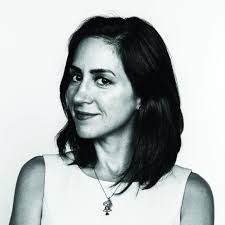
Today I have a really special conversation with Christina, the co-founder of Nubank. Nubank is one of the most successful fintech companies in the world. They have a market capitalization of over $70 billion. They have over 99 million monthly active users.
So today, out of our customers in Brazil, over 60% of them will say that Nubank is their primary banking relationship. We're the number one institution in Brazil today in terms of primary banking relationships. For context, that's more than Bank of America and Wells Fargo combined, but most Americans have never heard of them. However, that's about to change because they have just applied for a US bank charter, which means they're going to be bringing their products to the US.
So, we're cautiously optimistic about how we've been greeted by the US regulators about our ability to solve some of these main points. In this conversation, we're going to cover why they decided to launch here. But more importantly, we're going to dive deep into their backstory of what it took to build the company all the way from launching their very first credit card in Brazil in 2014 to taking the company public in 2021 and beyond.
I was pregnant with my third child. I was 8 months pregnant bringing the nice doll. So, it was a very interesting moment.
It's a really great story. So, I'm excited to dive in. Well, Christina, it's great to have you here today.
Well, thanks for having me. I'm excited to dive into the whole backstory of Nubank, but first tell us why you decided to look into opening operations in the US.
Yes. So that's very exciting news that we have fresh out of the press. We've been looking into expanding internationally beyond Mexico and Colombia for a few years now. We felt that we also needed to earn the right to do the next thing. That's how we've always thought about every next step that we've taken in our history. And when we look into the tradeoffs on the size of the market and how interesting the opportunity seems, while at the same time trying to balance our ability to actually come up with something that would be interesting and relevant in such a market, the US is such a sweet spot because it is the largest, most relevant, most sophisticated, biggest market out there for financial services. But when we look into the specifics of the customer experience, we do see a lot of opportunity for us to bring something interesting, something relevant, something fresh that could dramatically improve the customer experience when we compare to what we've been able to do in Brazil, Mexico, and Colombia. And we also believe that our thesis, which is if you have a cost advantage, which we do, if you have structurally lower costs, lower cost to serve, lower cost of funding, lower cost to acquire, lower cost of credit, you can't help but build better products because you're able to pass on that efficiency to customers in the form of no fees or lower fees or lower rates or more credit approvals or a better customer experience. So we really believe that the proprietary technology and all the knowledge that we've acquired over the past 12 years building this company will also be able to be deployed in the US market. But of course, we want to take that one step at a time. We know that there are at least a few hundred thousand customers of ours already living and working in the US, and they're asking us to serve them on this side of the border. But we also expect that this value proposition, a much more efficient and tech-forward product experience, will resonate with a much wider set of customers. So we're excited about this possibility.
Yeah, you guys have gotten very good at building incredible product experiences on a very low cost structure. I think in your early days, you were making tens of dollars per user per year. Now, for your most mature cohorts, it's $300, which is remarkable in markets like Brazil that are about one the US GDP, but that product experience plus the cost structure advantage. And then it's a huge market where we already have customers. So, I am very excited as someone who likes to see innovation and competition for you guys to come to the US. For our American audience though, I appreciate some of those stories, but a lot of people haven't heard the story of Nubank. And so I want them to hear basically the whole story and go all the way back to the beginning. So let's go back to when you first started around 2013. And I hope you don't take this the wrong way, but it's kind of three misfits who came together to start the company. So what convinced you originally to join David, the founder, your co-founder, to start on this mission?
No, I would definitely characterize us as three misfits. I think that's appropriate. So yeah, I had just quit my job. I was working for the largest incumbent bank in Brazil. I had spent five years with them running different parts of their businesses, but really feeling very powerless because there was a lot that I didn't agree with. There was a lot that I wanted to do differently. But it's really hard to change things from within. It's this gigantic company that has 100,000 employees that frankly doesn't need to do a lot of things differently because they were doing really well. There was effectively no competition. So they really didn't bother. And I spent my last year there, the best part of my last year, trying to convince them to do something differently. At the end, they were like, 'No, we'll just come up with another fee and that's okay.' And that was really the last job for me. And I decided to resign. And I thought I was done with financial services because these guys were kind of the best business around.
But you have this quote that I really like, which is when you were there, quote, nobody even talked about the competitors and the customer's perspective was actually very, very low in the hierarchy of priorities. So that was basically the best at the time in Brazil.
Yeah. So that's very true. It was all about a lot of people's personal agendas and a lot about what they personally wanted to achieve and how that related to compensation. So it was very hard to have any structured real effective conversation about either competition or what customers wanted. That was very low on the priority list, for sure. So when I met David and to your point, he was also not an entrepreneur, he was not an operator. He came from the investing side. He was coming out of venture capital, had been looking for companies to invest in Brazil for a while, and frankly there wasn't much. And he was kind of scratching his head and saying why isn't anyone tackling this opportunity. We're looking at this industry that is the largest in the country, in the region really, with one of the most horrible customer experiences out there, charging the largest fees, the highest interest rates, and no one seemed to be doing anything about it. And he was looking for somebody who knew the industry from within but that also shared the same mindset, that also saw the opportunity to do something different and was willing to put the energy and the resources behind it. So that's how we met. I didn't quit my job to start a company. I thought I was going to land somewhere else on a company that needed a lot of hands-on energy and that wanted to go through a transformation, and we just ended up agreeing that this was too big of an opportunity to pass. So I remember the day that I met David and I remember telling my husband, 'You know what, this is what I'm supposed to do.' Because I had taken some time off before sabbatical was a thing, but I really wanted to give this some thought. I wanted to be really thoughtful about the best use of my time for the next five to ten years of my life, and that's when I met David and I was like, 'Okay, this is it. I cannot pass on this.' So that was it.
I also love the story. Sequoia had hired David to come and look at investing in Latin America. And then after about a year, they're like, there's nothing here worth investing in. And so they on very good terms let him go and he says, 'Hey, I'm going to do this.' And then you're a banker who decides to go and join him. Maybe tell us about your third co-founder as well.
Yeah. So Edward was also someone else that was a bit of a misfit. So he does have a computer science degree from Princeton, but he was a consultant before, like me. So we were both at BCG at some point in our careers early on. Then he worked for a private equity firm. But he wanted to build a company, he wanted to build something, and he joined us as our CTO. He landed in Brazil the first day that we started working together. It was May 6, 2013. He didn't speak a word of Portuguese, carrying two pieces of luggage with everything that he owned and was like, 'Okay, let's do this.' So it was a very different group of people. So it was an American. David is of course Colombian, but he lived most of his life in Costa Rica. Although he is US educated, he went to the US for college and business school, and me being Brazilian. So it was a fairly interesting group of people coming together to build something fresh with fresh pairs of eyes looking into the different problems that we saw in that industry.
Yeah. And then talk about what you decided to build and the launch of your very first product.
Yeah. So when we looked at the opportunity in Brazil, one of the things that we saw was that in the credit card space there was a huge opportunity because we studied a lot the case of Capital One when it was first built in the US. That was something that we put a lot of thought into, trying to understand how they came about it, how they disrupted the market. But this was of course before the internet. And we saw a lot of similarities to the US market for credit cards when Capital One was born and when we were starting Nubank, in the sense that products were very much commoditized. APRs were all the same. There was very little differentiation. Experience was very bad. Products were kind of being pushed down to people, not necessarily people wanting it or feeling any type of desire for those products. Lots of very little differentiation, lots of commoditization. So when we looked into that, we saw an opportunity for us to use technology, use data, use design to really think differently about how that product came together. Of course, my last year at that big incumbent bank was trying to do precisely that, trying to reinvent their credit card business. So that helped because I had already put some thought into what we should do. One of the things that really bothered me was this very much push product. There was no pull. There was no demand really for it, except for adverse selection, except for people that were very credit hungry that would take anything that you would put in front of them. But of course that risk was very high. So what we wanted to do, the secret sauce so to speak, was what if we design a product people actually want? Can you imagine that?
Good idea. You should do that.
Good idea, right? And that's what we set out to do. We wanted to do something that would impress people, that people would use and they would say, 'Wow, this is an actual good experience. This is actually neat. I want this.' And that would get them talking about the product. Because the other belief that we also shared was that when you have great products, you don't have to spend a lot of time or money marketing. You don't have to spend a lot trying to convince people that they got to try this because customers will do that job for you. They won't stop talking about something that they rave about if they really like it. So that's what we tried to do with the credit card in the beginning. So we came up with a very unique design. Of course, it was a purple card, which was something very new. I remember when we first started talking to Mastercard or even the card printing companies, they were like, 'Purple? No one does that.' It was a color that was completely off the grid. Creating a financial institution, a bank that was purple felt very different. Of course today this is not a thought that will weird people out as much, but it was very unique some 12 years ago. So we wanted that to stand out. We wanted the customer experience overall, the app of course but also customer service, to feel very different. We wanted people to feel that there was somebody on the other side that gave a damn, that wanted to listen to them, that wanted to fix whatever issue was going on, to answer whatever questions that they had. So we put a lot of thought into that as well. Anyway, we looked for different angles to differentiate against everything else that was out there and it worked.
And then you launched the card, I think on April 1st, 2014. And you've done a lot of what you wanted on the product side of things in terms of a new experience, a new brand, fully digital online onboarding, I believe, even from day one, which was unheard of versus going to branch and spending a lot of time, a lot of paperwork. But if I'm not mistaken, your first set of customers that you thought would want this card actually weren't interested. So maybe talk about that first set of users that turned out not to work out.
Yeah. So it was more of a hypothesis. We just assumed that being a new brand, a new product that was very unique, that would appeal to a younger audience. So we had this hypothesis that maybe kids in college would be more drawn to this. And it was not like they rejected it. Sure, they were like okay we might as well try, but we saw a much bigger pool actually coming initially from just the early adopters of technology, which in hindsight really makes sense because that's often the audience of early adopters of every single new technology. So those were the people that were actually more interested, that wanted to hear more about it, that wanted to give it a try, that wanted to write reviews, that wanted to tell their friends about it. So we kind of started really finding traction within the technology community, with people that want to think about the first people that buy the new iPhones, or people that are always looking into the next gadgets. So that was where it really got traction early on, and from that it just spread out virally because again, those early adopters, one of the things that they pride themselves on is educating their friends, their family, their audiences sometimes about the new and cool things that are coming out. So that was a very interesting route for us to go through.
Yeah, so the initial hypothesis the pull from university students not there, but then I think one of these early tech adopters wrote a blog post that really started to drive a lot of growth for you guys. And from there you went from no users to having to implement a waitlist because you couldn't onboard enough of them.
Yeah. So of course we started with a lot of manual processes because we couldn't build everything at once, let alone even before we launched, as any startup would, we were just rushing to put something out there and see if the dogs would eat the dog food. So we definitely couldn't handle the amount of demand that we started to see. So very quickly we had to just set up a very simple waitlist for people to just let us know that they're interested in the product and we would just release them as we had capacity, and that just became another layer of variety because when there was that sense of scarcity and since there were a lot of people talking raving about the product, people wanted to try and then they couldn't get it, they had to wait for it, so that just reinforced this virtuous cycle of demand which was very interesting.
And so the first two years you had just tremendous organic growth but then you had 2016 some regulatory changes that almost killed the company and then those were resolved in probably the most bizarre way I've ever heard regulatory change get addressed. So maybe talk about what happened with some of the regulators in 2016.
Yeah sure. So we continued to see traction throughout those years, but eventually we got blindsided by this news that came out that the federal government was actually considering pushing through an executive order that would be effective immediately on this big regulatory change that wasn't even their jurisdiction. It should have come from the Brazilian central bank. But they were, I guess, desperate, as governments often find themselves, and they were seeking new measures to try to stimulate the economy. Somebody thought this was going to be a good idea, which obviously wasn't. And this would have meant that we would need an insane amount of funding in capital overnight. And of course, had that happened, it would have been one of those moments that we would have to find a way to either sell the company or raise one of those crazy rounds, but it would have been on the order of billions. So it was a very, very dire situation.
And specifically what happened with credit cards is you actually had a certain amount of time to pay the merchant after the consumer paid you, and the government was like no you have to pay them instantly. So you had this huge capital crunch like oh my god we don't have a balance sheet. We're not a bank. We don't have a business if we change the funding mechanics here.
That would hurt everyone in the industry, but it would hurt us much more because we didn't have deposits. We had no way to fund this. It wasn't that this was just going to be expensive. It was just unfeasible. So it was not like the situation that the economics would be severely hurt. Sure they would. But even before that, it was very much life-threatening.
And so what did you guys do and how did you engage with the regulators?
Yeah. So the first thing was to get on a plane and fly to Brasilia where the central bank of Brazil is and have a conversation with them. And it was funny because one of the directors that we were talking to, they actually found out about this through us because we picked it up first and we picked up the phone. We were like, 'We got to talk about this. We're getting on a plane. We're going to go.' They were like, 'What are you talking about?' Because this came from the federal government. So they were also blindsided by this. So by the time we got to Brasilia, we were having these conversations and we were trying to problem solve together and try to understand where this was coming from, what was the rationale behind it, what could we do. And we started to work together to address the issue and try to understand what type of data could we take to the federal government, how could we clarify the processes because again this was even coming from a different jurisdiction where it wasn't supposed to be. So anyway, we started problem solving. Of course the press was speaking up on this. Eventually, we were also working the press trying to educate them on the impact that this could have on our operation. And then eventually it was all over the news that no bank could go bust if this were to happen. And that's when we saw this magical moment because we already had a few million customers by then and customers came in our defense, which was beautiful. It was something beautiful to see. Customers reaching out to the federal government, to the Brazilian central bank saying, 'No, you guys cannot possibly let this happen. This is the first time that we have a company that actually cares about customers, that is actually providing a good service, that is doing something good. This cannot happen.' So the internet was flooded with messages from customers really standing up for us and really advocating for us, which was something very nice to see. So we were able in a few days, I believe it was in the course of maybe five or six days that we got very little sleep, we managed to get to the right people with the facts and of course the popular support to show them that this was actually a bad direction to take regulation. So they eventually backtracked and went in a different direction. So it was a mix of luck of course, but also of a lot of hard work for us to be able to educate the right people.
Yeah. You had spent a lot of time cultivating customer love and then that came to support you with the regulators when you needed it. Also I'm curious to what extent that experience informed your decision to launch your next product which in 2017, about a year after this regulatory crisis, which was your NuConta, I think is the product.
Yeah. It's our account product. So that was of course a moment that we could stare in the face the reality that we needed to own our own destiny and be able to be self-funded and build the deposit side of the balance sheet. So we had already started working, but of course that increased the intensity and the sense of urgency across the company for us to get a product out of the door. The thing is, we like to earn our right to do the next thing. So we only did credit cards for a few years because we want to do fewer things but do them really well. There are companies out there that will throw a lot of spaghetti on the wall, see what sticks, and then they'll deal with the stuff that doesn't work out and they'll deprecate things. We'll do that too but on a much smaller scale. We like to be more thoughtful about how we go into the next thing because we stand for a few things. We stand for this great customer experience. We want to build products that people love. So we have a very high bar for the things that we do. So that also came into play. But I guess eventually we got to launch the account product and to be able to collect deposits, and we've been very much self-funded since those days. And for all that matters, we're overfunded especially in Mexico and Colombia where we're still growing our credit base. We're very much overfunded because we already have the deposit product and people trust us a lot because when you build a love brand, and there are many rankings out there that show that not only are we one of the most valuable brands in Latin America today, but also the most loved brands across the markets that we play, because those things build up how people interact with the product, how much they love the product, the good job that we do with the experience with customer support, that just builds a lot of trust. So people are very ready to give us their deposits once we launch our deposit product, and that's often an uphill battle for a lot of companies starting because they don't have a brand, they don't have trust. They're asking people to trust them with their money, and since we started with credit, we had already built a lot of trust when we got the deposit product out there. So that was also a very successful launch.
Yeah. And it's interesting because it's the exact opposite of how a lot of fintech companies in the US have started. They start with the deposits and then they've really struggled to launch cards ever. But you started with the card and then three years later launched the accounts product which was also very successful. I'd like to talk...
It's very hard to do credit. That's the thing. People often start with the easiest thing which is putting the account out there with the debit card. You don't have to do credit underwriting. You don't have to fund the credit side. But then it's harder to do everything else. So we started with the hardest thing and then everything else was a little less hard.
Yeah. And it'd be great to talk through how you started to shift the market in terms of consumers experience of the financial system because I think for a lot of these people, they were not getting credit cards or they were not necessarily having formal accounts and then certainly and we can talk about this with your new insurance product just for how many of them this is the first time they've ever had an insurance product.
Yeah. So for many of our products that has been the case. One stat that I'm especially proud of is like we have a savings feature within our account product. For many of our customers, it's the first time they've ever had a savings account. And that's really meaningful because it's not just about providing a product, it's about providing access to financial services that can help people build a better life. And that's what drives us every day.
The account that we call Caixinhas, the literal translation is 'money boxes,' it's as if there were little pockets, I guess, that people put aside their savings, and those earn higher yield. 80% of people that save with us through that feature had never saved any money in their lives. And we're talking about tens of millions of customers. So that can be very powerful. It's the same thing for insurance. For over 80% of our customers, that was their first ever insurance product. Those are very accessible. On the credit side, we are now the largest financial institution in Brazil granting credit in terms of number of customers with access to credit. So we're really giving, I was mentioning the low cost structure that we have that just allows us to get to a certain segment of the population that a lot of other institutions just can't access because it doesn't add up for them. They don't have the type of cost structure to be able to get there because they can't afford to service them with the cost structure that they have. So that just allowed us to really expand the market way beyond what existed. And when you look into some of those stats, it's easy to think that Nubank is an inclusion play, a bank for the underbanked or for the unbanked, but that's not really the case. When you look into credit cards, for instance, which is our oldest product in Brazil, in our oldest market, over 80% of our customers had already had a credit card before. Only 20% of them were actually new to credit cards. But a lot of them chose to bank exclusively with us. So that's the other thing that makes us really proud: not only were we able to include a relevant piece of the population into financial services and give them access to products that they hadn't had before, but even for a lot of people that already had access, they're choosing us more and more as their primary banking relationship. So today, out of our customers in Brazil, over 60% of them will say that Nubank is their primary banking relationship. We're the number one financial institution in Brazil today in terms of primary banking relationships. So that's something that is really powerful, because it's not like we're getting there as a secondary credit card or as a secondary account that they use. No, it's really their primary relationship.
Yeah. And as an investor, one of the most impressive things for me to observe about Nubank has been not just the fact that people love your products, but you keep the cost of service very, very low. And the amount of revenue you earn as you launch new products has gotten up for the most mature cohorts to $300 per user in Brazil, which I mentioned before is a fifth the GDP per capita of the US. That's pretty remarkable given that a Chime is in the 200s, a Robinhood is in the mid 100s. So it's pretty impressive what you have done there. Launching new products is one really big part of growing the business. Another big part is launching new markets. So 2019 you launched Mexico. Why did you decide to do that and why did you decide to do it in 2019 versus earlier or later?
We have been thinking about going international for a while. We've always had international ambitions. We've always been a fairly international team. The official language inside Nubank is English. We have people working at Nubank from all over the world. So we knew when we first started the company that this was a global thesis. But we wanted to earn the right to go international. So we wanted to be in a place in which Brazil was very close, if not already past, breaking even. We wanted to have a very solid beachhead. We wanted to make sure that the credit side was very well taken care of, that we weren't going to get any surprises in the next credit cycle. So we wanted to cross our T's and dot our I's before we headed to the next country. But we've had our eyes on Mexico for a while, and Mexico was a very interesting opportunity because of course it's the second largest economy in Latin America. But not just that, when you look into credit cards specifically, it's underpenetrated. So there was a big opportunity for us to grow the pie, grow the market, grow access.
I think sub 10% when you entered, about like that?
About 10%. Yeah. So in Mexico, unlike Brazil. In Brazil when we started, 80% of customers already had credit cards. In Mexico, that number was close to 50. So about half of our customers had never had a credit card in Mexico before. So it was a much bigger portion of the business about growing the market instead of just stealing market share, which we have, but in a different proportion. And the economics of credit cards in Mexico are also much more interesting because in Brazil, credit cards are mostly a payment method. People don't really actively use the credit feature. They'll revolve but as a last resort type of situation. They don't actively finance through credit cards. In Mexico, it's the opposite. It's much closer to the US. People actually use that as a means of financing. So you have a lot more interest-bearing balances on the credit card side. So that makes the economics much more interesting. So we wanted to come when we felt, I won't say ready. You're never really ready. If you wait until you're 100% ready, you're probably late. But we wanted to feel a little bit more prepared to do that. And that's what we did in 2019. We wanted to prove that the model wasn't contained to Brazil, wasn't constrained to just one country, that we could export this internationally. So we did that, and then we did Colombia as well. And we've been growing those businesses. When you look, you've probably seen this as an investor, we have charts that will control for the size of the population and the timing of the launch, but when you look at the metrics for both Mexico and Colombia, Mexico is ahead of Brazil and Colombia is ahead of Mexico for a lot of those metrics, if not all of them.
So that's super interesting and important that your newer markets are growing faster than your original market.
Which is remarkable because we grew pretty fast in Brazil, right? So it's very interesting to see.
And so 2019 launched Mexico. 2021 you take the company public. What was that experience like?
Well, it was a big milestone. It was one that we knew would come eventually. We're not interested in selling the company, so eventually we have to find an exit for our early investors. So we knew it would come. It wasn't at all like a finish line for us. It was just like one of those days. It was an important day. We rang the bell. We were all there. I was pregnant with my third child. I was eight months pregnant ringing the bell. So it was a very interesting moment. But the next day we were back at work, earning the trust of our investors that had just made a commitment to us, or renewed their commitment in the case of some investors. And that's what we've been doing since then, just continuing to be heads down executing, doing the best that we can by our customers and doing the best that we can on the product side too.
Yeah. And congrats on three girls. I think the second you signed the term sheet the day after delivery and the third you were basically going through the IPO process while that.