I view the business through three lenses: my customers, my employees, and then my investors. That's a context I bring to every decision I make. The first $5 million would have been me, my co-founder, and then we had an early sales employee, Andy Brewer, who's still with us, who's VP of sales here at ZoomInfo today.
Who was doing the sales with us. Yeah.
I do these roundtables with SDRs, AEs, AMs, engineers, product people, and I basically just tell them, 'Tell me what sucks.' The culture is whatever you want it to be now.
You're the new CEO of this company. You get to decide what to do. You get to decide the culture.
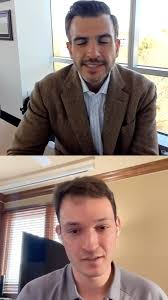
Hello, Henry, and welcome. I obviously am very familiar with you and your career, but for the benefit of our listeners, please give yourself a quick introduction and then we'll dive in.
Sure. Great. Thank you for having me, Laura. My name is Henry Schuck. I'm the founder and CEO of ZoomInfo. I am in my 19th year as CEO of ZoomInfo and founded the business when I was 23 years old in my law school dorm, bootstrapped it for the first $30 million in revenue, took outside funding from two different private equity firms, IPOed the business. Today we're just over $1.2 billion in revenue, continue to grow, and we work with hopefully most of the sales teams that are listening to this podcast. And if not most of the sales teams, we'd love to be working with most of your sales teams.
I honestly, that story just alone is crazy. But I for one am very excited for this conversation because I've followed, watched, been a consumer for my shorter career, which is seven years. But what I really want to do is just go through the whole experience because I just think this is crazy. So going all the way back to 23 years old, where did the initial idea come from? And also, I'm just thinking, there must have been no tech, no nothing. What is that, like 2007, 2006?
2007. Yep. 2007. So, when I was in college, I went to college, my mom gave me $5,000, which was the remnants of a life insurance policy, and she said, 'This is your college fund. Good luck.' That survived me for one year in college. At the end of the first year, I sold my PlayStation and I moved in with some friends. I had enough for the first month of rent. Then I found a job on the job board at the university to be effectively an assistant at a very small software company in Las Vegas. That company was the precursor to ZoomInfo. We grew it over the next 5 years from about $300,000 in revenue when I got there to about $5 million in revenue when I left 5 years later. The $5 million in revenue, the profitability metrics were basically the same. It was $5 million in revenue and $4.7 million in profitability. So there wasn't much of a business around it, but clearly a big demand. I didn't think I could build a career there, so I left and went to law school. My first year of law school, I put $25,000 on my credit card, my co-founder put $25,000 on his credit card, and we started what would eventually become ZoomInfo. When we founded the business, it was called DiscoverOrg. It was called DiscoverOrg between 2007 and 2019. We made an acquisition of a company called ZoomInfo, and it was a much better name than DiscoverOrg, had some more brand equity, so we changed the name in 2019 to ZoomInfo.
Oh my goodness. Okay, so I didn't know any of this. This is really interesting. And then so you're ZoomInfo now. How was your zero to $1 million run? How many people were involved? What did it look like back then? What was your go-to-market strategy in that sense to just get it out there from zero to one? I'm super intrigued.
Yeah, zero to one. Look, we were building, I think one of the key reasons why the business was able to be successful in the early days is that we were a pretty niche provider of data. What we were selling in the first, it took us two years to get to a million in revenue. What we were selling in the first two years was just data on the IT decision makers of mid-market companies. We were collecting data in an incredibly manual process. Not a lot of tech in 2007. We were out calling into mid-market companies, doing some internet research. LinkedIn and data providers were none. Knowing who worked in an IT department at any company was a mystery. The way companies went to market back then was they would hire account executives who would go to networking events and bring their Rolodexes and sell to the same people over and over again. No one really knew who the IT decision makers were at companies. Meanwhile, tech is exploding and people are selling software and hardware and network security, but there was no systematized way to go to market. We were gathering that data. We'd spend about 80% of our day building the product, which was essentially gathering data and putting it into a database that was searchable for our clients, and then 20% of our day building an ideal customer list. We were collecting data on IT decision makers, but we sold to sales and marketing decision makers. We built a really solid list of sales decision makers at companies and a solid list of companies that we would go target. Once we got our product after the first six months to a place where we thought it would be sellable, we took that product, had this very specific list, had examples of our product that we would go out and share, and started doing effectively really personalized email marketing that generated top-of-funnel demand, which we would then take to a demo and try to close the business. That was basically how it worked for the first probably $30 million in revenue. Honestly, it was continue to build a product, make the product better, expand it up and down from mid-market into Fortune-ranked businesses, and then continue to build out the ideal customer profile list and go to market to those folks, set appointments, have an account executive take that appointment to close it.
And the first million was just me and my co-founder selling. Actually, the first $5 million would have been me, my co-founder, and then we had an early sales employee, Andy Brewer, who's still with us, who's VP of sales here at ZoomInfo today, who was doing the sales with us.
I love that he's still there. That's actually crazy. So, when you were on that, let's call it the zero to $30 million run, when did you feel like, 'Oh, this is something'? When did you actually have, because everyone craves product-market fit, everyone goes between net new business and focusing on the customer and upselling, it's always flip-flopping with the market and the industry, but when did you feel like, I don't know if you had a conversation with your co-founder or whatever, but you were like, 'Actually, no, this could be something serious'? At what point was that?
It was probably when we took our first outside investment, which would have been right around $30 million. I never felt like we didn't have product-market fit. I always felt like we had strong product-market fit and I'd be able to generate demand for the business, but probably until we hit $30 million in revenue and took our first outside equity investment was the first time I felt like, 'Oh, this thing has durability.' Before that, it kind of felt like tomorrow this thing could be gone. I could wake up tomorrow and everything that we've built could disappear for any number of reasons. But at that point, we felt like there was something durable that we've built here. There were pieces along the way. We sold Google really early. The logo of Google gave us a lot of confidence. We beat our closest competitor to win that deal. I was so nervous that day. Andy was running that sale. We were in the final bake-off, us against our competitor, doing two demos side by side. I remember during the demo I was like, 'I have to leave the building. I can't be here while you do this because I'll be on pins and needles.' So I just left and came back an hour later. I was like, 'How did it go?' And he was like, 'It went great.' When we closed that logo, I think that was the first indication of like, 'Hey, this is something pretty real,' but not until $30 million in outside funding did I feel like it was durable.
Yeah, and there's a real difference, right? Even with the market right now, it's crazy. I have so many questions I could ask, by the way, because this is just my favorite topic. But in terms of actually scaling aggressively, you've done $30 million and gone all the way up. How did you actually, let me ask this because I want to start with this: How did you then start to remove yourself from the day-to-day and step out? We call it founder syndrome, but it's almost impossible if you built the product, you were there from day one. I would love to understand from your brain how at each step you are removing yourself to be more strategic, more visionary, from being involved to the point that you were in the room with Google at one point selling deals.
Yeah. First of all, I think the hiring of sales reps was dependent on my ability to generate demand that would fill a sales rep's calendar. The way it worked was we would generate a bunch of demand and appointments, those would go to sellers. If I thought I could generate more demand, then I needed more sellers to do it. The first two sellers that we had at ZoomInfo, actually honestly the first five sellers, they would come in, shadow me on how I was selling deals, be on a number of calls for about two weeks, and then they would go and I would start sending them leads coming into the top of the funnel. I would shadow them. In the early days, you couldn't send an email out to a prospect without me seeing it. I had access to everybody's inboxes. I would be like, 'Show me the email you're going to send.' I would edit it with them. I would see, 'Hey, this guy emailed. Why have you not emailed him back? It's been like 15 minutes. When are you going to email this person?' We set a standard for how we would respond to folks, what we would say in those responses. There was a lot of shadowing of our new sales reps and really getting everybody to say the same things, run the exact same motion, run a very similar process. That first group of five and then 10 sales folks were pretty intensely trained on a methodology that we had. They weren't really allowed in their first time to deviate from it. It was like, 'This is how you're going to generate demand. This is how you're going to do a demo. Here's every question that you're going to get asked. Here's how you're going to answer those questions. Here's how you're going to ask for a follow-up after.' Everybody lived and died by that process. The first job I ever had, second job I ever had, was I did door-to-door sales for a newspaper subscription. I would go knock on doors and ask if they would buy a subscription to the Glendale News Press. The thing I remember is before I got that job, the guy who ran the little team of 12 to 15 year olds dropped off a packet of information at my house which explained the job but then had a list of objections and answers to those objections. Part of the rule was do not leave the door of somebody's house until you've gotten six nos. Here's every objection they can give you: 'I've got to talk to my husband or wife,' what do you answer? 'I already have another newspaper subscription,' what do you answer? 'It's too expensive,' what do you answer? 'I don't have any need for a newspaper subscription,' what do you answer? We knew you were to memorize the answers to every one of those objections. If you're standing in front of somebody's doorstep and they give you these objections and you stay there for six nos, you're almost guaranteed to get the sale. I had to memorize all of those objections. At ZoomInfo, that wasn't very different. I had actually built a sales playbook that had all the objections you would get, the flow of the demo, what you're going to show, how you're going to show it, anything that they're going to say, what the follow-up should be after, and how to manage it. Every objection that you could receive from a customer, we had already cataloged and our sales reps were required to memorize and then bring to bear in the market.
It's so funny. There's two things there. One is the door-to-door sales thing because people ask me, 'What would you put as the most pivotal thing to your successful career?' I genuinely always say it was being a cold outbound SDR. If you can do that type of role for at least a year and absolutely nail it, A for the ability to accept the nos as part of the process, but B just to have that resilience for when you move into your account executive role that you self-generate. I've always self-generated my entire career. It's actually crazy how the people that are at that top level of success, when you said door-to-door sales, I was like, 'Oh, classic,' because that's genuinely what I believe. And then on top of that, I've done my whole career of coaching people on those objections. If you put it as part of the process rather than just off-the-cuff handling them on a call, and you know exactly when they're coming, what they're coming, or you even pre-handle them in the discovery, and you treat objections like stakeholder enablement or org mapping or whatever you're doing, and it's actually just within the process, I think that just game-changes the whole sales cycle because then they're prepped. That must have built so much, everyone's on the same page executing at the same level. I presume you slowly then came out and hired people to just repeat and repeat.
Yeah, that was basically the idea. Look, I think, you know, I'm a lawyer and in law school they do teach you persuasive speaking and how to have a persuasive argument. You're taught that when you have a persuasive argument, you should in your mind or write down what the other side's argument is going to be so you really understand it. Often times you might end up believing the other side's argument more than you believe your side's argument, but you have to know it and you have to know what your responses are going to be. A lot of what we do, when you get an objection, that is probably the first time in the sales process where your sales skills, your sales professionalism actually is on display. Can you persuade somebody who has some concern about your product or service that that concern is either unfounded or there's a workaround, or you've heard that concern before but here are customers who've navigated through it and have had an incredible amount of success? Your ability to be persuasive is absolutely on display when somebody's making an objection. That's your opportunity to give them a different narrative. If they say, 'Well, if I have access to this and my competitor has access to this, then what real advantage do I have?' You have a real opportunity to say, 'Do you think you can out-execute your competitor with access to this? Because that just assumes your competitor is going to run the same motion that you are. They're going to call the same people that you are. That's not reality, first of all. And second of all, imagine the disadvantage you're at if that's true. Your competitor has access to all this information and you don't. How do you square that?' We think of it a lot like you have to put a pebble in somebody's shoe and they've got to go walk on it a little bit until they're just like, 'Dang it, I got to get this pebble out of my shoe.' Your job in that process is to put as big of pebbles or as many pebbles as you can into somebody's shoe by persuading them that ZoomInfo's data and insights and intent and workflow is going to drive a better go-to-market motion than what they're running today. If you've done a good enough job of putting those pebbles in their shoe, at some point they're going to have to take their shoe off and get those pebbles out.
Yeah, and it's so interesting because they wouldn't be actually giving you these objections if they were just uninterested, right? All of these are like buying signals, but it's changing your mindset into believing that yes, they're giving you something that you perceive as negative, but actually if you can switch to 'Okay, they're giving you that because they want to, you're going down the deal cycle,' it's just crazy because that's when it changed.
Well, I think there's two things happening when they give you an objection. One is maybe they actually don't believe that this is going to be good for their business, and then again it's your job as a salesperson. You went into this profession for a reason, and that's lights, camera, action. That's your opportunity. And second, they might just be sharing an objection that they believe they're going to get from their boss when they go back and share this internally, and they want to be armed with the answer to share with their boss. It's one of those two things each time.
Yeah, it's so true. It's so interesting, the objection. I love it. I feel like I'm on the dance floor. I feel like it's game time. I'm just like, 'Let's go.' I honestly love it. So switching up in terms of the whole culture element, I find this super interesting. I feel like you can have two products and I hate the word culture because it's overused and it doesn't land as well, but honestly I think it's the ultimate competitive advantage. If you can get people that believe that your business is the vehicle for them to their next part in their career, they're going to be able to get to where they want to get to and you're all kind of on the same boat. But how have you maintained, because obviously from when it was just you, your co-founder, and Andy the VP of sales, just a few of you, and then as you're going through all these stages, what are the key things that you've noticed, done, managed to maintain a level of culture that can retain top talent?
Yeah, I think it's a couple of things. First, we have a set of cultural principles. I actually rewrote them three years ago because, first of all, I assume that when most people hear the words 'cultural principles' who listen to this podcast, they probably roll their eyes and just go, 'It's just some stupid HR gobbledegook.' I felt that way too. Actually, I felt differently when I first wrote our principles. I called it a manifesto. Wrote it. I sent it to our team. 'This is who we are.' 2015, I remember being in an airport and getting so annoyed with feedback from our team about things that I believe to be central to who we are. 'We experiment fast. We make mistakes. We make changes.' Then the sales team would be like, 'Oh, we just did a thing last week and it didn't work and now you're making us do a new thing.' I was like, 'Listen, one of our principles is we're going to try new things. We're going to experiment. We're going to fail. And then we're going to do new things. So don't complain to me about new things. That is how we win.' That was one of our principles. I wrote this thing. Then between 2015 and 2022, every new HR person who came into the door got their hands on this manifesto and they shaved every edge off of it. Instead of it being culturally who we were, which I think is very important when people come into the door, they need to know what this institution stands for. 'Who am I? What are the standards? Am I meeting those standards? Am I representing the culture of our business?' If they don't know what that is, they just float around and there's no honor in the work that you're doing. I rewrote them in 2022. I sat down and was like, 'These things suck. I can't believe we let HR ruin these. I'm going to write five key cultural principles. I'm going to make sure everybody understands them. Everybody knows them. Then I'm going to give them examples of what it looks and sounds like in the business so they're never confused about them.' Today they are: be relentless, be an expert, be entrepreneurs, be innovators, be a team. If you don't know those, and then we give you examples of what they look like and what they sound like. Those are the things that when I'm not there, your manager is not there, they're a whisper in your ear that tells you if I'm not being an entrepreneur, if I'm not being relentless in this deal, if I'm not being an expert in my product and the service that we offer, then I am not who ZoomInfo is. ZoomInfo wins and has won because we've been true to those principles for 19 years, and we're going to continue to win because we've been true to those principles. Are you upholding them or not? Because if you're not upholding them, you're letting everybody around you down and you should feel bad about that.
It's insane, isn't it? Taking off every edge is just, because it is true. You need them as an underlying core principle because then you can execute when people are not there and everything's redundant.
I'm going to give you every time you miss the mark, I'm going to point to a cultural principle that you missed the mark on. 'This is not relentless. This is not innovative. This is not you being an expert.' We can all agree that I told you on day one, this is who you're supposed to be. Whatever this feedback I'm giving you doesn't align to that principle, and it makes everything, actually those conversations much easier.
So you feel, just to confirm, that you've managed to retain top talent and the culture purely because of the principles and being able to show them, articulate them, illustrate them so that when something doesn't go wrong, you can then point to them and be like, 'Where was this? It was absent X, Y, Z.'
I think that's one. I think the second one is there's no leaders of leaders here. That should actually be in our principle, it should be a sixth one. But there's no leaders of leaders. We don't hire people whose main competency is leading other people. That's an important competency, but you need to know how to do the job of the people on your team. No leaders of leaders. Everybody all the way up the chain from the chief technology officer down to a software engineer, from the chief revenue officer down to an SDR, they have done those jobs. They know how to do those jobs. They can go deep into a domain and they can come all the way out and think about strategy for the organization. We do not have people here who just pontificate or theorize about what their function should do. There are people who have been practitioners in those functions and understand them deeply.