This is Signal and Noise, bringing clarity to data, tech, and AI.
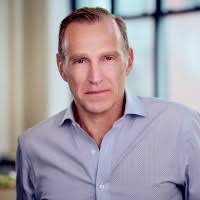
Welcome Mark Zagorski to Signal and Noise. It's great to have you on the podcast.
Thanks for having me, Brett. Good to be here. Hi, Rio.
Good to see you. So, for those that don't know Mark, Mark and I actually go way back to the beginnings of my career in ad tech at a company called Exelate, and sort of traversed the data marketplace, data management platform worlds before being purchased by Nielsen and launching the Nielsen Marketing Cloud. And then Mark did a whole bunch of terrific things. People probably know him as the CEO of DoubleVerify. In your own words, Mark, I'd love to have you share with our audience a little bit about your trajectory in martech, ad tech, and kind of what brought you to your current five-year-plus stint, right, at DoubleVerify.
Yeah. No, I mean, look, I've been swimming around in this internet ad pool since 1997 where I was with Modem Media, one of the first digital ad agencies. Some folks who are long in the tooth may remember that crew. And most recently sold Exelate to Nielsen, then ran a company called Telaria, a small public company which we merged with Rubicon to create Magnite.
Yeah, and formerly Tremor Video, right?
Formerly Tremor Video. Yep.
It was Tremor. We sold off the buy side and just focused on sell side. Turned that to Telaria. Telaria merged with Rubicon, became Magnite, and then I turned that over to Mr. Michael Barrett who's done an amazing job with that business. And then most recently in the last five years, IPOed DoubleVerify, and that's where we are today. So, it's been a really great kind of decade or so of selling companies, merging companies, and now IPOing companies.
That's awesome. Yeah. Well, your reputation definitely precedes you, Mark. We're thrilled to have you on the show and welcome everyone back to Signal and Noise. So, again, this is Rio Longacre here with my co-host Brett House and as you can see, Mark Zagorski is on. We're going to talk into and dig into the state of ad verification. And I guess you could say Mark is really in the, as CEO of DoubleVerify, he's right in the pilot seat, right? Mark, we're thrilled to have you here. And I just think this is such a very important topic, especially looking at ad verification and how this relates to things in the age of AI, right? Anyone who's followed this space knows there's been a lot going on this year. DV posted some really good Q2 results. Stock bumped quite a bit. Looking at the numbers here, it's 21% revenue growth. Guidance went up and the market noticed, shares went way up and I wish I'd bought more stock before that. Trajectory looks good, but in a lot of ways, verification isn't just a victory lap. I mean, there's been a lot of, I think, questions in the industry about where things are going. A few weeks ago, we had a guest on our show, Dr. Augustine Fou, who many know he's been a sharp critic of brand safety tactics, not specifically of DoubleVerify, but just in general. There's been argument from him as well as for many publishers that some blunt keyword blocking can drain revenue from quality news and maybe even sometimes miss real fraud. So we want to address all these concerns, talk about them, and understand what DV is doing, where the changes are being made, and why DV is leading the pack and how it relates to this recent good news. We'll also dig into some of DoubleVerify's recent moves including the Sybids AI acquisition which I thought was really cool and one of the kind of, I think, a harbinger of a lot of the M&A activity we've seen recently, as well as the auction-time optimization and Rockerbox attribution, and what these bets say about tying trust outcomes and the whole age of outcomes thing. The industry never sits still. Lots of change, a lot going on, especially with AI and really a lot to talk about. So, welcome here. Buckle up everyone and let's dive in.
Yeah, you really kept that narrow, Rio. We're really gonna... There's a broad set of topics and I think we got like five minutes and we'll be... Oh, you did say you were available to like 5:00 PM Eastern, right? So, DV, you know, you guys have been, I've heard you say the word referee, right? And you and I having spent some time at Nielsen, you certainly know what that sort of neutral arbiter role is. As you know, and I love that analogy for DV. Where do you draw the line between sort of neutral arbiter and sort of business partner with brand clients, with agency clients, without compromising your independence as an arbiter?
Yeah. I mean look, we have one main constituency who we serve and that is the advertiser. Over 90% of our revenue comes from advertisers. And our goal, and not our goal, our mission is to be an independent partner to them to help them assess the quality and efficacy of their media placements. There are many platforms that do what we do, but they're also selling media. There are many buying and selling platforms that do what we do, but they have skin in the game, which is they have a vested interest in making sure that transaction happens. We don't. We have a vested interest in making sure that the data we provide the advertiser is accurate and helps them make the best decision possible. So, there is no line in which we feel like we have to cross to be independent or good. We're already there. That is our mission. If our advertisers don't trust us that we're doing the right thing, then they won't spend with us and that is key. Our independence, the veracity of the data that we have, and our focus on ensuring that they are getting the right information to make the right decision is essential to who we are as a company and our value prop to anyone who works with us.
Well, results speak for themselves, that's for sure. Looking back to this outstanding results last quarter, street noticed, stock bumped. What do you attribute some of this success to?
So, I mean, look, we started off the year saying this is a year of transition for us and it still is. We are investing in solutions for both CTV and for social platforms because we believe more and more dollars are flowing there and there's less and less transparency. So we know that this year was going to be one in which there was going to be some variability. We started the year off saying that. We benefited from some active behavior that we had, not with new products which are still being developed, but with kind of selling our vision to new customers and upselling those solutions to our current customers as well. We had some really strong strategic wins over the last several quarters. Microsoft, Canva, Charter, all of these companies came to start working with DV and we were able to upsell them some new solutions. So, we benefited from our focus on selling the vision of where we're heading as a business, bringing new customers into the fold, and taking advantage of some of the growth opportunities in upselling products that have arguably been around for a while, but have not had penetration with some of these new customers that we just onboarded. So, we had a good first half of the year. I think we will continue to show strong growth based on the evolution of our solutions into other venues over the next several quarters as well.
I've heard you talk a lot about moving from just brand safety, protection, and verification into more performance outcomes. Really looking at things more holistically, what solutions are you bringing or problems are you think you're solving for CMOs? And you mentioned the brands themselves, that maybe even weren't solvable a few years ago.
Yeah. So, the evolution from us being what is classically known as kind of a protection business to one that also kind of has performance as part of his mission is not as big of a stretch, I think, as some might believe. We started off by saying we're going to help you take garbage out of the system, right? Things, ads that aren't viewable, fraud, ads that show up in content or context that's not aligned with who you are as a brand.
Yeah. When you take garbage out of the system, what's left is going to perform better, right? And I think that's the nature of who we've always been as a business. Now, fast forward to today, we're helping you find media quality, but with the addition of Sybids, we're helping you find that media quality, that impression quality, that impression cheaper. And now with the addition of Rockerbox, we're going to help you prove that that impression or understand whether that impression actually drove a sale. So if you think about it, it's the natural evolution of quality data, finding quality environments, finding that quality environment cheaper, and then proving that that quality environment or that impression actually drove a sale. So it's an expansion of our core, but we've always focused on efficiency, pulling garbage out of the system, and helping what's left work better.
The Sybids, that was an interesting acquisition. I figure we could jump ahead to some of the questions we had about that. Rio was... and those are custom bidding models, right? Based on signals like viewability and attention and IVT and other...
Yeah. I almost felt like that acquisition kicked off the acquisition... like we've seen a lot of them the last, let's say, year or so especially in the AI space. I thought that was like a harbinger, right? Not a lot of people predicted it. I'd love to hear a little bit more about your rationale for making that move.
Yeah, I'll be direct. The initial rationale for that acquisition was more defensive than offensive. And what we saw was we were in the world of pre-bid inventory being very binary. It was either viewable or not viewable. It was either brand safe or not safe. It was either fraud or not fraud. And we had this binary kind of take on how our solutions were implemented. And what we started theorizing is, well, viewability is binary, but when you start looking at the way the IAB defines it and how other advertisers are defining it, there is actually a scale of viewability. And what the IAB has decided is kind of arbitrary. Anyone in the media knows it's kind of like there's this line of, hey, the IAB says this is viewable or not viewable. And I think some of our customers started feeling the same way, not around things like fraud or brand safety, but things like suitability and viewability where there's a spectrum of, hey, you know what? If I could get this ad significantly cheaper and it actually has ROI against it, maybe I'm willing to not look at viewability as binary. Maybe an ad that didn't meet the binary definition of viewability actually still displayed long enough for someone to click on it so that it actually did do something.
And if I can get that super cheap, then why wouldn't I buy it? So, we started thinking like, is this the way the world is going to go? Is all buying just going to be more on a spectrum, more on versus binary? And that was the initial thesis behind Sybids, which is like, let's protect what we have.
Yeah. And it also moves you a little bit into the activation space, and you have this auction-time optimization which I think it reminds me a little bit, Rio, of our conversation with L. Pascalis who was, as you can imagine, Mark, a fascinating conversation. And he talked about the criticality of sort of signal, whether you're on the publisher side or the brand side, like harnessing and capturing the signal. Forget about just first-party data, we're talking about third-party data signal, and it is critical for success, for relevance, for content optimization, ad optimization, auction, real-time optimization. Is that really the goal, is to increase the amount of signal that you're capturing?
I think it's to not increase the amount of signal, but to increase the usability of our signals in more applications. And I mentioned viewability as one, but for the vast majority of customers of Sybids, they're using their own signals. So whether it's someone like Diageo who has their own KPIs, the idea behind Sybids is it's a custom KPI engine and it builds an algo based on whatever that advertiser wants to focus on. It could be a DV metric like attention, but it could be entirely their own metric. It could be sales, it could be clicks, it could be anything. It could be viewability, but the idea there is...
So that algorithm allows you to suck in data from the client, whether it's their own first-party data or part of their data ecosystem which could be third-party data partners through a clean room type thing. So you can bring all that in there and then customize to the variables that are driving the most impact.
Is that being combined as well with DV's signals? I mean that sounds interesting.
Yeah. And if you kind of play this out, think about Rockerbox now. Now we have Rockerbox which is pulling in attribution signals and all kinds of other transactional data that can also be optimized against. So you're right, there's accumulation of more signal that we're getting through Rockerbox and then there's the application of that signal in more places through Sybids.