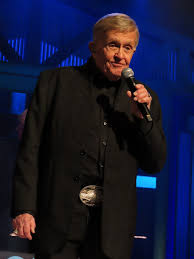
Now, right in the middle of all of this sits Bayer, a 160-year-old life sciences giant spanning crop science, pharmaceutical, and consumer health. A company that invented aspirin, dominates the seed and crop protection markets, and is currently in the middle of one of the most ambitious corporate restructurings anywhere in the world. Joining us shortly to discuss how Bayer is navigating this volatility, where the turnaround stands and what India means to the company's next chapter is Bill Anderson, CEO at Bayer AG. Welcome to India. You know, I was hearing all about your trip from your team. You've been in Mumbai, you've been in Delhi, you're in Bangalore and I believe you're going back to Jaipur. What's been the highlight so far?
Oh, well thanks Rachel. That's a really hard question because everywhere I've been I've seen so many amazing things. I think probably the highlight so far is when we were in Mumbai, we went to some farms outside of the city where we have our Better Life Farming centers.
The world is getting harder to navigate. A conflict in West Asia that's keeping energy markets on the edge. A tariff war that is redrawing global trade and growing pressure on both food systems and healthcare innovation. Now, right in the middle of all of this sits Bayer, a 160-year-old life sciences giant spanning crop science, pharmaceutical, and consumer health. A company that invented aspirin, dominates the seed and crop protection markets and is currently in the middle of one of the most ambitious corporate restructurings anywhere in the world. Joining us shortly to discuss how Bayer is navigating this volatility, where the turnaround stands and what India means to the company's next chapter is Bill Anderson, CEO at Bayer AG. Welcome to India. You know, I was hearing all about your trip from your team. You've been in Mumbai, you've been in Delhi, you're in Bangalore and I believe you're going back to Jaipur. What's been the highlight so far?
Oh well, thanks Rachel. That's a really hard question because everywhere I've been I've seen so many amazing things. I think probably the highlight so far is when we were in Mumbai, we went to some farms outside of the city where we have our Better Life Farming centers and we've got like 1,500 of these now in India. These are farm stores that offer farmers not just choices of seeds and crop protection products, but also things like access to credit. Now we have some that are equipped with drones for pesticide applications so the farmers don't have to go in the fields and be exposed to it. And so it was amazing because I met so many of these young entrepreneurs that are running these centers. And I met in fact I met three young ladies who were all in their 20s who are running these stores now. And they said when they started the effort, people in their villages looked at them like, 'What are you doing? What do you know about how to do this?' And now they're very successful and they're really kind of pillars of their communities.
Let me shift focus to where the world's attention is right now and that is very much unfortunately so in the Gulf region, with what's going on there and this geopolitical uncertainty that has become the nature of the game these days. How is your operational environment at Bayer getting impacted? How is it reshaping how you look at work today?
Yeah. Well, first let me say obviously we're concerned about the events there and we certainly pray for peace and hope for peace. We've started also making sure that we have about 500 people in that region making sure everyone's looked after, everyone's doing fine. And then they're focused on making sure that farmers, that patients have access to the essential products that we provide. You know, we have a mission as a company at Bayer: Health for all, Hunger for none. And we're in the business of providing essential products to make food and medicines and so that's something that it doesn't have sides, it doesn't have politics, it doesn't know borders in that sense. And so it's times like this where the about 88,000 people at Bayer, 5,000 of them in India are working full-time to make sure that we can keep those essential products flowing.
The other sort of key global event that the world's been focused on for the last couple of years has been tariffs. At Bayer for instance, how are you getting impacted by where these conversations are growing, the best and worst case scenario that you're building for your business?
Yeah, it's a mixed picture for us. So on the one hand we are producing in the major countries we operate in, whether that's India, US, China, EU, we're producing. And for example, seeds. We're the world's largest provider of seeds. And seeds, they actually kind of make sense. They need to be produced in the environment they're going to be grown. So seeds for Europe are grown in Europe. Seeds for America are grown in America. Seeds for India are produced in India. So those are not much affected by tariffs. Then we have other products where it's much more efficient for us to have a single source for the world and there we count on open borders and free trade and so we're having to adapt. We're constantly making the case with governments around the world: Let's keep the trade barriers low. This has been a big benefit to the economies of the world and people and we have to work to defend that.
Take for instance, Bayer is perhaps the only if not the primary manufacturer for things like glyphosate in a market like the US, one of the largest markets in the world. Does this trade barrier sort of give you an advantage over some of your peers would you say?
Well, I think there is a certain degree to which people are starting to look, governments are looking at, hey, how dependent are we on other sources, foreign sources for essential products. And that probably makes sense. You know, major countries, India included, ought to be thinking about how do we make sure that we've got a level of economic independence. And so, it's true that we're the only producer of glyphosate in the United States and it's a very important product and that's gotten attention recently. But I think we are going to see more of this, of companies making sourcing decisions to make sure that major countries have that kind of independence.
India is both a manufacturing hub for you. It is also a huge domestic market for you. So in your vision of the larger scheme of things, how are you positioning India in Bayer's global supply chain especially as this world order, as this trade world order is getting reorganized?
Yeah. Well, India, part of the reason I'm here and spending a whole week is because this is not an average country. It's a massive country with huge diversity in terms of peoples, in terms of economies and it's a very dynamic economy. The growth we've seen in recent years has been tremendous. I mean we're here today in Bangalore because we're opening an innovation hub and this innovation hub, it's not back office. And it's not just for India. Although we are supporting our rapidly expanding Indian operations from this hub. The work we're doing here is supporting the 88,000 people we have around the world. And I've seen some amazing results here. Whether it's we're one of the largest providers of imaging solutions. So we've got imaging R&D here in this building. We've got people working on novel applications for pharmaceutical R&D, for crop science genetics all here in Bangalore. So I think we're just going to see a lot more of that in the years ahead.
Interestingly because you have this data science and analytics center that you have in Hyderabad. I read you have a GCC in Mumbai, a global business center, a digital hub, the R&D which you talked about here in Bangalore. So you're well beyond the back office as far as the India market is concerned. But are you prepared to make India a true genuine decision maker in the overall scheme of things for Bayer rather than just be this GCC?
Yeah. Well, I'll explain in a slightly roundabout way my answer to that question. So, we've been implementing at Bayer a really novel approach to management for about the last two and a half years. We call it dynamic shared ownership. And we've taken out two-thirds of the managers across the company, by the way. They're mostly still working for the company, but they're not in management jobs. So, the whole principle here is you've got to put decision-making power with the people doing the work. Large companies, they have 10 or 12 layers of management and they think empowerment means that the CEO doesn't make all the decisions. That maybe the CEO delegates down one level or two levels. That's empowerment. The people at the bottom, they don't even notice that. Empowerment means the person doing the work makes the decisions. And so we're taking radical steps to achieve that. So we've got now people for example who used to be managing say six people on average. The average manager at Bayer was managing six people. That number today is more like 16 and it's going up. And what that means is for example, I talked to a person a couple weeks ago who's managing 107 people. So 107 people, one layer, and then this manager. If you're managing 107 people, you're actually not managing them. You're not controlling them. You are there to make sure that they've got the mechanisms they need to coordinate with each other to make decisions about which products should we prioritize, which efforts should we resource. So when you do this you get radical speed. I mean it's amazing and in fact I was just talking to a gentleman at lunch here who's responsible in setting up a new field test facility for Bayer in the outskirts of Bangalore. So this is for crop science and he said they want to set up a new testing station that's sort of like some land, equipment, buildings, things normally that would take two to three years. They decided we're going to do that in three 90-day cycles. And they did it. They started in February last year and they opened it in September. So it actually took eight months. And this is what we're doing across Bayer. So when you ask me, are we willing to put decision-making in India? Yes, it's happening. It's not like I'm thinking I think I'll put some decision-making in India. We've created a model that's putting the decision making where the resources are and we're significantly expanding our talent in India and we're putting the decision-making with it.
How critical the market is for you as we speak. Is it in your top five markets, what's the pecking order, what's your outlook on the kind of growth potential you see here? You've been here for 130 years, you have 13,000 employees, crop science is the largest business but what next, what's the growth engine?
Yeah. So we have three divisions. Consumer health, crop science and pharmaceuticals. Maybe I could just mention briefly. So in consumer health, we know that for example we have the leading nutrition supplement brand Supradyn and we have the leading headache brand Saridon. And we know that these are household names. You know these products. However, not everybody has access to these products and in the past, we would have said, 'Oh, people that have high incomes, we want to make sure they have access to our products.' No, we want everyone to have access. By the way, even though these are the best known brands, they're also some of the lowest priced products. And we are going to do what it takes to get these products available to everyone in India. In crop science I gave the example of these Better Life Farming centers. What we're doing is we're working with local entrepreneurs in now over a thousand villages. We're going to have tens or hundreds of thousands of villages in the next few years. We're covering 30 million smallholder farmers in India today. Again, we're going past the idea of just selling seeds or selling crop protection. We want to give them a full solution. We've trained 10,000 they're called drone didis. These are mostly young women who've been trained as drone pilots and they can cover a smallholder farm, typical here would be about a hectare. They can cover a hectare in 30 minutes with a drone. That would take one to two days for a person with a manual sprayer. And but these drones are affordable. And think about it this way. Not every farmer is going to have a drone. They don't need it. If they've got the drone pilot, they can access it. They can go to their Better Life Farming Center and say, 'Hey, I've got an outbreak of a certain insect. I need someone to come.' And they can be there that afternoon and do the treatment in half an hour and be done. So this is how we move people from subsistence to thriving.
Well, let me come back to the question then which is all great to hear but you've been present pretty much all over the world. Where in the pecking order does India stand and where do you see the potential over say next decade or so?