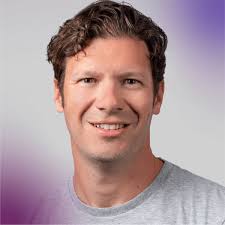
What does product-led growth actually look like when you're operating at real scale? Not as just another buzzword, but as a very real business model. Well, today it's time for me to sit down once again with Todd Olson, CEO and co-founder of Pendo. And together we're going to talk about what happens when product becomes the primary growth engine. Because here in 2026, Pendo now tracks trillions of user events across two and a half thousand customers. And Todd has had a front row seat at how SaaS has evolved through zero interest rate eras to the AI wave that we find ourselves now and what some are calling the great reckoning for the software industry. But we will talk today about how to turn overwhelming volumes of product data into meaningful insight, how AI is accelerating experimentation inside product teams, and why measurement and continuous improvement still matter in a world obsessed with automation. And he also argues that we will start to crave originality and creativity. So much to talk about today. So, will originality become the most valuable asset in an AI-saturated world? Are you getting tired of seeing too much AI slop and craving more originality? Maybe you are. And if you care about scaling software responsibly, building durable companies, and staying relevant through multiple technology cycles, well, this conversation will cover it all today. We got a lot to get through. So, join me in welcoming Todd right back onto the podcast now. So, a massive warm welcome back to the show, Todd. We first spoke way back in 2018. This is your fourth appearance, but for anyone that has missed our previous conversations, can you tell everyone listening a little about who you are and what you do?
Yeah, thanks for having me, Neil. It's great to be here. So, I am Todd Olson. I am the CEO and co-founder of Pendo. Pendo is a 12-year-old software company, and our focus is actually really simple. It's to help make sure that the software that gets created actually delivers on user needs. And in a world today where people are now able to generate software via a very simple prompt, Pendo measures, optimizes, and helps people fully take advantage and get value of all that software.
And going back to your origin story, I mean you founded Pendo back in 2013 with tech royalty. You got veterans from Red Hat, Cisco, and Google back in the day. So when you strip away the buzzwords, what does product-led growth actually look like inside a 750-person company serving two and a half thousand customers?
Yeah. Well, the good news is we're seeing product-led growth all around us all the time right now. I mean this is like one of the... what's product-led growth is when users and customers are able to interact with products in a more self-service manner and they get sort of so addicted to it that it creates a viral loop where people start using it more and then ultimately start paying for it. So it's leveraging the product as sort of the apex of the growth engine and relying far less on human beings. So that's kind of like ultimately at a high level we think about is how does the product deliver the experience and again rely a lot less on human beings.
And for people that don't know Pendo, you track trillions of user events to guide product decisions. So, how do you turn that scale of data into action without overwhelming teams or drifting into analysis paralysis because you can have too much of a good thing sometimes? I would imagine AI has made that world a little bit easier. But tell me more about that.
Yeah. No, I think that's a great question and yes, we do collect crazy amounts of data, but then it's all about how do we take that data and then start organizing it in a way that sort of reflects the state of the application and put it in terms and words that are actually very meaningful to the end users. So you can organize that data into things like what are my core pages or areas of my product? What are my core features that people are using or trying to adopt? What are key journeys? People going from point A to point B to point C and then where's there drop off amongst that. When you start surfacing things like there's drop off here or we have really good adoption here but really poor adoption there. That's when you start to glean insights. We've started to do a much better job of sort of surfacing what I would call outliers, big variances or changes. That's often where the insights lie. It's like okay I did some work, my team did some work, we published something out and the product either got dramatically better or dramatically worse, that's actionable, right? So like the question is, I think fundamentally your question is the right one, is how do we go from just raw data to actual insights. And yeah, you also mentioned that AI is making this easier. So we are now delivering capabilities where you can just ask AI what should I be looking at? And it has all of your data accessible via tooling and it could start to highlight things. Hey, we think you should look at that or hey, we think you should look at this. So, yeah, I would almost think of it as an AI data analyst just now it's included out of the box within Pendo. And I think it's still very early days on that technology. We're going to get smarter and better and better over time. I imagine a day where people just simply wake up and log into their Slack or other means and they see oh, Pendo's pushed me three things to look at today I should go take a look at it and you click into it and learn a little bit more. That's kind of a lot of the work that we're working on now is how do we just push to you the right things that you care about. And I think that it's really important distinction because whenever we think about an insight it has to one be contextual to the business so what's the business going through, it means contextual to the team what's my team going through and then what do I care about in that team and then we think of all three vectors when we think about insights.
And the world has changed so much in the last what six years. We went from the global pandemic working from home at scale, hybrid working, then AI came around and you wrote a book called The Product-Led Organization. I think it was something like around 2020, correct me if I'm wrong, which was around about that pandemic time. But looking back now, what did you get right about the movement and where do you think the industry has misunderstood or again maybe even oversimplified the concept?
Yeah, no, well first of all I think that the concept is as relevant today in 2026 as it was back in 2020 when I first published it. I think some of the examples may be a little bit outdated because there's been a lot of change in the last few years, but I think the concepts are dead on. I think this concept of the product-led organization where the product itself offloads a lot of work from the business and particularly humans is what we're seeing in the market today. We're seeing it almost in extreme forms and that's everything from I mean you're seeing these companies have incredible growth at least on the top line and the revenue but they're not growing their headcount internally at the same scale. So okay so who's doing the work? Well the product's doing the work. That's where most of these AI companies where you're seeing like ultra efficiency, not adding as much headcount but still growing at really remarkable speeds. These are actually step function better product-led organizations than what the prior era had created. So I think that is what AI is unlocking. As AI is making it easier for every company to be a product-led organization. So now you're inspiring me. I need to update my book because there's no question like I think it's again as relevant, almost every chapter is relevant. The big difference is you can do it at just grander scale faster. You know I have a whole chapter around running experiments like wow you can experiment really quickly now. So experimentation in the book was a great concept just the tools and techniques and how you do it, it's like it is like nirvana for people who read that book. So I feel really really good about that content. And look I also think that analytics and metrics and data is just as important and I think and that to me is the message that doesn't get told enough today. It's yes, AI is amazing. Yes, there's a lot of automation, but you still need to iterate on whatever it is you're building or delivering, like nothing's going to be right the first time you deliver it and you're going to have some issues. And if you're not measuring it, you're not understanding what those issues are, you're not going to make it better. And so like well I think you see this mix of AI is changing everything headlines and then you also see some of the counter headlines around you know certain projects failed this percentage of the time and like you see sort of the doomsayers as well. I think if you just release a bunch of technology and you don't measure it, you don't focus on a culture of continuous improvement, it's not going to be great, right? Yeah. And I think it's a message we need to continue telling because AI doesn't isn't like a magical unlock to make things great. You still need to like do the work and I think the book talks about that, but I think that's really important now.
And elsewhere there's also a growing talk about the reckoning in what many call the software industry complex. So from your vantage point as a three-time founder now, what are you seeing changing in SaaS economics and what needs to be rebuilt do you think?
Yeah, I know this is a really interesting thing and I think I have a unique vantage point. I started my career at age 14. So that makes me probably more than 30 years actually developing software. And fun fact at age 14 I was working in an IT department that was building custom apps. It would have been the natural areas where you have been using AI. And then I've since then worked at software companies which provide professional apps that then those companies buy and you've seen throughout that 30-year period this sort of custom versus packaged flip-flop a lot and clearly we're in a custom era right now where everyone's like whoa I can like type in a lovable and get a prototype out why would I need to spend all this money on Workday. Well, I will say there's a reason why Workday and companies like that exist. Like while it's really cool what you can build quickly like vibe coding your payroll has lots of implications if you get it wrong. There's a lot of compliance issues which like eventually the tax of just keeping up with the software will get overwhelming. So I do think that we're going to have software applications, we're going to be buying software applications. Does that mean all software applications survive this sort of reckoning? No. No. Some things are like pretty basic stuff. They don't solve super hard problems. I don't think those applications are going to survive, right? So I think we got to a point where we had this ZERP which is zero interest rate period where there's so much funding is that a lot of software companies got created during that time period that likely shouldn't exist. So you will see a reckoning of some of those businesses but the great businesses, the ones that solve really hard problems, I think they're going to be fine. But they're also going to have to change the way they're working. Like if you're being... everyone's going to have newer competitors which are more modern feeling, they're newer and they're going to be coming after some of the incumbents because the incumbents have validated that an addressable market exists in certain problem domains. So I think the other thing is we're seeing new competitors come on the market but this is go back we saw SaaS competitors take on every on-premise competitor and guess what some on-premise competitors were, or incumbents were able to make the transition and retain their customer base. Some weren't and got disrupted. Really that simple.
So, I mean, let's use an example like SEO obviously got disrupted by Salesforce. They didn't quite make the change as quickly as they wanted, but you know, Atlassian was an on-premise software company for years and now it's fully cloud, right? And now I think I would not bet against Atlassian becoming fully agentic. You know, they've already made the transition once. So, like we have lots of precedents for understanding what's going to happen. I think great companies are going to find a way to transform.
100% with you. And as I said at the beginning, we've spoke many times over what, eight years now. And Pendo is headquartered in Raleigh, North Carolina. And I'm curious, one of the things I've been meaning to ask you is how has building outside that traditional coastal tech hub? Has that shaped your talent strategy, your culture, and long-term ambition? Anything that you'd like to report on there, especially for the startup founders listening because you're doing things a little bit differently and excelling as a result.
100% with you. And as I said at the beginning, we've spoke many times over what, eight years now. And Pendo is headquartered in Raleigh, North Carolina. And I'm curious, one of the things I've been meaning to ask you is how has building outside that traditional coastal tech hub? Has that shaped your talent strategy, your culture, and long-term ambition? Anything that you'd like to report on there, especially for the startup founders listening because you're doing things a little bit differently and excelling as a result.