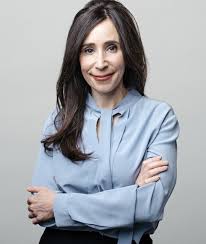
Good afternoon. I'm Jenny Chapman, dean of the Haas School of Business. Welcome to today's dean speaker series. We have an incredibly wonderful guest here, Meredith Kopit Levien. Meredith is president and executive officer of the New York Times Company. She leads the company's global operations and directs its business strategy.
So before becoming CEO in September 2020, Meredith served as the chief operating officer overseeing all major commercial operations including subscriptions, advertising, events, and the cross-functional digital product development organization. Prior to being appointed COO in 2017, she was the executive vice president and chief revenue officer, a position she held since 2015. So, a long and deep history with the Times. In that role, she was responsible for both the subscription and advertising businesses.
Meredith joined the Times Company in 2013 as head of advertising. Before joining the Times, she spent five years at Forbes, where she held various roles, including publisher and chief revenue officer, and six years at one of my favorite magazines, The Atlantic. She began her career at the Advisory Board Company. Meredith is a Henry Crown Fellow at the Aspen Institute. She serves on the board of directors of the New York Times Company and Instacart. She received a bachelor's of arts degree from the University of Virginia in 1993 and she divides her time between New York and Washington DC. Meredith, we are so incredibly grateful to welcome you here to Haas. Thank you.
I'm so happy to be here. I told everybody I'm on a big recruiting trip to get more smart, committed, business-minded people to work in journalism.
Yeah, they're right here. They're right here. Good. Good. So, let me give you some quick directions for our Q&A part. So, you all notice you have a note card on your seat. If you have questions while the conversation is going on, please jot them down, pass them to the side to Sarah and Carrie. We'll take a look over them. And we have a special guest here today. Dean Baquet from the journalism school here on campus, my colleague. Yay.
Dean Baquet is from this world of journalism and so I invited him over to facilitate the questions which will make it even more exciting. So I'm really excited you're here. Thank you. I'm now going to turn it over to our MBA team, Venata Gadi and Ima Essen who are going to have this wonderful conversation. Thank you.
Thank you Dean Meredith. It's truly an honor to have you with us today. Hello everyone. My name is Venata. I'm an executive MBA student at Haas. On behalf of Dean's team and everyone here, thank you so much for spending the afternoon with us and we're excited to learn from your perspective and leading an institution where the product is not just content but trust and how that translates into economic value. Thank you so much.
It's a privilege to be here. And hi everyone, my name is Ima. I'm a second-year full-time MBA student. I'm really happy to facilitate this conversation and learn from probably one of the best to help us navigate transitions in media.
I'm thrilled to be here. Can I do my own housekeeping detail? We are in the midst of in the presence of greatness. My friend and colleague who I admire so much is here. Katie Kingsberry. I just want to point her out. Katie is the completely baller. I have other amazing friends and colleagues here too. But Katie is the baller and very successful and now pretty tenured opinion editor of the New York Times. And I think she's speaking at the journalism school tonight. Or somewhere. She is speaking somewhere later. Anyway, she's here, too. I'm going to give the hard questions to you, Katie.
Well, welcome to everyone, Meredith. Thank you for being here. We'll just jump right in.
You've worked in media for most of your career. What's kept you committed to the work?
Oh, that's a fun place to start. Let me say I always react a little bit to the word media. And I want to say media is a big wide world word. It means a lot of things. I have worked for more than 25 years supporting the business of something specific within media which is high-quality original independent journalism which is a professional practice. I know Katie will back me up in this professional practice for helping people seek the truth and understand the world. So I just I want to make that distinction upfront. What's kept me there? A few things. One, you know, I've been a lifelong lover of serious journalism. I was telling somebody this morning, I remember being 9 years old when the Iran hostage crisis happened. And I was like obsessed with reading the news, watching the news, talking about it, and wondering why all the other nine-year-olds were not doing the same. And so maybe a little piece of advice in here, pick a field where the homework is something you would do if they didn't pay you. And like my homework for the New York Times is I read, watch and listen to an enormous amount of journalism every day. So that's the first thing.
The second thing reason I've stayed so long doing this kind of work is I also as a person who from a very young age was kind of worried about the country and the world and cared a lot about its fate and future. And we have a thing we say a lot at the New York Times, which is journalism can't solve the country and the world's problems, but the country and the world's problems cannot be solved without high-quality serious independent journalism. And that's because journalism and the thing we do at the core, reporting, is what gives people a shared fact base to make good decisions for themselves and with one another. So, and I'll just say there a little bit of advice. When you have a hard day at work and you go home and you think I am doing this in service to some higher purpose, like all the easier that hard day goes down better.
And the last thing I'll say is what's kept me there is I've spent half of my 25 years now, more than that, at the New York Times. So I get to do this work at an institution whose work reaches 50 to 100 million people just on our own sites and apps every single week and many more beyond that. And I get to see the work have impact and I also this is a very like MBA like a business school message. I get to do that work at a I run a public company but it is a family-controlled public company and that governance structure has allowed the Times which exists in a very tough market to make really good hard strategic calls and give them a long time and resources to play out and to be proven right. And there's not much in business that I see that's great that doesn't actually take a long time and a lot of commitment and a lot of resources. So I get to do that at a company that's set up to enable that.
Thank you for sharing. That's awesome. And building on that, I would like to talk about your transition point as a leader. You've been at Times since 2013 and became the CEO in 2020. And that was also the time when Times is seeing this transformation from print institution to becoming a digital subscriber business model. Can you share what was the hardest internal belief that you have to change and not just inside the market but inside the building and then how and could you share how actually you made the shift real?
Yeah. In the market, I'll just say quality journalism was something worth paying for by end users, by other companies. We're still fighting that fight. I think users get it now, but the ecosystem needs to get it too. If somebody isn't paying for it, including the, you know, companies that dominate and control the flow of information. If it's not paid for, it's not going to happen. So that's the first thing.
Inside the building, maybe a little more kind of fun and interesting to talk about. I've learned this big lesson, which is that every business question at the New York Times, every question about how much can we grow, how fast can we grow, how big is the growth opportunity really comes back to how much audience, how much engaged audience can we grow for the work. Every business question is about that. And one of the big beliefs we had to change early on so early in my tenure there was when we were mostly a newspaper, the act of doing the journalism, the things that people like Katie did and the act of finding an audience for that journalism or running a business around that journalism were like such distinct things and everything was set up to keep them very far apart from one another. In a digital world, those are much more interconnected activities.
And so just like convincing people of that, you know, I think a dozen years ago now, we began to establish a what is now really formidable audience development operation in news. Part of getting people comfortable with that was convincing, you know, the world's preeminent journalism team that it's not going to screw up the work. It's not, you know, we're not gonna sort of alter the way we would cover something just to get that audience. We're not going to chase a particular audience because that's in vogue or we feel like we don't have enough of those people. We're not going to do clickbait. And I think the way you get belief for that is you prove it. And I think, you know, we've spent a dozen years now proving that we can do hardcore work to build an audience without compromising like an inch of the quality and the independence of the journalism. In fact, now I think it's well understood amongst the journalists at the New York Times that the more audience we have, the more impact they have for their work, the better the business does, the more we can invest in more journalism.
The last thing I'll say, and this I joke that I sort of ran for CEO on a platform of product-driven growth. This is the one that I am probably most responsible for. We sort of figured out early on like 11 or 12 years ago that we were competing with the most powerful companies, information companies the world had ever known for engagement. And those companies had that engagement at like billion people plus scale. And for us to get a lot of engagement, we had to be good at the things they were good at. And one of the things I realized when I was the COO of the company was we were trying to get that engagement, but we had this like old organization that was sort of largely tilted to commercial activities, sales, marketing, and pretty siloed and pretty functionally based. And so we literally rebuilt the whole business side of the company to be much more about product-driven growth. And we actually hired a guy from Uber to come sort of teach us how to do objective-based cross-functional work. It was amazing. And now at the time when we started this, we probably had a couple hundred engineers. We now have a thousand people at the New York Times doing digital product development work. It's the sort of second biggest function. Most people are doing journalism. That's the next biggest function. So learning how to do that, how to make sure the way you find and experience the journalism happens at a level of quality that the journalism happens at that we had to get a lot of belief for that.
That's very insightful. Thank you so much.
I mean, can I say one more thing? I'm going to crib the publisher of the New York Times here and use his two favorite words about what we've had to change. Value and values. They both really matter at the Times. We understood early, you know, like for 175 years, we've understood the thing that makes us most valuable is the quality, the originality, the independence of the journalism. So in good times and bad times at the New York Times, we have kept investing in the journalism and we have done that. We've created that value even when other news organizations were doing less and less of that.
And then on values, I just want to say you know we are living at a time where so much of media even to some degree journalism feels to people swayed you know by anger from the left or the right or the administration or corporate interest or just is built to feed an algorithm so that somebody can grow an audience. And I want to say the Times at its core, the most important value we have and hold on to is the independence of our journalism. We pursue the truth wherever it may lead, even when that is to places people don't like. And we do that in service to nobody's interest but the public. Come what may. Whatever is going to be said about us or done, the New York Times journalism is not going to be cowed. And I think sticking to that understanding of value and being unrelenting in our commitment to those values has really helped the place change and built belief amongst the people who work there.
That's awesome. Well, that's really helpful to understand because that shift really translated into very visible results with the subscriber base growing to about 12.8 million since you've joined and also revenue the digital revenue growing closer from 800 million to probably two billion. So when you look at that growth, what actually surprised you most about what it took to make that happen?
Yeah. I'm not going to say things that are terribly surprising. I actually think the thing I just said like unrelenting, uncompromising commitment to the journalism has a value. That value is to the public. We're going to keep investing in it and we will not be cowed or pushed by anyone no matter how pissed off people get and whoever they are we are going to pursue that truth wherever it leads. So like doing the journalism without fear and favor that is the biggest reason.
I'll name a couple other things though that are worth saying to a room full of people getting an MBA. Really clear strategy. One of the things that's been most fun for me at the New York Times being there 13 years is to work on a strategy, help shape and then deliver on a strategy that I think our investors understand, the people who work for us understand. I think even the public understands and I say to other people about strategy like if you can't describe it in the simplest terms then it's not a good strategy. So what is New York Times strategy? We aim to be essential to curious people everywhere who want to understand the world and make the most of their lives. That's it. And how are we going to do that? Three ways. One, we are going to provide the world's best news coverage, be the world's best news destination. Two, we're going to have leading coverage and products in really big lifestyle spaces where people spend a lot of time. And three, we're going to put those things together in an interconnected experience. So whatever is going on in the world or your world, we're going to be relevant to you every single day. That is the company's strategy.
And that strategy, which we've been articulating now for, let's say, four or five years, is built on a set of really big kind of hard calls that we made more than a decade ago. And those like big hard calls are still playing out. The obvious one I think everybody knows as we said we were a subscription business first that has paid dividends for years multi-revenue stream model but first we do things for subscribers. The other one we settled on what I call these 4Ds like 10 years ago literally and they are still we are still obsessed with them. We're still talking about them you know every week in our executive committee meetings. People have to come to us as a destination. They can't just find us on the internet but ultimately the best experience on the New York Times has to be with us because by the way that is where we actually have a business too and you get the best experience of the journalism there. Two they have to have a direct relationship with us. Three we are endeavoring not to be something you do once every so often. We want to be a daily habit. We want to be a daily habit at scale. And four, we need some driveby audience, but we've got to be deliberate about when those people drive by, we actually turn them into people coming to the destination who have a direct relationship, who use us to have a daily habit. And that sort of strategic clarity has, I think, gotten us very far.
I'll name one other thing that I don't think gets talked about enough, which is we've been pretty good at execution. I think execution is like the great undertold story of successful business and there's one key to that which is I think more there's lots of things but one thing more than anything we have a team of executives leaders and even if you go into the ranks on down who've I knew I was going to do that I talk with my hands and I was like at what point am I going to throw that by accident. That team of executives has been developed. They've grown up at the Times. We have invested tons of time and energy into how they work together. And that's what execution is all about. It's like can you get a group of people doing very disparate things kind of working in harmony to the same objectives? And I think we get better and better at that every year. Doesn't mean we don't bring in new people. Our head of advertising came in from the outside. She's amazing. We spent a lot of time saying to her, 'This is how our culture works, right?' So, so lots of time and effort, lots of intention around getting talent to stay and work together really well.
Thank you for that. That's really awesome. The 4Ds and at Berkeley, we have the four defining leadership principles that are actually inscribed on the walls as well as our hearts, you know. Yeah. You talked about creating the value and how it comes from uncompromising product and not just treating journalism as a loss leader. That's great and I would love to go deeper a bit into what actually drives that value for the users. You know nowadays there is a lot more content and what actually creates a real habit you know than just someone just scrolling past and how much of that is driven by the content itself versus a strategy product strategy like bundling notifications or even daily rituals?
These are things we think about all the time. Let me push you asked about content. Let me say two things about the sort of framing the question. One is content is ubiquitous. It's everywhere. We can all get it 24/7. Quality information obtained through a professional process to make sure that information is uncompromised by anything other than like truth or value or joy or what it's meant to do. That is really rare. That is probably more rare and more valuable than it's ever been. So that's the first thing I want to say. And on a list of like 10 things to get people to have a habit, I think one through seven or eight is the information worthy of coming to and coming back to every single day or really often. So that's the first thing to say.
And the Times has a number of properties that people consume millions scale every day or most days a week. We have the internet's largest morning newsletter. It's called the Morning. Millions of people listen to the Daily every day. Millions of people play our biggest games. Raise your hand if you play. Exactly. And you know, millions of people go to our app or our homepage every day. And what do those things have in common? Really high quality. These are brands. And what is a brand? You know, the Times parent brand or even like a franchise brand like the Morning or the Daily or Wordle. It is the promise that the thing you're going to get the next day is just as good. It's going to be different, but it's going to be just as good. And I think that plays a really big role in habit. And I have to imagine some of you are going to go work in digital product. I think too like you know nine and 10 on that list are is the experience by which you take it in is it elegant is it efficient does it honor your time like Wordle totally honors your time sometimes Connections doesn't but that's a different story but so I think those are the keys.
And then I'll just say you're asking like is it the content is it the stuff that goes in it we try really hard to think about those things holistically. And I'll say one other thing. You know, our strategy at the Times, which a lot of people will call the bundle strategy, is about can we get you to come for one thing and then do something else. And that plays a really big role in habit. And we know it used to be before we had these other products, it was like if we could get you to read one more topic in news, you were more likely to stay and come back. Now, if we can get you to use more than one product, you're much more likely to stay paid, do all those virtuous things, and we just launched a family plan. If we can get you to do it with the people you love, you're that much more likely to have a habit.
Yeah. So, even in this product-driven environment, I want to circle back to the fact that you said journalism is still a core value. But what you're really describing is more closer to a tech subscription model as you've named. So how do you think about this tension between being a journalism company still and being also a consumer subscription platform?
Yeah, no tension. No tension at all. And I'll say that two ways. One, the promise of fact-based, independent, high-quality news journalism. And news is a really big term like media is a really big term means a lot of things every single day. That is the first reason that the Times is a successful business. So I just want to say no tension like there's nothing quite like news and the promise of how it is going to be delivered with quality and rigor and independence to drive the business. So that's it's the most value creating thing we do obviously for society but also economically. So no tension.
We have an expression inside the Times for a solar system news is the sun. It's like the thing that imbues everything else with a life-giving force. Now, those planets, those earth has a lot of value. Those planets also have enormous value. And we want to make each of the planets in the solar system the biggest best version that it can be. The Athletic, we want it to be the number one place for sports journalism on Earth. By the way, it has a running start. We have the largest newsroom by 550 journalists by miles just covering sports on the planet. So running start, we want games to be as big as they could be and I would say that sort of all the way across the bundle.
I'm going to say one more thing to your point like is it a tech construct? I do think often a bundle is just like a marketing or merchandising construct. Buy this thing and you also get this thing and maybe this thing. That's not what the Times is doing. We've got this idea that when you wake up in the morning, when you get on your commute, when you're in the elevator going up to the office, at lunch, at the end of the day, when you're winding down, there's something for you in some part of the portfolio. It's a cohesive idea that sort of all hangs together. When we bought the Athletic, I was getting PR advice and the PR consultant said to me, 'Sports and news like peanut butter and chocolate.' People always assumed that it was good done together. And I would say that the whole bundle is a cohesive thing. And the last thing I'll say, when people think like tech invented the bundle, at the peak of newspapers, which was probably 50 years ago, 60 million American households got a newspaper. They didn't all get the Times, but they got a newspaper and that newspaper came into the house with news and recipes and shopping advice and things to play or to make you laugh. So like I just reject the idea that we haven't always been doing it. We're just doing it at digital scale now.
Yeah, that's true. Can't deny. And while subscriptions are at the core, you also evolved how Times approached advertising in a more deliberate and structured way. Your digital advertising continues to grow even there is turbulence in the broader ad market and a lot last year. Yep. And legacy media companies have historically been at the mercy of these market dynamics. Right. So what's structurally different about how Times approaches advertising marketing today versus 10 years ago?
Why is the ad business better? And let me just say anyone in the ad business, anyone is subject to the dynamics of the ecosystem and the macroeconomy and everything else. I love to talk about the ad business because it is run so much better and it is so much more successful now that somebody else is running it than when I ran it. Our ad leadership team is doing a great job. The most ironic thing it's so obvious now it felt sort of crazy then is the big unlock to our ad business was saying we are a subscription business first which we did 11 years ago. What does that mean? It means that you make products for consumers and you need tens of millions maybe even hundreds of millions of people to engage with you and that's you build everything to get that enormous engagement, right? And the sort of assertive Times strategy now to be essential for curious people everywhere means we want to mean more to more people. We want to do that at great scale. Guess what? We also mean more to more advertisers. Why? One, we are in giant spaces, news broadly defined and sports and recipes and shopping advice and games where so many people spend time. Two, we have incredible brands in those spaces. Some are newer, right? But they're incredible brands and they're brands that marketers are delighted to be associated with. And we have enormous engagement and we also have a huge registered user base. So we've been building for years now. I'm going to use a kind of technical jargony term but we've been building what's called first-party data like our own data to help and we have so much signal. Think about it. You go to the Times for so many needs in your life. We have so much signal that we can use in privacy-forward ways. So all that just makes a much better proposition for marketers. I'm going to say one other thing. We don't have that many ads on a page because we care a lot about the consumer experience. So the ads we do have really work. Marketers come back again and again. And what has happened the real the structural difference is when I came to run the ad business 13 years ago even at the Times which was a big publisher that was like a niche idea.
To a marketer relative to television, relative to platforms, we're like not niche anymore. We're not Meta, we're not TikTok, of course not, we're not Google, but we are playing like up a level in terms of what marketers consider. And I think we're a must-buy for a lot.
Yeah, I totally agree. And also hearing that the model is so much more sophisticated now, I want to zoom out a bit and ask, so media today is incredibly fragmented. We have individual creators and new Substacks that keep emerging and some openly question whether traditional media is over.
I've never heard that. Oh, I gave a whole speech last year where I walked out on the stage at the Times and said traditional media is dead. Like we hear it every single day, which is like such a ridiculous idea, but carry on. Carry on.
A lot of people do think it. You're not ridiculous. A lot. It's the right question. A lot of people think it.
But I guess we will then inquire where do you see the broader media ecosystem going and how does the importance of independent journalism endure within that?
Yeah, here's what I see and bear with me because I think there are a few things going on. One, we are living at a time to your point about podcasts and Substacks and videos and social media. We are living in a time where there is an abundance of takes and less and less original reporting. So, that is just the first thing to say. And those takes serve a purpose. They're entertaining. There's lots of good coming out of them. But that is not a substitute for reporting and high-quality independent journalism. That's the first thing to say. We are living at a time when over the last 25 years or 20 years something like three-quarters of all the newspaper journalists in America lost their jobs. What does that mean? It means people run into high-quality independent journalism at like the level of relevance of their daily lives far less than they used to. We are living at a time it used to be that institutions sort of mutually reinforced the importance of independent journalism and we are living at a time when now there are a number of institutions that are doing the opposite. They are trying to discredit independent reporting and journalism for its own purpose. And maybe the biggest one, we're living in a time where most people's media diets have some or a lot fed to them by algorithms. And what is that algorithm designed to do? It is designed to match whatever you already think and love and know. It wants to give you more and more of that. And independent journalism exists to like do the opposite of that to broaden your mind. So that's the first thing I want to say. All those things you mentioned, lots of it has a lot of value. A lot of it also still requires there to be big institutional journalism organizations that are putting reporters in places and there's not a lot of reporting. There's some reporting, but a lot of what you described is not grounded in reporting. The New York Times has had people on the ground, many people in Ukraine for four-plus years, for every bit before the war started. Still now, we've got people on the ground in the Middle East. We've got people where we've had people in Sudan. Most people don't even know that there is a brutal war in Sudan. And the public needs that kind of institutional journalism. And a lot of the takes even need it. A lot of the takes need it. And so you've got people getting their information from Instagram or TikTok or a chatbot. All those things still need somebody to go out and unearth new facts in the world and do that in an uncompromised way. And so I'll close on that by saying the world like unquestionably needs more independent journalism and independent journalism needs more from the world. It needs institutions to not discredit the work. It needs like press freedom and the chance for journalists to do their work in an unfettered way. It needs an ecosystem where the shapers of the ecosystem can help people recognize high-quality work and where they themselves get fair value exchange for it. And it needs a public that understands the difference between all these things. So we're working on all those things but it is hard.
That's incredible and thank you for sharing. And you mentioned about the algorithm right? I want to shift to now the AI is being talked about a lot and it's shaping how...
We don't get to talk about AI very much.
It's shaping not just how information is accessed but also like how is it interpreted and which is actually raising broader questions about values and judgment and all of that. Right. So from your perspective, where do you see AI improving the experience of the reader? And where do you think the human judgment is still playing a bigger role than ever?