Today's number 0.001. That's the percentage of deep sea ocean floor that explorers have actually seen. Ed, how do you identify the blind man at Anudas Beach?
Um, let's see. I'm headed to Florence, Italy.
Hold the phone. Now we know why my speaking revenue has crashed. You're taking my gigs. Let me get this. Who's bringing you to Florence?
Uh, Royal Bank of Canada.
RBC is bringing you to Florence.
That's right. Florence, baby. I'll be there for one day. So, I'll give that do that. Probably try to have some fun as much as I can, but we'll be recording at the same time. Coming back, then going to Texas.
Oh, well, that should be easy. There's a ton of direct flights from Florence to Houston. Oh my god. You're literally living the life I had in the 20s and 30s. And let me tell you, it's exhausting. Look at me. You're going to look like this.
I'm anxious about it for sure.
So, you are now getting my speaking gigs and your memo to self undermine Ed's credibility. Begin slowly diminishing his professional standing. Kill the prince. Okay. Okay. That's great. Congratulations.
Thank you. Yeah, I'm excited. It'll be fun.
That's really exciting. Have you been to Florence before?
No, it's going to be my first time.
It's I love the tourist places people. So, it's so touristy like Venice and Florence. I love highly touristy destinations. I think they're great. It's a beautiful little city.
Why? Why you a fan of the tourist drops?
I went to Florence right out of college with a backpack and a rail pass. You guys do young people do that anymore or do you just sit at home on their phones?
Yeah, of course. Interrailing. That's what I did too. Yeah, a little bit. I joined my friends for the latter half. So, I was mostly in Eastern Europe. We were in like Slovenia, which was not that interesting, but Florence would have been fun. If I'll probably have like an hour to myself, if I had to see one thing in Florence, do you have any recommendations?
The honest get up. We know a lot of good food. Um, I don't I don't have any like cultural landmarks or in the no and Florence with Scott Galloway. I couldn't be less Stanley Tucci. I couldn't be. I'm like, where's the bar? Where's the bar? Uh, yeah, that's not that's not my gig. But I'm very happy for you. Should uh Oh, we should get on our promo, Ed. How are ticket sales going? What's going on with our tour?
I believe they're going quite well. We're uh I think we're close to sold out in San Francisco. To be honest, I haven't checked. So, uh I'm sort of speaking out of my ass here.
New York and San Francisco are almost sold out. We have very soon we're going to be announcing speakers in LA, Miami, and I think are we close to New York? I think we're close. Very excited about that. We're doing kind of business of business of entertainment or business of nightlife in Miami. We're going to do business of money or business of finance in New York. We're going to do business of media/entertainment in LA, business of tech in San Francisco. You know, that kind of stuff. But if you are interested in getting a ticket, please go to Prof Markets Tour. Profs Tour. Thank you. 5Garketsteour.com and uh we look to see you in either LA, San Francisco, Chicago, Miami, or New York.
Absolutely. And if you're watching us on YouTube and you like what you're hearing, hit subscribe. And if you're listening on Spotify or Apple Podcasts, hit follow. And with that, shall we get into our conversation?
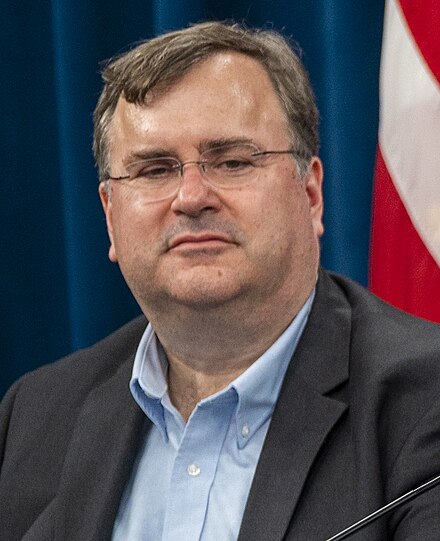
Let's do it. Over the past month, we have focused on the downsides of AI. From real world violence targeting industry leaders to growing political push back against data center expansion. So, this felt like the right moment to bring on someone who believes that AI can serve the public good. Our guest has spent years making the case that AI will improve our lives. He has also created, advised, and invested in some of the largest and most successful technology companies in the world. Few individuals sit closer to what might turn out to be the most transformative technology of our time. And so we wanted to find out what is actually happening on the ground. Here is our conversation with Reed Hoffman, co-founder of LinkedIn, Inflection and Manis AI, partner at Greylock, and author of Super Agency. What could possibly go right with our AI future? Reed, great to have you on the show. Thank you for joining us. I want to start with some specific news that we saw this week uh that is making investors a little bit anxious and that is this OpenAI news uh specifically that they missed their revenue target last year. They also missed their user target and they're obviously set to go public soon. It should be one of the most important IPOs ever. And suddenly investors are very anxious about this company and anxious that they're actually not growing in the way that they had expected. And you are in an interesting position because one, you're on the board of Microsoft and Microsoft is obviously one of the largest shareholders in OpenAI, one of the earliest investors and also you are an early investor in OpenAI uh through uh your VC firm Greylock. So let's just start with this. What do you make of this news? Uh, and should investors be worried about OpenAI?
Well, ultimately as an investor, I'm not worried. Um, I mean, part of it is the company had very aggressive targets and so when you have aggressive targets and you you kind of go in a little below them. That's actually not the kind of thing that I worry about that much. And classically the reason why public companies cuz you know most public investors tend to want reliability quarter to quarter you know tend to do their best to be on target in terms of what they're saying because there's this kind of a reliability thing whereas I as a private investor tend to be the just establish the really really strong basis and so you know for me the thing I wasn't tracking so much was you know last year's revenue last year's uh user count those are you making progress. Uh obviously we'll need to grow more too, but a lot more. But the the real question that I was like very happy to see was, you know, the the 5.5 release. Um because, you know, I think the thing that I'm most tracking is is OpenAI continuing to deliver some of the world's best, you know, kind of technology frontier models and so forth. And you know, that's that's I think the precursor to everything else. And that from every source I've seen in multiple different benchmarks and multiple different engagements has been you know is the kind of the new world leader in quality of model. So that that's more of what I pay attention to cuz it's you know with investing it's downstream effects. It's you know what does next year look like is the most relevant question.
Does that make you concerned? It's an interesting point like early stage investors venture capitalists they're more interested in the technology. They're more interested in what's going to happen 10, 15, 20 years down the line. Public markets investors are more interested in what's happening right now. I mean, we're literally we read quarterly earnings. We look at what happened last year. We look at what happened in the previous quarter. It's much more of a sort of backward-looking practice, which seems to be like it might be a big problem for OpenAI if they are to go public at the end of this year because suddenly they will be scrutinized for their financials. And so I wonder if that concerns you that suddenly your the company is leaving an ecosystem of people and investors that are okay with financials that might not make sense right now but then suddenly they're going and pitching the company to a group of investors who care a lot about that stuff. Are you worried that maybe they will get punished or that they will have a hard time in the public public markets when that time comes?
Well, if they can't establish themselves, there was a small set of companies. Um, and it isn't just Tesla, which is the probably the extreme example of this, which is kind of betting on the future, but Amazon for a significant uh number of years, and others that say, "Hey, I've got a foundational promise of which I'm going where investors go, we believe in that future, and so we're buying in that future." and the fact that the, you know, the the current, you know, you know, PE comparables, other kinds of things, you know, don't make sense on a quarter by quarter basis, even factoring in a, you know, an interesting KGER or anything else. Um, I think it'll be for all of the AI companies that are, you know, kind of, you know, prepping and considering going public, it'll be important to establish that basis. Um because I think the first year or two will look a lot like you know kind of early.com companies some of which were complete flame outs and some of which were enduring institutions Amazon being an example.
What do you make of the unit economics right now? This is something I've been thinking about when we think about these companies like 10 years down the line where currently the unit economics don't really make sense like the the cost to build these models is is so incredibly high and that is why open AI and anthropic any of the sort of foundation labs are burning a lot of money right now and it almost seems as if the only way that this works out from the perspective of the business model is for these companies to become like essentially utility companies like almost have these monopolies over compute. And Sam Alman has said this. He said that eventually he could see OpenAI becoming something like a utility company down the line, which to me is quite an interesting perspective because it's it's quite different from what we saw uh in the dotcom boom where we've had, you know, a handful of companies, we might call it an oligopoly, but a handful of companies operating in the same space. I mean where do you see the business model trending further down the line?
Obviously, you know, as you know, you have to distinguish between the training costs and the inference costs. And one of the things when you look at these numbers and the inference costs are actually in fact pretty good economics for inference, but obviously you have an exponentiating training category. And so the question is is you're doing this exponentiating training and I do think that at some point the training cost even though there's a goal to get as strong as you can there because then your quality of model you know kind of dominates through all the different inference units essentially you know at some level of of exponential that starts asymptoting just because it doesn't make sense within you know how many gigawatts do we have what what kind of economic cost do we get there and And I think a little bit of the the race is a race to that asymptote. Now where is exactly that asymptote is I think somewhat governed by availability of capital from investors believing and then the delivery of revenue. Now part of the delivery of revenue is not just the current services where you say okay you know open AI is dominating the the kind of chatbot and kind of what the consumer and and kind of interaction with that service is. Anthropic is doing the coding side you know followed by open AI you know as the on the coding side in terms of of how the API and coding works but like this has got to be just the beginning part of how you're looking at these AI models is not just the provision of tokens which obviously is interesting and across a number of things but what is the output that comes from now that software engineering can be much more broadly spread and a whole bunch of areas which otherwise wouldn't have been able to afford software engineering can now do them. That can affect what their productivity of their areas. What happens there? What happens in services firms when the a bunch of different services you know take legal or accounting or anything else can be done with intensive you know kind of amplification of this and that it's not just the question of like you know playing seats in the software basis but what is the delivery in terms of the margins of of what the delivery of the service is and and where all those economics play out is I think very early in TBD um and you'd say well should we wait to go public for those. I actually think one of the the things when you you know you you two know this better than I do, but I think one of the things that's been a bit of a kind of call it a social problem over the last few decades has been so much of the growth has been contained only to the private markets. um because of like let's delay going public until it's you know extremely stable which means that a lot of folks who who cannot participate in the private markets only get exposure to the public markets and I think that's one of the benefits of having some of these AI companies but I think it's early relative to what are the business models going to be um and then what is that revenue going to be and now utility um I think in terms of the fact that any task that you do with language or information I think we'll have uh AI participation at some level of depth whether it's complete automation whether it's augmentation whether it's assistance in various ways and so the spread of that is I think a good measure on utility I think one of the things that's good for society is the fact that we have multiple providers of these frontier models so they're competing with each other in terms of you know pricing in terms of availability to entrepreneurs building other kinds of different services in terms of being able to you know like the best governance mechanism is you know relative to the health of society for the cost of things holopoly monopoly etc is to have competition which then brings the price down and I think that's something that we are also seeing so the utility question around um kind of around the the like should it run like utility um you know I I don't know how uh you know how Well, utilities are thought of in the UK. In the US, utilities are kind of a disaster. So, uh, you don't want it run like that.
So, I'd love to just get your I mean, granted, you have a you might have a bias because you're on the board of Microsoft, but and you're an investor in several AI platforms or LLMs. Can you give us a lay of the land in terms of the competitive set? you know, obviously OpenAI, Anthropic, Google with Gemini, and then the Chinese models, and I'm sure there's a bunch others, but give us what you think is the competitive landscape right now.
So, I think um and this is to some degree a good news for startups and productive startups is I think the strongest positions are open AI and anthropic. I think in the traditional big companies, Gemini is is kind of next and I think we'll have a bunch of different efforts from Meta, you know, Microsoft on its own. Obviously, it uses a lot of open AI right now. You know, Amazon, um, who knows where Apple will play out in all this stuff since, you know, like they still don't seem to realize that Siri is like, you know, 20 years old. Um, kind of in in tech terms. Uh now for the Chinese models the interesting question will be like there's a lot of good open source models that pretty clearly have some roots in distillation from kind of the major western frontier models and I think part of what we're going into is an area where that distillation will get a lot harder. Now that being said, the Chinese are building up compute, um, building up chips, have extraordinary amounts of talent, hardworking, great tech companies. Matter of fact, the sea dance, um, you know, multimodal, uh, video model is, I think, amongst the best in the world. Um, so I think it's already, you know, that you already have stuff that's kind of uh playing there, but like and then you get a kind of a jagged edge like you go, okay, let's go coding specific. So most developers will say cloud code. Part of the reason is because cloud code has got the best model, I think, the best interaction thing for iterating through kind of the amplification of a software engineer. But then the in-depth engineers that I know who play with um go open AI codeex because it spends it's much more uh useful at like call it you know uh 20 30 50 90 minute reasoning long tasks that play to a harder engineering and so they prefer that versus cloud code. Um and right now at the moment that's it when you get to like people who have exposure to it. Some people then go, okay, I can't afford either of those, so I'll use Quen, um, you know, the the Chinese open source model, which is quite credible, but when you think about the fact that, you know, when you're looking for coding, just as one instance, um, you're actually looking for really part of the reason why you pay, you know, software engineers and all the rest, you're really looking for something that's quite good and quite reliable that doesn't introduce bugs. Obviously we have mythos coming with questions around cyber security and what does this all mean there and that matters too. So you know the I I tend to think a little bit on the coding side for your particular coding problem. It's a little bit like what we call in blitz scaling a Glengarry Glenn Ross market which is you know first prize Cadillac second prize steak knives third prize you're fired. So roughly uh but but then it's different across you know like images like the open AI image generator is I think now like like I've been wanting to create uh graphic novels for eight years with AI and I now I think I can uh so that's interesting anyway. So they just we could go we could spend the entire time on the on the on the the different capabilities of these.
So it's a good segue into talking about mythos. Uh so Anthropic described mythos. It said that it turns every computer into a crime scene and I'm trying to distinguish between what is responsible warnings about their own product and catastrophizing as a means of fundraising because everyone's talking about mythos right now and there's sort of this and it's prevalent I think across a lot of AI that my technology is so amazing that it's going to reshape the world both good and bad. Please invest in my series D at 100 times revenues. How much of this is responsible warnings from you know Dr. Frankenstein that Frank could be dangerous and how much of it is just quite frankly it's just fundraising.
One I think the anthropic people are very earnest principled and honest. So I think there's a fundamental basis which is completely honest. And here's a simple way of making that the case which is if you said the the minimum that mythos is is an ability to have an infinite number of uh quality cyber security engineers who are penetration testers and it's not infinite obviously because there's a compute cost for running of them but you could take a thousand of them and run them in a direction you end up you know if it's just that you end up with a rechanging of the cyber security landscape because we have billions of lines of code that essentially haven't been touched and partially because there hasn't been either an economic model for the number of cyber criminals or the number of people employed by rogue states to go after any other than a certain set of systems. But it broadens the range by the ability to just kind of spin up many new penetration testing engineers, you know, with a kind of an AI mechanism. And that's the minimum that I think you could look at um the the discussion around Mythos and its cyber security issue is I think that it's actually um somewhat better than that. And I don't mean that that's amazing what I just said, but I don't know yet how much more, right? Like is it is it oh my gosh you put a a a classic you know call it a you know top 10% uh cyber security engineer and put them against you know kind of a couple of mythos agents and do they outpace that person? Um you know it's unclear to me. Does it think in ways that we haven't thought about before and generate new patterns? That's unclear to me. But you don't need those to have this be a massive, you know, kind of shift in how we think about cyber security. What are the kinds of things we need to do? And so I actually think that they're doing a responsible thing by saying there's an important change coming and we need to get at least the essential systems ready. We weren't more than a minute to answer this because it's it's a difficult or you know we're going to need a bigger boat.
But Andrew Yang, who was on our podcast a few days ago said, you know, he's having a moment, right? Because he's sort of in some ways predicted all the fears, the sum of all fears around capital destroying labor. And there's, you know, people would point there's already evidence around youth unemployment increasing, a lack of hiring, layoffs at some of the early adopters. We I won't use we. I have taken the view that we have been to this movie before and some of the catastrophizing around the destruction in the labor market doesn't recognize the new opportunities and the new jobs that'll be created. So I would love to just get your thought and take is whatever time you need to describe what you think the impact on the labor market is going to be of AI.
Every job that uses language or information will have an AI component that will range in certain cases from automation, in certain cases much more AI work and in certain cases kind of AI amplification or augmentation of human labor. And I think that will be true of all of those things. And so almost every industry because if you think about like even like steel manufacturer you still have meetings financial analysis um you know kind of uh capital other kinds of things you know legal other kinds of things all that play in it you know strategic planning and so that means that AI will touch everything now and I by the way inherently also agree with you that um one of the general problems when you get new technology kind of put this in super agency is you go well I can see if I take jobs as a fixed number that do not grow and do not change and I can see that a bunch of them will be you know now we the horses then car the buggies will go away and we'll have cars and like all the grooms people will go away and all the horse carrying jobs will go away and all the horse cleanup jobs will go away and I can tell that and you're like well but you didn't predict all the new car the the the new jobs and drivers and d and that that particular thing and you can predict the negative changes you can't predict the positive ones So um now the the rub in this is uh uh there's a couple of places where AI creates kind of multi-industry very fast much cheaper things like say for example if you said well um uh you know like for example one of the areas where I think you'll see a lot of automation is where human beings are following a script the AI will follow a script much better so I think I think like customer service jobs go completely away. But by the way, I think like sales jobs transfer a whole bunch too. And what does the new sales universe look like? Both of them are are are lots of body employers. And so you get you get a you get some pretty big transitions in terms of of how this plays. And that's the thing is I actually think that the the transition points will be like uh more likely than not challenging to navigate. Now part of the reason like I I still tend to be a AI like we just should should accelerate as much as possible and use it. We can go into that even though we're going to have this transition difficulties but the thing we should be doing is saying well with AI how do we help in these transition difficulties namely how do we say oh if you're not no longer customer service jobs which they haven't really been decreasing yet and so therefore a little bit of the you know kind of college people not being hired and so forth it's much easier for companies to say we're doing layoffs because of AI and we mishired in the pandemic. There's global instability, we're not investing in the future at the moment because of global instability, etc. No, no, we're strong because we're using AI. So, there's a lot of discourse on that. But I actually think that, you know, it's things like the customer service jobs that will be the as one of the kind of canaries in the coal mine of we have to have customer service and all of a sudden the jobs start going down because of Sierra or Parloa or whatever. um then I think that the um uh that you'll begin to see some of that now you I think you'll see it. It's just a question of speed, time, how etc. And then we get to the transition transformation transitions and part of the transition is let's deploy AI for that. Let's deploy AI for okay I no longer have a customer service job. How do I what other jobs could it like work with me? What other jobs could I do are being created? What are the things that um uh you know like you could help me learn? What are the things you could help me do? What are the what are the jobs you can help me find? And when I think about this from a society point of view because these kinds of workforce transformations, you know, the industrial age was really painful in terms of its trans the like we don't have any of the wonderful things we have without the industrial revolution. And I think the same thing is true of the cognitive industrial revolution with AI. But the transition is really painful. How do we make the transition better? And I think the simplest thing is deploy AI for it.
We'll be right back after the break. And if you're enjoying the show so far, tune in on Sunday for our founder series. We will be speaking with the co-founder of the hot new legal AI startup, Harvey.
Support for the show comes from LinkedIn ads. There's no worse feeling than making a major investment in something only to realize it didn't exactly live up to the hype, such as buying a nice piece of tech that ends up in storage collecting dust, or taking a business workshop where your main takeaway was little more than a few motivational words. If you work in marketing, this can happen with ads. You optimize for the numbers that look great, impressions, reach, and reactions. But when they don't show revenue, well, that can turn into an unfun conversation with the CFO. LinkedIn has a word for that, bull spend. Reach the right buyers with LinkedIn ads and invest in what looks good to your CFO. According to the 2026 Dream Data Benchmark report, LinkedIn ads generated the highest ROAS of all major ad networks. It's $121%. You can target by company, industry, job title, and more. It's time to cut the bull spend. Advertise on LinkedIn, the network that works for you. Spend $250 in your first campaign on LinkedIn ads and get a $250 credit for the next one. Just go to linkedin.com/scott. That's linkedin.com/scott. Terms and conditions apply.
We're back with Profess. I agree and Scott knows this that eventually new opportunities will come as a result of AI transforming our economy. But the question is what happens in the interim and the industrial revolution. I think is a great point. We're in a comfortable position now looking back a hundred years ago saying, "Oh, it worked out. Look how wonderful the world is today." But I'm sure there are thousands, potentially millions of people who lived through that revolution, who did lose their jobs, who were not very happy about the situation. And we've talked to people who have talked about that too. Darona Simoglu is someone who says actually we didn't do a very good job of handling that transition. And it seems that this is going to be a similar thing except even faster because instead of putting vehicles uh on the ground or building factory equipment, you're literally just shipping software to companies. And we're already seeing it where employees are being laid off like thousands at a time in one go. I mean, this is what happened with Block. This is uh what happened with Amazon. They just literally send an email. They say, "You're all fired. Sorry." Like, that's a new kind of system. And from a just purely like capitalist perspective here, one, I mean, from a human perspective, that's got to be kind of shitty for a lot of people and we're already seeing that. But also from a capitalist perspective, it seems as though one of the biggest obstacles for the AI buildout, if you are an AI optimist technologist, one of the biggest obstacles is how unpopular it is now. largely because of this work being replaced dynamic where AI is now less popular in the US than ICE. Um so that seems to be a big issue and we're now seeing it in the political sphere. And so I guess my question is like how much of a problem is that? Is the popularity problem for AI a genuine concern among the technologists who you are close with in Silicon Valley who are actually building this technology?
you know, you'd have to be pretty blind not to be concerned about the popularity problem and, you know, it's manifest and such, you know, things also is, you know, weird like we should have we should ban data centers and you're like, okay, you want the data centers built in Canada or somewhere else, you know, as opposed to here. um you know and and most of the arguments against data centers are um pretty spurious. Um I think the key question around the local economy is say hey make it a good enough trade for us to bring it here like bring in some economic prosperity. Sure the construction jobs and the running jobs aren't a lot of jobs. Maybe there's some other things you can bring in like you know maybe you could bring in a plus 10% of your energy of your usage. You add 10% that helps us in a structural way. I mean there's all kinds of different ways you can do that. Now that being said, you know, for example, you know, the UK didn't invent the industrial revolution, but embraced it uh strongly and had, you know, centuries of global prosperity from it. And so I do think the transition is challenging, but I think the embrace is valuable. And um and I think that the the question around you know what should we do is like it's important from a economic it's like it is the driving force of what the future economies are and it'll only work for future generations if we embrace the right economic things. But I think the key thing is to try to figure out what's the way we navigate better. like I think is like you know anyone who says oh we navigated the industrial revolution perfectly is out of their mind or ahistorical or anything else is like look what's the learnings what are the things we can do now the most often thing that people who are not building within the you know kind of just call it competitive business world or competitive technology world just slow everything down right and you're like okay the problem is competition doesn't slow down that's actually not not the way that that kind of competition works like if you just said hey everyone wait for me to get my econ economy in order and then you can start shipping your export things. I mean, you know, take a look what what's going to be happening within Europe with the spread of BYD cars from Hungary, for example. It's like, oh, no, no, wait for a decade for us to get our auto industry in in in place. That's not going to happen in terms of in terms of how this operates. So you have to be like figuring it out how to make the adjustments and transformation at the speed that you know here we are in a markets podcast that the markets are are bringing about and that's the the thing to do. So the idea is they give good ideas on the transformation that we can embrace to help make the transformation better. And that's part of the reason why like I gesture at the speed and and depth of AI also gives us tools to help with the transformation.
How much genuine thought is being given to those kinds of ideas? Like I think that the trouble that a lot of people have is on the one hand there's the possibility that AI could be good for society and it could be a great thing and bring prosperity to many people potentially but also on the other hand it could also make a small handful of individuals incredibly incredibly wealthy. It could make wealth inequality even worse. It could concentrate power and wealth into into the hands of a a small few which makes it I think it make it makes people feel fairly and justifiably suspicious and you know Dario Ammed could could go on a a show and say AI is going to be you know wreck everything and people would might say that that's not a lie but exaggeration. He could also say AI is going to be a great thing for everyone. everything's going to be fine. Everyone would say, "That's an exaggeration. That's a lie. He's just trying to get rich." So, I guess the question is like when when you interact with these people as someone who's kind of like in the eye of the storm, to what extent are people actually concerned and working on solutions to make this work for everyone versus just trying to kind of like keep the message intact as they pursue the ultimate goal of wealth.
I don't think it's wrong to produce a goal of wealth. I think every worked system, cities, trade, everything else creates, you know, economic inequality and and economic inequality is part of the engine by which we, you know, fuel capitalism and competition and all the rest. So, it's like, you know, just to be clear, I think that's a fine thing. I do think the question is is how do you bring, you know, kind of the bulk of society along? eg how do you have benefit that spreads you know throughout all society and I'd say like for example is one instance you know Sam Alman's gotten a bunch of bad press over the last you know x months and yet in the very early days he was funding you know universal basic income experiments trying to figure out what kinds of things would work there and you know uh spending money directly himself in order to do that so I'd say that there are people who actually in fact pay attention mention the issue, care about the issue. It's one of the things I don't think Sam gets enough credit for is just one instance. Now, that being said, the question is to say, um, all right, are we putting in time and energy in order to help society? I think that that a number of the different players um you know definitely
Microsoft, Google, Anthropic, OpenAI and some others are interested and willing to do that. They're not willing to do it if it's fruitless relative to its engagement and everything else, given that they also have an intense competition clock going. So if you wanted to say, like one of the things that I've been telling governments for years is the kind of things you should be asking for is: I'd like to have a medical assistant that runs on every smartphone that can help people. I'd like to have a legal assistant that runs on every smartphone that can help people. I'd like to have a tutor that runs on every smartphone and essentially make those the equivalent of free as part of the benefit for helping transition. I think you could do that and I think you could very easily cut the deals in which they would build it, and so where then the government could make sure it's there for everybody and to be getting some benefits in as we sort out the kind of melee of what's going on. But like say for example they just say, okay, we'll go build a tutor that helps with like all things economic and jobs. Well, okay, we build it, are going to use it, how's it going to get there? Do we have to spend energy and time on that too? Given that there's this focused competition about where the primary economics are and they establish a new platform and so forth. So this is kind of an area where I think they are legitimately concerned. Part of the reason why they in their own minds will say, you know, pretty this is, you know, Scott was gesturing at, you know, kind of like the, oh, are you just fundraising by saying white collar bloodbath in X years, you know, buy my Series D. And it's, I don't think that's a great way to try to sell the Series D. I think it's actually like, hey, shit's coming. Somebody should be helping do something here and we're happy to help. We got our stuff that we're working on, but we're happy to put some energy into it. And I think that's what we need to be doing. Now unfortunately at the moment saying well-run government seems to be, you know, something on kind of on the order of dinosaurs or dodo birds or anything else. And it's difficult to figure out what to do. I'm always happy whenever any government of any western democracy style democracy calls me and says, hey, I'm trying to figure this out. What can I do to help? Like, I'm like, okay, here's some ideas. Here's things. Like, you know, the medical assistance one that I've been talking about since 2018, right? Because you want to say, hey, this AI transformation is challenging. Most people do not have immediate access to medical advice, right? The vast majority of the world does not have that. And so it's like, oh, could I get some that's good and that would be easy for governments to set up because it's changing the legal liability and then the mandate for how it's reached and then having a deal with whatever number of companies you want in order to go into that in terms of what you do and then all of a sudden you're providing something.